

Reducing lymphedema risk after breast cancer
About one in five women develops arm lymphedema after breast cancer. The 2026 NLN evidence ranks screening, skin care, weight, exercise and a sleeve first.
By The Renu lymphatic and massage team · 7 min read
Roughly one in five women treated for breast cancer develops arm lymphedema, far fewer after a sentinel biopsy than after an axillary dissection. The practices with evidence behind them are regular measurement from a baseline, meticulous skin care with fast treatment of any infection, a healthy body weight, a prescribed progressive exercise programme and, after a dissection, a compression sleeve. Blood pressure cuffs, needles and flights have not been linked to swelling in prospective studies, and every decision belongs with you and your oncology team.
Being handed a list of lifelong “never do this” rules at the end of breast cancer treatment can feel like a second diagnosis. The useful news is that the list has been rewritten. In March 2026 the National Lymphedema Network (NLN) published an evidence-based update of its risk-reduction position, and the practices it now puts first are measurement, skin care, body weight, exercise and, after an axillary dissection, a compression sleeve. Several of the older rules did not hold up when they were tested in prospective studies.
How big is the risk, in plain numbers
Most women treated for breast cancer do not develop lymphedema, but enough do that it deserves a plan. A 2013 meta-analysis in The Lancet Oncology (DiSipio and colleagues, 72 studies) put the pooled incidence at 16.6% across all study types and 21.4% in prospective cohorts, which the authors summarised as more than one in five women who survive breast cancer. The figure depends heavily on what was done in the armpit: about 19.9% after an axillary lymph node dissection against 5.6% after a sentinel node biopsy, roughly a fourfold difference.
Timing matters too. Incidence in that review peaked 12 to 24 months after diagnosis, and a later prospective study of 2,171 women (McDuff and colleagues, 2019) found the peak shifts with treatment: 6 to 12 months after dissection alone, 18 to 24 months when regional node radiation was added, and 36 to 48 months after a sentinel biopsy with regional radiation. The risk does not switch off after year one, which is why the NLN frames this as long-term awareness rather than a short-term scare.
The NLN names axillary dissection as the strongest risk factor, followed by regional nodal irradiation, a higher body mass index, early low-volume swelling, and Black race or Hispanic ethnicity. Cording, taxane chemotherapy and individual anatomy are listed as possible contributors. If you had a sentinel biopsy only, our page on lymphedema risk after a sentinel node biopsy puts your numbers in context; if you had a full clearance, see lymphedema after an axillary lymph node dissection.
What the evidence supports, ranked
Here is how the NLN’s 2026 practices line up, with the strength of what sits behind each.
1. Prospective screening, starting before surgery
The NLN asks that everyone at risk be screened regularly from a preoperative baseline, with symptoms, objective measurement and education at each visit. High-risk individuals (those who had a dissection) should ideally be measured as often as every three months for the first two years, then less often in years three to five; low-risk individuals can be checked around every six months alongside self-monitoring. The reason is simple: diagnosing and treating lymphedema at the earliest possible point improves outcomes, and the NLN’s diagnosis statement notes that subclinical swelling after dissection progresses to clinical lymphedema in about 39.7% of cases without treatment, against 11.5% after sentinel biopsy.
2. Skin care and treating infection fast
Cellulitis is the one everyday event with a clear link to lymphedema. In Ferguson’s prospective study of 3,041 arm measurements, cellulitis was associated with arm volume increase at P < .001, the same strength as dissection itself, and the Asdourian review of 31 studies called skin infection and prior inflammation of the arm among the most clearly defined and well established risk factors. The NLN’s advice: cleanse daily with mild, pH-balanced products, moisturise so the skin does not crack, learn the signs of infection (redness, warmth, pain, swelling, fever, chills), and treat any suspected infection in the at-risk arm as an urgent medical event, because prompt antibiotics limit further lymphatic damage. The American Cancer Society adds gloves for yard work, SPF 30 or higher, and washing any cut or bite with soap and water.
3. A healthy body weight, with support rather than blame
DiSipio’s review graded being overweight or obese as a strong-evidence risk factor, and Ferguson’s cohort found a BMI of 25 or more associated with arm volume increase (P = .0236). The NLN recommends maintaining a healthy weight and seeking professional help if weight is above guideline ranges, while acknowledging that cancer treatment and other conditions can make weight loss harder. It asks for a supportive, multidisciplinary approach that may include weight management, endocrinology, exercise prescription and nutrition services.
4. Progressive exercise
The NLN states that individualised, appropriately prescribed progressive exercise programmes, supervised as needed, do not incite lymphedema in people at risk after breast cancer. That reverses decades of advice to protect the arm from effort. The key words are prescribed and progressive: start light, build slowly, and if you wear a prophylactic sleeve, wear it while you train.
5. A compression sleeve, if you had a dissection
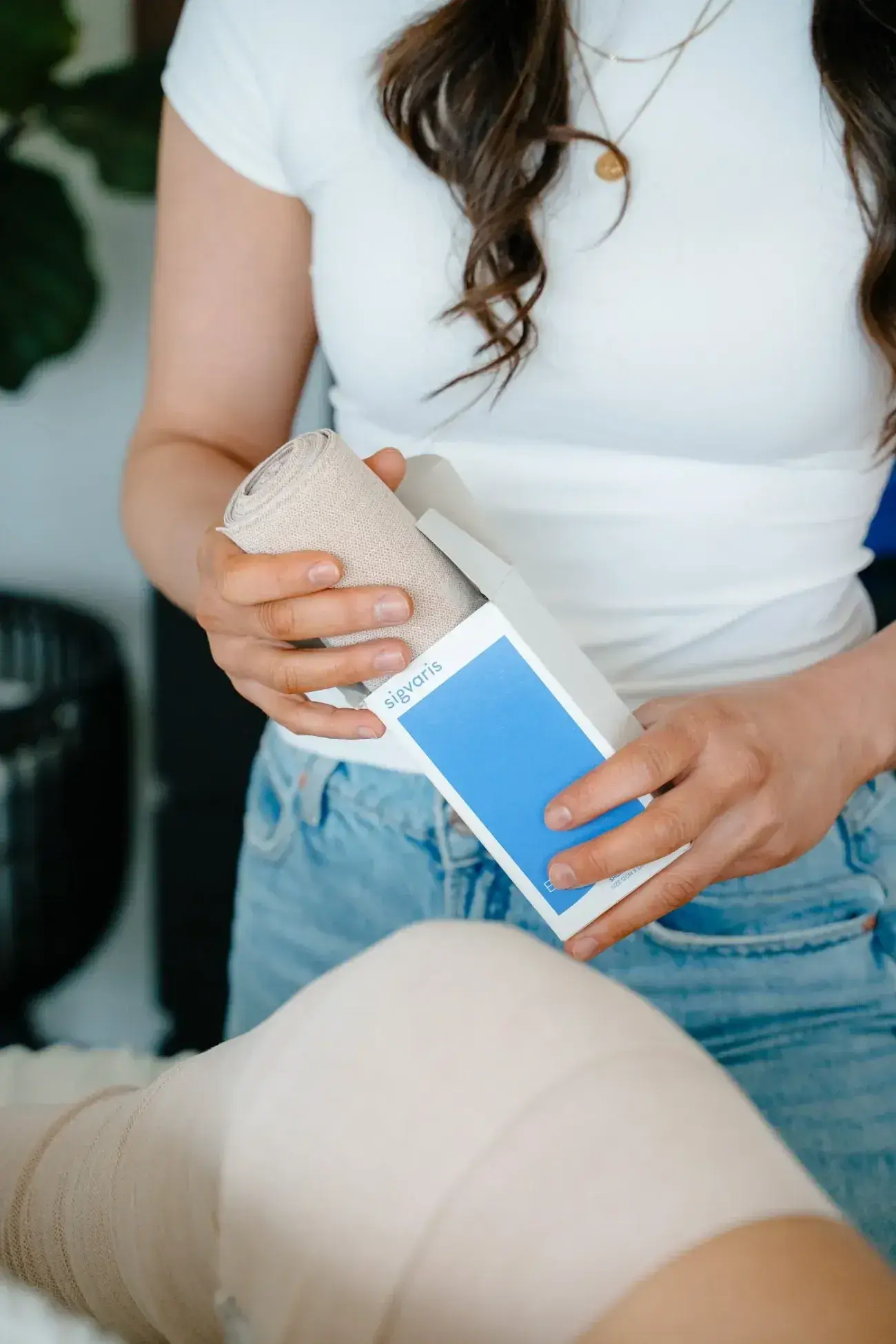
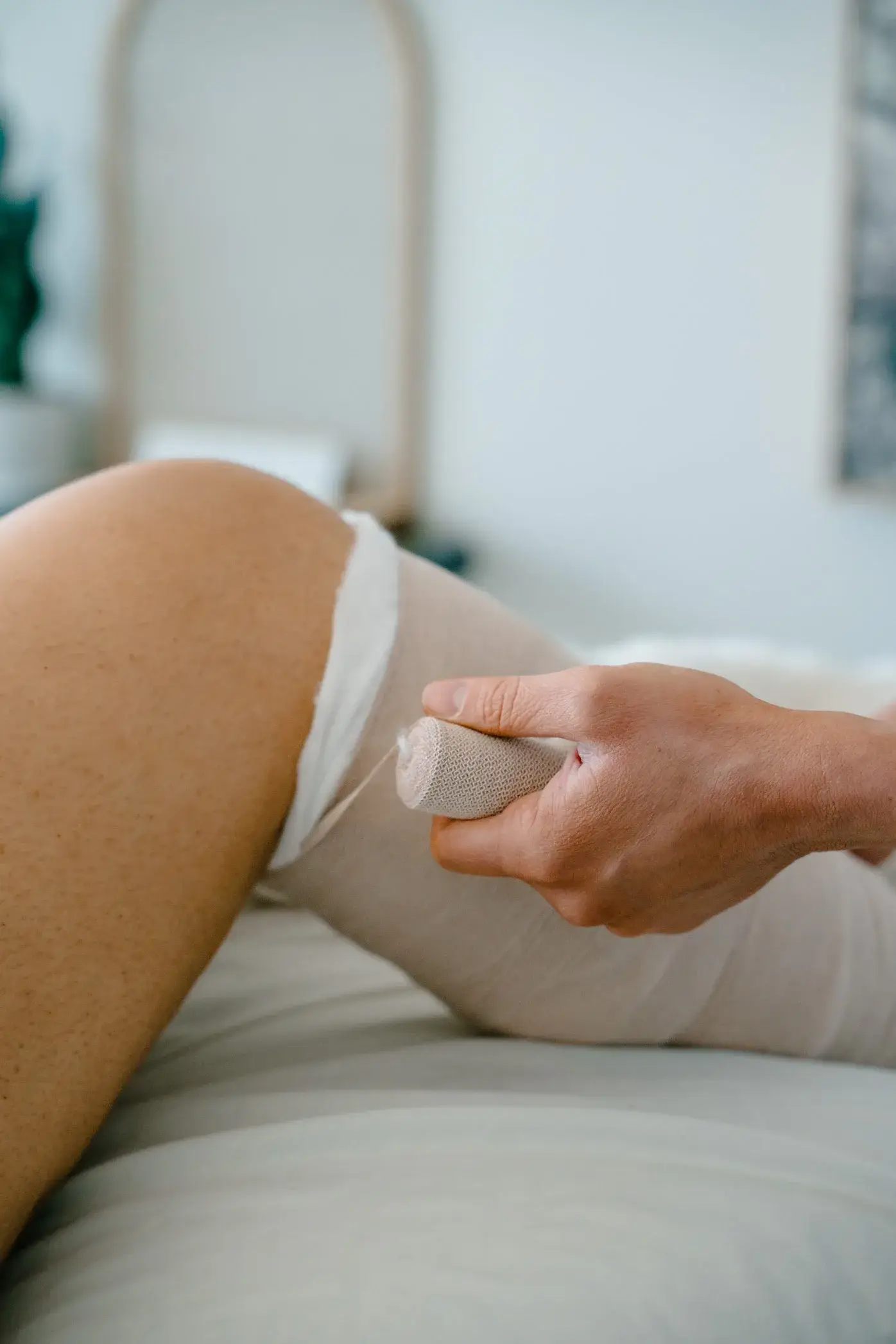
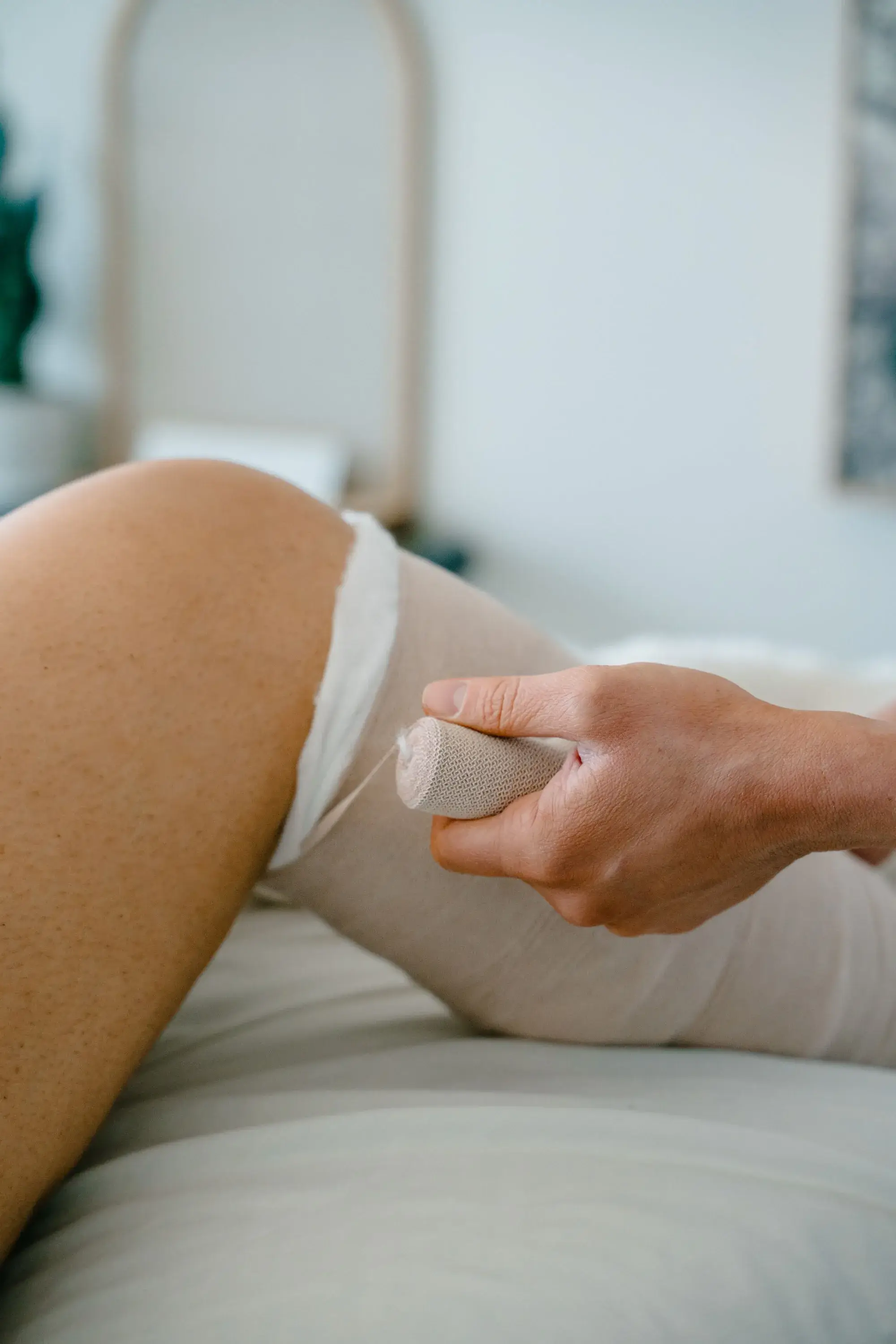
In a randomised trial of 307 women at high risk (Paramanandam and colleagues, 2022), sleeves worn from surgery until three months after adjuvant treatment reduced one-year arm swelling measured by bioimpedance from 52% to 42%, and by arm volume from 25% to 14%. On that basis the NLN now says prophylactic sleeves may decrease or delay onset for the high-risk group only: a class 1 or 2 sleeve, fitted soon after surgery, worn during waking hours for at least eight hours a day until three months after adjuvant treatment, replaced about every six months. It is not a routine recommendation after a sentinel biopsy. Renu offers a 30-minute compression fitting with Meeghan Mackenzie, a Certified Compression Fitter, when your team has recommended a garment.
The rules the studies did not confirm
Three familiar precautions have been tested prospectively and did not predict swelling.
| Old rule | What prospective studies found | NLN 2026 position |
|---|---|---|
| No blood pressure, needles or blood draws on that arm | No association with arm volume change in Ferguson’s cohort (P values .43 to .91) | May be done on the at-risk arm when indicated, with you taking part in the decision; still avoided in an arm with diagnosed lymphedema |
| Wear a sleeve to fly | Air travel not shown to be a risk factor | Prophylactic garments not routinely recommended for flights |
| Avoid heat entirely | Weather changes did not alter limb volume; hot weather can cause temporary swelling | Avoid saunas; protect the skin from sunburn and other burns |
The Asdourian authors were candid that most of the older rules rested on low-level or inconclusive evidence and had been causing anxiety, and they called for a risk-adjusted approach. The NLN notes that these findings come from breast cancer cohorts and that nobody has studied repeatedly cycling automatic cuffs during surgery or wrist cuffs. Our pages on blood pressure and needles on the affected arm and flying after lymph node removal go into the detail.
Building your own plan
Put the practices in this order and the list becomes manageable.
- Ask your surgical or oncology programme whether it runs prospective measurement, and get a baseline if you have not yet had surgery.
- Learn the early sensations the NLN wants reported immediately: heaviness, a sense the arm is bigger, or a feeling of swelling, even if a tape measure shows nothing yet.
- Keep the skin on that arm clean, moisturised and protected, and treat any cut or bite promptly.
- Move: a walking, strength or swimming programme prescribed for you, built up gradually.
- If you had a dissection, ask about a prophylactic sleeve and have it fitted properly; the American Cancer Society warns never to wear a compression garment that has not been fitted for you.
- Drop the rules that no longer have evidence, after a conversation with your team.
When to call your oncology team
Call the same day if the arm, breast or chest on the treated side becomes red, hot, more swollen or painful, or if you develop a fever, chills, sweats, muscle aches, nausea or dizziness; these are the infection signs the American Cancer Society lists for people at risk. Call promptly, rather than waiting for a scheduled visit, for new heaviness, tightness, a change in how rings or sleeves fit, or new aching, tingling or numbness. Our when to seek medical care page covers the broader red flags after surgery.
Where Renu fits
We are not your oncology team and we do not replace a surveillance programme. What we offer is a Certified Lymphedema Therapist, Meeghan Mackenzie (an RMT since 2005, trained in the Vodder and Földi methods and through the Academy of Lymphatic Studies), who can assess an arm you are worried about, provide manual lymphatic drainage and complete decongestive therapy if lymphedema is diagnosed, and fit compression when it has been recommended. If you are planning reconstruction, our guide to lymphatic care after mastectomy and reconstruction explains how we work around healing tissue. Bring your treatment summary to a first visit; what was done in the armpit shapes everything we do.
Questions people ask
Is lymphedema after breast cancer inevitable?
No. Prospective cohorts put the overall figure near one in five, so most women never develop it. The odds depend mainly on whether you had a dissection or a sentinel biopsy, whether the nodes were irradiated, your body weight and whether the arm has had an infection.
Does lifting or exercising with the treated arm cause lymphedema?
Not when the programme is prescribed and progressive. The 2026 NLN statement says individualised, supervised progressive exercise does not incite lymphedema in people at risk after breast cancer. Start light, build slowly, and wear your sleeve while training if one has been prescribed.
Is it too late to lower my risk if surgery was years ago?
No. Skin care, prompt treatment of infection, a healthy weight and regular exercise matter at any point, and the risk window extends well past the first two years. If you notice heaviness or a change in size, ask for an assessment rather than waiting for the next scheduled visit.
Which single habit has the strongest evidence behind it?
Avoiding and promptly treating cellulitis. Skin infection in the arm was linked to swelling at P less than .001 in a prospective study of 3,041 measurements, and the NLN treats any suspected infection in an at-risk limb as an urgent medical event.
Sources
- National Lymphedema Network: Position Statement, Evidence-Based Practices for Lymphedema Risk Reduction (March 2026)
- DiSipio et al., Lancet Oncology 2013: Incidence of unilateral arm lymphoedema after breast cancer, systematic review and meta-analysis
- American Cancer Society: For people at risk of lymphedema
- Asdourian et al., Lancet Oncology 2016: Precautions for breast cancer-related lymphoedema (review of 31 studies)
- Ferguson et al., Journal of Clinical Oncology 2016: Impact of ipsilateral blood draws, injections, blood pressure measurements, and air travel on the risk of lymphedema
- McDuff et al., International Journal of Radiation Oncology Biology Physics 2019: Timing of lymphedema after treatment for breast cancer
- Paramanandam et al., Journal of Clinical Oncology 2022: Prophylactic use of compression sleeves in women at high risk of breast cancer-related lymphedema
- National Lymphedema Network: Position Statement, Lymphedema Diagnosis and Treatment (September 2025)
Page reviewed October 3, 2026. This page is education, not a diagnosis. For your own situation, talk to your doctor, surgeon or care team, or ask us.
Keep reading
Related pages