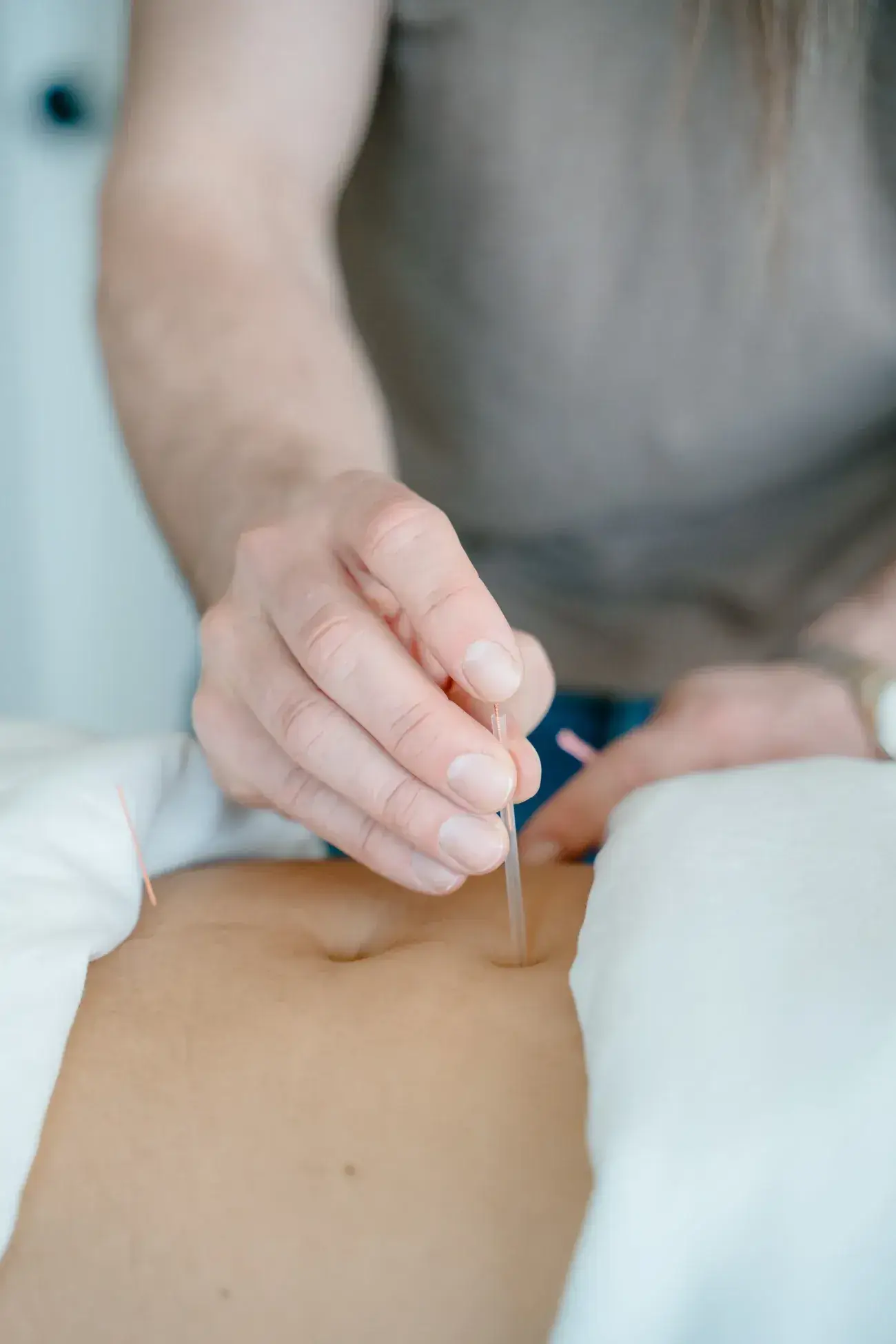

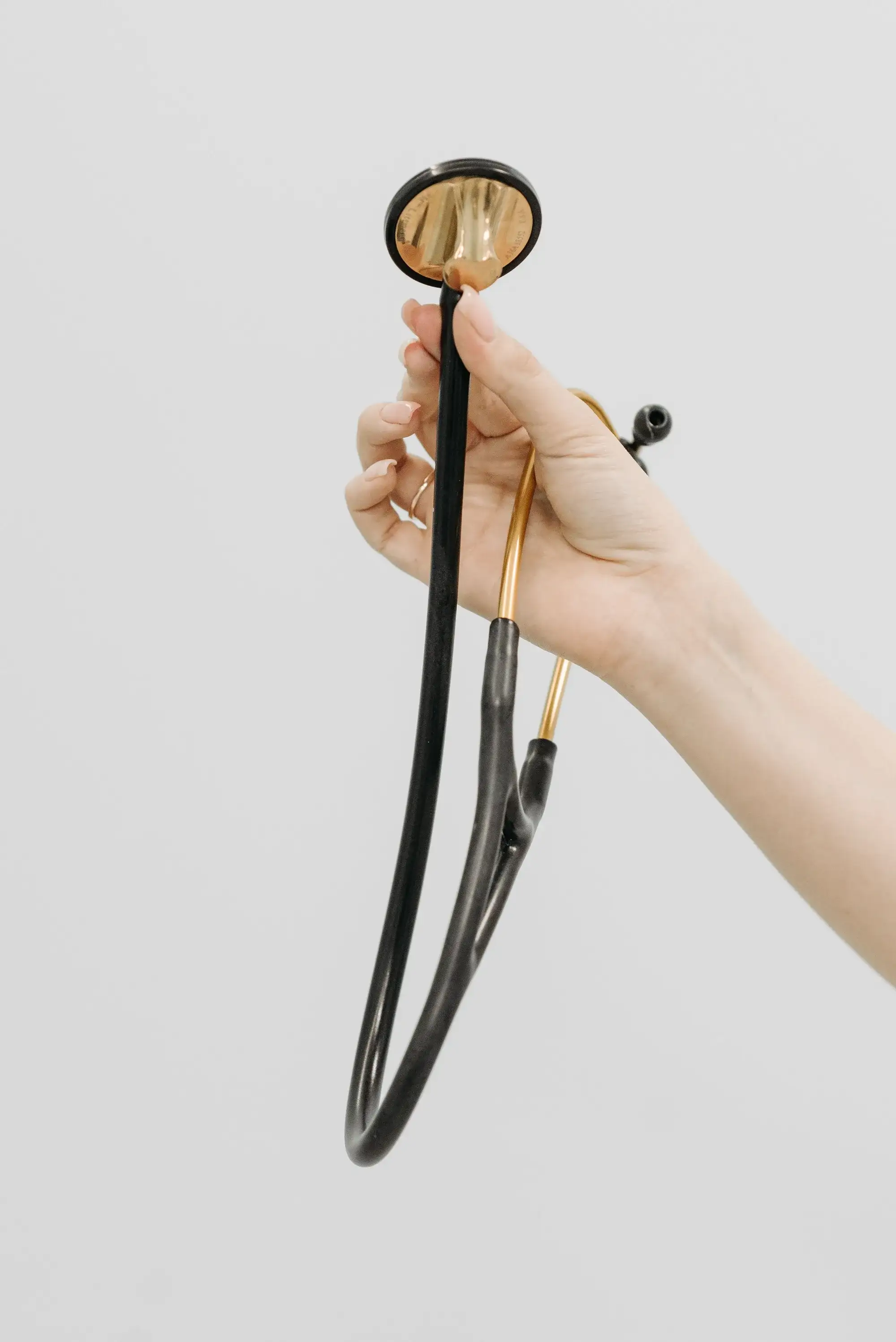
Blood pressure and needles on the affected arm
The NLN now says a cuff, injection or blood draw on an at-risk arm has not been linked to swelling and may be done, your choice. A swollen arm is different.
By The Renu lymphatic and massage team · 7 min read
If you are at risk of lymphedema but have never had swelling, the National Lymphedema Network's 2026 statement says isolated blood pressure measurements, injections and blood draws have not been associated with increased limb swelling in prospective studies, and may be done on that arm when indicated, with you as an active participant in the decision. If you have diagnosed lymphedema, the NLN still recommends avoiding these procedures in the swollen limb. The American and Canadian cancer societies continue to advise avoidance when possible, so the page sets both out and gives you words for the conversation at the lab.
If you are at risk of lymphedema but have never had swelling, the National Lymphedema Network’s 2026 statement says isolated blood pressure measurements, injections and blood draws have not been associated with increased limb swelling in prospective studies, and may be done on that arm when indicated, with you as an active participant in the decision. If you have diagnosed lymphedema, the NLN still recommends avoiding these procedures in the swollen limb. The American and Canadian cancer societies continue to advise avoidance when possible, which is why the nurse in front of you may say one thing and the pamphlet another.
“Never that arm, for the rest of your life” is probably the single most repeated instruction given after breast surgery. It is also the one that has changed the most. This page separates the two situations the advice now distinguishes, shows the data behind the change, and gives you a way to have the conversation without a standoff at the lab.
Two situations, two answers
The NLN writes its guidance in two columns: people at risk, and people with a confirmed diagnosis.
At risk means you have a known injury to the lymphatic system, such as lymph node removal during cancer surgery, but no signs or symptoms of lymphedema. For this group the statement says blood pressure measurements, injections and venipuncture may be done on the limb at risk when indicated, and that you should be an active participant in deciding whether to have them there. Ideally those procedures happen within the context of a prospective screening program, so that if swelling ever appears it is caught early.
Diagnosed lymphedema is the other column. Here the NLN notes a paucity of research on the safety of these procedures in a swollen limb, and recommends that blood pressure measurements, injections and venipuncture are avoided in the limb with lymphedema. In a medical emergency, or when there is no uninvolved limb, the facility should meet the medical priority while taking reasonable precautions to avoid repeated trauma, and refer you to a certified lymphedema therapist once you are stable.
If you are unsure which column you are in, the rest of our Library can help you find out: early signs of arm lymphedema describes what the first symptoms feel like, and lymphedema and lipedema explains how a diagnosis is made.
The data that changed the advice
The prospective evidence the NLN relies on comes from a screening program at a single cancer centre, published by Ferguson and colleagues in 2016. Women treated for breast cancer between 2005 and 2014 had both arms measured with a perometer before surgery and at every visit afterwards, and at each visit reported how many blood draws, injections and blood pressure readings the at-risk arm had received since the last one.
Across 3,041 measurements, there was no significant association between an increase in arm volume and having one or more blood draws (P = .62) or injections (P = .77). The things that did raise arm volume were a body mass index of 25 or more (P = .0236), axillary lymph node dissection (P < .001), regional lymph node irradiation (P = .0364) and cellulitis (P < .001). The authors’ conclusion was measured: although cellulitis increases risk, ipsilateral blood draws, injections and blood pressure readings may not be associated with arm volume increases.
Asdourian’s review the same year looked at 31 studies of these lifestyle precautions and found that most of the evidence supporting them was low-level or inconclusive, with skin infection the only clearly established factor among them. The authors wrote that the paucity of high-level evidence and the conflicting literature made it hard to establish definitive predictors, and that the precautions could themselves be a considerable source of patient distress and anxiety.
That last line is the reason this page exists. A rule that cannot be substantiated but is enforced for life carries a cost of its own.
Why the cancer societies still say “avoid”
Read the patient pages and you will find the older wording intact. The American Cancer Society tells people at risk to avoid blood pressure measurements and blood draws from the affected arm “when possible”. The Canadian Cancer Society goes further: avoid needle sticks of any type in the affected limb, including blood samples, intravenous lines, injections and acupuncture, and avoid blood pressure on that arm, switching arms each time if nodes were removed on both sides. Macmillan says to avoid, if possible, blood pressure and needles in the arm at risk.
None of these is wrong to be cautious, and the NLN itself keeps the caution for anyone with established lymphedema. The gap is between a precaution written before the prospective data and a position statement written after it. The NLN also lists what the new data do not cover:
- The studies involved ambulatory blood pressure readings on the upper arm.
- There are no studies on automatic cuffs that cycle repeatedly, as in an operating room, on wrist cuffs, or on blood-flow restriction training.
- Evidence on infusions into the at-risk limb is limited.
- Everything was studied after axillary node removal for breast cancer; other causes of lymphedema risk have not been examined.
So the honest summary is: a routine reading or a single needle on an arm that has never swollen has not been linked to lymphedema, a swollen arm should still be protected, and the grey areas are a conversation for the anaesthetist or the infusion nurse. The question of acupuncture needles specifically has its own page, acupuncture on the arm after lymph node removal.
A script for the lab or clinic
The awkward moment usually comes when a phlebotomist reaches for the arm and you are not sure whether to object. A few sentences prepared in advance keep it calm:
- Say what happened and when. “I had lymph nodes removed from my right armpit in March; that arm is at risk of lymphedema.” Clinics cannot act on what they do not know.
- State your choice. Either “please use my left arm” or “my oncology team says the right arm is fine for a single draw, and I am comfortable with that.” The NLN puts this decision with you.
- If the arm has lymphedema, say so plainly. “That arm has lymphedema; the guidance is to avoid needles and cuffs in it.” Offer the other arm, or a leg if your team has suggested it.
- If both arms are involved, ask for alternation and a note. The Canadian Cancer Society suggests switching arms for blood pressure when both sides are affected; asking for the chart to record which arm was used shares the load.
- For an operation or infusion, ask ahead. Mention the cycling cuff and the line placement at the pre-admission call rather than on the day.
Nobody at a lab needs a lecture on the evidence. They need to know the arm’s history and your preference, in one breath.
When to call your oncology team
- Heaviness, tightness, a sense that the arm is bigger, or visible swelling after any procedure, however small: the NLN says swelling in an area of impaired drainage should prompt a referral for lymphedema evaluation and treatment.
- Redness, warmth, pain or swelling around a needle site, or a fever or chills, which the NLN treats as an urgent medical event in an at-risk limb; the American Cancer Society adds a fever that is not from being sick to its call-now list.
- A cuff or tourniquet that left the arm painful, marked or swollen.
- Any new or worse pain in the arm without an obvious cause.
The Learning Centre’s when to seek medical care covers the wider warning signs.
Where Renu fits in
We are not the people who decide which arm your bloods come from; that sits with you and your oncology team. What we can do is settle the question underneath it, which is whether the arm has started to change. Meeghan Mackenzie, our Certified Lymphedema Therapist, can examine the arm, measure both sides and compare them with any baseline you have, and tell you plainly whether what she finds fits the at-risk column or the diagnosed one. If lymphedema is present, treatment is complete decongestive therapy. The full ranking of what actually lowers risk, from skin care to exercise, is on reducing lymphedema risk after breast cancer.
Questions people ask
Can I have blood drawn from the arm where my lymph nodes were removed?
If that arm has never swollen, the NLN says venipuncture has not been associated with increased swelling in prospective studies and may be done when indicated, with you choosing. If the arm has diagnosed lymphedema, the NLN recommends avoiding it. Your own oncology team can tell you which applies to you.
Both my arms are at risk because I had surgery on both sides. Which arm do I use?
The Canadian Cancer Society suggests switching arms each time blood pressure is checked when nodes were removed on both sides. The NLN adds that when there is no uninvolved limb, facilities should meet the medical priority while avoiding repeated trauma from needles and cuffs as far as possible. Ask that each procedure be noted so the load is shared.
Does the new advice cover IV lines and surgery blood pressure cuffs too?
No. The NLN states its guidance reflects ambulatory upper-arm blood pressure readings, and that it knows of no studies on repeatedly cycling automatic cuffs during operations, wrist cuffs or blood-flow restriction, and only limited evidence for infusions in the at-risk limb. For an operation or a long infusion, raise it with the anaesthetist or nursing team beforehand.
What if I just feel safer refusing that arm?
That is a legitimate choice and the NLN frames it as yours to make. The guidance says you should be an active participant in deciding whether to have blood pressure, injections or blood draws on the limb at risk. Say so calmly, offer the other arm, and nobody needs to argue.
Sources
- National Lymphedema Network: Position Statement, Evidence-Based Practices for Lymphedema Risk Reduction (March 2026)
- Ferguson et al., Journal of Clinical Oncology 2016: Impact of ipsilateral blood draws, injections, blood pressure measurements, and air travel on the risk of lymphedema
- American Cancer Society: For people at risk of lymphedema
- Canadian Cancer Society: Lymphedema
- Macmillan Cancer Support: Reducing your risk of lymphoedema
- Asdourian et al., The Lancet Oncology 2016: Precautions for breast cancer-related lymphoedema
Page reviewed October 4, 2026. This page is education, not a diagnosis. For your own situation, talk to your doctor, surgeon or care team, or ask us.
Keep reading
Related pages