

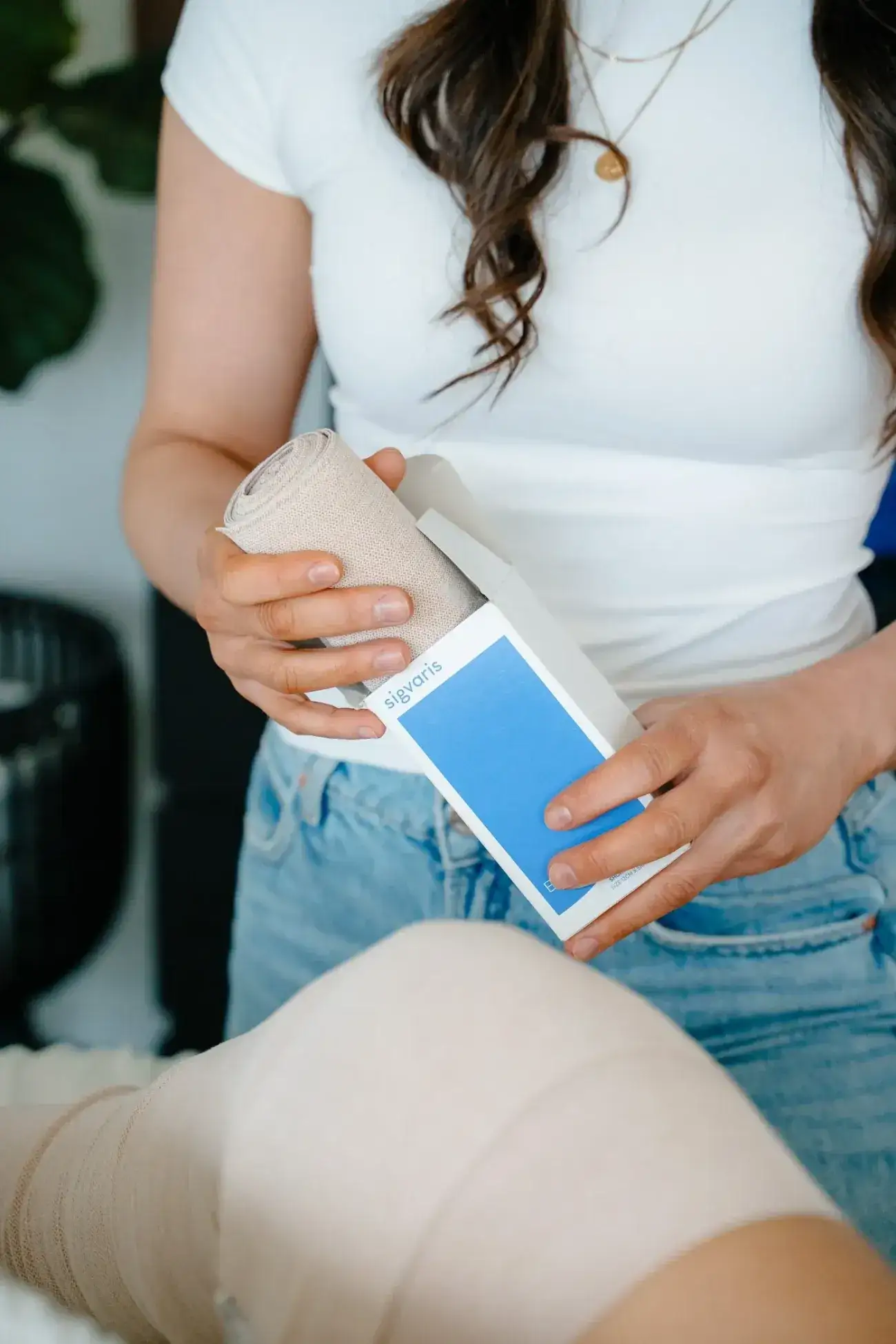
Lymphatic care after mastectomy and breast reconstruction in Calgary
Recovery guide · Meeghan Mackenzie, RMT, CLT
You’ve already been through so much.
And now there’s a new word on your radar… lymphedema. Maybe cording too. A shoulder that won’t lift. A scar that feels stuck.
Let’s talk through all of it, calmly, and at your pace.
Why this surgery is different
Breast cancer surgery often removes lymph nodes from the armpit so your team can see whether cancer has spread. There are two main types:
-
Sentinel lymph node biopsy: usually one to three nodes removed. Lower risk.
-
Axillary lymph node dissection: often ten or more nodes removed. Higher risk, because the lymphatic system has fewer pathways left.
Radiation can scar the area further. Lymph nodes don’t grow back, so the body has to rely on the routes that remain.
Lymphedema: the numbers, honestly
Published research shows lymphedema develops in roughly 5–17% of people after a sentinel node biopsy and 20–53% after an axillary dissection. Radiation, chemotherapy and body weight can raise the risk.
It can appear within weeks, or months to years later. Once it develops it can’t be cured, but it can be very well managed, especially when caught early.
The other side effects no one warns you about
Pain after cancer treatment is common, but it isn’t something you just have to accept. The most common issues we help with:
-
Cording (axillary web syndrome): tight, rope-like bands from the armpit down the inner arm, sometimes into the chest. Reported in up to 86% of people after breast cancer surgery, usually appearing 2–8 weeks after surgery. Cords are not always visible. If reaching overhead pulls like a guitar string, that may be cording.
-
Seroma: a soft pocket of clear fluid under the arm or near the incision.
-
Tight, stiff shoulder from pain, swelling and cording.
-
Scar tissue that sticks to the layers underneath and restricts movement.
-
Radiation fibrosis: skin and tissue that becomes firm and tight over months.
-
Numbness or nerve pain in the armpit and inner arm.
How we help at Renu
This is Certified Lymphedema Therapist work: Manual Lymph Drainage and Complete Decongestive Therapy, designed for people after cancer.
-
Early post-op drainage to ease chest, armpit and arm swelling, with your surgical team’s clearance
-
Cording care: gentle hands-on work on the cord and the nearby scar. The root cause is often the scar itself.
-
Scar mobilisation so tissue glides again
-
Radiation fibrosis work using a layered approach, surface first, then deeper only as the tissue allows
-
Manual Lymphatic Mapping to feel which pathways still flow and where fluid is restricted
-
Complete Decongestive Therapy for lymphedema: MLD, compression bandaging or garments, skin care and exercise
-
Reconstruction recovery: care around expanders, implants or flaps, including the abdominal donor site after DIEP or TRAM reconstruction
-
Risk-reduction coaching, and referral to an oncology physiotherapist when shoulder rehab is needed
Your recovery timeline
| When | What’s typical | How we support you |
|---|---|---|
| Weeks 0–2 | Drains, soreness, limited arm movement | Surgeon-guided care. Gentle breathing. |
| Weeks 2–8 | Cording may appear, seroma possible, shoulder stiff | First session once drains are out and incisions closed |
| During radiation | Skin sensitivity, fatigue, breast swelling | Gentle MLD around the treatment field, adapted day by day |
| Months 3–12 | Radiation fibrosis, scar tightness, lymphedema risk | Fibrosis and scar work. Early lymphedema screening. |
| Years later | Lymphedema can still appear | It’s never too late to be assessed |
Early signs of lymphedema to watch for
-
Heaviness, fullness or tightness in the arm, hand, breast or chest
-
Rings, watches, bras or sleeves fitting more snugly on one side
-
Swelling that doesn’t go down overnight or with elevation
-
Skin that feels thicker or firmer on the affected side
-
Stiffer joints in the hand, wrist or elbow
Tape measurements only catch lymphedema once the arm has visibly changed. Symptoms like heaviness often come first, so trust what you feel.
Lowering your risk
No one can guarantee you won’t develop lymphedema, but these habits help:
-
Keep the skin on your affected arm clean and moisturised, and treat cuts, scrapes and bites promptly
-
Return to movement gradually with guided exercise
-
Work toward a comfortable body weight, one of the few clearly linked risk factors
-
Wear well-fitted compression if recommended, especially for exercise or flying
-
Get early symptoms assessed rather than waiting
What a session feels like
Quiet. Slow. Nothing that hurts.
We begin by clearing working lymph nodes, often on the opposite side of the body or in the groin, then gently guide fluid toward them. Every session is adapted to your history: nodes removed, radiation, reconstruction type and where you are in treatment.
Call your doctor if…
-
A red, hot or spreading rash on the affected arm or chest, especially with fever (possible cellulitis, which needs prompt antibiotics)
-
Sudden swelling with pain, or one-sided arm swelling that appears quickly
-
A new lump
-
Increasing pain, redness or drainage at an incision
Active infection and untreated blood clots are reasons to pause lymphatic work until you’re cleared.
Questions
What clients ask about this recovery
Is lymphatic drainage safe after breast cancer?
Yes. Manual lymphatic drainage is a standard part of lymphedema care. We work alongside your medical team and adapt around active treatment.
What are my chances of getting lymphedema after lymph node removal?
Published figures range from about 5–17% after a sentinel node biopsy to 20–53% after an axillary dissection. Radiation and weight also play a role.
What is cording, and does it go away?
Cording is tight bands of tissue from the armpit down the arm. It often improves with gentle movement and hands-on care, sometimes quickly, sometimes over months.
Do I need a Certified Lymphedema Therapist?
If you’ve had lymph nodes removed or radiation, yes. CLT training covers re-routing lymph, compression and lymphedema management that general lymphatic courses don’t.
Can I have lymphatic drainage during radiation or chemotherapy?
Often yes, with your oncology team’s okay. We adapt pressure, positioning and areas treated.
Is lymphedema therapy covered in Alberta?
Many extended health plans cover RMT services, and some cover compression garments with a prescription. We provide detailed receipts.
Had breast cancer surgery, recently or years ago?
We’d love to just talk first. No pressure, no commitment… just a conversation about what you’re noticing and what might help. Call 403.270.2111 or book a lymphedema assessment at renu.janeapp.com.
Page reviewed September 29, 2026 by Meeghan Mackenzie, RMT, CLT
Keep reading
Related recovery guides


West Hillhurst, NW Calgary
Give fresh life or strength to.
Book online in a minute, or call the clinic. New clients can begin with the 60-minute intro massage, which includes a complimentary infrared cocoon session.
200, 209 19 St NW · Monday to Friday 8:00 am to 8:30 pm · Saturday and Sunday 10:00 am to 5:00 pm