

Flying after lymph node removal
Prospective studies have not linked flying to lymphedema after node removal, and the NLN no longer routinely advises a sleeve for flights. Who still should.
By The Renu lymphatic and massage team · 6 min read
Flying has not been shown to trigger lymphedema in people whose lymph nodes were removed for breast cancer. In a prospective study of 3,041 arm measurements, neither the number of flights nor their length was associated with arm volume increase, and the National Lymphedema Network's 2026 position statement no longer routinely recommends a prophylactic compression garment for air travel. Anyone already prescribed a garment should wear it, properly fitted, and the Canadian Cancer Society still advises compression in the air, so the decision belongs with you and your oncology team.
Flying has not been shown to trigger lymphedema in people whose lymph nodes were removed for breast cancer. In a prospective study of 3,041 arm measurements, neither the number of flights nor their length was associated with an increase in arm volume, and the National Lymphedema Network’s 2026 position statement no longer routinely recommends a prophylactic compression garment for air travel. Anyone already prescribed a garment should wear it, properly fitted. The Canadian Cancer Society still advises compression in the air, so the two positions are set out below for you to take to your own oncology team.
If you have been told to buy a sleeve “just in case” and are now standing in a pharmacy wondering whether the trip is safe at all, the first thing to say is that the fear is older than the evidence. Here is what the studies actually measured.
What the prospective studies found
The strongest data come from a screening program in which women treated for breast cancer had both arms measured with a perometer before surgery and at every follow-up visit, and reported the flights they had taken since the last measurement. Across 3,041 measurements, Ferguson and colleagues found no significant association between arm volume change and taking one or two flights (P = .77) or three or more (P = .91) compared with none, and none for flight duration, whether one to twelve hours (P = .43) or twelve hours and over (P = .54). The factors that did move arm volume in the same analysis were a body mass index of 25 or more, axillary lymph node dissection, regional lymph node irradiation and cellulitis.
Asdourian’s 2016 review in The Lancet Oncology went through 31 original studies of lifestyle precautions, air travel among them, and concluded that the precautions “remain unsubstantiated by high-level scientific evidence”: most supporting studies were low-level or inconclusive, and the authors called for guidelines to move toward a risk-adjusted approach.
The NLN did exactly that. Its March 2026 risk-reduction statement says, under Air Travel, that studies have not shown air travel to be a risk factor for lymphedema in those at risk, and that prophylactic compression garments are not routinely recommended for air travel. It adds one honest caveat: the studies were conducted in people at risk of breast cancer-related lymphedema, so the finding has not been tested for legs after pelvic or groin node surgery.
Why you may still be told to wear one
Advice from the large cancer charities has not all caught up. The Canadian Cancer Society’s lymphedema page says it is important to use compression garments during air travel because lymphedema can become worse at high altitudes. Macmillan’s risk-reduction page does not ask for a sleeve, but notes that even without lymphoedema you may need travelling socks on a long flight to prevent a clot in the legs, which is a different concern with a different garment.
So two trusted sources can give you opposite instructions. Neither is being careless; one reflects the older precautionary tradition, the other the prospective data. Your oncology team knows your surgery, your radiation fields and your weight, and is the right place to settle it for your arm.
Who should wear a garment in the air
The NLN draws the line by what has already been prescribed, not by the flight:
- At risk, no garment prescribed. No routine sleeve for flying.
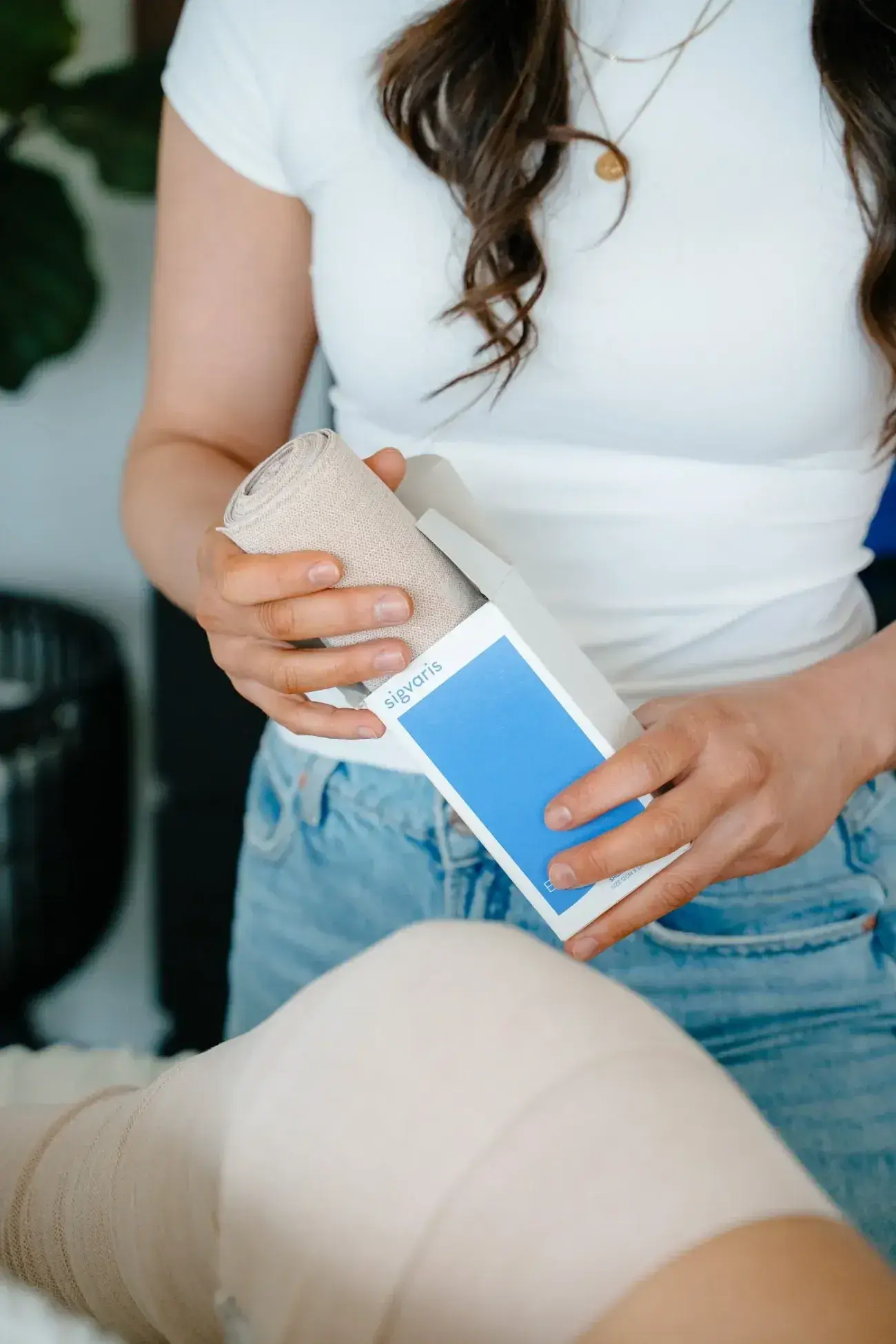
- High risk after an axillary dissection, already prescribed a prophylactic sleeve. Keep wearing it on the plane as part of routine management; a sleeve worn at least eight hours a day for the months after surgery does not come off for travel. Our page on the prophylactic compression sleeve explains that schedule.
- Diagnosed lymphedema, routinely wearing compression. The NLN recommends wearing the garment for air travel, and notes there is scant evidence on flying specifically for this group.
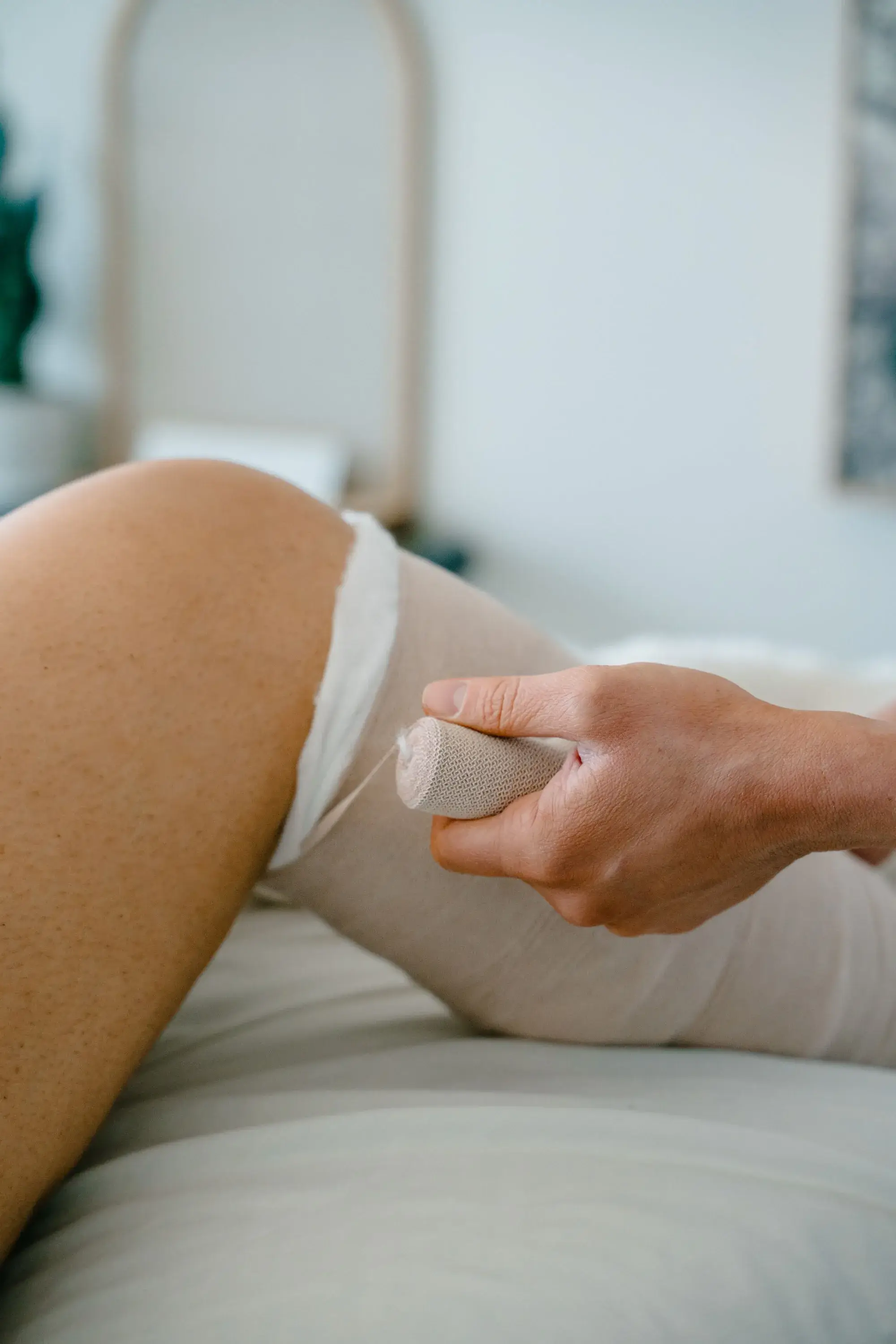
- Any garment, any group. It should be fitted by a certified lymphedema therapist, because ill-fitting garments have the potential to cause harm. If swelling increases or the garment constricts during the flight, remove it immediately.
That last point matters more than it sounds. A sleeve that is too tight at the wrist or bunches at the elbow can act as a tourniquet rather than a support, and a garment bought online without measurement is the one way to make a flight riskier than it needs to be. How garments are chosen is covered in the Learning Centre’s guide to compression garments.
Cabin habits worth keeping
Whatever you decide about a sleeve, the NLN lists the same common-sense habits it would give any healthy adult:
- Get up and move around the plane often.
- Move the limb at risk during the flight: hand opening and closing and arm pumping for an arm, ankle pumps and knee bends for a leg.
- Keep well hydrated.
- Elevate the limb where you can.
Macmillan adds the same instruction in plainer words: move around often and do gentle stretching exercises on a plane or train. If your legs rather than your arms are the concern, the separate question of why feet swell on a flight, which affects everyone, is answered at why do my feet swell on a plane. The packing side, from garment care to what to carry on board, is in the flying with lymphedema checklist.
What a flight decision does not replace
The habits with real evidence behind them are the everyday ones: skin care and prompt treatment of any infection, a healthy body weight, a progressive exercise program and, if you have had a dissection, prospective measurement. The NLN asks everyone at risk to know three sensations and report them immediately: heaviness, a sense that the arm is bigger, or a sense of swelling. A flight is a good moment to notice them, not a reason to expect them. What those first signs feel like, and what counts, is on early signs of arm lymphedema.
When to call your oncology team
- The arm or hand feels heavy, tight or larger after the trip and has not settled within a day or two of being home.
- Any redness, warmth, pain or new swelling in the limb, or a fever or chills: the NLN treats a suspected infection in an at-risk limb as an urgent medical event, so call the same day.
- A garment that left deep marks or caused pain, so the fit can be checked before the next wear.
- Any swelling at all if you have not yet had the arm assessed, since the NLN says swelling in an area of impaired drainage should prompt a referral for lymphedema evaluation.
The Learning Centre’s when to seek medical care page lists the wider red flags.
Where Renu fits in
We do not sell sleeves for flights, and we will not tell you to buy one when your team and the evidence do not call for it. If your oncology team or a Certified Lymphedema Therapist has recommended a garment, Meeghan Mackenzie, our Certified Lymphedema Therapist and Certified Compression Fitter, offers a 30-minute compression fitting for $25 so that whatever you wear in the air is measured for your arm. If you have diagnosed lymphedema and want it managed properly before a long trip, that is the work of complete decongestive therapy. And if you simply want the arm checked by someone trained to look, book a short assessment and bring your flight dates; we are open seven days a week in West Hillhurst.
Questions people ask
Do I have to buy a compression sleeve before I fly if I have never had swelling?
Not as a routine, according to the NLN's 2026 statement, because prospective studies have not shown air travel to be a risk factor for people at risk. The exception is anyone whose team has already prescribed a sleeve after an axillary dissection; that garment stays on for the flight as part of normal wear. If you are unsure which group you are in, ask your oncology team before the trip.
Why does the Canadian Cancer Society still say to wear compression on a plane?
Its lymphedema page states that compression garments are important during air travel because lymphedema can become worse at high altitudes. That advice predates the prospective data and has not been updated to match the NLN. Both positions are laid out on this page so you can discuss them with your own team.
What should I do if my arm swells during a flight?
If you are wearing a garment and it starts to constrict or the swelling increases, the NLN says to remove it immediately. Move the arm, drink water and elevate it where you can. Swelling that has not settled within a day or two, or any redness, heat or fever, needs a call to your oncology team.
Can a badly fitting sleeve do harm on a plane?
Yes. The NLN notes that ill-fitting garments have the potential to cause harm, which is why it asks that any garment used for air travel be fitted by a certified lymphedema therapist. A sleeve bought online in a guessed size is the one scenario where wearing compression may be worse than wearing nothing.
Sources
- National Lymphedema Network: Position Statement, Evidence-Based Practices for Lymphedema Risk Reduction (March 2026)
- Ferguson et al., Journal of Clinical Oncology 2016: Impact of ipsilateral blood draws, injections, blood pressure measurements, and air travel on the risk of lymphedema
- Canadian Cancer Society: Lymphedema
- Macmillan Cancer Support: Reducing your risk of lymphoedema
- Asdourian et al., The Lancet Oncology 2016: Precautions for breast cancer-related lymphoedema, risk from air travel, blood pressure measurements, skin puncture, extreme temperatures, and cellulitis
Page reviewed October 4, 2026. This page is education, not a diagnosis. For your own situation, talk to your doctor, surgeon or care team, or ask us.
Keep reading
Related pages