
Strength training with lymphedema: the slowly progressive method
Strength training with lymphedema is safe when loads rise slowly: what the PAL trial found, a sample progression, rest between sets, sleeve and gauntlet on.
By The Renu lymphatic and massage team · 7 min read
Weight training does not worsen stable lymphedema when it is slowly progressive and done in a well-fitted compression garment; that is the conclusion of the Physical Activity and Lymphedema (PAL) trial, which found women who lifted twice a week had fewer flare-ups than those who did not, and no higher rate of new lymphedema among survivors at risk. The method is the message: low weights and low repetitions to start, gradual progression, rest between sets, nothing strapped tightly around the limb, and a hand piece with the sleeve.
For a long time women with arm lymphedema were told not to lift anything heavy. The Physical Activity and Lymphedema trial changed that advice. Its two papers, in the New England Journal of Medicine in 2009 and JAMA in 2010, showed that slowly progressive weight lifting in a well-fitted compression garment did not increase swelling in women with stable lymphedema, lowered their rate of flare-ups, and did not raise the rate of new lymphedema in survivors at risk. The protection was in the method. Below is what the trial did, what it found, and how to copy its habits in an ordinary gym.
What the PAL trial did
Two groups, one program. The 2009 paper enrolled 141 breast cancer survivors who had stable lymphedema of the arm and randomised them to twice-weekly progressive weight lifting or to no change. Participants were required to wear a well-fitted compression garment while lifting. The primary outcome was the change in arm and hand swelling at one year, measured by water displacement of both limbs.
The 2010 paper enrolled 154 survivors one to five years after unilateral breast cancer, with at least two lymph nodes removed and no clinical signs of lymphedema. The intervention was a gym membership with 13 weeks of supervised instruction, then nine months unsupervised, against a control group asked to keep their usual activity. Lymphedema onset was defined as a 5 percent or greater increase in the difference between the two arms.
Both papers describe the program with the same two words: slowly progressive.
What it found
| Women with stable lymphedema (NEJM 2009, n = 141) | Women at risk, no lymphedema (JAMA 2010, n = 154) | |
|---|---|---|
| Swelling increase of 5 percent or more | 11 percent lifting versus 12 percent control | New lymphedema in 11 percent lifting versus 17 percent control |
| Among those with 5 or more nodes removed | Not reported separately | 7 percent lifting versus 22 percent control |
| Flare-ups assessed by a certified lymphedema specialist | 14 percent lifting versus 29 percent control | Not applicable |
| Other outcomes | Fewer and less severe symptoms, greater upper- and lower-body strength, no serious adverse events | Clinician-defined onset in 1 lifter versus 3 controls |
The 2009 authors concluded that slowly progressive weight lifting had no significant effect on limb swelling and resulted in a decreased incidence of exacerbations, reduced symptoms and increased strength. The 2010 authors wrote that the findings remove concerns that slowly progressive weight lifting will increase the risk of lymphedema onset in breast cancer survivors. The NLN’s 2013 exercise paper cites the same trial as showing that women who lifted had better control of their lymphedema and fewer flares, while adding the honest footnote that those who flared still needed standard lymphedema therapy.
The method, step by step
The trial’s exact loading rules were set by its trainers. What follows is our way of reproducing its habits using the NLN’s published principles for resistance exercise: start with low weights and low repetitions, progress gradually, and apply the six modifications.
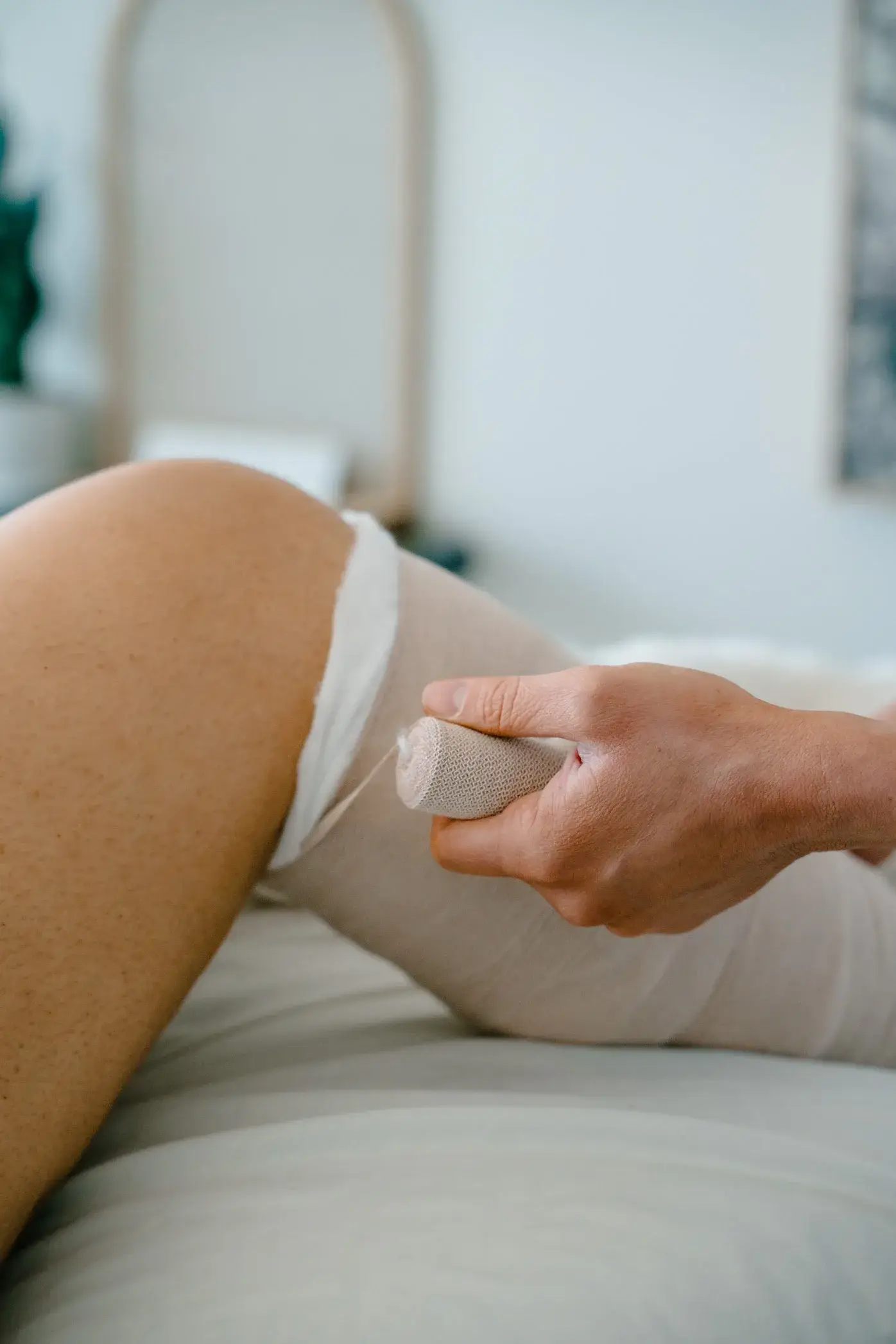
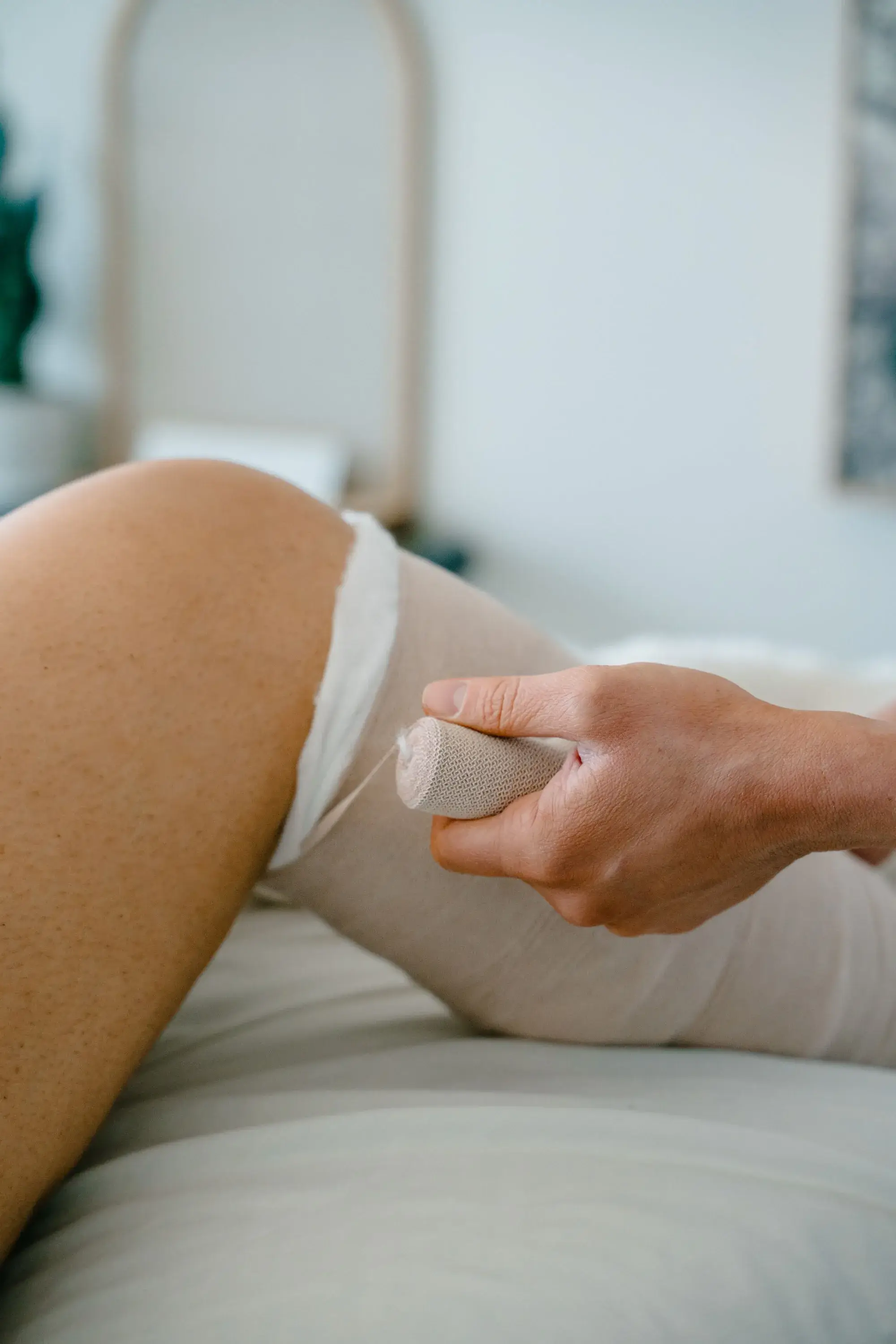
- Get the garment right before the first session. The NLN says compression for exercise should be measured by someone trained in fitting lymphedema garments, should be at least Class I for the arm, and should be paired with a hand piece (gauntlet or glove) to avoid causing or worsening hand swelling. The 2009 trial did not let anyone lift without a well-fitted garment. If you are at risk rather than diagnosed, the NLN calls compression an individual decision made with your care provider; its 2026 paper adds that if you are already using a prophylactic sleeve after node dissection, wearing it during exercise and repetitive arm motion is recommended. See gauntlet or glove with a compression sleeve.
- Start with body weight or the lightest load on the rack. Push-ups against a wall, sit-to-stands, light band rows. The NLN counts body-weight movements such as push-ups as resistance exercise, and its instruction is low weights, low repetitions, gradual progression.
- Rest between sets. Adequate rest intervals are the first of the NLN’s six modifications. Two to three minutes is a reasonable interpretation; the point is that the arm is never worked breathlessly from set to set.
- Nothing that cinches the limb. The NLN says to avoid weights that wrap tightly around an extremity and clothing that constricts. Dumbbells over wrist weights; a loose sleeve of fabric over an elastic armband.
- Circuit the body. Alternate the type of exercise and the body part within the session, which is the sixth modification. An upper-body set, a leg set, a core set, then back to the arm, rather than four arm exercises in a row.
- Add load only when two sessions in a row felt easy and the arm was unchanged afterward. This is our rule, not the trial’s published one, and it is deliberately conservative; the NLN’s warning is that a sudden increase in usual duration or intensity may trigger or worsen lymphedema. Change weight or repetitions in a given week, never both.
- Drink, and stay cool. Hydration and avoiding overheating are modifications four and five.
- Check the arm that evening and the next morning, the way Cancer Research UK asks you to check the area during and after exercise, and write it down.
A sample first six weeks, holding to one change per week: body weight only for two weeks; the lightest dumbbells for two weeks at 8 to 10 repetitions; then an extra set; then the next weight up. Someone who began lifting a 1 kg dumbbell in week three and is lifting 3 kg by week twelve has progressed exactly as slowly as the evidence suggests.
Why rest and circuits matter
Because the NLN’s definition of the hazard is overuse of the affected part. Its position is that people with or at risk of lymphedema should avoid repetitive overuse, and that a program of slowly progressive exercise for the affected limb will likely reduce the chance of ordinary daily activities causing overuse. Rest between sets and circuiting both exist to keep the arm from being loaded repetitively for minutes at a stretch. They are also why back-to-back arm sets with no rest run against the NLN’s modifications; the NLN suggests asking any trainer about their experience with the condition before you start.
Stop and call
Stop the session, and talk to your lymphedema therapist or doctor before lifting again, if:
- The arm or hand is painful, more swollen or uncomfortable during or after a session. The NLN’s rule is to stop for pain, increased swelling or discomfort.
- The limb feels heavier or tighter the next day, or the garment is harder to get on. The NLN lists heaviness and a perception of increased size among the symptoms to report immediately, because early treatment improves outcomes.
- The skin becomes red, sticky and hot (Macmillan’s stopping sign, quoted on our starting exercise page).
- Redness, warmth, pain, swelling, fever or chills appear: the NLN’s infection signs. A suspected infection in the limb is an urgent medical event in the NLN’s words, and you do not train through it.
- You develop new swelling for the first time after node removal. Cancer Research UK says to stop and contact your lymphoedema specialist about any change in the area at risk.
The wider list is on when swelling needs medical care.
Where it fits with treatment
Strength training is not lymphedema treatment; the NLN is clear that resistance exercise may reduce limb volume when used alongside compression therapy, and that no study has evaluated it as a stand-alone treatment. The treatment is complete decongestive therapy, and the NLN’s model is that after the intensive phase you work with your certified lymphedema therapist to fold exercise into your fitness program. At Renu that is Meeghan Mackenzie, our Certified Lymphedema Therapist and Certified Compression Fitter; a compression fitting is 30 minutes for $25, which is the sensible first appointment before the first dumbbell. For a deeper read of the two PAL papers and what they do and do not prove, see weight lifting and lymphedema: the PAL trial.
Questions people ask
How heavy can I lift with lymphedema?
The sources do not give a ceiling, and the PAL trial did not either; its rule was progression, not a limit. The NLN says resistance exercise should be done cautiously, starting with low weights and low repetitions and progressing gradually, and the 2015 review in the World Journal of Clinical Oncology describes benefit from upper-body resistance exercise that was appropriately prescribed and supervised by a certified cancer exercise trainer. The weight you can lift is whatever the limb has been walked up to without a reaction.
Do I need a gauntlet as well as a sleeve to lift weights?
The NLN recommends a hand piece, meaning a gauntlet or glove, when exercising with a sleeve, to avoid causing or worsening hand swelling. Gripping a dumbbell or bar is exactly the kind of hand work that argues for one. The 2009 PAL paper required a well-fitted compression garment for every lifting session.
Can I lift if I had nodes removed but have no lymphedema?
The 2010 PAL paper studied exactly this group: 154 survivors with at least two nodes removed and no lymphedema. A year of slowly progressive weight lifting did not increase the rate of new lymphedema (11 percent versus 17 percent in the control group), and among women with five or more nodes removed it was 7 percent versus 22 percent. The NLN notes the at-risk women in that study exercised without compression, and that those who developed lymphedema continued with garments; whether you wear one is a decision for you and your care provider.
What if my arm feels heavy or tight after a session?
Treat it as information. The NLN says to stop exercise for pain, increased swelling or discomfort and to report it to a professional who can adapt the program. In the 2009 trial, flare-ups still happened in the lifting group (14 percent versus 29 percent), and the NLN notes those women still needed standard lymphedema therapy to settle them, so a reaction is a reason to drop back a step and tell your therapist, not a sign the method has failed.
Should I lift with a trainer or on my own?
The PAL participants had 13 weeks of supervised instruction before 9 months on their own, and the NLN says people with lymphedema may benefit from an exercise physiologist or personal trainer, with the caveat that you should ask about their experience with lymphedema. A few supervised sessions to learn the progression, then independence, is the pattern the evidence was built on.
Sources
- Schmitz KH et al. Weight lifting in women with breast-cancer-related lymphedema. New England Journal of Medicine, 2009 (abstract, PubMed)
- Schmitz KH et al. Weight lifting for women at risk for breast cancer-related lymphedema: a randomized trial. JAMA, 2010 (abstract, PubMed)
- ecancer: Weight lifting reduces risk of lymphedema among breast cancer survivors
- National Lymphedema Network: Position Statement, Exercise (updated November 2013)
- Morris C, Wonders KY. Concise review on the safety of exercise on symptoms of lymphedema. World Journal of Clinical Oncology, 2015
- Cancer Research UK: Exercise and lymphoedema
- National Lymphedema Network: Position Statement, Evidence-Based Practices for Lymphedema Risk Reduction (March 2026)
Page reviewed October 4, 2026. This page is education, not a diagnosis. For your own situation, talk to your doctor, surgeon or care team, or ask us.
Keep reading
Related pages