
How to start exercising with lymphedema, safely
Start exercising with lymphedema safely: get cleared, settle the compression question, apply the NLN's six modifications, build slowly, and keep a limb diary.
By The Renu lymphatic and massage team · 7 min read
Exercise is safe and recommended with lymphedema when it is started gradually and increased cautiously. The National Lymphedema Network asks you to be cleared by your physician first, to wear compression during exercise if you have a confirmed diagnosis, and to follow six modifications: rest between sets, no weights or clothing that constrict the limb, compression on, stay hydrated, avoid overheating, and rotate exercises and body parts in a circuit. The real risk is a sudden jump in duration or intensity, so the first two weeks are about building a habit, not fitness.
You can exercise with lymphedema, and the guidelines want you to. The National Lymphedema Network’s position is that exercise is part of a healthy lifestyle and essential for effective lymphedema management, and that people with or at risk of lymphedema can and should do aerobic and resistance exercise in a safe manner. “Safe” has a specific shape: clearance from your physician, compression on if you have a diagnosis, six practical modifications, and a pace of progress slow enough that the limb never gets a surprise. This page turns those rules into a first fortnight.
What the evidence actually says
It says the fear was larger than the risk. Cancer Research UK summarises the National Institute for Health and Care Excellence’s view that exercise does not cause or worsen lymphoedema and may improve quality of life. A 2015 concise review in the World Journal of Clinical Oncology concluded it was safe for breast cancer survivors to do both aerobic and strength training during and after treatment. The NLN’s 2026 risk-reduction paper states that individualised, appropriately prescribed progressive exercise programs, supervised as needed, do not incite lymphedema in people at risk, and are beneficial for people who already have breast cancer-related or lower-limb lymphedema.
The NLN also names the other side of the ledger: the risks of exercising have to be balanced against the risks of deconditioning, which it says undoubtedly results from not exercising. A deconditioned limb can do progressively less before it is overused. Movement is protective; the dose is what needs managing.
One honest caveat from the NLN’s exercise paper: most of the research was done in breast cancer survivors, so the principles are applied to leg, head and neck, and primary lymphedema by extension rather than by trial.
The NLN’s six modifications
These are the adjustments the NLN says are commonly recommended for people with lymphedema doing aerobic or resistance exercise. They are the whole difference between an ordinary program and a lymphedema-safe one.
- Allow adequate rest intervals between sets.
- Avoid weights that wrap tightly around the limb, or clothing that constricts it. Ankle weights, wrist weights and tight straps are the usual culprits.
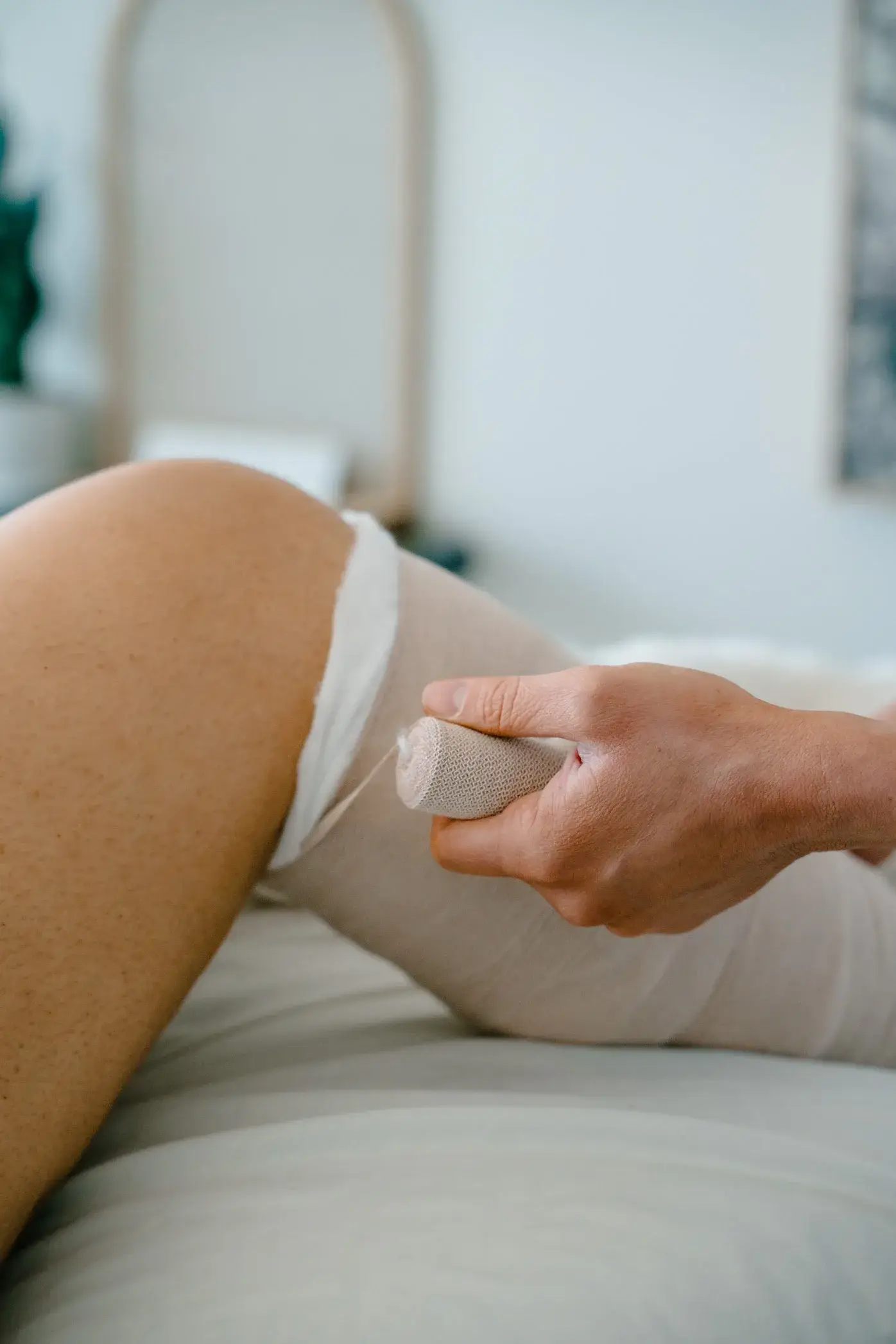
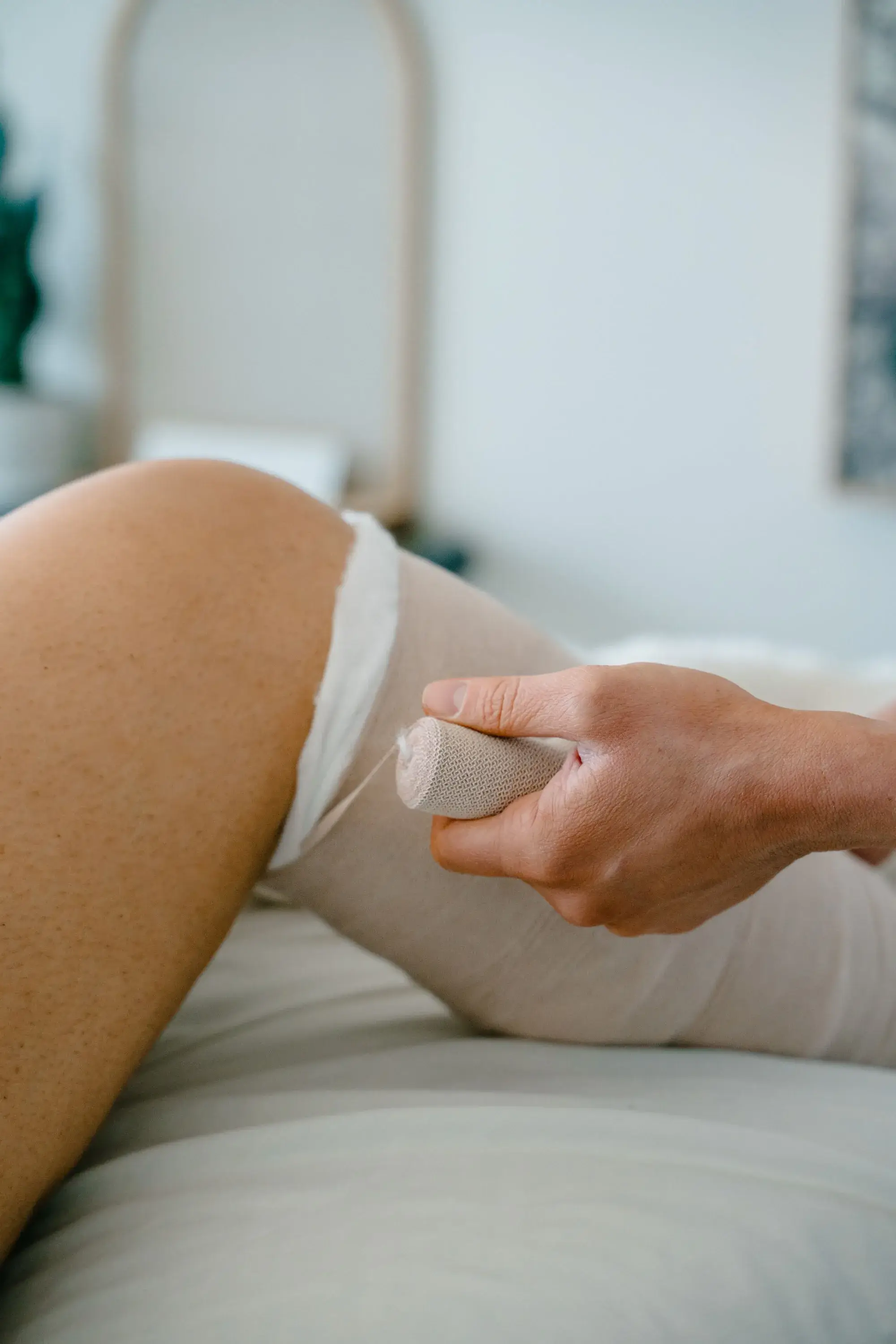
- Wear compression sleeves or bandages during exercise. For a confirmed diagnosis this is the NLN’s position; for people at risk it is an individual decision made with a care provider.
- Maintain hydration.
- Avoid extreme heat or overheating. No hot-room classes while you are learning how the limb responds.
- Exercise in a circuit that alternates the type of exercise and the body part within the session, so no one region is worked repetitively for long.
A seventh rule sits above the six. The NLN says exercise should be started gradually, increased cautiously, and stopped for pain, increased swelling or discomfort, and that a sudden increase in your usual exercise duration or intensity may trigger or worsen lymphedema. The scenarios that sentence has in mind are familiar ones: a first long hike, a return to a class at the old intensity, a weekend of yard work.
Before the first session: three decisions
1. Get cleared. The NLN wants you cleared for the program of activity by your physician before starting, and Cancer Research UK says to talk to your doctor or lymphoedema specialist first so they can advise what you should and should not do. Tell them about other conditions too; the NLN lists diabetes, heart disease, neuropathy and arthritis as things that shape a personal regimen.
2. Settle the compression question. With a diagnosis, garment on. The NLN adds that a hand piece (gauntlet or glove) is recommended when exercising with a sleeve, to avoid causing or worsening hand swelling, and that garments should be measured by someone trained in fitting compression for lymphedema. Macmillan says to speak to your specialist if wearing the garment during exercise is uncomfortable rather than quietly leaving it off. Our compression garments guide and the page on exercising in your compression garment go deeper.
3. Choose a starting activity you can do most days. Cancer Research UK says walking can be a good way to start if you have not exercised for a while, and that you can gradually increase distance and pace; it also lists yoga, tai chi, Pilates, cycling, swimming and aqua aerobics, and anything you enjoy. Macmillan’s advice is that if you have not been active for a while, start slowly and build up, and that the most important thing is to do it regularly.
A two-week starter plan
This is our example of how the rules look in a calendar. Cancer Research UK suggests trying to do some exercise every day and building it into your routine; the NLN’s rule is gradual, cautious progress. The plan deliberately changes only one variable at a time.
| Day | Session | Change from the day before |
|---|---|---|
| 1 to 3 | 10-minute easy walk, garment on, water bottle along | None: three identical days to learn the limb’s baseline |
| 4 | Rest day with the remedial exercises only | Rest |
| 5 to 7 | 10-minute walk plus one circuit of body-weight movements (sit-to-stand, wall push-ups, calf raises, 8 to 10 each, resting between) | A circuit is added; walk unchanged |
| 8 | Rest day with remedial exercises | Rest |
| 9 to 11 | 15-minute walk, same circuit | Five minutes of walking added; circuit unchanged |
| 12 | Rest day | Rest |
| 13 to 14 | 15-minute walk, two rounds of the circuit | A second round added |
Only move to the next row if the limb was unchanged after the last one. If anything in the diary below shifts, repeat the row.
The remedial exercises mentioned on rest days are the specific rhythmic muscle and breathing exercises the NLN describes as part of lymphedema treatment; ours are on remedial exercises for arm lymphedema and for leg lymphedema. The walking build continues on a walking program for lymphedema, and loading comes later on strength training with lymphedema.
The check-in diary
Cancer Research UK asks you to check the swollen area, or the area at risk, during and after exercise, and to stop and contact your lymphoedema specialist if you notice changes. Writing it down turns a vague worry into a pattern you and your therapist can read. After each session, note:
- Heaviness or tightness in the limb that evening and the next morning (the NLN lists heaviness and a perception of increased size as symptoms to report).
- Fit: does the garment, a ring, a watch or a shoe feel tighter than yesterday?
- Skin: Macmillan says to stop and rest if the skin becomes red, sticky and hot.
- Breath and comfort: Macmillan says to ask your specialist if you become more breathless or more uncomfortable than expected.
- What you did: minutes, rounds, weather, and whether the garment was on.
Bring the diary to appointments. The NLN’s model is that you report adverse effects to a professional who can help adapt the regimen, which is exactly what the page in your hand lets us do.
Stop and call
Stop the session, and contact your lymphedema therapist or doctor before the next one, if:
- Pain, increased swelling or discomfort appears during or after exercise (the NLN’s stopping rule).
- Swelling gets worse. Macmillan: stop straight away.
- The skin becomes red, sticky and hot. Macmillan: stop and rest, and ask your specialist.
- You have a skin infection (cellulitis). Macmillan says not to exercise at all until it has been treated. Redness, warmth, pain, swelling, fever or chills are the signs the NLN asks everyone to learn, and it treats a suspected infection as an urgent medical event.
- Breathlessness or chest symptoms that are new or out of proportion. Macmillan asks you to report more breathlessness than expected; anything alarming is a medical call, not a therapist call.
Our page on when swelling needs medical care covers the wider red flags.
Where to aim, eventually
The Canadian 24-Hour Movement Guidelines for adults set the destination: at least 150 minutes a week of moderate to vigorous aerobic activity, muscle-strengthening activity at least twice a week, several hours of light activity including standing, no more than 8 hours a day sedentary, and 7 to 9 hours of sleep. CSEP also says that progressing toward any of these targets brings some health benefit, so a person at 40 minutes a week who reaches 80 has done something real.
At Renu, exercise sits inside the self-management phase of complete decongestive therapy with Meeghan Mackenzie, our Certified Lymphedema Therapist. The NLN’s position is that after intensive treatment, the person with lymphedema should work with their certified lymphedema therapist to fold remedial exercises into a fitness program as they move into self-management. Bring your diary and your plan; the first fortnight is easier to shape than the first flare is to undo.
Questions people ask
Does exercise cause lymphedema or make it worse?
The evidence says no when it is built up gradually. Cancer Research UK reports NICE's conclusion that exercise does not cause or worsen lymphoedema and may improve quality of life, and the NLN's 2026 risk-reduction paper says individualised, appropriately prescribed progressive exercise programs do not incite lymphedema in people at risk. What the NLN does warn against is a sudden increase in your usual duration or intensity, which may trigger or worsen swelling.
Do I have to wear my sleeve or stocking to exercise?
If you have a confirmed diagnosis, yes: the NLN's position is that people with diagnosed lymphedema should use compression garments or bandages during exercise, and Macmillan says you usually need to wear your garment when you exercise. If you are at risk but not diagnosed, the NLN calls it an individual decision to make with your care provider or therapist. A hand piece is recommended whenever you exercise in a sleeve.
How much exercise should I aim for eventually?
The Canadian 24-Hour Movement Guidelines for adults set at least 150 minutes a week of moderate to vigorous activity, muscle-strengthening at least twice a week, and no more than 8 hours a day sedentary. CSEP also says progressing toward any of those targets brings some benefit, which is the right frame when you are starting from very little.
Should I hire a personal trainer?
The NLN says people with or at risk of lymphedema may benefit from working with an exercise physiologist or personal trainer, and suggests asking whether they have experience with lymphedema and other medical conditions, since trainer certification varies. If you are unsure of someone's qualifications, the NLN advises working with a certified lymphedema therapist or health care provider to find a suitable program.
What if the limb swells a little after a session?
Macmillan says swelling may increase if you exercise too quickly, too often or for long periods, and that if swelling gets worse you should stop straight away. The NLN's rule is to stop for pain, increased swelling or discomfort and to report adverse effects to a professional who can adapt the program. Scale the next session back and tell your therapist before you try again.
Sources
- National Lymphedema Network: Position Statement, Exercise (updated November 2013)
- National Lymphedema Network: Position Statement, Evidence-Based Practices for Lymphedema Risk Reduction (March 2026)
- Cancer Research UK: Exercise and lymphoedema
- Macmillan Cancer Support: Managing lymphoedema with physical activity
- Morris C, Wonders KY. Concise review on the safety of exercise on symptoms of lymphedema. World Journal of Clinical Oncology, 2015
- Canadian Society for Exercise Physiology: 24-Hour Movement Guidelines, adults 18 to 64
Page reviewed October 4, 2026. This page is education, not a diagnosis. For your own situation, talk to your doctor, surgeon or care team, or ask us.
Keep reading
Related pages