
Scar care after cancer surgery
Scars from cancer surgery keep changing for up to two years, so there is time. When to start massage, how irradiated skin and drains change the rules.
By The Renu lymphatic and massage team · 7 min read
A scar from a mastectomy, node removal or other cancer surgery keeps remodelling for up to two years or more, so a tight or raised scar at three months is not the finished result. Scar massage can start once the wound has fully healed, with a water-based cream a few times a day for up to ten minutes, but the research behind it is weak even though surgical scars respond best. Skin inside a radiation field, drains and keloids each change the timing, and a scar that is painful, warm, swollen or weeping goes back to the surgeon.
A scar from a mastectomy, node removal or other cancer surgery keeps remodelling for up to two years or more, so a tight or raised scar at three months is not the finished result. Scar massage can start once the wound has fully healed, with a water-based cream a few times a day for up to ten minutes, but the research behind it is weak even though surgical scars respond best. Skin inside a radiation field, drains and keloids each change the timing, and a scar that is painful, warm, swollen or weeping goes back to the surgeon.
There is time: scars change for up to two years
People often arrive worried that the scar they have now is the scar they will keep. It is not. The NHS describes a normal fine-line surgical scar as slightly raised at first, then flattening and fading over time, and says scars can take up to two years or more to fade as far as they will. A scar never disappears completely, but what you see in the first months is the early, active phase, when the tissue is still red, firm and busy laying down collagen.
That timeline is reassuring for two reasons. A scar that feels stuck or tight at eight weeks may loosen considerably on its own. And there is no urgency that justifies working on a wound before it is ready.
What the research says about scar massage
Many surgeons recommend scar massage after an operation, and the regimens they suggest vary widely. Shin and Bordeaux reviewed the published evidence in 2012: ten studies, 144 patients who received scar massage, with treatment starting anywhere from suture removal to more than two years after injury, and protocols ranging from ten minutes twice a day to thirty minutes twice a week, for anywhere from one session to six months.
Overall, 65 of the 144 patients (45.7%) improved on measures such as scar appearance scales, range of motion, itch, pain or mood. The surgical subgroup did far better: 27 of 30 surgical scars (90%) improved in appearance or scar score. The authors’ conclusion is the one to keep in mind: the evidence for scar massage is weak, the regimens are inconsistent and the outcomes were not measured in reliable, objective ways, although it appears more effective for post-surgical scars than for traumatic or burn scars. In plain terms, it is low risk, probably helpful for the kind of scar you have, and not proven.
When to start, and when to wait
Fully healed first. The NHS advice is to begin massaging only once the wound is fully healed. In practice that means no scabs, no open or weeping edges, no stitches or staples and no drain. If a drain is still in place, nothing touches the area until it is out and the exit site has closed. Your surgical team confirms this at follow-up; we do not override it.
Irradiated skin waits longer. If your scar sits inside a radiation field, the timing changes. During treatment the skin can become dry, itchy, red or darker and may peel, and some people develop a moist reaction in which the skin breaks down and can become infected. The National Cancer Institute’s care rules for that period are specific: do not use heating pads, ice packs or bandages on the treatment area, keep it clean and dry so it does not become infected, and shave less often with an electric razor if the skin is tender. Cancer Research UK lists areas receiving radiotherapy among those a massage therapist should avoid. Scar work in a treated field starts only once the skin has recovered, and it stays gentler for good, because the tissue remains more fragile. Our pages on massage during radiation therapy and radiation fibrosis explain why.
Broken or bruised skin waits too. Cancer Research UK also lists broken, bleeding or bruised skin as a reason not to massage. A scar with a small open spot is a wound again until it closes.
The daily routine at home
The NHS routine is simple enough to keep up for months:
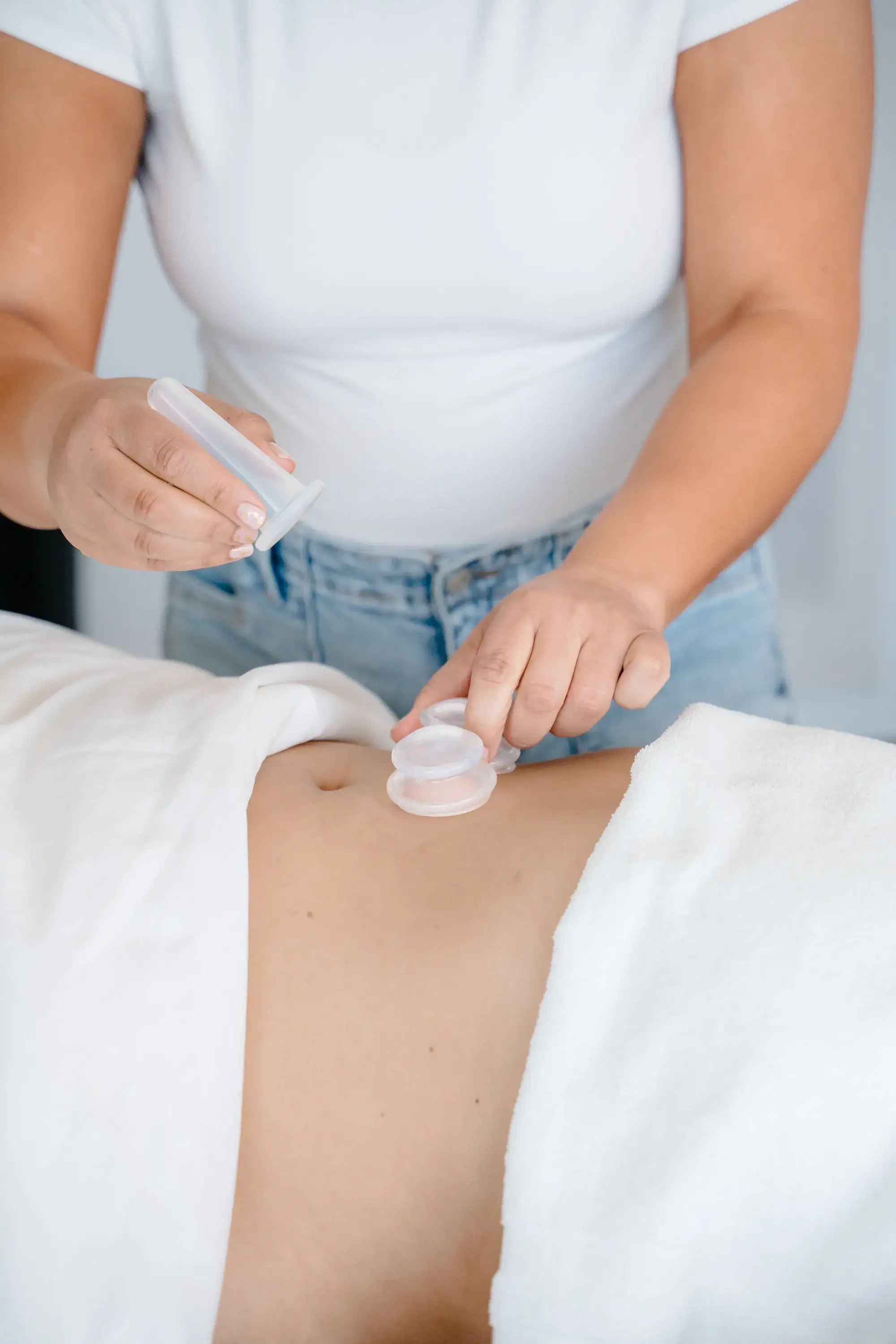
- Once the scar is fully healed, massage it with a water-based cream or moisturiser a few times a day for up to ten minutes.
- Keep the scar covered from the sun for at least a year, and use sunscreen with an SPF of 30 or higher when it is exposed. New scar tissue darkens and burns more easily than the skin around it.
- Silicone gel sheets or gels and pressure dressings are among the treatments the NHS lists for raised scars; ask your surgical team whether one suits yours.
Our self-care page on scar massage at home walks through the hand positions, and silicone, sunscreen and new scars covers the products.
What a therapist adds, and what changes after cancer surgery
Home care is the daily work; a therapist’s session is the occasional, more thorough one. Two things make scar work after cancer surgery different from scar work after, say, a knee operation.
The first is the lymphatic system. A mastectomy or axillary scar sits where lymph nodes were removed, and the 2026 NLN position statement is clear that cellulitis in a limb at risk significantly increases the chance of lymphedema. A therapist who knows this inspects the skin before touching it, keeps the work light over the chest wall and armpit, and treats any sign of infection as a reason to stop and refer. The American Cancer Society asks people at risk to report any cut, bite or injury to the affected area, and a scar that opens counts.
The second is the surrounding tissue. Skin that has been irradiated, a port site in the upper chest, a reconstruction with an implant or a flap, and the cording that can follow node surgery all sit near the scar, and each pulls the pressure and the direction of the work in a different way. The scar is rarely treated on its own; it is treated as part of the whole quadrant. At Renu this is the territory of pre and post-op lymphatic drainage, and our Learning Centre page on lymphatic care after mastectomy and reconstruction describes how the two fit together.
Keloids, hypertrophic scars and when to go back to the surgeon
Not every raised scar is the same, and the difference decides who should see it.
| What you notice | What it may be (NHS) | Who to see |
|---|---|---|
| Slightly raised line that flattens and fades over months | Normal fine-line scar | Home routine; mention at follow-up |
| Raised, firm, red scar that stays within the wound edges | Hypertrophic scar | Surgical team or GP; silicone or steroid options |
| Raised, hard, smooth scar growing beyond the original wound | Keloid | Surgical team or GP before any massage |
| Scar that feels tight and restricts movement | Contracture | Surgical team; therapy once assessed |
See your GP or surgeon if a scar is painful or is troubling you, and seek care promptly if it becomes swollen, warm or shows signs of infection. Treatments the NHS lists for problem scars include silicone dressings or gels, steroid injections or creams, cryotherapy, laser therapy and skin camouflage. Massage is not a substitute for any of them, and massaging a keloid harder does not shrink it.
When to call your surgeon or oncology team
Call the same day if the scar or the skin around it becomes red, hot, swollen or starts to weep, if the wound edges open, or if you develop a fever, chills, sweats or feel unwell. The American Cancer Society’s call-now list for anyone who has had node surgery includes new or worsening pain, heat or redness in the area and any unexplained fever. If radiation is under way and the skin breaks down into a moist reaction, that is for your radiation team, not for a cream from the pharmacy and not for a massage appointment. For a fuller list of warning signs, see when to seek medical care.
Where Renu fits
Bring the scar to us once your team has cleared it and the skin is closed. A first visit looks at the scar and everything around it, including the arm or chest wall at risk of swelling, and sends you home with a routine you can keep up between appointments. Meeghan Mackenzie is our Certified Lymphedema Therapist, and post-op lymphatic drainage sessions are 30, 45 or 60 minutes ($105, $115 and $140). If anything about the scar looks like it needs a surgeon, we will say so before we do anything else.
Questions people ask
How long after a mastectomy can I start massaging the scar?
Only once the wound has fully healed, with no scabs, open edges or drains, which is a judgement for your surgical team at follow-up. The NHS advice is to begin then with a water-based cream a few times a day for up to ten minutes. If radiation follows the surgery, the scar inside the treated field waits until the skin reaction has settled.
Does scar massage actually work?
The evidence is thin but points the right way for surgical scars. A 2012 review of ten studies covering 144 patients found 45.7% improved overall, and 27 of 30 surgical scars (90%) improved in appearance or scar score. The authors called the evidence weak because regimens varied and outcomes were not measured in a standard way.
My scar has grown beyond the original cut and feels hard. Is that normal?
That description fits a keloid, which the NHS defines as a raised, hard, smooth scar that grows larger than the original wound. A hypertrophic scar is also raised and firm but stays within the wound edges. Both are reasons to see your surgeon or GP rather than massage harder; treatments include silicone dressings or gels and steroid injections.
Can I massage a scar that was in my radiation field?
Not during radiotherapy, and not until the skin has recovered afterwards. The NCI says not to use heating pads, ice packs or bandages on the treatment area during treatment, and Cancer Research UK lists areas receiving radiotherapy among those to avoid massaging. Once the skin has settled, start gently and expect it to stay more fragile than untreated skin.
Sources
- Shin and Bordeaux, Dermatologic Surgery 2012: The role of massage in scar management, a literature review
- NHS: Scars
- National Cancer Institute: Skin and nail changes during cancer treatment
- Cancer Research UK: Massage
- National Lymphedema Network: Position Statement, Evidence-Based Practices for Lymphedema Risk Reduction (March 2026)
- American Cancer Society: Lymphedema
Page reviewed October 4, 2026. This page is education, not a diagnosis. For your own situation, talk to your doctor, surgeon or care team, or ask us.
Keep reading
Related pages