
Silicone, sunscreen and new scars: protecting a scar in its first year
Keep the healing wound moist and covered, consider silicone gel or sheets once it is closed, and put SPF 30 on the healed scar every day for its first year.
By The Renu lymphatic and massage team · 6 min read
Besides massage, three habits protect a new scar: keep the wound moist and covered while it is still healing, use silicone gel or silicone sheets once it has closed if the scar is large or looks like it is thickening, and apply broad-spectrum sunscreen of SPF 30 or higher to the healed scar whenever it is exposed. The American Academy of Dermatology and the NHS both give those three steps. They matter for about a year or more, because a scar keeps remodelling for twelve to eighteen months and can take up to two years to fade.
Massage gets most of the attention in scar care, and we have a page on it. This one is about everything else: how you treat the wound before it closes, whether silicone is worth it, and why sunscreen on a scar is not vanity. The sources are dermatology and NHS guidance, and the window they describe is long. A scar is still changing a year after the operation.
The first job is a wound that heals quickly
Scar quality is set partly before there is a scar. The St George’s physiotherapy leaflet makes the link plainly: the longer a wound takes to heal, or the more damaged the skin, the greater the chance the scar will be thicker and less flexible. Your age and skin type play a part you cannot change; healing time is the part you can.
The American Academy of Dermatology’s (AAD) wound-care steps are short:
- Keep it clean. Gently wash the area with mild soap and water to keep out germs and remove debris.
- Keep it moist. Use petroleum jelly so the wound does not dry out and form a scab; the AAD notes that wounds with scabs take longer to heal. The Cleveland Clinic says the same about petroleum jelly or moist burn pads.
- Keep it covered. An adhesive bandage over the skin keeps germs out.
- Follow the surgeon on stitches. If the injury needed stitches, the AAD says to follow your doctor’s advice on wound care and on when the stitches come out.
A surgical incision will have come home dressed, and the West Hertfordshire leaflet says most wounds and stitches can be gently cleaned with water once you are discharged, if you have been told you may remove the dressing. Nothing is massaged until the wound has healed with no openings.
Silicone: what it is for and when
Silicone is the one over-the-counter product with a place in the published guidance. The AAD suggests hydrogel or silicone gel sheets for large scrapes, sores, burns or persistent redness, with the instruction to follow the package directions for changing the sheets. The NHS lists silicone dressings or gels among the treatments for scars, alongside steroid injections or cream and laser therapy for scars that need more. The Cleveland Clinic puts it cautiously: applying silicone ointment to a scar may make it smaller or prevent it from forming.
Our reading of that guidance, for a surgical scar:
- Silicone goes on a closed scar, not an open or weeping wound.
- It is most worth considering on a longer incision, a scar over a joint or an area that moves, or a scar that is starting to look raised or red, the pattern the NHS calls hypertrophic (raised and firm, not larger than the original wound) or, if it grows beyond the wound, keloid. Our page on hypertrophic and keloid scars explains the difference.
- Sheets and gels do the same job in different formats: sheets suit a flat area you can keep covered; gel suits the face, a curve or a scar you massage through the day.
- Follow the product’s own instructions on wear time and changing; the AAD defers to the package, and so do we.
Sunscreen: the daily habit for a year
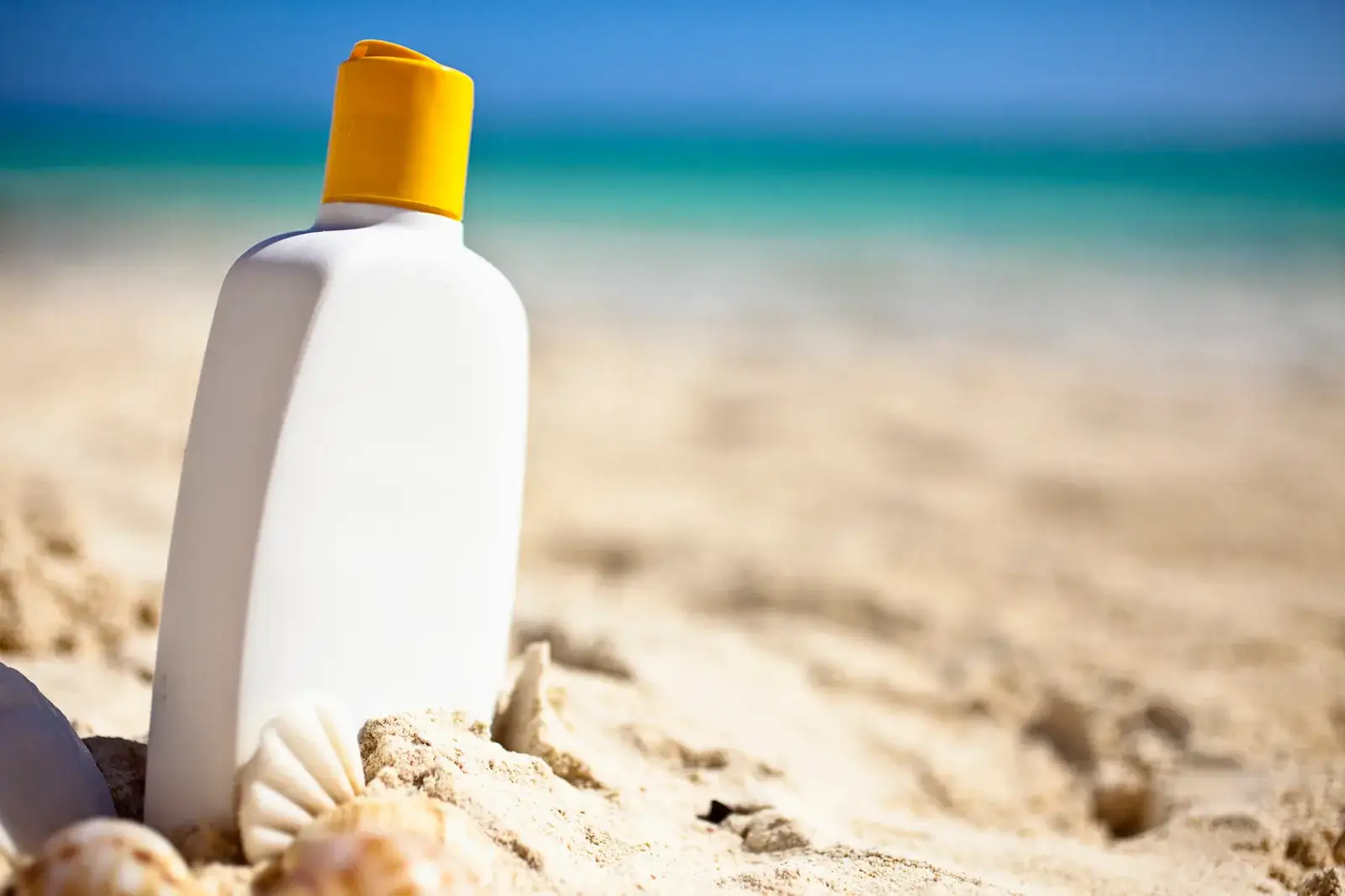
A scar is new skin, and both the AAD and the NHS want it protected. The AAD says to apply sunscreen to the wound after it has healed, always broad-spectrum with an SPF of 30 or higher, reapplied frequently. The NHS gives the same threshold: a sun protection factor of 30 or more. The Cleveland Clinic’s home-care list says to cover the scar or use sunscreen to protect it.
In Calgary that means more than beach days. A chin, neck or arm scar sees the sun on a January walk, and a scar on the abdomen or thigh sees it at the pool. Sunscreen is for whenever the scar is uncovered, and clothing counts as cover. If you also live with lymphedema, our sun protection page explains why the stakes are higher for that limb.
A morning and night routine
This is our suggested shape for the first year, assembled from the guidance above rather than copied from a single source:
While the wound is open
- Morning: wash gently with mild soap and water, pat dry, petroleum jelly, a fresh dressing.
- Night: check the dressing, replace it if it is wet or lifting, and look at the edges for redness or discharge.
Once the wound has closed
- Morning: cleanse, apply silicone gel if you are using it (or put the sheet back on), then sunscreen SPF 30 or higher over anything that will be exposed.
- Night: remove the sheet if you wear one in the day, cleanse, do your two to three minutes of scar massage with plain cream, then silicone if your product is a leave-on gel.
- Weekly: a photo in the same light. Scars change slowly; a monthly comparison shows you what a daily glance cannot.
What a scar does over a year
| Time since the wound closed | What to expect, per the sources |
|---|---|
| First weeks | Red and obvious; the scar is laying down collagen (St George’s). Massage begins once there are no openings (West Hertfordshire). |
| Months one to six | The minimum period for massage (St George’s). Nerve endings growing back can make the scar painful or itchy for a time (Cleveland Clinic). |
| Twelve to eighteen months | The scar is still growing and changing (St George’s). |
| Up to two years or more | Most scars fade over this period, though no scar can be completely eliminated (NHS, AAD). |
Questions worth asking a dermatologist
The AAD suggests a dermatologist if you are worried about the appearance of a scar, and the NHS says to see a GP if a scar is painful or bothering you. Useful questions:
- Is this scar hypertrophic or keloid, and does my skin type raise the risk of either?
- Would a silicone product help at this stage, and which format?
- Is a steroid injection or cream appropriate, or laser later on?
- How long should I keep up sun protection on this scar?
When to see a doctor now
Some scars are not a cosmetic question. The NHS says to get urgent help if a scar is swollen or painful or has pus coming out of it. The Cleveland Clinic says to contact a provider if a scar changes or becomes painful, tender, itchy or infected, and if you notice a mole, freckle or growth on or near a scar, because that can be a sign of skin cancer. A wound that is deep, very painful or showing signs of infection needs medical care before any of the routine above applies.
Where this fits with your recovery at Renu
After a procedure, our post-op lymphatic drainage works around the incision rather than on it, moving fluid away from the healing area while the skin does its job; the post-op recovery overview explains the sequence of weeks. If you have had liposuction, firm tissue under a scar is a separate matter from the scar itself, and our guide to fibrosis after liposuction covers it.
Questions people ask
Should I let a wound scab over or keep it moist?
Keep it moist. The American Academy of Dermatology says to use petroleum jelly so the wound does not dry out and form a scab, because wounds with scabs take longer to heal, and to cover the skin with an adhesive bandage. The Cleveland Clinic gives the same advice: petroleum jelly or moist burn pads keep the wound from becoming too dry.
When do I start silicone on a scar?
Once the wound has closed. The AAD suggests hydrogel or silicone gel sheets for large scrapes, sores, burns or persistent redness, following the package instructions for changing them; the NHS lists silicone dressings or gels among scar treatments. Silicone is not for an open or weeping wound, which still needs ordinary wound care.
Does sunscreen really change how a scar looks?
Both the AAD and the NHS advise it. The AAD says to apply sunscreen to the wound after it has healed, using a broad-spectrum product with an SPF of 30 or higher and reapplying frequently; the NHS says to use sunscreen with a sun protection factor of 30 or more. The Cleveland Clinic's version is simply to cover the scar or use sunscreen to protect it.
How long does a new scar take to settle?
Longer than most people expect. St George's physiotherapists say a scar continues to grow and change for about twelve to eighteen months; the NHS says most fade over time but that this can take up to two years or more. The Cleveland Clinic notes the scar will never completely go away, although most fade and cause no long-term problems.
Sources
Page reviewed October 4, 2026. This page is education, not a diagnosis. For your own situation, talk to your doctor, surgeon or care team, or ask us.
Keep reading
Related pages