
Massage during radiation therapy: skin and timing
Massage can continue during radiotherapy if treated skin is left alone: no pressure, oil, heat or friction over the field, shorter sessions led by fatigue.
By The Renu lymphatic and massage team · 8 min read
Massage can continue during a course of radiation therapy as long as the treated field is left alone. Cancer Research UK's rule is to avoid massaging any area where you are having radiotherapy, and the US National Cancer Institute adds no heating pads, ice packs or bandages on that skin. Everything else, from a sore neck to tired legs, can be worked with lighter pressure and shorter sessions paced by fatigue, which affects up to 90% of people during radiotherapy. Talk to your cancer doctor or specialist nurse before booking, and tell your therapist exactly where the field is.
Massage can continue during a course of radiation therapy as long as the treated field is left alone. Cancer Research UK’s rule is to avoid massaging any area where you are having radiotherapy, and the US National Cancer Institute adds no heating pads, ice packs or bandages on that skin. Everything else, from a sore neck to tired legs, can be worked with lighter pressure and shorter sessions paced by fatigue, which affects up to 90% of people during radiotherapy. Talk to your cancer doctor or specialist nurse before booking, and tell your therapist exactly where the field is.
Daily radiotherapy is tiring in a way that is hard to explain to people who have not done it, and the skin in the field becomes a thing you think about constantly. You should not have to give up the one hour a week that makes your shoulders drop. This page covers what the skin is doing, the rules a therapist works by, how fatigue sets the length, how positioning changes, and the moments when the radiation team needs to hear from you first.
What is happening to the skin in the field
The Canadian Cancer Society says most skin reactions happen within the first two weeks of starting radiation therapy, and that they usually go away a few weeks after treatment, although some changes, such as darkening or scarring, can be permanent. During treatment the skin in the area may look and feel sunburned; white or light skin may turn red, and black or brown skin may appear purple or darker than usual. It may become dry or itchy, swollen or puffy, and it can peel, especially in skin folds such as under the breasts, the buttocks and behind the ears. When peeling goes further the skin becomes wet from oozing fluid, which the CCS calls a moist reaction and says should go away two to three weeks after treatment ends.
The NCI describes the same progression in its skin-care guidance: skin that dries and peels, itches, turns red or darker, looks sunburned, or becomes swollen, with the possibility of sores that become painful, wet and infected. The practical consequence for massage is simple. Skin in that state is not a surface to apply pressure, oil or friction to, and the field is defined by your radiation team’s marks and plan, not by where it currently looks pink.
The rules a therapist works by over treated skin
Put together, the published guidance gives a short list:
- No massage over the field. Cancer Research UK: avoid massaging any area of your body where you are having radiotherapy. The same page says not to have massage to skin that is broken, bleeding or bruised.
- No heat or cold on the field. The NCI: if you are receiving radiation therapy, do not use heating pads, ice packs or bandages on the treatment area. That rules out hot stones, heated towels, warming balms and cold compresses anywhere near it. The CCS adds that extreme heat, cold and wind can chafe the skin.
- No rubbing. The CCS asks for loose clothing that does not rub on the skin; a sheet drawn across the field, or a forearm leaning on it, counts as rubbing.
- Products are the radiation team’s call. The CCS advises mild soap, warm rather than hot water and moisturizer applied while the skin is still slightly damp, but which product and when relative to each treatment is for your team to specify. A massage oil or lotion of the therapist’s choosing does not belong on that skin.
- Keep it clean and dry. The NCI’s instruction to keep the area clean and dry so it does not become infected means the field is uncovered only as needed and never left damp under a sheet.
- Cover it from the sun. During radiation therapy the CCS says to cover the treated skin so it is not exposed to the sun; the same goes for a sunny treatment-room window.
What remains is still most of the body. If the field is the left breast and axilla, the right arm, both legs, the feet, the scalp and the lower back are all available. If the field is the neck, the legs and lower back are. A therapist who understands this works around the field without anxiety, and the session still feels like a massage.
Fatigue sets the length
The NCI’s fatigue summary reports that up to 90% of people undergoing radiation therapy experience fatigue during the course of treatment, that it increases through the course, peaks around mid-course and stays there until treatment is complete, then improves somewhat over the two months after. The CCS says fatigue usually arrives after a few weeks of radiation therapy, can get worse as treatment goes on, and for some people lasts several weeks or months afterwards.
So the massage you had before treatment is not the measure. A session during radiotherapy is better planned as 30 or 45 minutes in a position you can hold without effort, with the understanding that you may fall asleep or want to stop early. The NCI lists massage therapy among the interventions with the highest level of evidence for cancer-related fatigue in its summary of NCCN guidance, alongside physical activity and psychosocial therapies, and we treat that as permission to keep the appointment, not as a promise of what it will do. The evidence on fatigue specifically is on massage for chemotherapy-related fatigue.
How positioning changes
Where you can lie depends on where the field is.
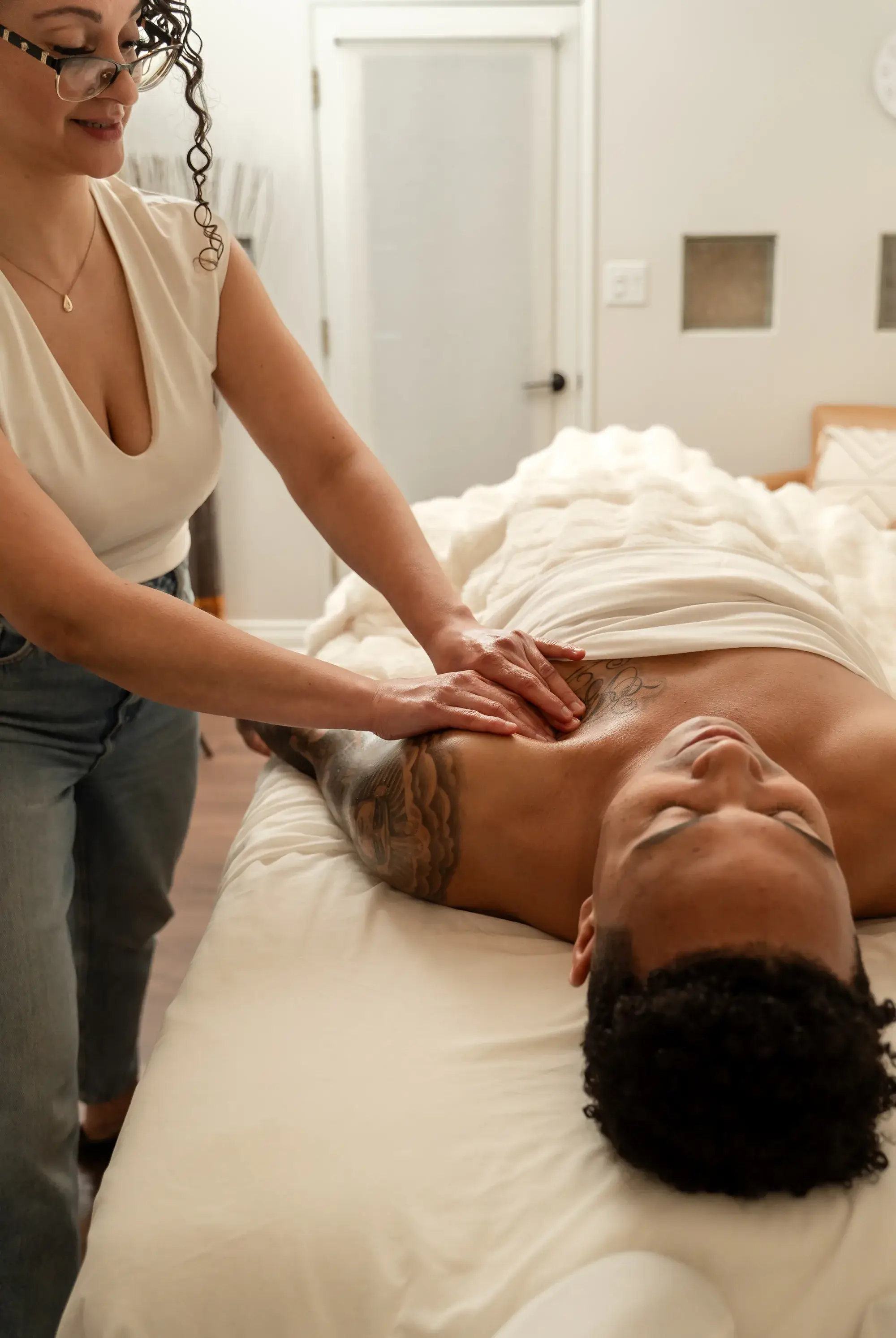
- Chest or breast: lying face down on a sore breast is out, and lying on your back may be fine only if nothing rests on the chest. Side-lying with a pillow between the knees and another supporting the upper arm reaches the neck, shoulders, back and legs with the field untouched.
- Neck or head: the face cradle of a massage table can press on treated skin at the jaw or throat; a seated, supported position or side-lying avoids that. Nothing is placed over the neck.
- Pelvis or abdomen: lying on the front is usually uncomfortable and may press on treated skin; back-lying with the knees supported, or side-lying, keeps the field clear. Cancer Research UK also notes that techniques may need adapting if you are very weak, so getting on and off the table is planned rather than rushed.
Cancer Research UK adds one more adaptation that matters alongside radiotherapy: avoid general massage to arms or legs that are swollen because of lymphoedema. If regional lymph nodes are in your field, the arm or leg on that side is treated as at risk from now on; what that means over the following years is on lymphedema risk after regional node radiation.
Before you book
Cancer Research UK’s advice is to talk to your cancer doctor or specialist nurse before using massage therapy. Then tell the therapist, at the time of booking and again on the table:
- Where the field is, when the course started and when it ends.
- What the skin is doing today, and whether any area is peeling or wet.
- Whether lymph nodes were removed or are being irradiated, and on which side.
- How tired you are, so the session is sized accordingly.
The full set of levers an oncology-adapted session uses, from pressure to lubricant, is on oncology massage: pressure, positioning and safety.
When to call your radiation team first
The NCI asks you to let your health care team know about any skin changes so they can be treated promptly. Call them the same day, and postpone a massage, if:
- The skin in the field has become wet, oozing or broken, or a sore has become painful.
- The area is increasingly red, warm or swollen, or you have a fever or chills; the NCI warns that sores can become infected.
- Pain in the field has changed sharply.
- You are too exhausted to sit upright comfortably, which is a day for rest rather than a table.
The CCS notes that side effects can begin during treatment or days to weeks after it, and that most settle within a few weeks to two months of finishing. A massage can wait a week; an infected field cannot.
After the course ends
The skin usually quietens over the weeks after treatment, and the field gradually becomes workable again, with the radiation team’s agreement and a gentler hand than elsewhere. Some people develop tightness and reduced range in the treated area months or years later; that late effect, and what manual therapy can and cannot do for it, is on radiation fibrosis after cancer treatment.
Where Renu fits in
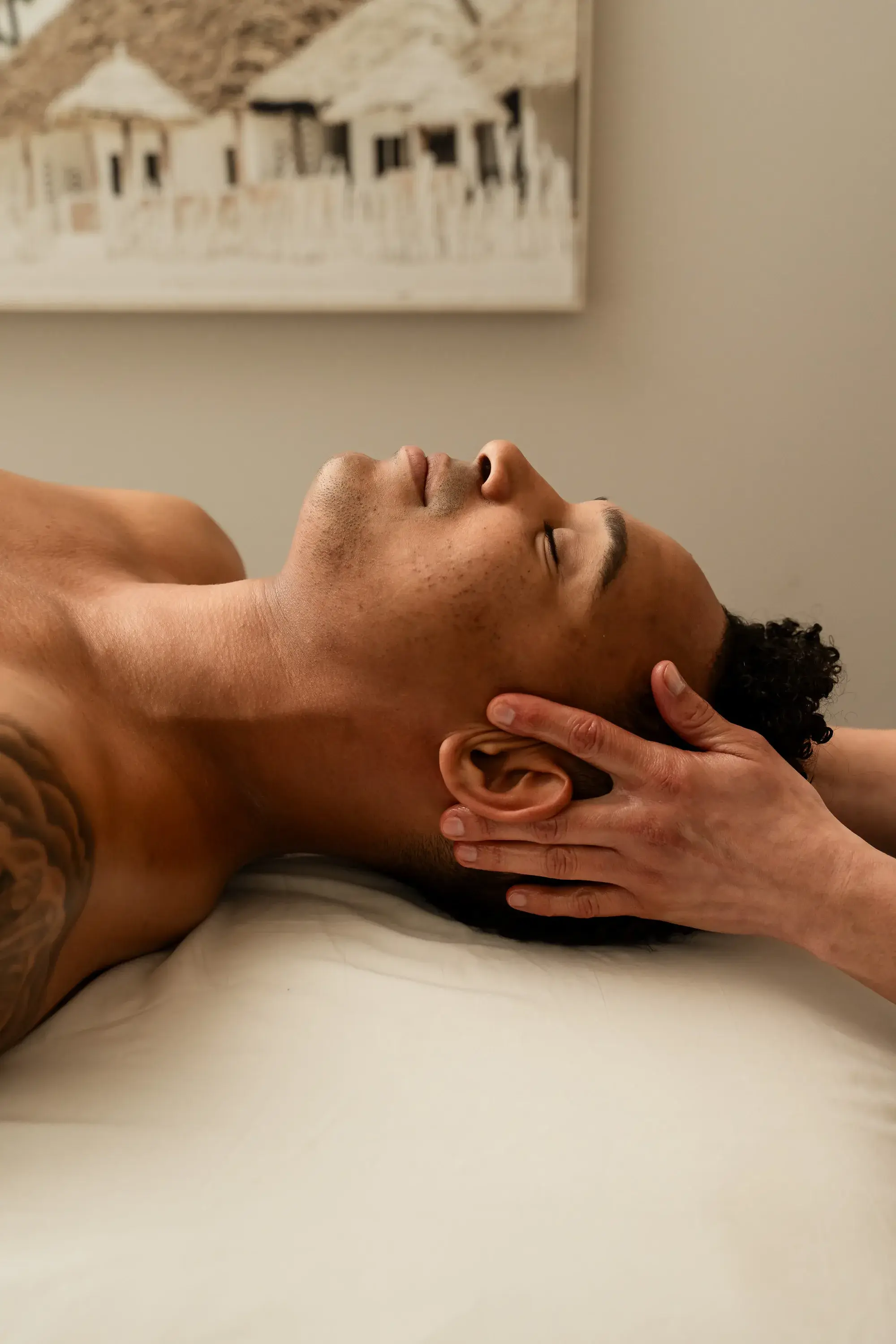
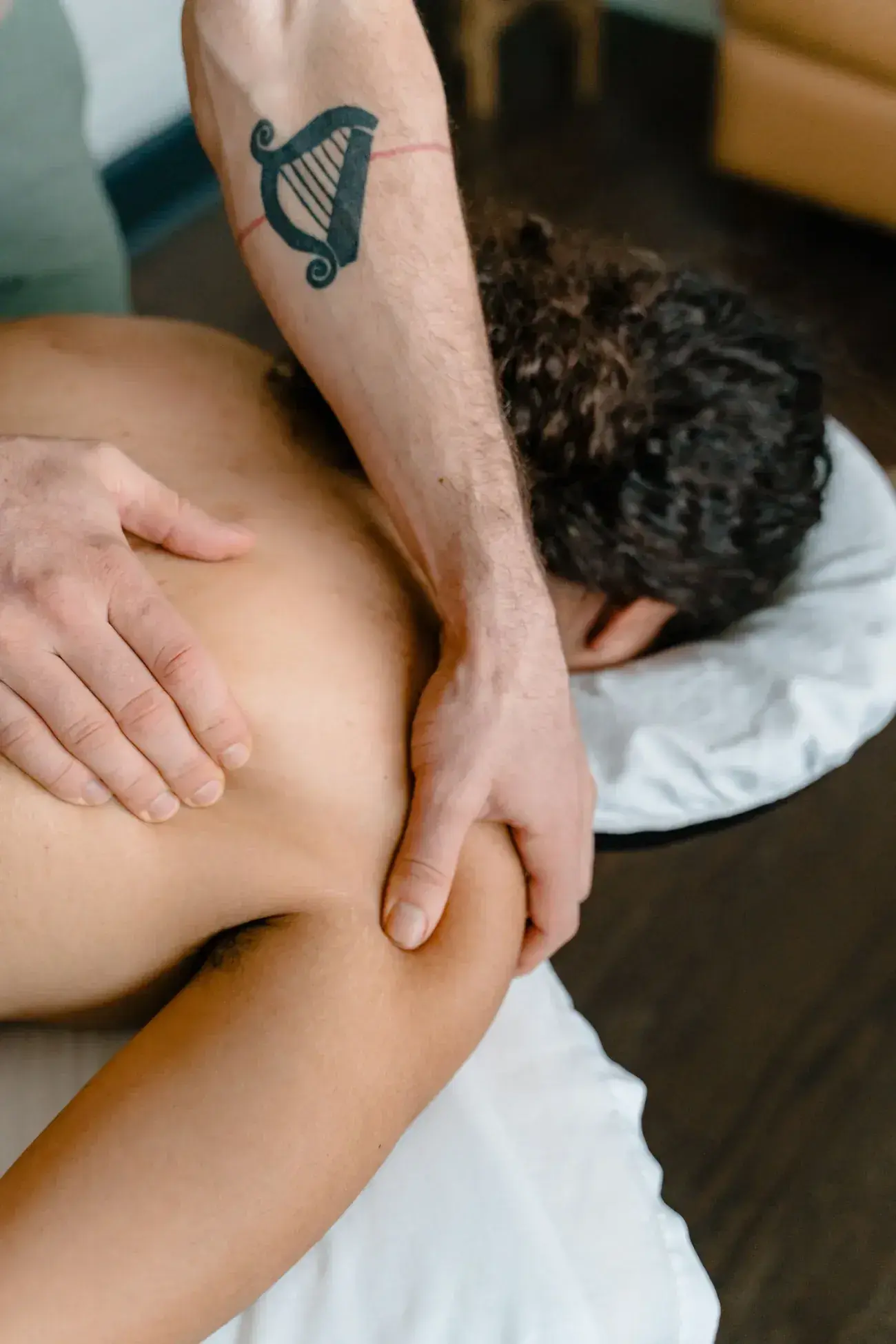
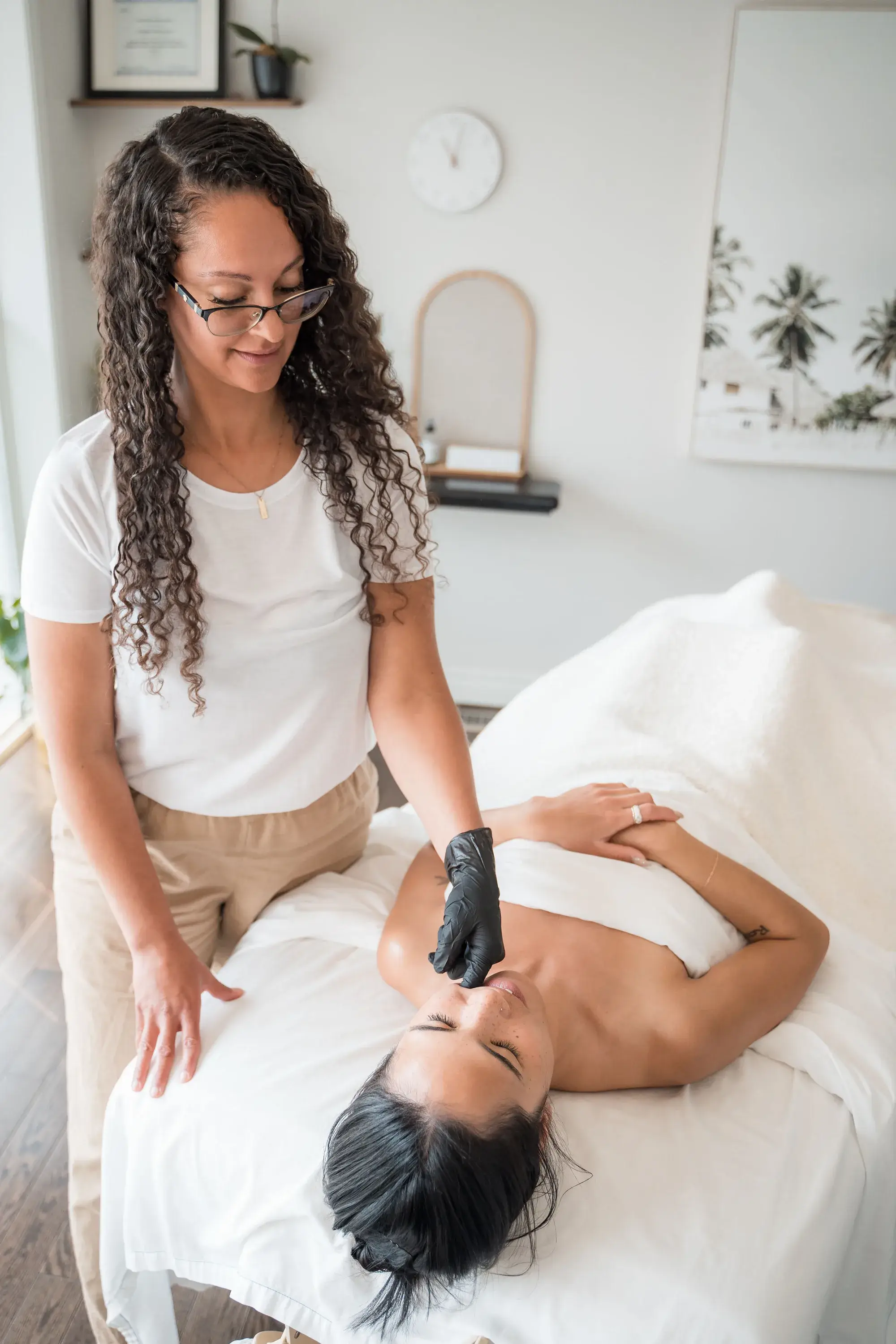
Our massage therapy menu runs from 30 to 90 minutes, and during radiotherapy we would steer you toward the shorter end, with the field left alone, positioning built around comfort, and the session stopping whenever you say. Tell us at booking that you are in treatment so the appointment is planned that way. Our team page lists who is available on which days; we are open seven days a week, which helps when daily treatment sessions already fill the weekday mornings.
Questions people ask
Can my therapist put oil or lotion on the skin that is being treated?
Not as part of the massage. The treated field is left untouched during a session, and the only products on that skin should be the ones your radiation team has told you to use. The Canadian Cancer Society advises mild soap, warm rather than hot water and moisturizer applied while the skin is still slightly damp, but which product and when is your team's call.
How long should a massage be during radiotherapy?
Shorter than you are used to, and set by how you feel that day rather than the menu. Fatigue builds through a course of radiotherapy and peaks around the middle, so a 30 or 45 minute session in a comfortable position often serves better than a full hour. Tell the therapist when you have had enough; stopping early is always fine.
Can I lie on my front if my chest or back is in the field?
Usually not comfortably, and not if it means pressure or rubbing on treated skin. Side-lying with pillows, or seated and supported, lets a therapist reach the neck, shoulders and legs without the field bearing weight. Positioning is one of the main adjustments in an oncology-adapted session.
Is it true that massage can spread cancer?
No research has shown that. Cancer Research UK states plainly that although some people worry massage may make cancer cells travel, no research has proved this to be true. The reasons a therapist avoids the treated field are about fragile skin, not spread.
Sources
Page reviewed October 4, 2026. This page is education, not a diagnosis. For your own situation, talk to your doctor, surgeon or care team, or ask us.
Keep reading
Related pages