
Scar massage at home, step by step
Once the wound has closed: plain cream, fingertip pads, up and down, across and in circles, firm but never painful, a few minutes two or three times a day.
By The Renu lymphatic and massage team · 6 min read
Scar massage at home starts once the wound has healed with no openings, or after the stitches are out, and uses a plain, non-perfumed cream with the pads of two fingers or a thumb working up and down the scar, across it and in small circles. The pressure is as firm as you can tolerate without pain, starting light and building over days. The NHS physiotherapy leaflets we follow suggest two to three minutes, two to three times a day, kept up for at least three to six months, because a scar keeps changing for twelve to eighteen months.
A scar is not finished when the stitches come out. It keeps laying down and reorganising collagen for a year or more, and in that window your fingers can influence how soft and how mobile it ends up. The method below is the one two NHS physiotherapy and therapy departments give their own patients, reproduced with their timings and their cautions. It takes a few minutes, a few times a day.
Why fingers make a difference
Scar tissue is built from collagen fibres that strengthen the repair, and the St George’s physiotherapy leaflet is honest that scar tissue is never as good as the skin or tissue it replaces. The longer a wound takes to heal, or the more damaged the skin, the thicker and less flexible the scar is likely to be. Beneath the surface, bands of scar tissue called adhesions can bind together whatever they touch: skin, tendon and deeper structures.
Massage works on that process while it is still under way. St George’s lists what it can do: reduce itchiness or over-sensitivity, moisturise the scar if you use cream, improve flexibility, mobility and softness, and help collagen form more evenly through pressure. The Cleveland Clinic describes it as helping to break up scar tissue so it can remodel. The West Hertfordshire leaflet adds the practical goal: preventing scar tissue that sticks to underlying structures, which protects joint range of movement and stops puckering.
When to start
Begin when the wound has healed with no openings, or after your stitches are removed, which is the wording in both NHS leaflets. St George’s notes that your therapist may advise starting earlier or later depending on the surgery you had and the condition of your skin, so if a surgeon or physiotherapist has given you a date, that date wins. Until then, the American Academy of Dermatology’s advice for a healing wound is to keep it clean and moist under a dressing rather than let it scab; our page on silicone, sunscreen and new scars covers that early stage.
What you need
- A plain cream. St George’s suggests a water-based cream such as aqueous cream or E45 hand cream; West Hertfordshire suggests a non-perfumed or non-fragranced cream such as E45 or Nivea, or Bio-Oil.
- Clean hands with short nails.
- Two or three minutes, two or three times a day. A reminder on your phone helps more than good intentions.
The method, step by step
- Desensitise first if the scar is tender. West Hertfordshire’s advice is to apply a small amount of cream to the area around the scar and gently massage around the edge, which begins to make the area less tingly or painful. If the scar is too painful or sensitive to touch, massage away from it and work gradually towards it over days.
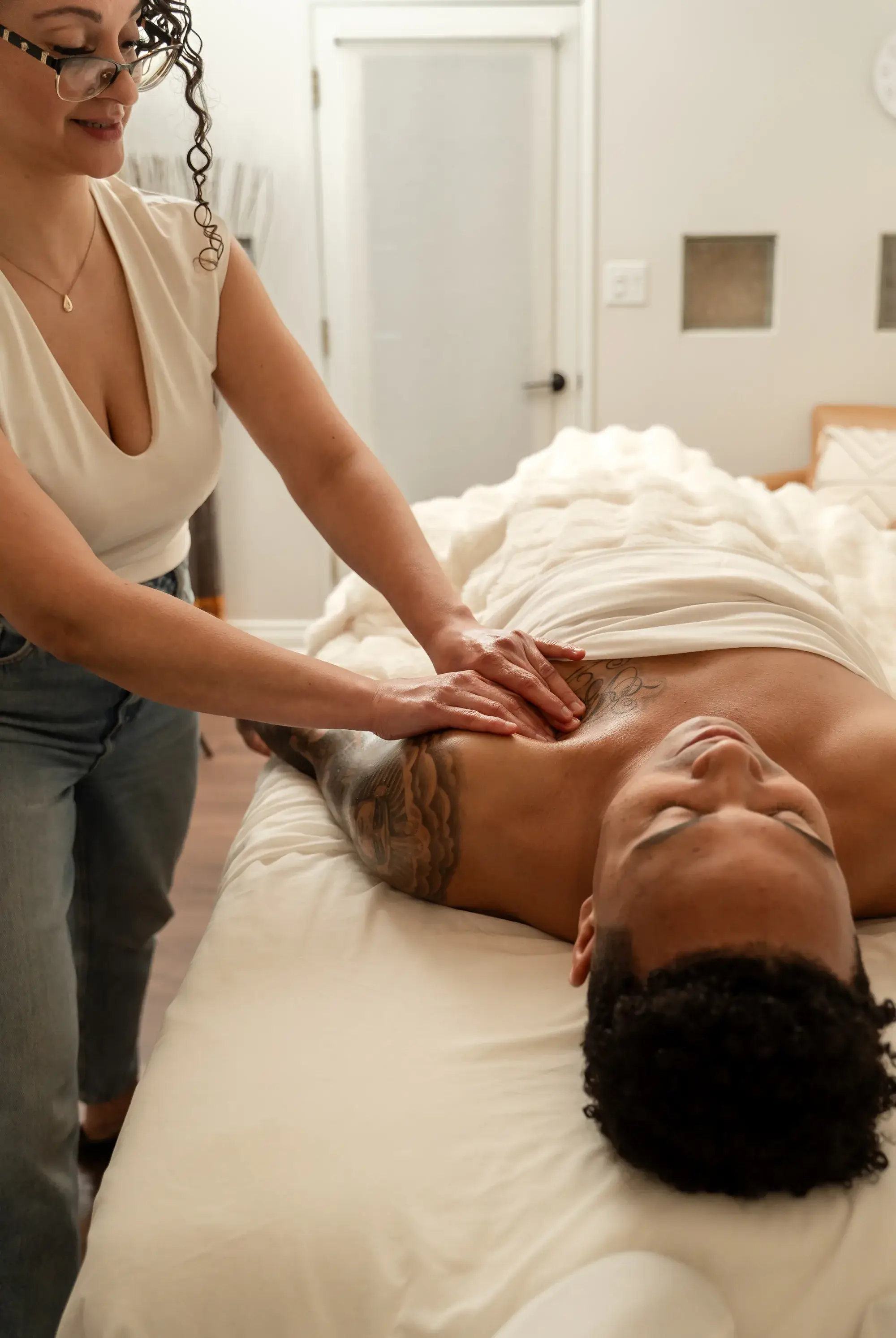
- Move onto the scar itself when it is comfortable. Using two fingers or a thumb, massage up and down the scar and then at a right angle across it. Start with gentle pressure and slowly increase it if tolerated.
- Add small circles. Once those movements are comfortable, West Hertfordshire describes a deeper, firmer massage in small circles with two fingers or a thumb around the scar, clockwise and anticlockwise. St George’s summarises the directions as side to side, up and down and circles: in other words, all directions.
- Set the pressure by comfort. St George’s: apply as much pressure as you can without it hurting, beginning with light pressure and moving to deeper and firmer pressure over time. West Hertfordshire: the massage should be pain free; if you experience pain, reduce the pressure and focus on the area around the scar to begin with.
- Time it. Gently massage the scar for two to three minutes, two to three times a day, and the area around the scar a little more vigorously for two to five minutes, two to three times a day, per the West Hertfordshire leaflet.
- Keep going. St George’s: carry on for at least three to six months after your surgery or injury. The scar continues to grow and change for about twelve to eighteen months, so the earlier and more regularly you massage, the lower the chance of long-term problems.
What a scar is doing in its first year
| Stage | What the sources say |
|---|---|
| Wound still open or scabbed | Not yet. Keep it clean and moist under a dressing (AAD); massage only around the edges once closed (West Hertfordshire). |
| Healed, stitches out | Start the method above (St George’s, West Hertfordshire). |
| First three to six months | The minimum period to keep massaging (St George’s). |
| Twelve to eighteen months | The scar is still growing and changing (St George’s); the whole process can take up to two years (West Hertfordshire). |
| Up to two years or more | Most scars fade over this period, though they may not disappear (NHS). |
The Cleveland Clinic adds one thing people rarely expect: as nerve endings grow back, a scar may become painful or itchy for a while. That is a reason to keep up the gentle desensitising strokes, not a reason to stop.
Mistakes we see
- Rubbing along the scar line only. The point is the across-the-grain and circular work that stops the scar sticking down; West Hertfordshire specifically says the circles go around the scar, not along it.
- Pressing until it hurts. Pain means too much, too soon. Drop back to the surrounding tissue.
- Stopping at six weeks because it looks fine. The remodelling runs for a year or more; the leaflets ask for a minimum of three to six months.
- Starting over an incision that is not fully closed. Any opening, weeping or scab means wait.
- Massaging a fresh surgical abdomen or a liposuction area deeply. Those areas need a different, far lighter approach early on; our guide to fibrosis after liposuction explains when firmer work becomes appropriate.
When to see a clinician
The NHS says to see a GP if a scar is painful or bothering you, and to seek urgent help if a scar is swollen or painful or has pus coming out of it. The Cleveland Clinic’s list is similar: contact a provider if the scar changes or becomes painful, tender, itchy or infected, or if you notice a mole, freckle or growth on or near it. A scar that becomes red, raised, thick or increasingly sore during your massage programme is also a reason to pause and have it looked at; the AAD suggests a dermatologist if you are worried about a scar’s appearance. Our page on scar tissue and adhesions describes what a restricted scar feels like from the inside.
How we can help
Scar work is part of our massage therapy when a scar is mature enough for it, and for the early weeks after a procedure our post-op lymphatic drainage keeps the tissue around an incision moving without any pressure on the scar itself. Bring your massage routine to the appointment; we will check your pressure, your directions and whether the scar is gliding over the layers beneath it, and adjust from there. The broader timeline lives on our post-op recovery page.
Questions people ask
When is it safe to start massaging a scar?
When the wound is healed with no openings, or after the stitches are removed, according to the St George's and West Hertfordshire NHS physiotherapy leaflets. St George's adds that your therapist may advise starting earlier or later depending on the surgery and the condition of your skin. If any part is still scabbed, weeping or open, wait.
What cream should I use for scar massage?
Something plain. St George's suggests a water-based cream such as aqueous cream or E45 hand cream; West Hertfordshire lists a non-perfumed or non-fragranced cream such as E45 or Nivea, or Bio-Oil. The cream is there to let the fingers glide and to moisturise, so an expensive scar product is not required for the massage itself.
How hard should I press on a scar?
As much pressure as you can without it hurting, beginning light and moving to deeper and firmer pressure, in the St George's wording. West Hertfordshire's rule is that the massage should be pain free, and that if you feel pain you reduce the pressure and work around the scar rather than on it for a while.
How long do I have to keep doing it?
At least three to six months after the surgery or injury, says St George's, because the scar continues to grow and change for about twelve to eighteen months. West Hertfordshire puts the whole healing process at up to two years, and the NHS says fading can take up to two years or more. Little and often beats a long session once a week.
What happens if I never massage the scar?
St George's answer is that the scar could become hard and inflexible or adhesions may form, and that a scar crossing a joint could stop the joint bending or straightening fully. Most scars still fade on their own; massage is about softness and movement rather than appearance alone.
Sources
Page reviewed October 4, 2026. This page is education, not a diagnosis. For your own situation, talk to your doctor, surgeon or care team, or ask us.
Keep reading
Related pages