

Massage during chemotherapy: what changes
Massage during chemotherapy is possible with your team's agreement. When to book in the cycle, and how counts, ports and skin change a session.
By The Renu lymphatic and massage team · 7 min read
You can usually have massage during chemotherapy, with adjustments and with your oncology team's agreement. Where you are in the cycle matters: white cells are typically lowest about 7 to 10 days after a dose, and platelets, skin, nausea and energy all shift from week to week. The therapist needs to know your counts, where your port or PICC line is, and how your skin and stomach are that day. A fever over 100.4 °F (38 °C), bleeding or new pain means the cancer centre, not the clinic.
You can usually have massage during chemotherapy, with adjustments and with your oncology team’s agreement. Where you are in the cycle matters: white cells are typically lowest about 7 to 10 days after a dose, and platelets, skin, nausea and energy all shift from week to week. The therapist needs to know your counts, where your port or PICC line is, and how your skin and stomach are that day. A fever over 100.4 °F (38 °C), bleeding or new pain means the cancer centre, not the clinic.
Yes, with conditions
Cancer Research UK’s guidance is the starting point: talk to your cancer doctor or specialist nurse before using massage therapy. For most people that is a question at a routine appointment, and the answer will usually come with conditions about counts, lines and skin that the therapist needs to hear. The Society for Oncology Massage describes care plans that adapt to a person’s situation whether they are in treatment or ten years out; during chemotherapy the adapting happens week by week.
What follows is the list of things that change, so you know what to tell us and what to expect.
Where you are in the cycle
Chemotherapy is given in cycles, and your body is not the same on every day of one.
The American Cancer Society explains that white blood cell counts typically fall to their lowest point about 7 to 10 days after a dose, which is when the risk of infection is highest. Your team can tell you how your particular regimen tends to run, and when your counts are checked. In the one randomised trial that built massage into a chemotherapy schedule, the sessions were given before each paclitaxel infusion, which places them just before a new dose rather than in the days after one.
None of this makes any day off limits. It means the best day is one your team is comfortable with, and that a session booked for the low-count window may need to be moved if you are unwell.
Blood counts: white cells and platelets
Low white cells (neutropenia). When your neutrophils are low you catch infections more easily and they can become serious quickly. The ACS precautions are the ones a clinic should mirror: thorough hand washing, staying away from people who are sick, and avoiding crowds. In practice that means a therapist who washes their hands in front of you, freshly laundered linens, and a clear understanding that if the therapist has a cold, the appointment moves. If your team has told you to avoid public places that week, treat us as a public place.
Low platelets (thrombocytopenia). Platelets help blood clot. When they are low you bruise more easily, and the ACS lists petechiae (small red or purple dots, often on the feet and legs), bleeding gums or nosebleeds and unusual bruising as the signs. The ACS also advises avoiding activities that risk injury and switching to a soft toothbrush and an electric shaver. For massage, the lever that moves is pressure: it drops to a level that cannot bruise, and deep work waits for a cycle when counts have recovered. Bring your most recent blood results, or know roughly where your counts stand.
The port, PICC or line
Most people on chemotherapy have some kind of central line. The ACS describes the three common types: an implanted port placed under the skin, usually in the upper chest or arm; a PICC line inserted through the skin of the arm and threaded along a vein toward the heart, with tubing left outside; and a tunnelled catheter that enters a vein in the chest or neck and exits through a separate small incision.
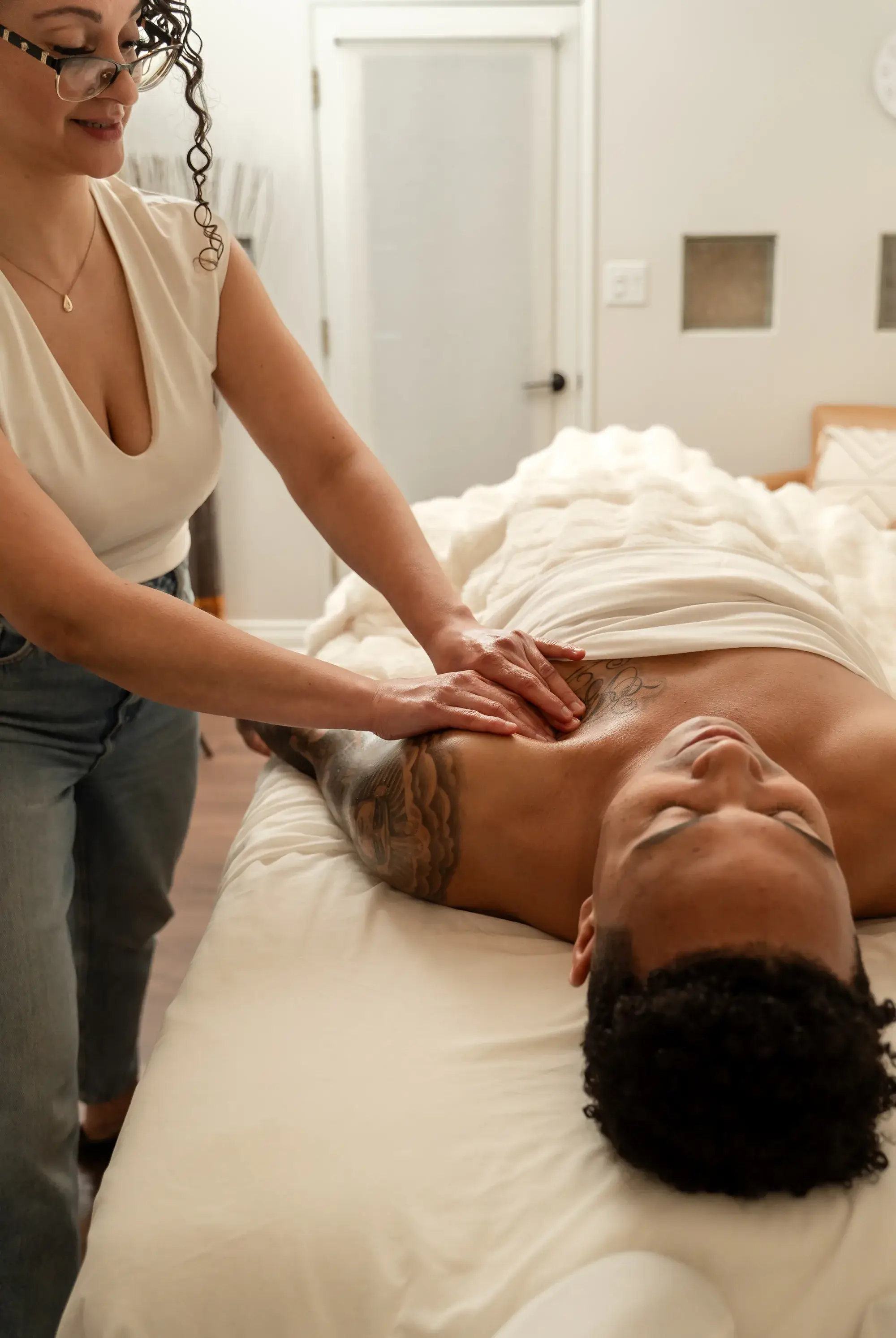
In a session, nothing is worked over the device, the dressing is never touched, and tubing is never pulled or bent. Position is chosen to keep weight off the site, which usually means side-lying or face up rather than face down for a chest port. An arm with a PICC is handled gently and is not stretched or compressed. The ACS asks you to report fever, chills or any new redness, swelling or oozing at the site, and any swelling of the hand, arm, shoulder or neck on that side, so those are also reasons to skip the session and call your team.
Skin, bruising and sun
The National Cancer Institute describes chemotherapy skin as prone to becoming dry, itchy, red or darker, or to peeling, and to burning easily in the sun; nails can darken and crack and cuticles can hurt. The NCI’s care advice is mild soaps, regular moisturising, loose clothing, short lukewarm showers and avoiding alcohol-based products, and keeping any sore area clean and dry so it does not become infected.
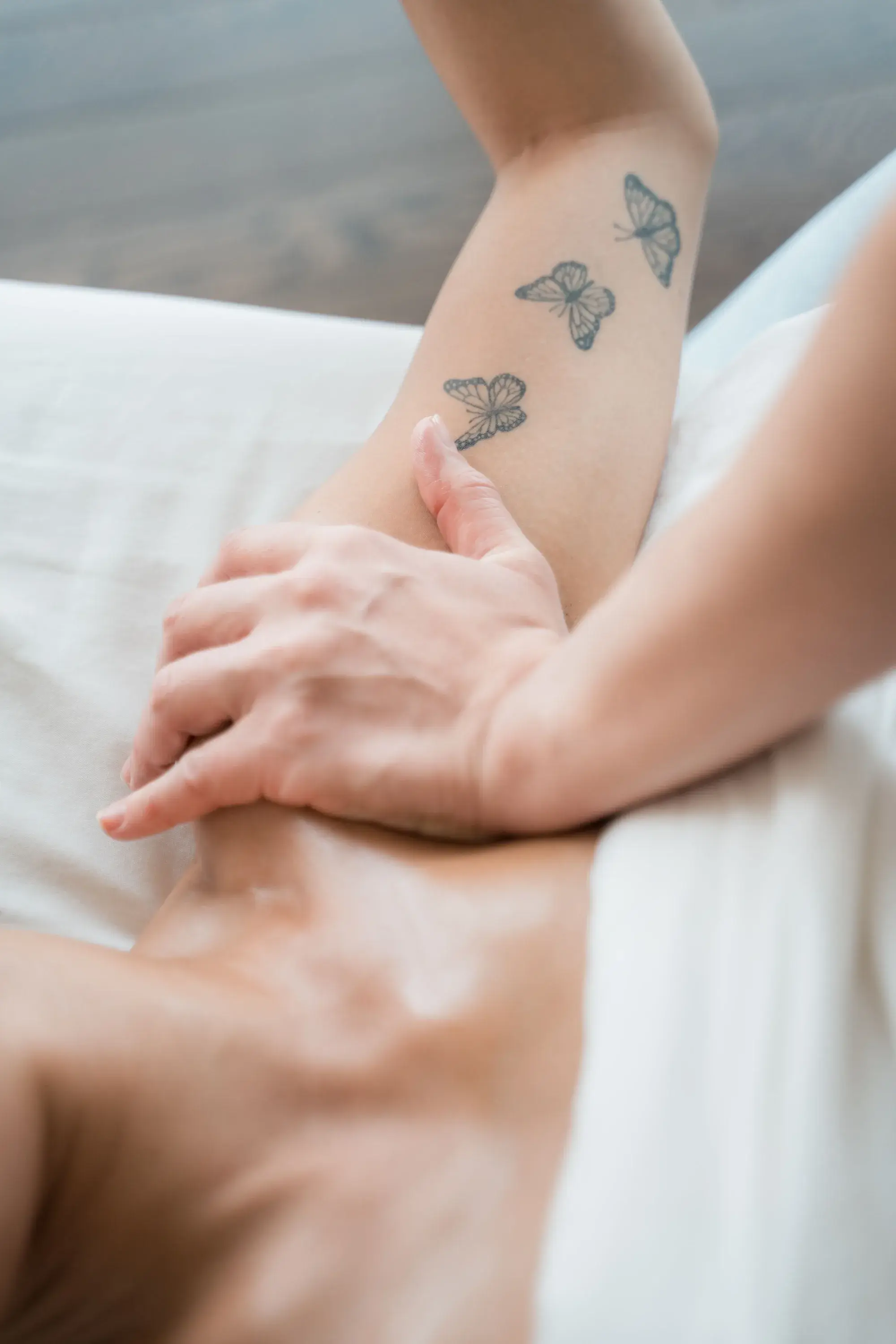
For massage, fragile skin means an unscented, simple lubricant, no friction over dry or peeling patches, and leaving any rash, sore or recently irradiated area alone, as Cancer Research UK advises for broken or bruised skin and for areas receiving radiotherapy. Hands and feet with hand-foot reaction are not worked. If you are having radiation at the same time as chemotherapy, our page on massage during radiation therapy covers the treated field.
Nausea, fatigue and the shape of the session
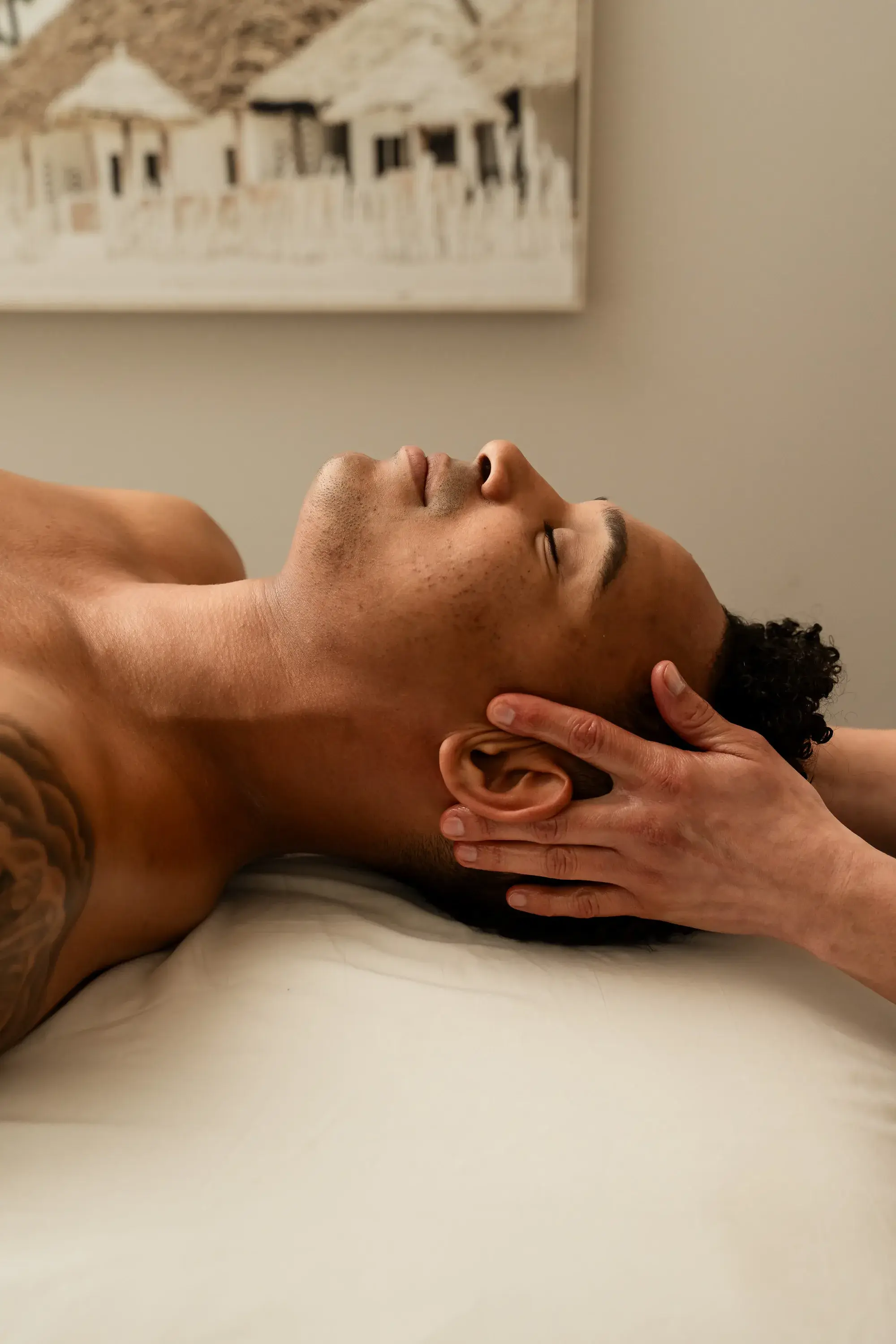
Chemotherapy changes what a comfortable session is. Nausea-aware positioning means no pressure on the abdomen, a slightly raised head if lying flat makes things worse, side-lying when that feels safer, and no strong scents in the room. Fatigue means shorter: a 30 or 45 minute session, with slow strokes and long pauses, usually serves better than 90 minutes of work your body has to recover from. Pressure stays light to moderate throughout, for the reasons on oncology massage: pressure, positioning and safety. If fatigue is the main problem you want help with, massage for chemotherapy-related fatigue looks at what the research found.
What the evidence shows
Be clear-eyed about what massage during chemotherapy can do. The trial of massage before paclitaxel infusions, in 40 women with breast cancer, found less peripheral neuropathic pain at week 12, better sensory and motor quality-of-life scores, and more favourable nerve conduction findings in the massage group. That is one small study and it was about neuropathy, not nausea or fatigue. Our page on massage for chemotherapy-induced neuropathy puts it beside the other trial.
The broader picture is the 2016 Cochrane review: 19 studies, 1,274 people with cancer, very low quality evidence, a short-term pain benefit in one trial, and no clear effect on nausea, fatigue, anxiety or quality of life compared with no massage. Only two of the studies reported adverse events (physical distress, rash and general malaise), and seventeen said nothing about harms. Massage during chemotherapy is best thought of as comfort and skilled touch at a hard time, offered carefully, rather than as a treatment for the chemotherapy’s effects.
When the cancer centre comes first
Some symptoms mean you do not come in, you call your oncology team, and if you cannot reach them you go to emergency:
- A temperature over 100.4 °F (38 °C), or chills and sweating, especially in the low-count window. The ACS treats this as a possible infection needing immediate treatment.
- Bleeding that will not stop, blood in vomit or stool, a severe headache or new confusion while platelets are low.
- Fever, chills, redness, swelling or oozing at a port or line site, or swelling of the arm, shoulder or neck on that side.
- New or worsening pain anywhere, breathing difficulty or chest pain, or a rash spreading or involving the eyes or mouth.
- Nausea so severe you cannot keep fluids down.
Our Learning Centre page on when to seek medical care lists the wider set of warning signs.
Booking at Renu
Tell us you are in chemotherapy when you book a massage, and roughly where you are in your cycle. We will suggest a shorter appointment to begin with, ask about your counts, your line and your skin at the start of the session, and adjust as we go. Our Registered Massage Therapists and our Certified Lymphedema Therapist, Meeghan Mackenzie, work from what your team has told you, and if anything on the day suggests you should be at the cancer centre instead, we will say so and rebook you without fuss. The general questions about visiting the clinic are answered on our FAQ page.
Questions people ask
Which day of my chemo cycle is best for a massage?
There is no single right day, but the American Cancer Society notes that white cell counts are usually lowest about 7 to 10 days after a dose, when infection risk peaks. The one trial that scheduled massage around chemotherapy gave it before each paclitaxel infusion. Ask your team which window suits your regimen.
Should I skip massage if my white blood cells are low?
Ask your oncology team, because the answer depends on how low. If they are comfortable with you being out and about, a massage with careful hand hygiene and a therapist who is well is reasonable; if they have asked you to avoid crowds and public places, treat the clinic the same way and reschedule. Fever over 100.4 °F during that window is a call to the cancer centre, not to us.
Can I lie face down with a port in my chest?
Often not comfortably, and we do not ask you to. Side-lying or a supported face-up position keeps weight off the port, and nothing is worked over the device itself. If you have a PICC line, that arm is handled gently and the dressing is never touched.
Will massage make my chemo nausea worse?
It should not if the session is planned around it: an unhurried pace, no strong scents, a position that does not press on the stomach and a shorter appointment. Tell the therapist how your stomach is that day. If nausea is severe or you cannot keep fluids down, that is a day to call your team rather than come in.
Sources
- Cancer Research UK: Massage
- American Cancer Society: Neutropenia (low white blood cell counts)
- American Cancer Society: Bleeding and bruising (thrombocytopenia)
- American Cancer Society: Tubes, lines, ports and catheters used in cancer treatment
- National Cancer Institute: Skin and nail changes during cancer treatment
- Izgu et al., European Journal of Oncology Nursing 2019: Prevention of chemotherapy-induced peripheral neuropathy with classical massage in breast cancer patients receiving paclitaxel
- Shin et al., Cochrane Database of Systematic Reviews 2016: Massage with or without aromatherapy for symptom relief in people with cancer
- Society for Oncology Massage: Supporting patients
Page reviewed October 4, 2026. This page is education, not a diagnosis. For your own situation, talk to your doctor, surgeon or care team, or ask us.
Keep reading
Related pages