
Oncology massage: pressure, positioning and safety
Oncology massage is an approach, not a technique: an intake, then adjustments to pressure, site, position, duration and heat. What each one changes, and why.
By The Renu lymphatic and massage team · 7 min read
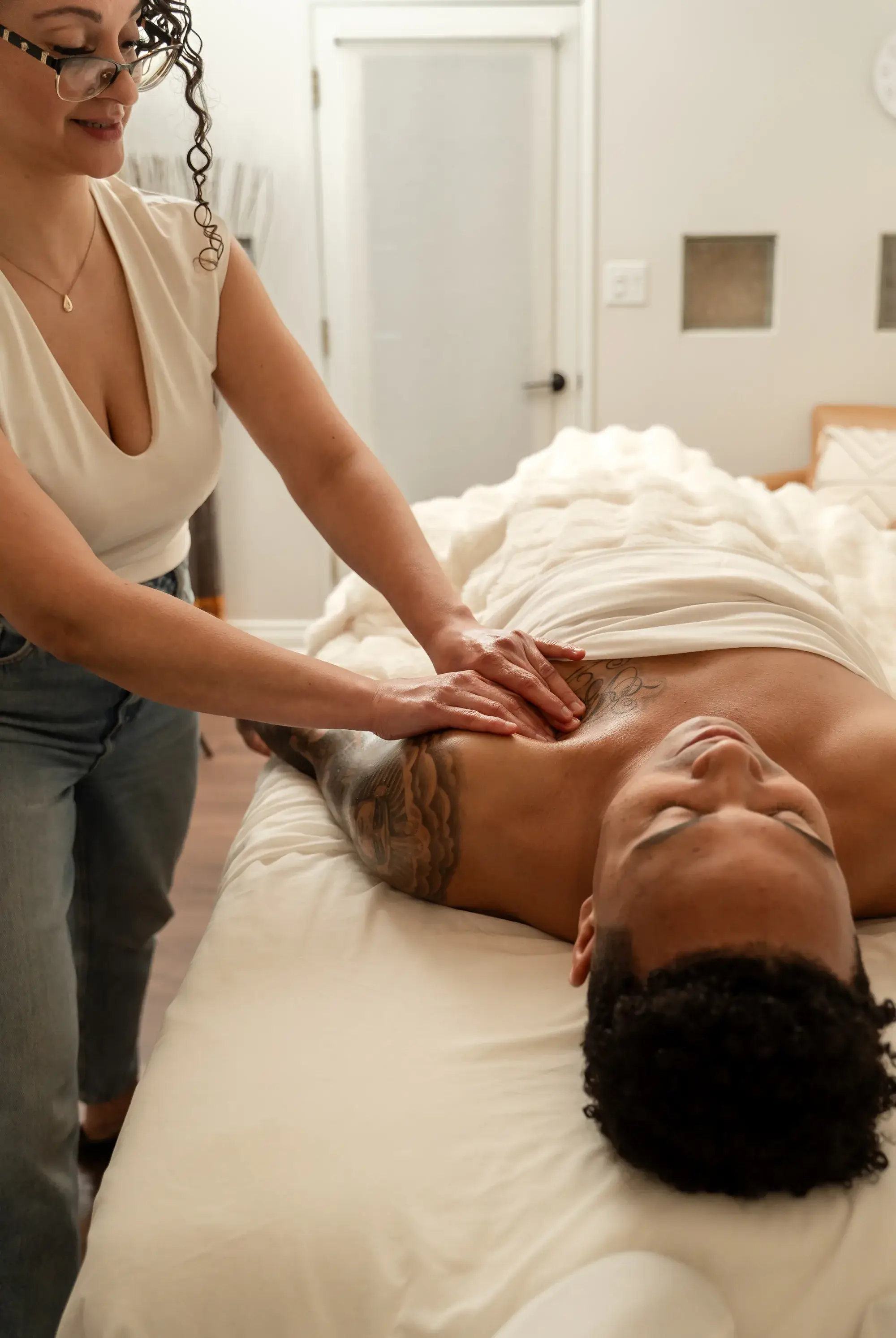
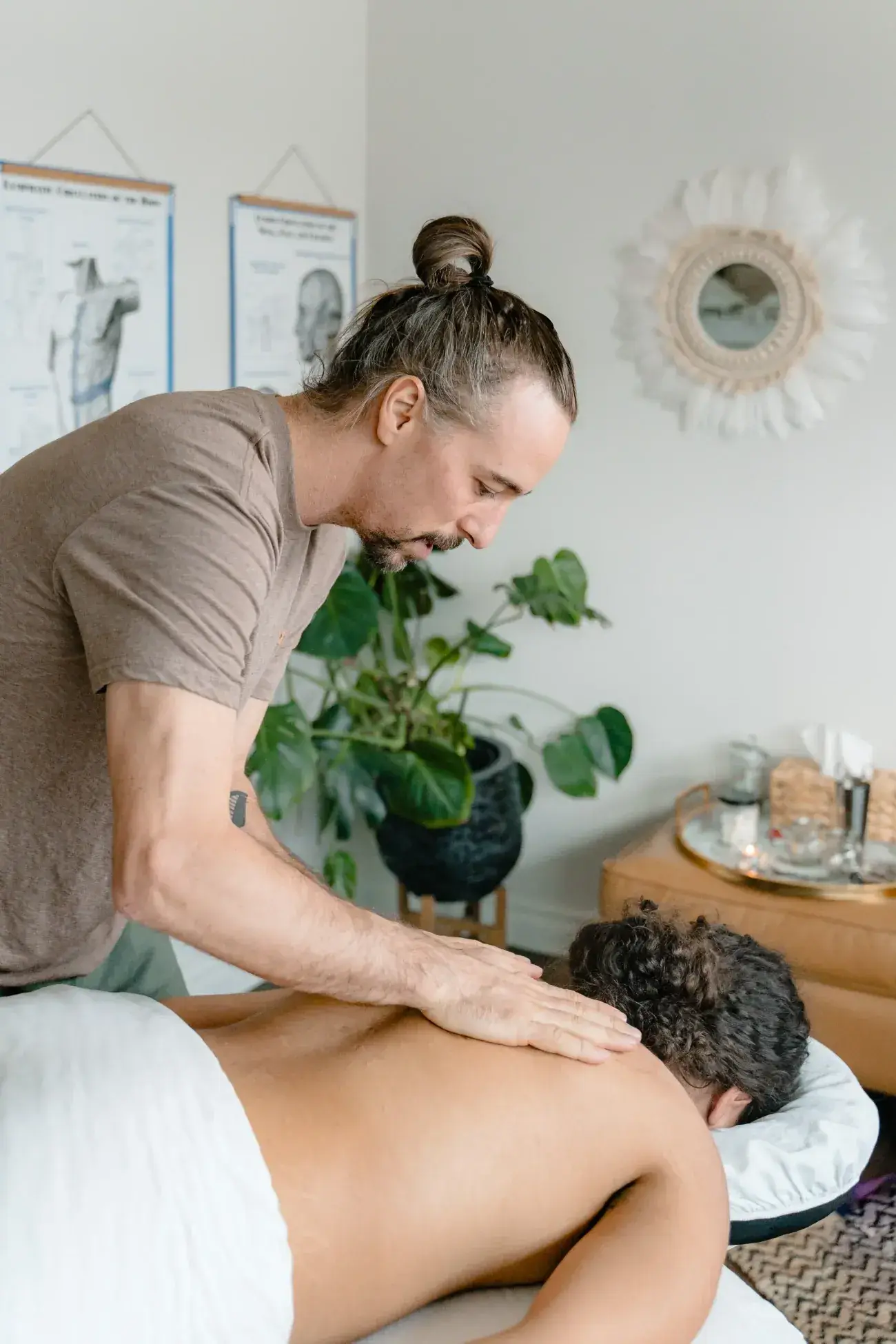
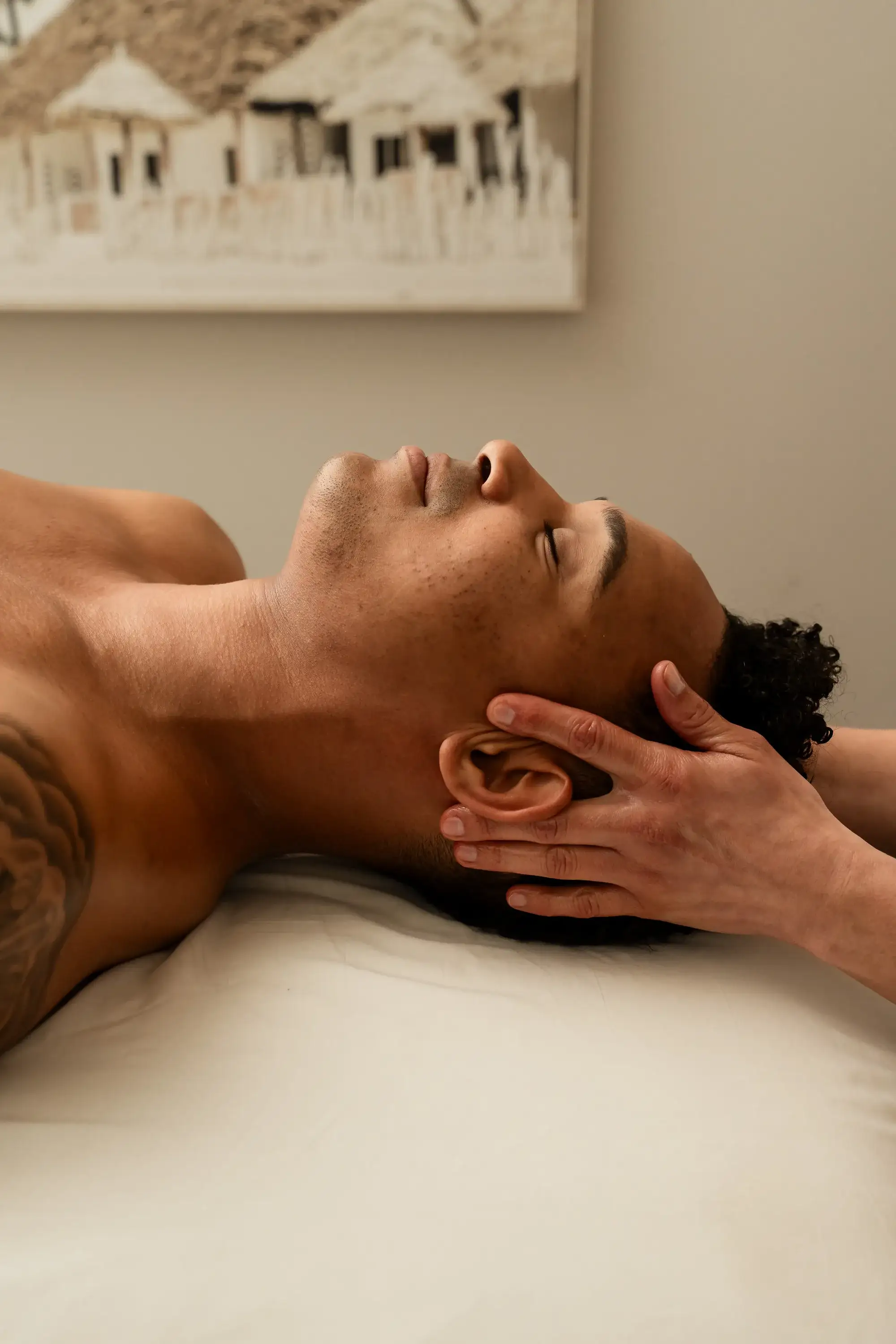
Oncology massage is not a technique you can see from across the room. The Society for Oncology Massage defines it as a comprehensive approach built on thorough assessment and adjustments to standard techniques, and those adjustments pull on five levers: pressure, site, position, duration, and lubricant and heat. Lymph node removal, radiation fields, ports and lines, low platelets, bone involvement and blood clots each move one or more of them. The therapist works from the information your oncology team provides, never around it.
Oncology massage is not a technique you can see from across the room. The Society for Oncology Massage defines it as a comprehensive approach built on thorough assessment and adjustments to standard techniques, and those adjustments pull on five levers: pressure, site, position, duration, and lubricant and heat. Lymph node removal, radiation fields, ports and lines, low platelets, bone involvement and blood clots each move one or more of them. The therapist works from the information your oncology team provides, never around it.
An approach, not a technique
The clearest definition comes from the Society for Oncology Massage: oncology massage and oncology esthetics are not techniques. They are comprehensive approaches to care that involve thorough assessment and adjustments made by the therapist to standard techniques. The strokes themselves can be the same Swedish, lymphatic or myofascial work used with anyone else. What changes is what the therapist knows before starting, and what they decide to leave out.
The same organisation describes skilled practitioners as using personalised care plans that adapt to the person’s situation, whether that person is in treatment or ten years out from it. That last phrase matters. A lymph node dissection or a course of radiotherapy changes tissue for life, so some adaptations never expire, even when the cancer is long behind you.
If you want to judge whether a clinic is safe, the question is not “do you do oncology massage” but “what will you ask me, and what will you change because of my answers”.
The five levers
A randomised trial of oncology massage at MD Anderson described the training behind it as teaching therapists to make treatment modifications including changes in position, special bolstering, adjustment of pressure and pace, and site restrictions. Grouped, those are the levers:
- Pressure. How much force, and how quickly it builds. In that trial, pressure was increased gradually, per tolerance, following oncology massage guidelines.
- Site. Which areas are worked, which are avoided, and which get a different kind of touch.
- Position. How you lie, how you are bolstered, and whether you lie face down at all.
- Duration. How long the session is and how much of it is active work.
- Lubricant and heat. What goes on the skin, and whether warmth is used anywhere.
A session with none of these adjusted is a relaxation massage given to someone with a cancer history. A session with the right ones adjusted is oncology massage.
What pulls each lever
| Your situation | What changes, and the source behind it |
|---|---|
| Lymph nodes removed from an armpit, groin or neck | The limb and quadrant at risk are treated with lymphatic-style light work rather than deep strokes; Cancer Research UK advises specialist manual lymphatic drainage, not standard massage, for a swollen limb. The NLN recommends avoiding saunas and heat that could injure the skin. Position avoids compressing the at-risk limb. |
| Radiation, current or past | The treated field is avoided during radiotherapy (Cancer Research UK) and treated with lighter pressure and no heat afterwards; irradiated skin stays fragile. |
| Port, PICC line or tunnelled catheter | Nothing over the device. Ports sit under the skin of the upper chest or arm; PICC lines travel up a vein in the arm; tunnelled catheters exit through the chest or neck (American Cancer Society). Position keeps weight off the site and tubing is never pulled or bent. |
| Low platelets | Pressure drops to a level that cannot bruise. The ACS lists easy bruising, petechiae and bleeding from gums or nose as signs of low platelets and advises avoiding activities that risk injury. |
| Bone metastases, osteoporosis or fractures | No deep pressure or joint stretching over affected bones; Cancer Research UK lists fractures and bone involvement among the reasons to adapt or avoid massage. Positioning is chosen for comfort rather than access. |
| Blood clot, current or recent | Massage waits for the oncology team’s clearance; the MD Anderson trial excluded people with a clot in the previous twelve months. |
| Very weak, nauseous or fatigued | Shorter sessions, side-lying or supported positions, slower pace; Cancer Research UK lists being very weak among the reasons to adapt. |
| Broken, bruised or recently operated skin | The area is left alone until healed (Cancer Research UK). |
None of these are about cancer spreading. Cancer Research UK is explicit that no research has shown massage spreads cancer, and our page on does massage spread cancer takes that question on its own. The adaptations exist because treated tissue is more fragile, lymphatic drainage may be reduced, bones may be weaker and blood may clot less well.
What to tell the therapist, and what we ask of your team
Cancer Research UK’s advice is to talk to your cancer doctor or specialist nurse before using massage therapy. We ask you to do the same, and to bring the answers to these questions to your first visit:
- Which lymph nodes, if any, were removed, and from where.
- Where radiation was given and when it finished.
- Whether you have a port, PICC or other line, and where.
- Your most recent platelet and white cell counts if you are in active treatment, and when your next infusion is.
- Whether cancer is present in bone, and where.
- Any history of a blood clot.
- Current medicines, especially blood thinners and steroids.
- How your energy, nausea and skin are this week.
That is the thorough assessment the Society for Oncology Massage describes. It is not a formality, and it is repeated in brief at every visit because the answers change. Our page on massage during chemotherapy goes through the mid-treatment version of this list.
What the evidence says about benefit
Honesty cuts both ways. The 2016 Cochrane review of massage with or without aromatherapy for people with cancer included 19 studies and 1,274 participants and rated the evidence very low quality. It found a short-term reduction in pain in one trial and no clear difference in anxiety, depression, nausea, fatigue or quality of life compared with no massage. Only two studies reported adverse events (physical distress, rash and general malaise); the other seventeen did not report on harms at all. Cancer Research UK’s own summary is that research results on symptoms are mixed, with some evidence for reduced stress and anxiety.
So the case for oncology massage rests less on measured outcomes than on comfort, safety and the experience of skilled touch during a hard time, which the Society for Oncology Massage describes as bringing a sense of emotional and physical wellbeing, tranquillity and peace. We think that is worth offering, and we do not dress it up as more than it is.
Choosing a clinic
Cancer Research UK suggests asking a therapist how long they trained, what experience they have with people who have cancer, and whether they hold professional indemnity insurance. Add three questions of your own: what will you ask me before we start, what will you change because of my history, and will you stop and tell me if something looks like it needs my doctor. A therapist who welcomes those questions is the one you want.
When to call your oncology team instead
Some symptoms belong to the cancer centre, not the treatment table: a fever, new or unexplained bruising or bleeding, redness, swelling or oozing at a port or line site, sudden swelling or pain in one limb, new bone pain, new weakness or numbness, or breathlessness. The American Cancer Society asks people with a central line to report fever, chills or any new redness, swelling or drainage at the site, and swelling of the hand, arm, shoulder or neck on that side. If any of these appear, cancel the massage and call your team. We would rather lose an appointment than miss something.
How this works at Renu
Our Registered Massage Therapists and our Certified Lymphedema Therapist, Meeghan Mackenzie, work from the history you give us and from what your oncology team has advised. Tell us about your diagnosis and treatment when you book a massage or lymphatic drainage session so the right person and the right length of appointment are set aside. Our page comparing oncology massage with regular massage shows how a session differs minute by minute, and the team page introduces who you will meet.
Questions people ask
Do I need my oncologist's permission before having a massage?
Cancer Research UK's advice is to talk to your cancer doctor or specialist nurse before using massage therapy, and we agree. For most people this is a short conversation at a routine visit, not a formal letter. It matters most during active treatment, when counts, lines and skin are changing from week to week.
Why does an oncology massage feel so light?
Because pressure is the lever that most often has to come down. Tissue in a treated area, skin that has been irradiated, a limb with lymph nodes removed, bones with metastases and blood with low platelets all tolerate less force than healthy tissue. Lighter does not mean less skilled; in the MD Anderson neuropathy trial, pressure was increased gradually to tolerance by therapists with more than 15 years of experience.
Can the therapist work near my port?
Around it, not on it. Ports sit under the skin of the upper chest or arm, PICC lines run through a vein in the arm, and tunnelled catheters exit through the chest or neck, so the area over any device is left alone and the arm with a PICC is handled with care. Tell the therapist where everything is, and report any redness, swelling or oozing at the site to your care team.
Will an oncology-adapted session be shorter than a regular massage?
Often, yes, and that is deliberate. Duration is one of the five levers: fatigue, nausea and fragile tissue are all reasons to work for 30 or 45 minutes rather than 90. A shorter session with the right adaptations leaves you better than a long one that asks too much of your body that week.
Sources
- Society for Oncology Massage: What is oncology massage (home page)
- Society for Oncology Massage: Supporting patients
- Cancer Research UK: Massage
- Shin et al., Cochrane Database of Systematic Reviews 2016: Massage with or without aromatherapy for symptom relief in people with cancer
- Lopez et al., Scientific Reports 2022: A randomized pilot study of oncology massage to treat chemotherapy-induced peripheral neuropathy
- American Cancer Society: Tubes, lines, ports and catheters used in cancer treatment
- American Cancer Society: Bleeding and bruising (thrombocytopenia)
- National Lymphedema Network: Position Statement, Evidence-Based Practices for Lymphedema Risk Reduction (March 2026)
Page reviewed October 4, 2026. This page is education, not a diagnosis. For your own situation, talk to your doctor, surgeon or care team, or ask us.
Keep reading
Related pages