
Self-lymphatic drainage for the arm, step by step
The eight-step NHS home routine for arm lymphedema: belly breaths, both armpits, chest strokes, elbow and wrist pumps. Firm but never painful, no oil.
By The Renu lymphatic and massage team · 7 min read
Self-lymphatic drainage for the arm is an eight-step routine a lymphedema therapist teaches you and you repeat at home: slow belly breaths, circular pumping of the unaffected armpit, chest strokes away from the swollen arm, the affected armpit, then stroking down the arm with elbow and wrist movements before working back up. The pressure is firm enough to move skin but must never cause pain or redness, and it is done on bare skin without oil. Cancer Research UK gives the usual rhythm as twice a day for about 20 minutes.
If you have lymphedema in one arm, the home routine most lymphedema services teach is called simple lymphatic drainage, or self-lymphatic drainage. The version below follows the West Suffolk NHS Foundation Trust leaflet step by step: breathe, clear both armpits, stroke the chest away from the swollen arm, then work down the arm and back up. It is firm enough to move the skin but never painful, it is done on bare skin without oil, and Cancer Research UK gives the usual rhythm as twice a day for about 20 minutes.
Learn it from a therapist before you do it alone
Every source we read says the same thing: a specialist teaches this, then you take it home. Cancer Research UK calls it a gentle massage that your specialist can teach you to do yourself. Macmillan says your lymphedema specialist will show you how, and can show a friend or relative at the same time. The NHS treatment pathway follows the same order: a therapist gives manual lymphatic drainage first, then teaches the simplified self-massage for ongoing maintenance.
The reason is not gatekeeping. The routine depends on which lymph nodes are still working for you, and that depends on your surgery, your radiation and your own anatomy. If nodes were removed from the armpit, the West Suffolk leaflet says to seek your clinician’s advice before pumping that armpit at all. A Certified Lymphedema Therapist maps the route once; after that, the sequence below is yours.
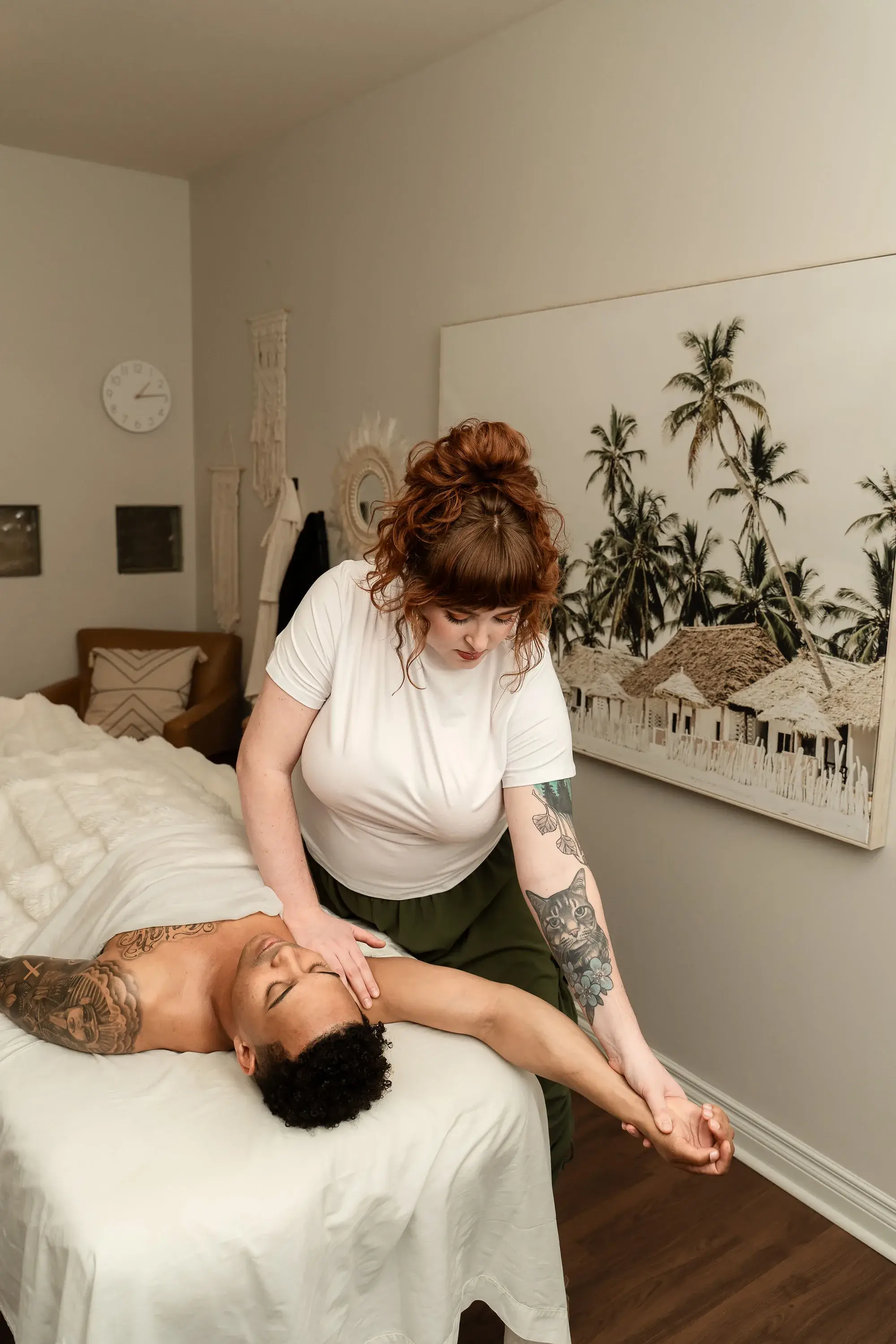
At Renu, Meeghan Mackenzie is our Certified Lymphedema Therapist, and self-care teaching is part of complete decongestive therapy.
The arm routine, step by step
Sit or stand with the arm and chest bare. These are the leaflet’s eight steps.
- Breathe. Place both hands over your abdomen and breathe in slowly and deeply. As you breathe out through pursed lips, let your hands sink into your belly. Repeat 2 to 5 times.
- Pump the unaffected armpit. Use the flat of your other hand to massage the lymph nodes in the armpit on the side without swelling, using circular movements. Repeat 10 times.
- Stroke the chest away from the affected arm. Starting at the first point on the chest, stroke the skin in the direction away from the swollen arm, and continue point by point across the chest to help it drain. The stroking can be firm, but it must not cause pain or redness.
- Pump the affected armpit. The same circular massage with the flat of the hand, 10 times. This is the step that needs your clinician’s go-ahead if any nodes were removed.
- Work down the arm. Starting at the top of the limb, stroke firmly in an upward direction while progressing down the arm. At the elbow, flex and extend it 10 times to help drain that area, then continue the upward stroking as you move toward the base of the fingers.
- Clear the hand. At the base of the limb, flex and extend the hand and wrist to drain those areas.
- Return up the arm. Stroke back up toward the shoulder, clearing again at each joint and point as you pass.
- Finish in reverse. Back at the top of the arm, repeat steps 4, 3, 2 and 1 in that order.
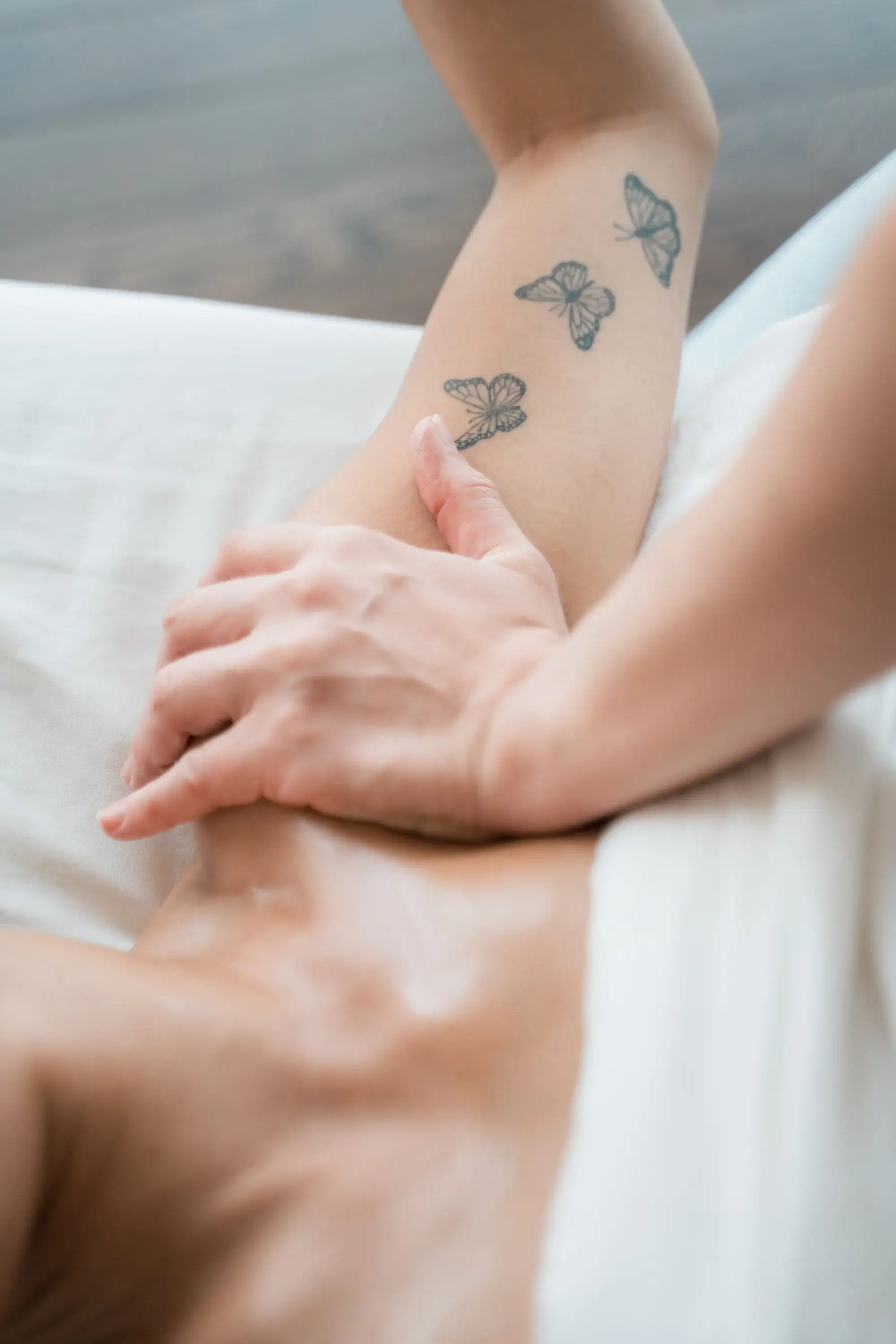
Each stroke moves skin, not muscle. Macmillan’s description is the clearest: you use your hand to very gently move the skin in a particular direction, and you always move the skin away from the swelling.
Pressure, oil and timing
How firm. The leaflet says the massage is firm but you must not cause pain or redness to the skin. Macmillan gives a simple test: if your skin is red when you have finished, the movement was too much. More pressure is not the goal; redness is the sign you have gone past it. The light touch you feel in the clinic is the same idea; see why lymphatic drainage pressure is so light.
No oil. Both the leaflet and Macmillan say bare skin, no cream or oil. The point of each stroke is to take the skin with your hand rather than slide over it, which is also why clinic lymphatic drainage is done without oil. Moisturize at another time: Cancer Research UK suggests at night, after your compression garment is off.
How long, how often. Cancer Research UK: twice a day, for about 20 minutes each time, though the routine might vary. Macmillan adds two practical notes: choose a time and place where you can do it in a relaxed way, and do deep breathing exercises first.
Why the routine starts away from the swollen arm
Because fluid needs a clear road ahead of it. Cancer Research UK explains that the specialist first clears the area they want the fluid to drain into, including the chest and neck, before treating the affected limb. Macmillan goes further: usually you do not massage the swollen area at all, you massage the areas where you do not have lymphedema, moving the skin away from the swelling.
The leaflet’s order makes that concrete. Breathing first, then the healthy armpit, then chest strokes heading away from the arm, and only then the affected armpit and the arm itself. By the time you reach the swollen tissue, the territory it drains into has already been opened. The same logic explains why clinic drainage starts at the neck.
Stop and call
Do not do the routine, and contact your lymphedema clinician or doctor, if any of these apply:
- The arm, hand or chest looks red, feels hot, hurts, or is suddenly more swollen. Macmillan says to contact your GP immediately, because these are signs of cellulitis; red streaks, fever or flu-like symptoms count too. See how to tell if your lymphedema is infected.
- You feel unwell or have an infection anywhere. The leaflet says not to perform the massage at all in that case, and to contact your lymphedema clinician if unsure.
- A blood clot is suspected, you have heart problems, there is cancer in the area, or you have a blockage of the large vein returning blood to the heart. Cancer Research UK lists each of these as a reason not to have lymphatic drainage. Ask your doctor before any version of it.
- Any step hurts. Firm is allowed; pain is not.
- Lymph fluid is leaking through the skin. Macmillan says to contact your lymphedema specialist.
- Nodes were removed and no clinician has yet told you how to handle that armpit.
Our guide to when swelling needs medical care covers the wider red flags.
Where clinic visits fit around the routine
Self-drainage is the maintenance piece. The NHS describes the sequence as manual lymphatic drainage from a specialist first, then simple lymphatic drainage you carry on at home. The routine above cannot replace a trained pair of hands, and it does not try to; the honest comparison is in self-lymphatic drainage versus professional MLD.
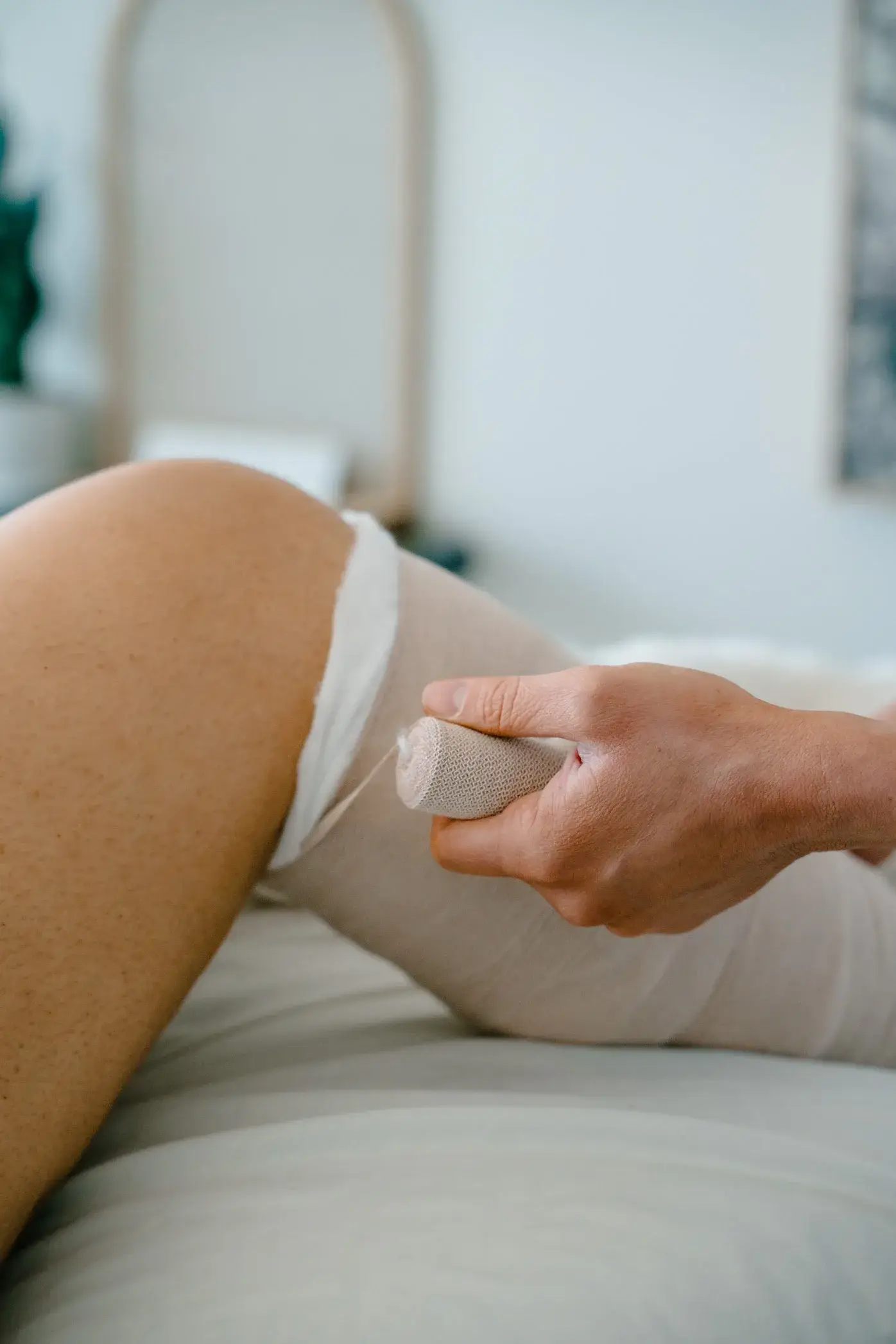
Between sessions, two other habits support the arm. Macmillan suggests resting the arm on a cushion placed on the arm of a chair when you sit, avoiding holding it above shoulder height for long periods, and moving the muscles regularly rather than keeping the arm in one position; our page on elevating an arm or leg goes further. Cancer Research UK adds that exercise makes the muscles contract and pushes lymph through the lymph vessels, and that wearing your compression garment while you exercise is advised if you have one; see remedial exercises for arm lymphedema.
If you would rather watch than read, the Lymphoedema Support Network publishes a free self-lymphatic drainage video for the arms, presented by patients with the team from Kendal Lymphology.
At Renu, a classic lymphatic drainage session is 60 minutes for $130, and compression fitting with Meeghan Mackenzie, a Certified Compression Fitter, is 30 minutes for $25. Bring your routine to an appointment and we will check it against how your arm is behaving that month.
Questions people ask
How often should I do self-lymphatic drainage on my arm?
Cancer Research UK describes the usual routine as twice a day for about 20 minutes each time, and adds that the routine might vary. Your lymphedema therapist sets your version, because it depends on how much swelling you have and which nodes are working. Macmillan suggests choosing a time and place where you can do it in a relaxed way.
Can I use lotion or oil to make the strokes smoother?
No. The NHS leaflet says the routine must be performed on bare skin without moisturizing cream or oils, and Macmillan says the same. The strokes are meant to move the skin, not glide over it. Moisturize afterward: Cancer Research UK suggests applying it at night once your compression garment is off.
Why do I pump the armpit on my good side first?
Because the fluid needs somewhere to go. Cancer Research UK explains that the specialist first clears the area they want the fluid to drain into, including the chest and neck, before working on the affected limb. The home routine copies that order: unaffected armpit, chest, then the affected side.
What if lymph nodes were removed from my armpit?
The West Suffolk leaflet says to seek your clinician's advice before pumping an armpit where nodes have been removed. Cancer Research UK also lists cancer in the area as a reason not to have lymphatic drainage. Have your therapist map the route first; the sequence changes depending on which nodes still work.
Can my partner do the routine for me?
Yes, with teaching. Macmillan says your lymphedema specialist can show a friend or relative how to do simple lymphatic drainage as well as showing you. The same rules apply to their hands: skin moves, nothing hurts, and the skin should not be red when they finish.
Sources
- West Suffolk NHS Foundation Trust: Simple lymphatic drainage, arms (leaflet 6455)
- Cancer Research UK: Manual lymphatic drainage (MLD) for lymphoedema
- Macmillan Cancer Support: Lymphatic drainage for lymphoedema
- NHS: Lymphoedema, treatment
- Macmillan Cancer Support: Managing and treating lymphoedema
- Cancer Research UK: Caring for your skin when you have lymphoedema
- Lymphoedema Support Network: Self-management videos
Page reviewed October 4, 2026. This page is education, not a diagnosis. For your own situation, talk to your doctor, surgeon or care team, or ask us.
Keep reading
Related pages