
Why does lymphatic drainage start at the neck?
Lymph empties into the veins at the base of the neck. Clearing that exit and the main nodes first makes room downstream, so a leg session starts there.
By The Renu lymphatic and massage team · 5 min read
Because the neck is where lymph leaves the system. All the fluid the lymphatic vessels collect drains through two ducts into the large veins just behind the collarbones, so a therapist clears that exit and the main node groups first to make room downstream. Only then do the strokes move to the swollen area. Working the swollen leg first would push fluid toward a crowded outlet.
It is one of the first things new clients notice: they came in for swollen ankles and the first ten minutes were spent at their collarbones. Nothing has gone wrong. The sequence is the technique. Here is the plumbing behind it.
Where lymph actually goes
The lymphatic vessels are a one-way return line. The Cleveland Clinic describes the journey: tiny lymphatic capillaries pick up the fluid left behind in the tissues, feed it into larger vessels, and those keep it moving until it reaches one of two ducts in the upper chest, the right lymphatic duct and the thoracic duct. The ducts merge into the subclavian veins and empty the lymph into them, and from there it is blood plasma again.
The National Cancer Institute’s anatomy summary gives the map. Lymph from the lower limbs drains into the lumbar trunk, which joins the intestinal trunk and the cisterna chyli to form the thoracic duct, and the thoracic duct empties into the left subclavian vein. The left arm drains into the left subclavian vein by its own trunk. The right arm drains into the right subclavian vein. Those veins sit just behind the collarbones.
So the base of the neck is not a lymphatic region like any other. It is the exit for the entire system. Everything from your feet upward has to pass through it to get back into circulation.
Why the exit is cleared first
Think of a drain rather than a pump. Cedars-Sinai explains that manual lymphatic drainage follows a specific sequence, starting with the main drains in the body, including the lymph nodes in the neck, groin and armpits, and that the idea of massaging an area with no swelling first is that the congested fluid will then have somewhere to go, because you have created space for it.
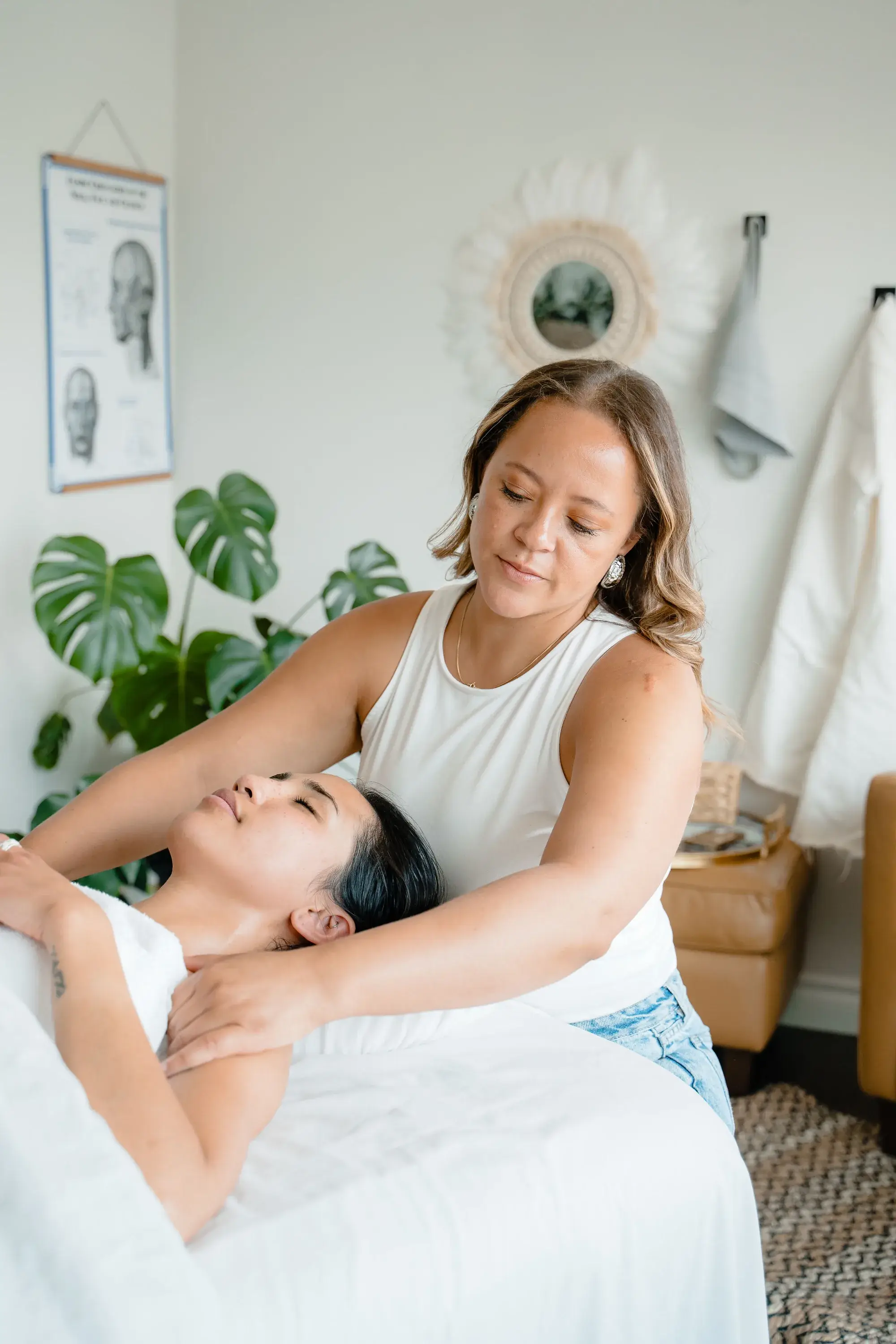
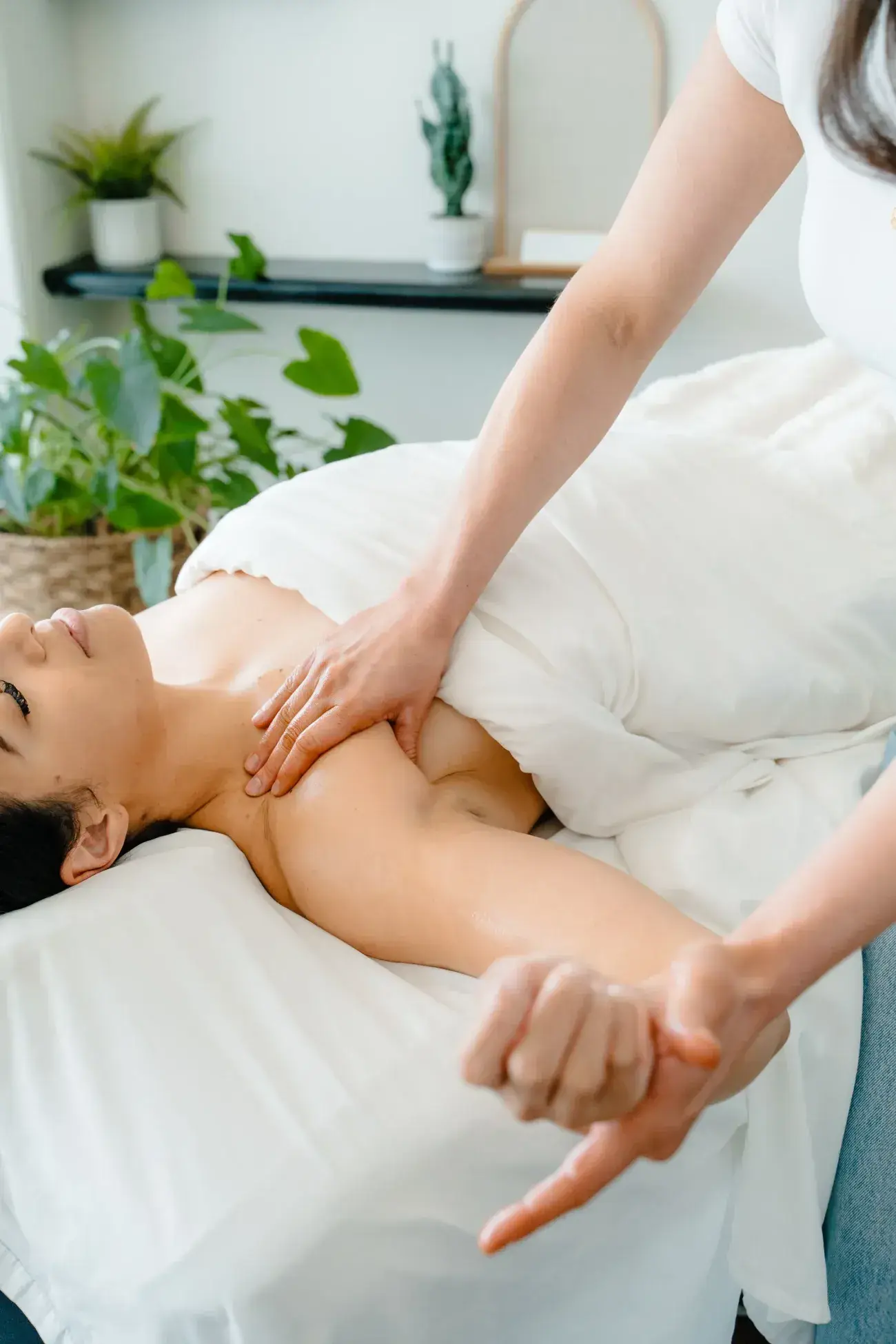
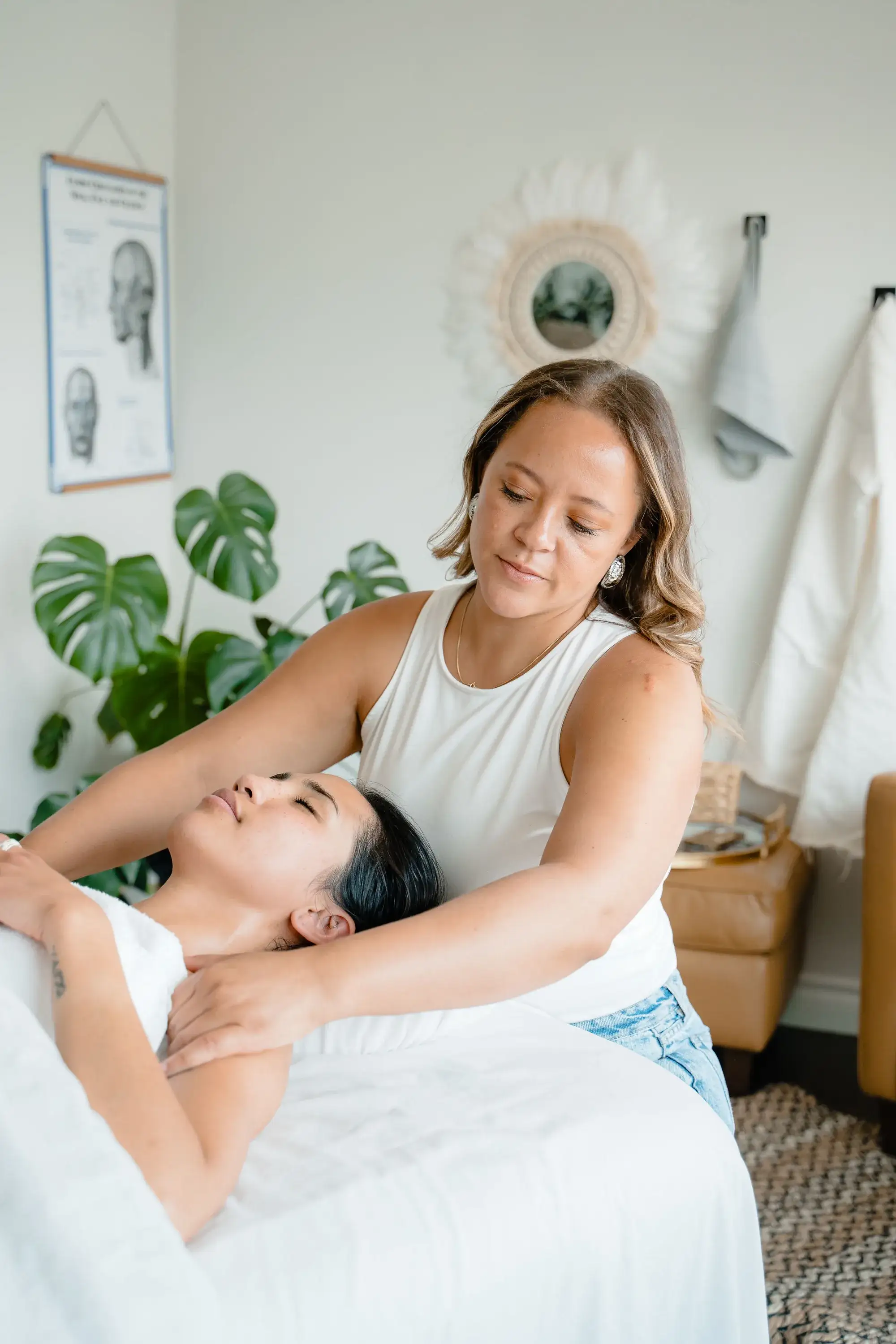
The Cleveland Clinic describes a session the same way: it usually begins with strokes to stimulate the areas that house your lymph nodes, which means the armpits, the neck and, with your consent, the groin, and only then does the therapist coax excess fluid from the swollen tissues toward those nodes, where it can reabsorb.
Healthline’s self-massage guide, written with a certified lymphedema therapist, is explicit about order. It names two stages, clearing and reabsorption. The purpose of clearing is to create a vacuum with gentle pressure so the area is prepared to bring in more fluid. Clearing goes: the supraclavicular area directly under the collarbones first, then the armpits, then the inside of the elbows, in that order, and always on both sides of the body. For the legs, it says to complete the upper-body clearing before starting on the legs at all, so that the system is clear to allow fluid to drain up. Only in the reabsorption stage does the work begin at the far end of the swollen limb and sweep toward the trunk.
What would happen if we started at the ankle
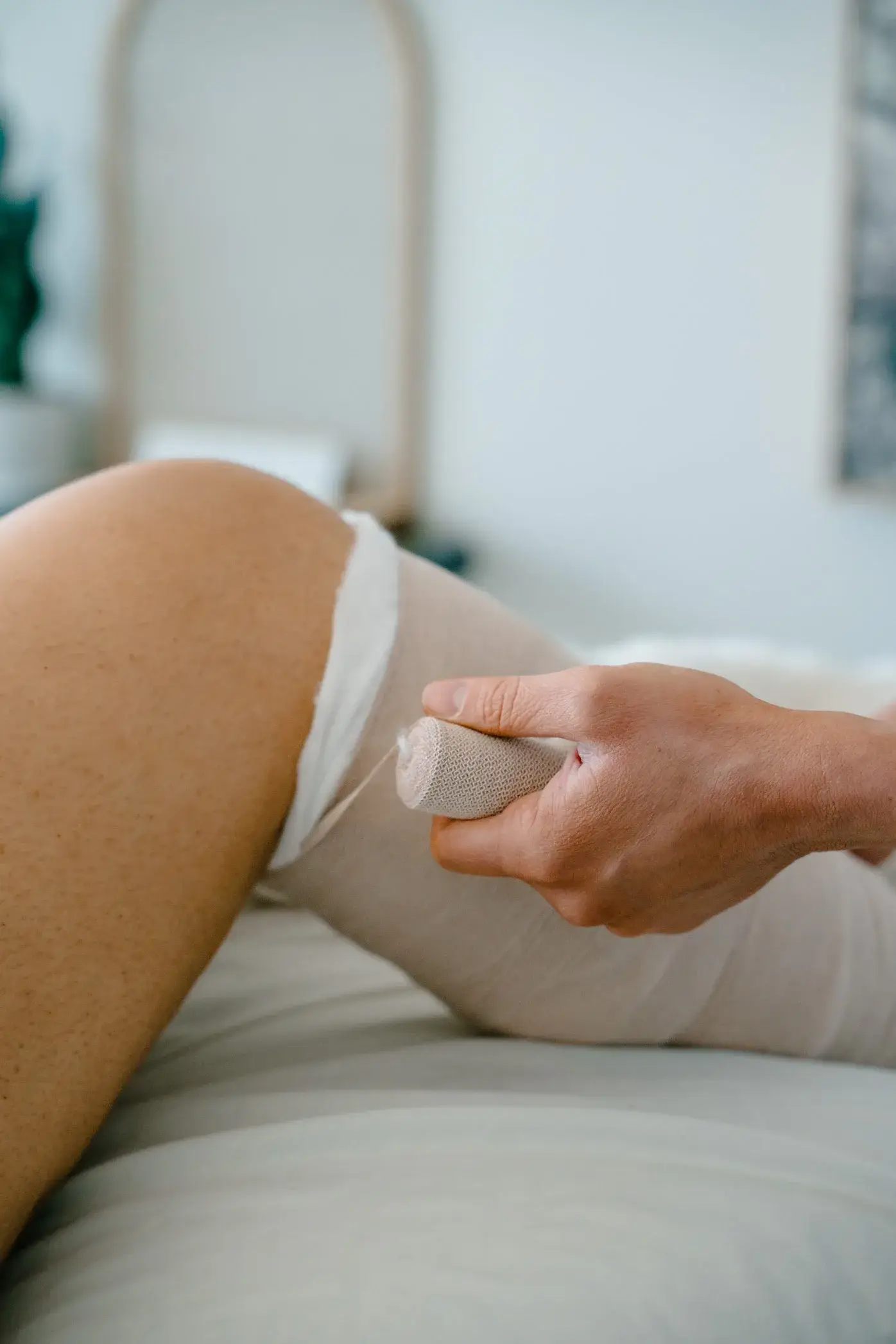
The fluid would have nowhere to go. The lymphatic system has no central pump; the NHS treatment page for lymphedema notes that, unlike blood circulation, it relies on the massaging effect of surrounding muscles to move fluid toward the nodes. Strokes at the ankle push fluid a short distance up the leg. If the groin nodes, the trunk and the outlet at the neck have not been opened first, that fluid arrives at a full system and simply waits. The session feels pleasant and achieves less. Our answer on how lymph moves without a pump explains why this slow, directional approach is the whole point.
The order of a typical session
For a swollen leg, a classic session runs roughly in this sequence. Timings vary with the person and the length booked.
| Stage | Where | Why |
|---|---|---|
| Opening the terminus | Just above and behind the collarbones, both sides | The outlet into the subclavian veins |
| Deep breathing and the trunk | Chest, abdomen | The thoracic duct runs here; breathing helps move lymph |
| Regional nodes | Armpits, then groin (with consent) | The stations the limb drains through |
| The thigh, then the lower leg | Working from the top of the limb downward | Each cleared segment makes room for the next |
| Sweeping back up | Ankle and foot toward the groin | Reabsorption, now that the path is open |
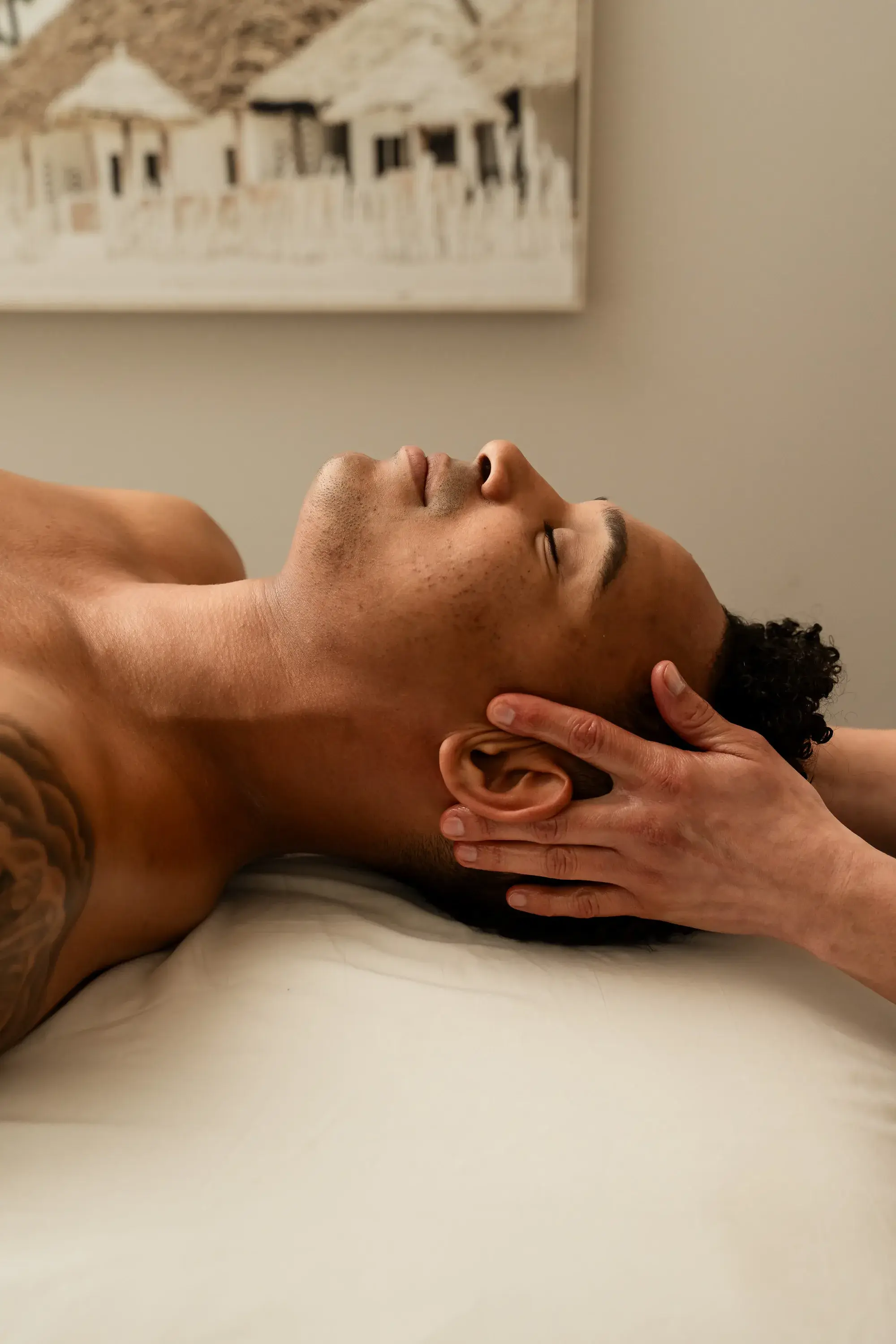
Cedars-Sinai mentions one more small thing you can do yourself: tapping the area just above the collarbones with light pressure can activate the lymph capillaries beneath the skin. It is the same principle as the opening of a session, scaled down.
Why it does not feel like much
The vessels this work targets lie just beneath the skin. The NCI describes the superficial lymphatics as a dermal network of capillary-like channels without muscular walls or valves, draining into deeper vessels that do have both. Reaching them takes a stretch of the skin, not pressure into the muscle; Healthline’s rule is that if you can feel the muscles underneath, you are pressing too hard. So the collarbone work is light, slow and quiet, and the client often wonders whether anything is happening. Our page on what lymphatic drainage feels like covers that honestly.
When neck swelling is the problem itself
Everything above is about the neck as an exit. If the neck is the swollen part, after surgery or radiotherapy to the head and neck, the approach changes and so does the care plan. The NHS lists swelling or heaviness in the face, mouth or throat and problems with swallowing and speech as signs of head and neck lymphedema, and those belong with your cancer team and a Certified Lymphedema Therapist, not a standard session. Any new, unexplained swelling in the neck, or a lump that is hot, painful or comes with fever, needs a doctor before it comes to us; the Cleveland Clinic lists swollen lymph nodes among the reasons to call a healthcare provider.
For lymphedema anywhere, Meeghan Mackenzie, our Certified Lymphedema Therapist, delivers complete decongestive therapy, where manual drainage is one of four parts. For general swelling, a classic lymphatic drainage massage is 30, 45 or 60 minutes ($95, $105 and $130), and the Learning Centre’s guide to understanding your lymphatic system has the fuller anatomy if you want it.
Questions people ask
Does the neck work mean something is wrong with my neck?
No. The strokes above the collarbones are about the exit, not a problem there. Lymph from the whole body rejoins the blood through two ducts that empty into the subclavian veins at the base of the neck, so every session opens that outlet first regardless of where the swelling is.
Why does the therapist work my armpits and groin when my ankle is the problem?
Those are the node groups the ankle drains through. Cedars-Sinai describes the sequence as starting with the main drains: the lymph nodes in the neck, groin and armpits. Massaging an area with no swelling creates space, so the congested fluid downstream has somewhere to go.
Can I skip the neck part if I am short on time?
We would rather shorten the limb work than skip the opening. The self-massage guide Healthline publishes with a certified lymphedema therapist says the same: if you only have a brief amount of time, do the clearing stage, and always clear the collarbone area before anything else.
Which side does my lymph drain to?
Mostly the left. The thoracic duct, which carries lymph from both legs, the abdomen and the left arm and side, empties into the left subclavian vein. The right lymphatic duct serves the right arm, the right side of the chest and the head, and empties into the right subclavian vein. A good therapist works both sides of the neck.
Sources
- Cleveland Clinic: Lymphatic system
- National Cancer Institute: Lymphedema (PDQ), health professional version: anatomy of the lymphatic system
- Cedars-Sinai: Lymphatic drainage massage FAQs
- Cleveland Clinic: Lymphatic drainage massage
- Healthline: How to perform lymphatic drainage massage
- NHS: Lymphoedema, treatment
- NHS: Lymphoedema
Page reviewed October 4, 2026. This page is education, not a diagnosis. For your own situation, talk to your doctor, surgeon or care team, or ask us.
Keep reading
Related pages