
Why is lymphatic drainage pressure so light?
Lymphatic drainage is light because the vessels it treats lie just under the skin and open when the skin is stretched, not pressed. Why harder is not better.
By The Renu lymphatic and massage team · 6 min read
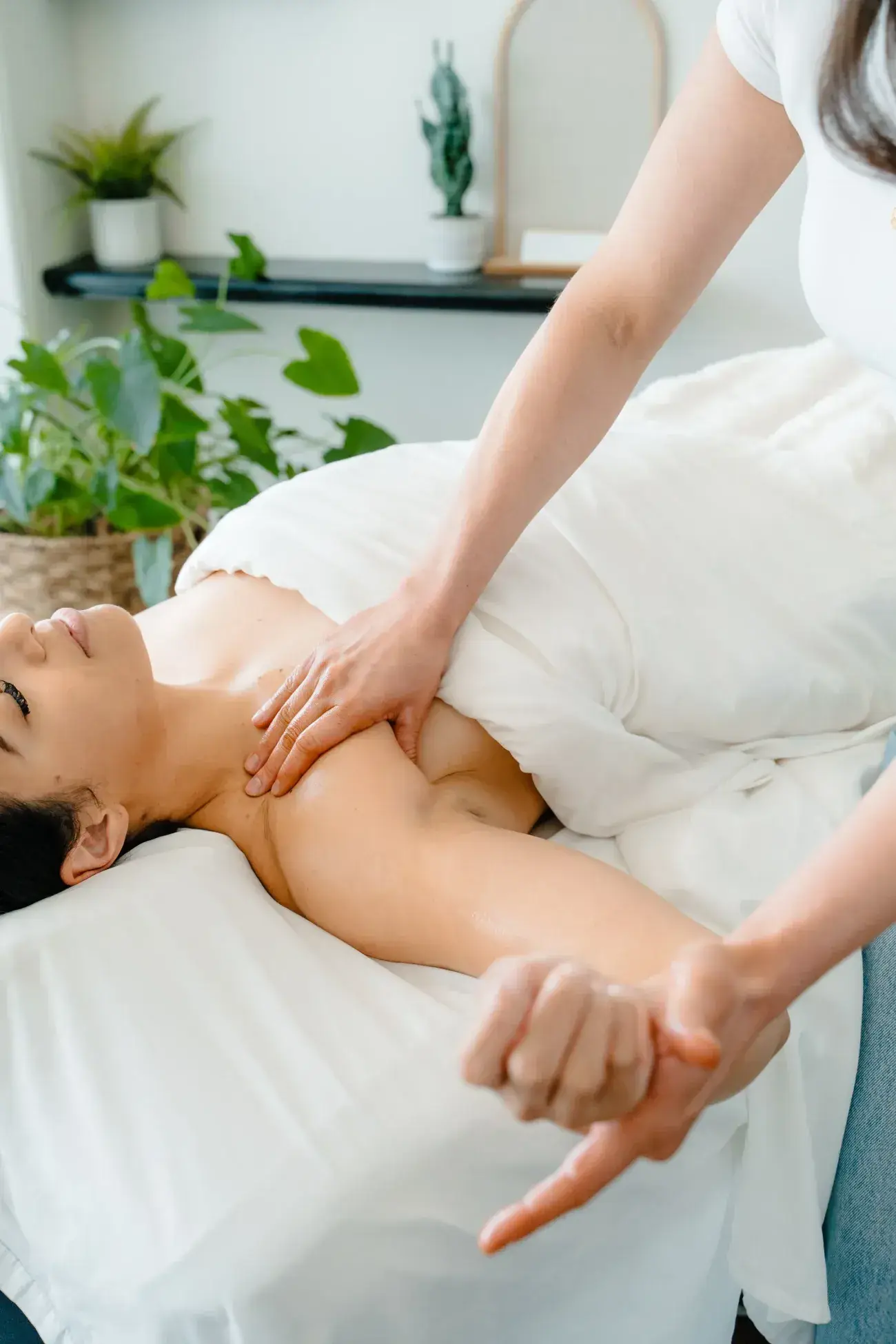
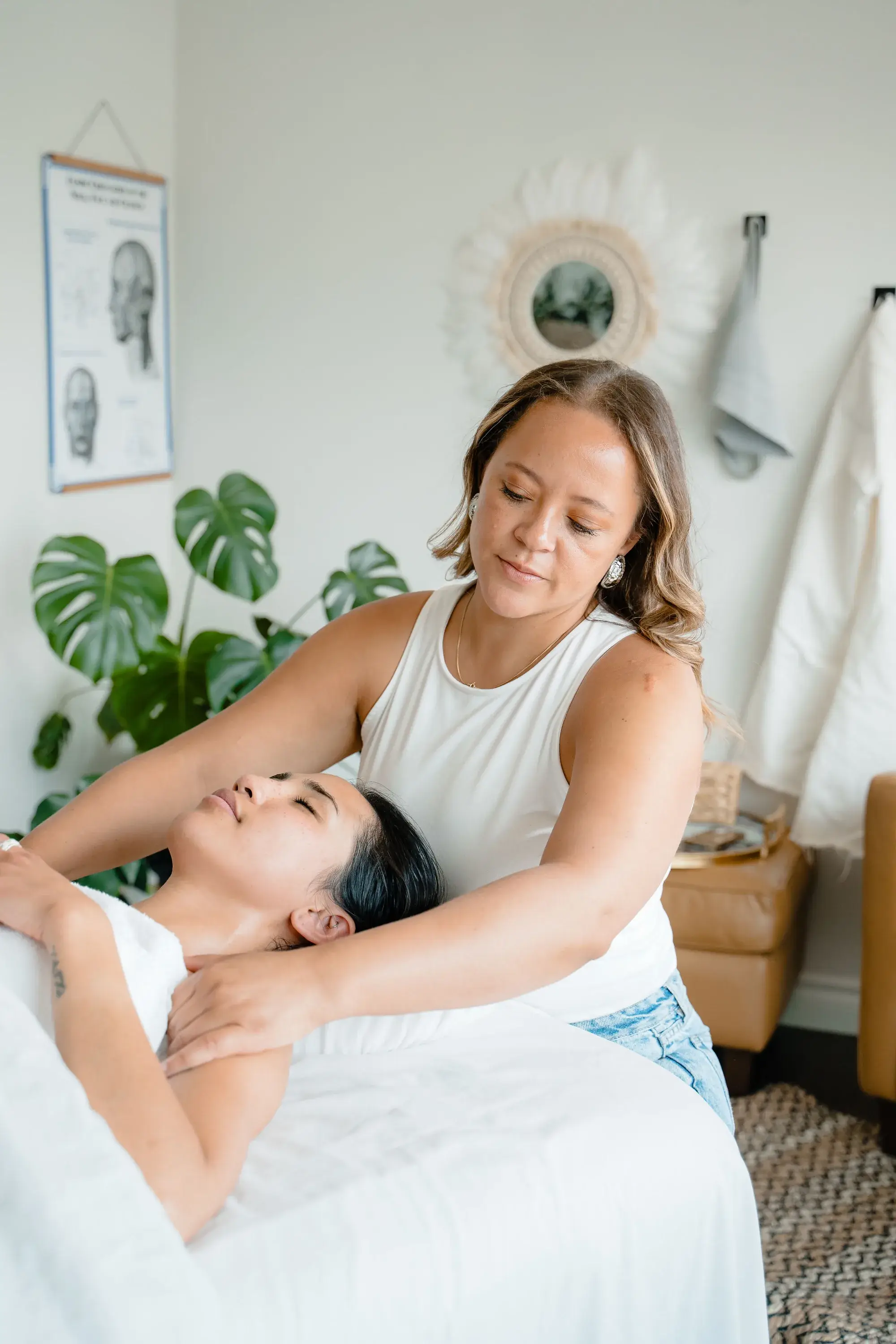
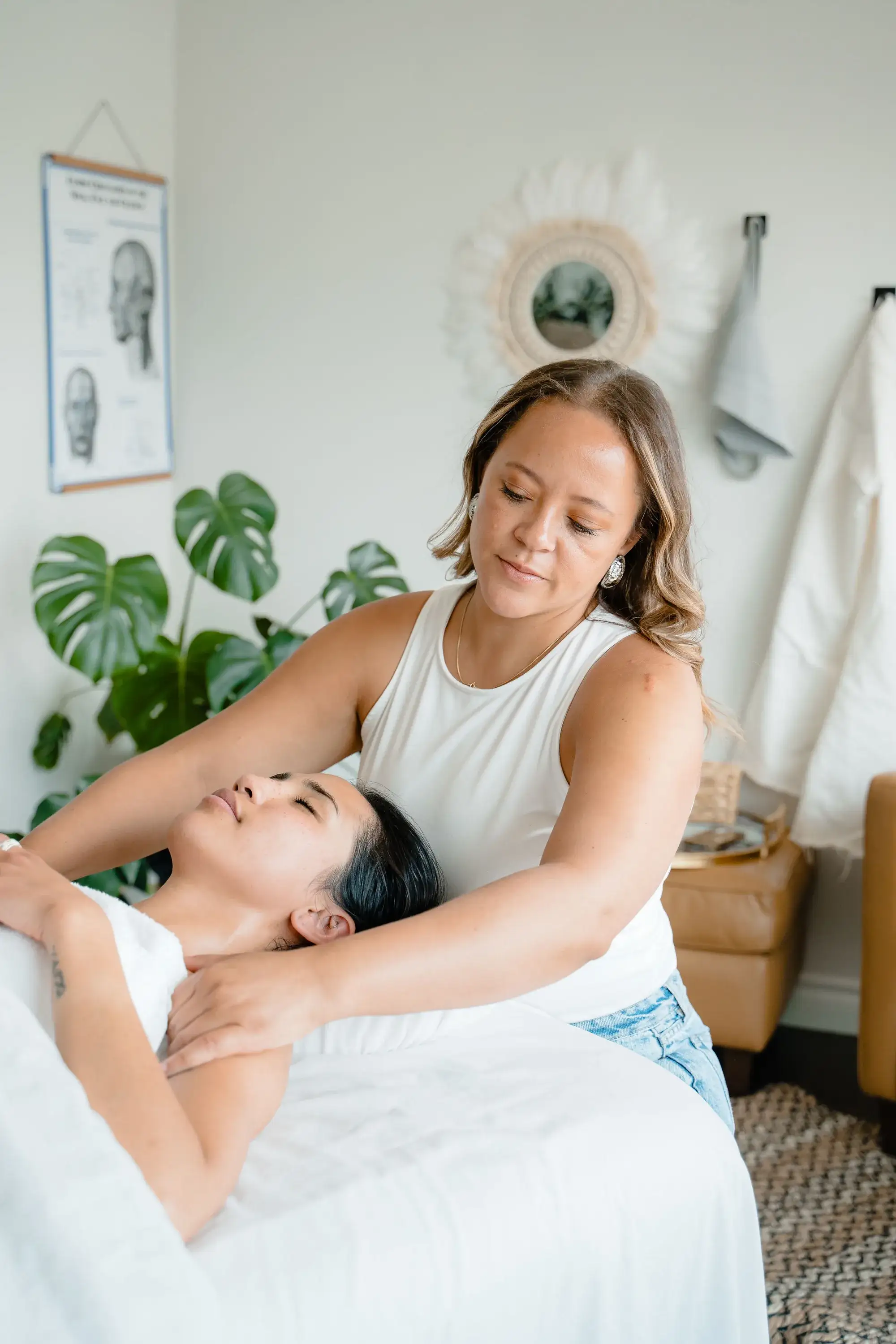
Lymphatic drainage pressure is light because the vessels being treated sit directly beneath the skin, not in the muscle. The smallest lymph vessels fill when the tissue around them is gently stretched, which is what a slow skin-stretching stroke does. Pressing harder reaches the muscle, which is a different structure with a different job, and clinical descriptions of the technique are consistent that it uses light pressure, no oil and no deep work.
The vessels are in the skin, not the muscle
The pressure is light because of where the target is. A physical therapist at Cedars-Sinai puts it plainly: lymphatic drainage massage uses light pressure to mobilize the lymphatic system, which lies directly beneath the skin. The Cleveland Clinic describes the same thing, light pressure and strategic techniques to clear the lymphatic pathways and then coax fluid from swollen tissue toward the nodes.
A deep tissue massage is aimed at muscle and the fascia around it. Those structures sit under the layer we are working in. Press hard enough to reach them and the hand has already gone past the vessels that carry lymph. You cannot treat two different depths with one pressure, which is why a lymphatic session and a deep tissue session feel like different treatments. They are.
How a gentle stretch opens a lymph vessel
The smallest lymph vessels, called initial lymphatics, do not have a pump behind them and they do not have muscle in their walls. A 2023 review in Cellular and Molecular Immunology describes how they take fluid in. Their walls are made of overlapping cells, and fine anchoring filaments tether those cells to the surrounding tissue. When pressure in the tissue rises, the filaments pull on the cells and the overlapping flaps open, letting tissue fluid in. Once the vessel has filled, the pressure inside closes the flaps again so nothing leaks back out.
That is the mechanism a lymphatic stroke is built around. Moving the skin a short distance changes the tension in the tissue underneath it, which is exactly the signal those filaments respond to. The review also notes that initial lymphatics are exposed to roughly ten times less flow stress than blood vessels. They are delicate by design.
So the light touch is not caution for its own sake. It is the amount of force that matches the structure.
What the hands are actually doing
Three things distinguish a lymphatic stroke from an ordinary massage stroke, and each follows from the physiology above.
- The skin is moved, not slid over. The hand takes the skin a short distance and lets it return. Nothing glides.
- No oil or lotion. Cedars-Sinai advises against oils because the technique acts on the skin itself, and a slippery surface makes the stretch impossible. HelloPhysio describes the strokes as working with the skin’s surface tension to guide fluid toward working vessels.
- A set order. Cedars-Sinai explains that the sequence starts with the main drains, the lymph nodes in the neck, groin and armpits, so that congested fluid has somewhere to go once the swollen area is treated.
Even the self-care advice from the same source keeps to this logic: use very light pressure, move the fingers in a C shape, and work tissue that is not swollen. Tapping lightly just above the collarbones, Cedars-Sinai adds, can activate the lymph capillaries beneath the skin. None of it is firm.
Light does not mean nothing is happening
This is the part most people find hard to believe from the table, because you feel so little. The measurable effect is real.
In a 2011 pilot study, researchers injected a fluorescent tracer into the skin of 12 healthy volunteers and 10 people with lymphedema, filmed their lymph vessels, gave a standard manual lymphatic drainage session, and filmed again. In the healthy limbs, average lymph velocity rose by 28 percent and the interval between pumping events of the vessels shortened by 23 percent. In the swollen limbs of the lymphedema group, velocity rose by 23 percent. The sessions used ordinary clinical technique, which is to say light pressure.
The Dr. Vodder School, which teaches the original method, describes its aim as precision and lightness of touch, and says that is why the technique produces relaxation and pain reduction alongside the drainage effect. Lightness is the skill, not the absence of it.
Is there such a thing as too much pressure?
For hands, no clinical source gives a number. For machines, there is a useful reference point. The National Cancer Institute’s lymphedema summary, discussing pneumatic compression pumps, records a theoretical concern that pressures higher than 60 mm Hg and long-term use may injure lymphatic vessels. A pump is a sleeve that inflates around a limb. If even that calibrated pressure is kept modest, a thumb pressed into a swollen leg is not a sensible way to move lymph.
There is a second, practical reason to stay light. HelloPhysio, writing about care after liposuction, notes that the gentle approach is suitable even for sensitive post-surgical tissue. Bruised, newly operated skin does not tolerate kneading, and lymphatic technique does not need it to.
Where firm pressure does belong
None of this makes deep pressure wrong. It makes it a different tool. Tight muscles, a stiff neck, an aching back after a long drive: those are reasons to book massage therapy, and the pressure will be whatever your tissue needs. Our page on massage therapy covers that work, and lymphatic drainage versus deep tissue massage sets the two side by side.
If you want both, Renu offers a massage and lymphatic combination at 60 minutes ($130) or 90 minutes ($165). The lymphatic portion stays light and the massage portion stays away from any swollen area.
If it felt like nothing happened
A quiet session is normal. Many people are drowsy within minutes, and the Cleveland Clinic is candid that you might not see immediate results. What you may notice over the following day is more trips to the bathroom and a limb that feels a little less tight.
What a lymphatic session should never produce is soreness, bruising or a stretch that burns. If you feel any of those, the work has drifted into something else, and it is fine to say so on the table. If you have had several sessions and nothing has changed, the Cleveland Clinic’s advice is to ask your healthcare provider about other options rather than asking for more pressure.
When to see a doctor rather than book
Light pressure is safe for most people, but it is a treatment for swelling, not a way to find out what caused it. The Cleveland Clinic lists conditions in which lymphatic massage should be avoided, including blood clots, cellulitis, fever, infection, heart disease and kidney failure. Please see a doctor before booking if your swelling:
- Is new, or affects one limb only
- Comes with redness, heat or pain in the skin
- Comes with a fever or chills
- Has lasted more than a few weeks without an explanation
Our page on who should not have lymphatic drainage massage goes through the full list.
Lymphatic drainage at Renu
Classic lymphatic drainage at Renu runs 30, 45 or 60 minutes ($95, $105 and $130), and a dedicated post-op session is 60 minutes ($140). Meeghan Mackenzie, our founder and Certified Lymphedema Therapist, trained in the Vodder and Földi methods, and our lymphatic therapists work in that tradition. If you would like to know what the session feels like from start to finish, read what lymphatic drainage massage feels like before you come in.
Questions people ask
Would lymphatic drainage work better if the therapist pressed harder?
No. The vessels being treated lie directly beneath the skin, so firm pressure passes through them to the muscle. Imaging work in healthy volunteers measured faster lymph flow after a standard light session, and the clinical sources we rely on describe the technique as light pressure without oil or deep work.
Is there a maximum pressure for the lymph vessels?
The National Cancer Institute notes a theoretical concern that pneumatic compression pumps set above 60 mm Hg may injure lymphatic vessels. Hands are not calibrated like a pump, which is one reason trained therapists keep the stroke to a gentle skin stretch rather than a squeeze.
Can I have deep tissue and lymphatic drainage in the same appointment?
Yes, as separate parts of one session. Renu books a massage and lymphatic combination at 60 or 90 minutes, and the deep work is kept away from any area that is swollen. If you have lymphedema, tell your therapist first so the affected limb is treated with lymphatic technique only.
Why does my skin feel pulled rather than rubbed?
Because the stroke is a stretch, not a glide. The hand takes your skin a short distance and releases it, which is why no oil is used. That stretch is what the smallest lymph vessels respond to.
Sources
- Cedars-Sinai: FAQs about lymphatic drainage massage
- Cleveland Clinic: Lymphatic drainage massage
- HelloPhysio: Lymphatic drainage massage after liposuction
- Cell Mol Immunol 2023: Biomechanical control of lymphatic vessel physiology and functions
- Tan et al., Arch Phys Med Rehabil 2011: Assessment of lymphatic contractile function after manual lymphatic drainage using near-infrared fluorescence imaging
- National Cancer Institute: Lymphedema (PDQ), health professional version
- Dr. Vodder School International: Frequently asked questions
Page reviewed October 4, 2026. This page is education, not a diagnosis. For your own situation, talk to your doctor, surgeon or care team, or ask us.
Keep reading
Related pages