
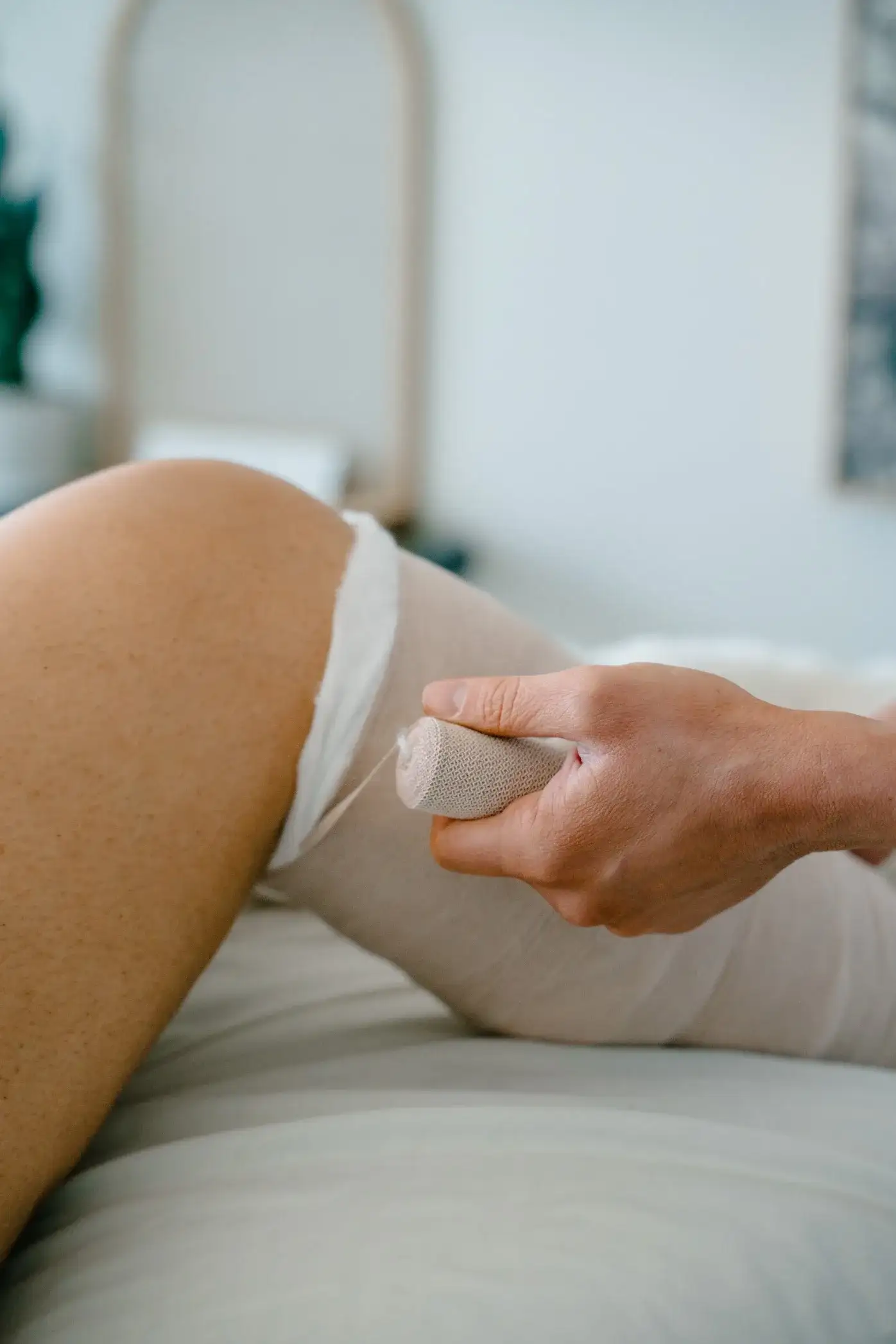
Moisturising when you wear a compression garment: timing and products
Emollient at night after the garment comes off, absorbed before it goes back on, downward strokes, no fragrance, and a check of the lotions the maker allows.
By The Renu lymphatic and massage team · 6 min read
The rule for moisturising under a compression garment is simple: apply your emollient at night after the garment comes off, and put the garment on in the morning over clean, dry skin with no cream left on the surface. Use an unperfumed, soap-free product, finish with downward strokes so hair follicles stay clear, and check the garment manufacturer's guidance, because the National Lymphedema Network notes that some lotions damage the fibres or change how the garment works. Cancer Research UK, Macmillan and the West Suffolk NHS lymphoedema service all give the same night-time timing.
A compression garment and a moisturiser want opposite things. The garment wants dry, grippy skin so it slides on and stays put; the skin wants a layer of emollient so it does not dry out and crack under fabric all day. The way to give both what they need is timing. Here is the schedule the lymphedema services agree on, the products that suit it, and what to do when the skin under the garment is itchy, sweaty or hot.
The timing: emollient at night, garment in the morning
Three sources, one answer. Cancer Research UK says to moisturise daily, at night after you have removed your compression garment. Macmillan says the same, and adds that it can help to avoid creams just before putting the garment on because they make it harder to get on. The West Suffolk NHS lymphoedema service compresses the whole idea into one line of its daily-care leaflet: wear in the morning, skin care in the evening.
Overnight the emollient has hours to absorb. By morning, Cancer Research UK’s donning instructions can be followed to the letter: the skin clean and dry, any moisturiser fully absorbed, rubber gloves on to stop snagging, the garment folded back on itself and worked up the limb, then smoothed so there are no wrinkles. If you need a daytime top-up for a dry patch, keep it small and light and wait until it has gone in before the garment goes back on.
The products: plain, unperfumed, garment-safe
What to use. Macmillan says any moisturiser that keeps the skin in good condition is fine, with a specialist cream if the skin is dry. Cancer Research UK groups the helpful products as emollients: bath oils, soap substitutes and moisturisers. The West Suffolk leaflet asks for a non-perfumed product, and the NLN’s 2026 position paper specifies mild, pH-balanced cleansing with regular moisturising to prevent dryness and cracking.
What to avoid. Perfumed body lotions, which Cancer Research UK says can dry the skin and cause irritation, and soaps that strip it. Macmillan suggests soap-free cleansers for dry skin.
Check with the garment maker. This is the step people skip. The NLN paper says that when wearing compression garments you should review the manufacturer’s guidance about which lotions are safe, since some products can damage the fibres or alter garment function. The care leaflet in the garment box, or the maker’s website, will say. Meeghan Mackenzie, our Certified Compression Fitter, can tell you what your particular garment tolerates at a 30-minute fitting appointment ($25). Our compression garments overview covers the fabrics.
How to apply it
- Garment off, skin inspected. Look at the whole limb in good light before you cover it in cream; heat, redness and broken skin are easier to spot on bare, dry skin.
- Wash if you have not already. Warm water, soap-free cleanser, dried carefully between fingers or toes.
- Work from the top of the limb down. The West Suffolk leaflet describes starting at the root of the limb and moving down it.
- Finish each area with a downward stroke. Macmillan’s reason: the last stroke in the direction of hair growth stops the moisturiser blocking hair follicles.
- Do not forget the edges. Where the garment’s top band or a glove’s wrist sits is where skin dries and chafes most.
- Leave it to absorb. Overnight is ideal. If you wear a night garment, give the cream time to sink in before it goes on, and check the night garment maker’s guidance too.
Looking after the garment while you look after the skin
Skin care and garment care are the same job seen from two sides. Cancer Research UK says most people have at least two garments so one can be worn while the other is washed, that they should be washed with a mild powder or liquid with no fabric softener, and air dried flat away from direct heat. Macmillan adds that hand washing makes garments last longer and that each one lasts about three to six months in daily wear. The NLN paper gives six months for day garments and twelve for night garments as the ideal replacement interval, or whatever the manufacturer says. The West Suffolk leaflet asks you not to cut, stretch or otherwise alter a garment, because that changes the compression.
Cream residue in the fabric shortens all of those timelines, which is the practical reason for the night-time rule.
Troubleshooting
Itch. Dry skin is the first suspect: increase the evening emollient and check whether the product you are using is perfumed. If the itch comes with redness, heat or pain, read the next section.
Sweat and heat. Wash and dry the limb before the garment goes back on; Cancer Research UK’s instruction that the skin be clean and dry applies after a workout or a hot afternoon as much as in the morning. The NLN notes that transient increases in swelling after hot weather have been reported, so a garment that feels tighter on a hot day is not necessarily a skin problem. Our page on coping with compression in hot weather goes further.
After swimming. Macmillan’s travel advice: shower and put moisturiser on afterward, because sea salt and chlorine make the skin extra dry. You do not need the garment in the water.
The garment is marking, digging in or going numb. That is a fit question, not a cream question. Macmillan says numbness, pins and needles, pain or fingers or toes changing colour mean the garment is too tight: remove it and contact your lymphedema specialist. Cancer Research UK says a garment should be comfortable and never cause pain, numbness, tingling or a change in skin colour.
Stop and call
Moisturiser is for intact skin. See a clinician the same day, and leave the garment off, if the skin under it is:
- Red, hot, painful or more swollen, with or without fever or flu-like symptoms. The NLN lists redness, warmth, pain, swelling, fever and chills as the signs of infection and calls any suspected infection in the limb an urgent medical event.
- Cracked, weeping or not healing. Macmillan says to speak to your GP if broken skin does not heal or shows any sign of infection.
- Blistered, which the NHS lists among cellulitis signs.
If cellulitis is diagnosed, Macmillan says not to wear compression in the area, and the NHS says to avoid compression stockings until you have recovered and to raise the affected limb. Skip self-drainage and exercise on that limb until your clinician says otherwise.
In the clinic
Garment fit, skin and moisturiser are reviewed together in complete decongestive therapy at Renu, because a garment that is the wrong size will make the best skin routine fail. The daily skin-care routine is the companion to this page, and if you are living with lipedema rather than lymphedema, the lymphedema and lipedema overview explains how the skin advice carries over.
Questions people ask
Can I put lotion on in the morning if my skin is very dry?
If you must, use a small amount of a light, fast-absorbing product and wait until it is fully absorbed; Cancer Research UK says the skin should be clean and dry with any moisturiser fully absorbed before the garment goes on. Macmillan says it helps to avoid creams just before donning because they make the garment harder to put on. The heavier evening application is where the real repair happens.
Will moisturiser ruin my compression garment?
Some products can. The NLN paper says to review the manufacturer's guidance about which lotions are safe because some damage the fibres or alter garment function. Applying at night, washing the garment as instructed and letting it air dry away from heat are the three habits that protect it.
Why does my skin itch under the sleeve?
Dryness is the usual reason, which is why the nightly emollient matters, but perfumed products can also irritate; Cancer Research UK says they can dry the skin and cause irritation. Itch with redness, heat or pain is a different thing and needs a clinician the same day.
Should I moisturise upward or downward?
Macmillan says to make sure the last stroke is downward, in the direction of hair growth, so the moisturiser does not block hair follicles. The West Suffolk NHS leaflet describes starting at the top of the limb and working down. Either way, the finishing stroke follows the hair.
What do I do about skin care when I have cellulitis?
Stop wearing the garment. Macmillan says not to wear compression if you have cellulitis in the area, and the NHS says to avoid compression stockings until you have recovered. Keep the skin clean and moisturised around the area as your clinician advises, and raise the limb.
Sources
- Cancer Research UK: Caring for your skin when you have lymphoedema
- Cancer Research UK: Compression garments for lymphoedema
- Macmillan Cancer Support: Skin care for lymphoedema
- Macmillan Cancer Support: Compression to treat lymphoedema
- National Lymphedema Network: Evidence-Based Practices for Lymphedema Risk Reduction (position statement, March 2026)
- West Suffolk NHS Foundation Trust: Lymphoedema guidance on daily care (leaflet 6467)
- NHS: Cellulitis
Page reviewed October 4, 2026. This page is education, not a diagnosis. For your own situation, talk to your doctor, surgeon or care team, or ask us.
Keep reading
Related pages