
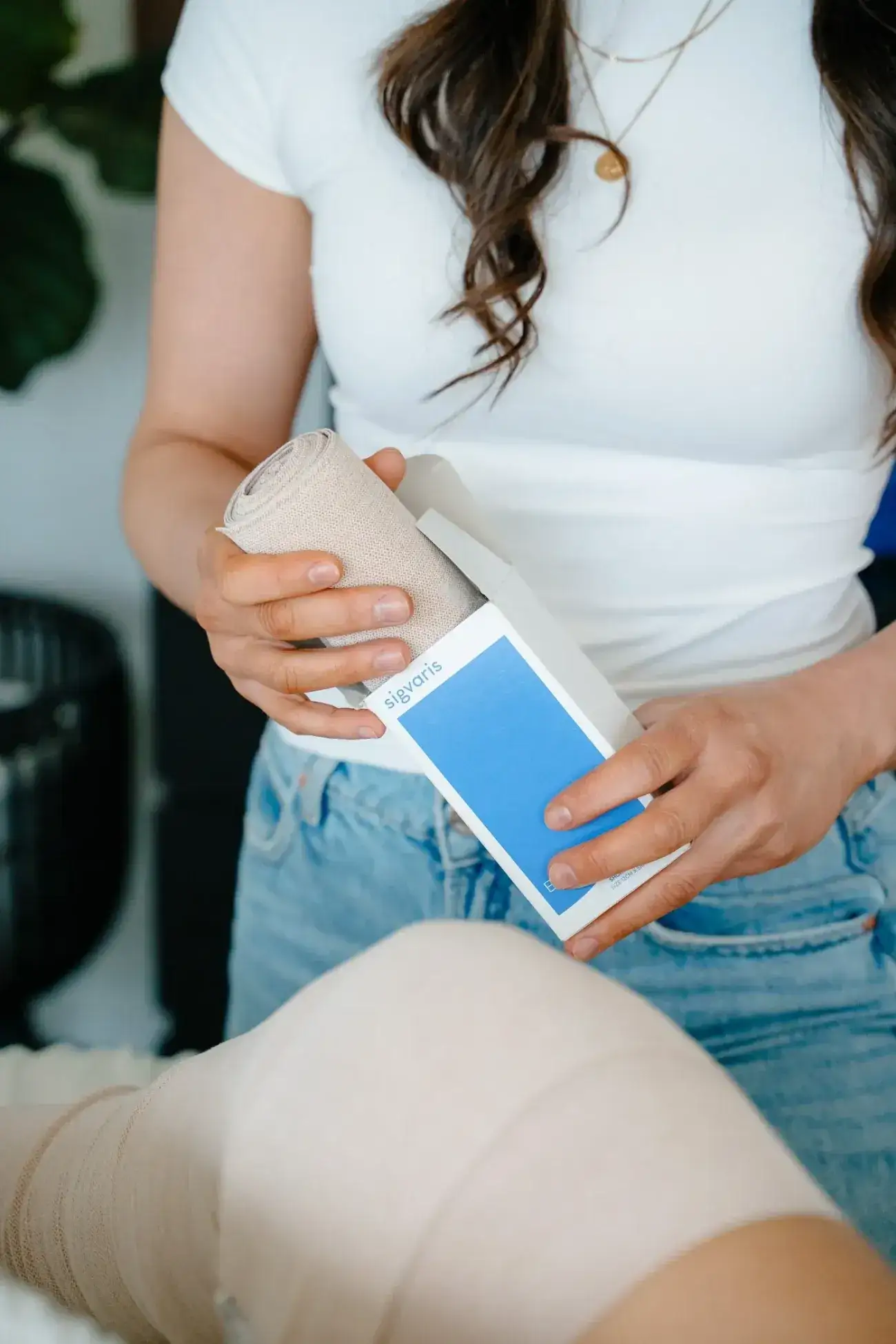
A daily skin-care routine for lymphedema
Morning: wash warm, dry between folds and toes, check the skin. Evening: garment off, non-perfumed emollient, downward strokes, a look for redness or heat.
By The Renu lymphatic and massage team · 7 min read
The daily skin-care routine for lymphedema is simple and non-negotiable: in the morning, wash the limb with warm water and a mild, soap-free cleanser, dry carefully between fingers, toes and skin folds, look it over, and put the compression garment on. In the evening, take the garment off, moisturise with a non-perfumed emollient, finishing with downward strokes, and check again for redness, heat or broken skin. The National Lymphedema Network's 2026 position paper puts it plainly: meticulous skin hygiene and intact skin are central to risk reduction, because cellulitis in the limb causes further lymphatic damage.
Of the four cornerstones of lymphedema self-management, skin care is the one people underestimate. It is not glamorous and it does not reduce the swelling you can see. What it does is keep bacteria out, and in a limb whose lymphatic system is already struggling, that is the difference between a stable year and one interrupted by cellulitis. Here is the routine, morning and evening, with the reasons behind each step.
Why the skin is the first line of defence
The National Lymphedema Network’s March 2026 position statement states that cellulitis in a limb with lymphedema significantly increases the risk of progression by causing further lymphatic damage, and that people with lymphedema are at significantly increased risk of skin infections in the first place. The same applies before any swelling appears: in a limb at risk, an infection significantly increases the risk of lymphedema developing. The NLN’s instruction is to practise meticulous skin hygiene and maintain skin integrity through daily cleansing with mild, pH-balanced products and regular moisturisation to prevent dryness and cracking.
The West Suffolk NHS lymphoedema service puts skin care first among its cornerstones for the same reason: dry, cracked skin is at risk from bacteria, and daily moisturising with a non-perfumed product minimises that risk. The NHS lymphoedema page frames the whole list as reducing your risk of cellulitis. Every step below exists to keep the skin intact.
The morning routine
- Wash with warm water. Macmillan says to wash every day with warm water, using a soap-free cleanser if your skin is dry. Cancer Research UK adds that soaps which dry the skin should be avoided, and suggests a soap substitute such as aqueous cream. Very hot water is out: the NHS lymphoedema guidance advises avoiding very hot baths and showers.
- Pay attention to the hidden places. Cancer Research UK says to wash paying attention to skin creases, skin folds and between the fingers and toes. The West Suffolk leaflet lists the places people forget: under the breasts, the groin and genital area, between the toes, deep folds and scars.
- Dry carefully. Macmillan: dry in between the fingers or toes of the affected limb, and dry between the toes to help prevent athlete’s foot. Pat rather than rub.
- Look. Thirty seconds in good light. You are looking for redness, warmth, a crack, a scratch, a bite, a patch of flaky or weeping skin, or anything that was not there yesterday.
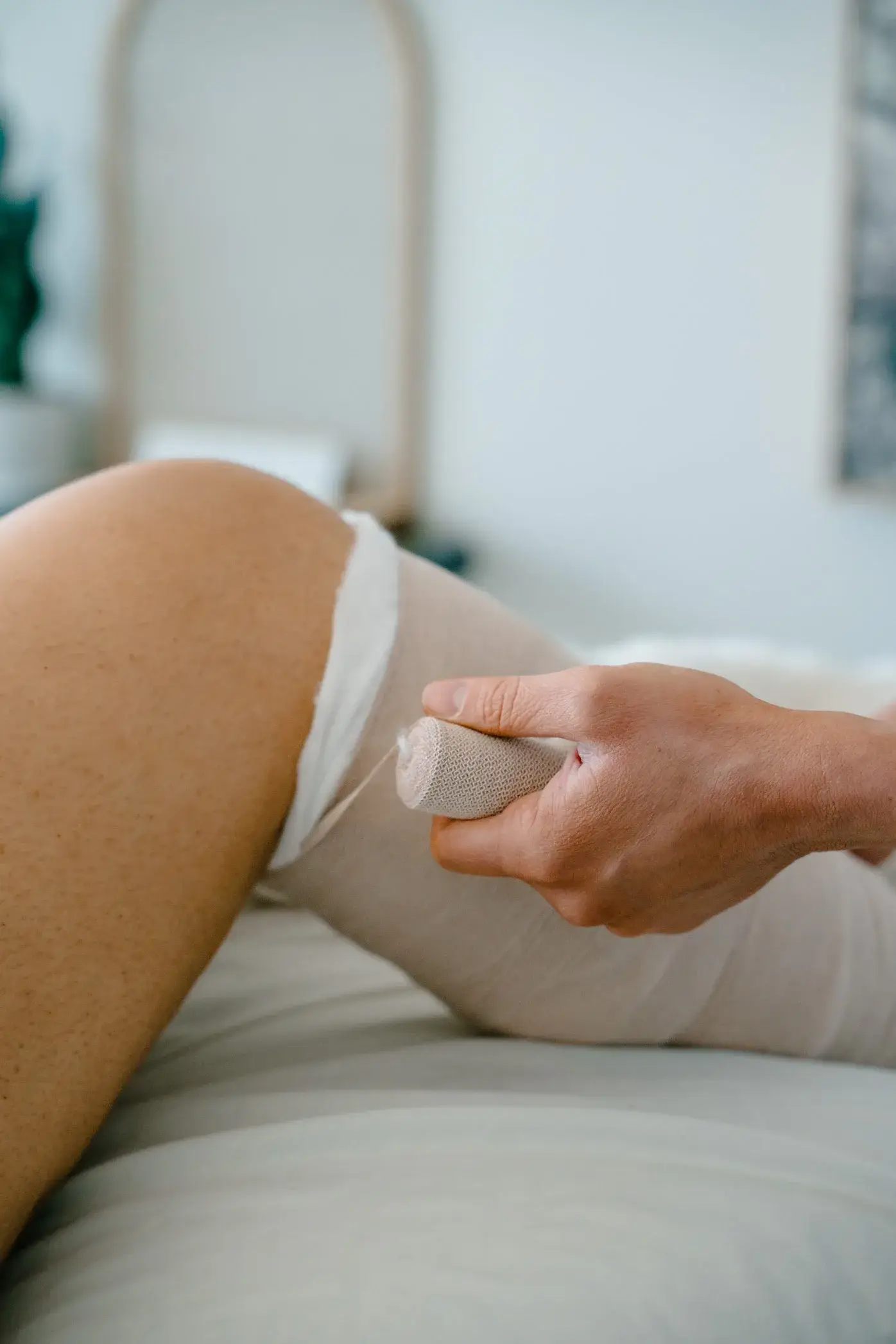
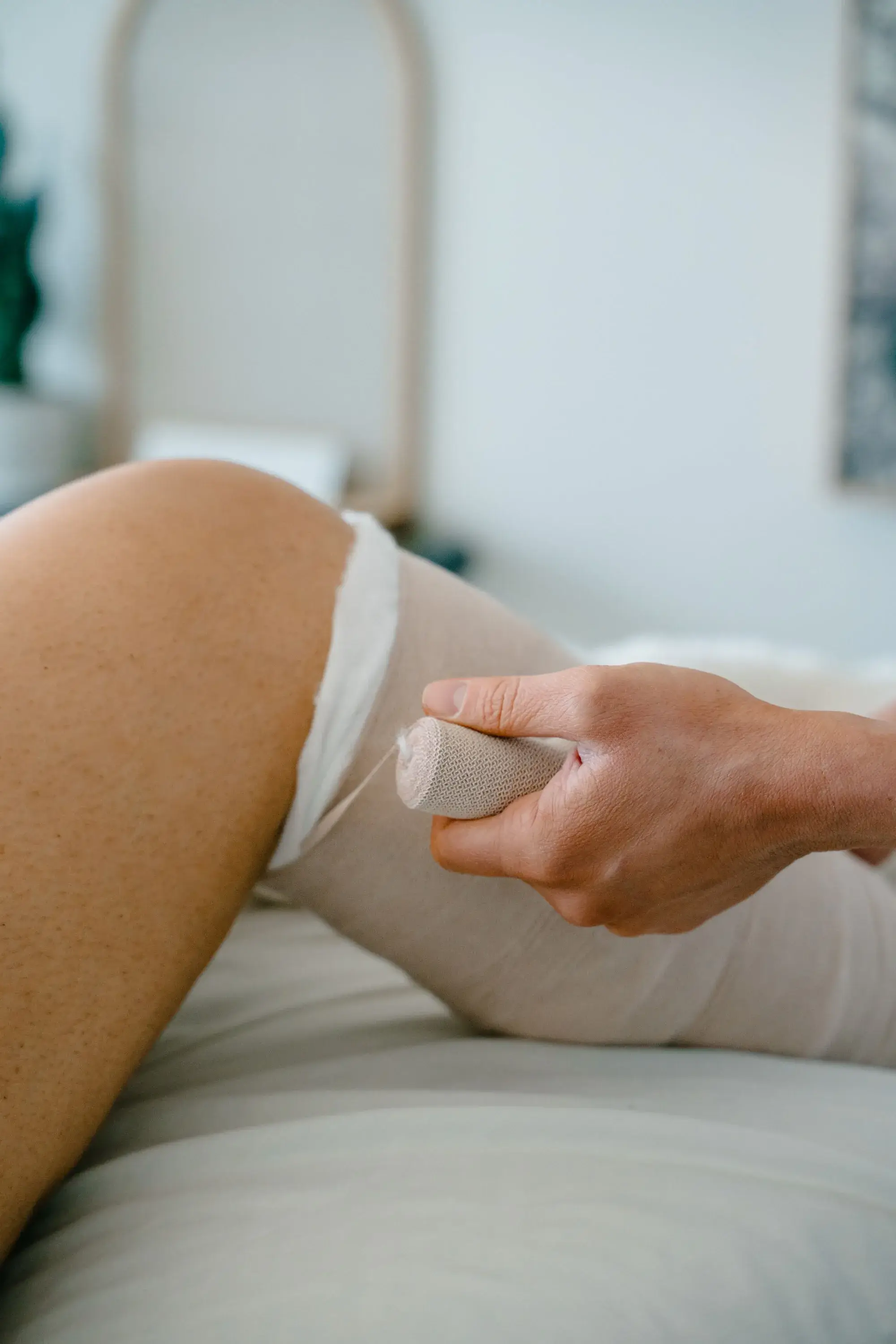
- Garment on. The West Suffolk guidance is to apply compression early in the morning, over clean dry skin, and to do skin care in the evening. If you have a cut that needs a dressing, cover it first; our cuts and first aid page explains how.
The evening routine
- Garment off. West Suffolk says it comes off last thing at night unless your therapist has given other instructions. Look at the skin the garment covered: marks that fade within a few minutes are normal, but numbness, pain or a change in the colour of the fingers or toes mean the garment should come off and your fitter should hear about it.
- Moisturise. Cancer Research UK says to moisturise daily, at night after you have removed your compression garment. Use a non-perfumed emollient; Cancer Research UK warns that perfumed body lotions can dry the skin and cause irritation.
- Finish with downward strokes. Macmillan’s detail: make sure the last stroke is downward, in the direction of hair growth, so the moisturiser does not block hair follicles. The West Suffolk leaflet describes starting at the root of the limb and working down it.
- Check again. Heat is easier to feel on bare skin at the end of the day. Compare the two sides with the back of your hand.
- Nails. When they need trimming, Macmillan says to use nail clippers rather than scissors, and not to push back or cut the cuticles. Cancer Research UK says to keep nails short and clean. The NHS suggests seeing a chiropodist for foot and nail care if that is difficult for you.
The products, in one list
- Cleanser: soap-free or a soap substitute, pH-balanced, unperfumed.
- Emollient: any plain moisturiser that suits your skin, or a specialist cream if the skin is dry; Cancer Research UK mentions bath oils, soap substitutes and moisturisers as useful emollients. If you wear a compression garment, the NLN paper says to check the manufacturer’s guidance about which lotions are safe, because some products can damage the fibres or alter how the garment works. More on that on our moisturising under compression page.
- Antiseptic cream for cuts, and a few dressings.
- Electric razor: Macmillan calls it the safest way to remove hair; Cancer Research UK says waxing, plucking and sugaring can damage the skin and increase infection risk.
- Sunscreen: at least SPF 30 with a high star rating according to Cancer Research UK; Macmillan goes further and suggests SPF 50. No sunbeds.
- Insect repellent: Macmillan recommends a product with at least 50% DEET.
- Gloves: Cancer Research UK’s list includes gardening gloves and oven gloves; the NHS adds gloves for household tasks.
Everyday habits that protect the limb
The West Suffolk daily-care leaflet lists what to avoid in the swollen area: injections or infusions, having blood taken, cuts, grazes, insect bites and stings, scratches from pets, very hot or cold baths or showers, burns, sunburn, direct contact with snow or ice, deep tissue massage, and tight clothing or jewellery. The NLN recommends avoiding blood pressure measurements, injections and venipuncture in a limb with lymphedema, with the obvious exception of an emergency where no other limb is available. For an at-risk limb with no swelling, the NLN’s 2026 position is different: isolated blood pressure readings, injections and blood draws have not been linked to swelling in studies, and you can decide with your provider.
Heat deserves its own line. The NLN says people with lymphedema should avoid saunas and be cautious about anything that can burn the skin, because a burn is a portal of entry for bacteria. The NHS adds that the heat of saunas, steam rooms and sun beds may increase swelling.
Stop and call
Contact your doctor the same day, and treat it as urgent, if the limb shows:
- Redness, warmth, pain, swelling, fever or chills. The NLN lists exactly these as the signs to be taught and says any suspected infection in the limb is an urgent medical event, with prompt antibiotics essential.
- Skin that is painful, hot and swollen, with or without blistering, which the NHS describes as cellulitis; flu-like symptoms with swollen, painful glands count too.
- A temperature of 37.5°C or higher, or below 36°C, which Cancer Research UK lists among infection signs.
- Redness that looks yellow, purple or darker than usual on brown or black skin.
- A cut or crack that is not healing, or any sign of infection in broken skin; Macmillan says to speak to your GP.
Call emergency services if there is a very high temperature, a fast heartbeat or breathing, confusion, dizziness, or purple patches on the skin; the NHS lists these as signs of serious complications. While cellulitis is treated, the NHS says not to wear compression stockings until you have recovered, and to raise the limb. Our when to seek medical care page keeps the full list in one place.
How this fits with treatment at Renu
Skin care is the part of complete decongestive therapy that you carry on every day of the year. Meeghan Mackenzie, our Certified Lymphedema Therapist, checks the skin at each visit and will adjust the routine to your garment, your climate and your hands. If you are new to the diagnosis, the overview of lymphedema and lipedema and our page on compression garments are good companions to this one.
Questions people ask
What kind of soap should I use with lymphedema?
A mild one, or none. Cancer Research UK says to avoid soaps that dry the skin and suggests a soap substitute such as aqueous cream; Macmillan recommends soap-free cleansers if your skin is dry; the NLN paper specifies mild, pH-balanced products. Perfumed body lotions and washes are best avoided because Cancer Research UK says they can dry and irritate the skin.
Why do I moisturise at night and not in the morning?
Because the garment goes on in the morning, and it goes on more easily over clean, dry skin. Cancer Research UK says to moisturise at night after you have removed your compression garment; the West Suffolk NHS guidance is to wear the garment in the morning and do skin care in the evening. Our moisturising page covers the timing in detail.
How do I know if the skin is infected rather than just irritated?
Cellulitis makes the skin painful, hot and swollen, and usually red, sometimes with blistering; you may also feel flu-like with swollen, painful glands. On darker skin Cancer Research UK says the redness can look yellow, purple or simply darker than usual. If you are unsure, treat it as infection: the NLN says any suspected infection in the limb is an urgent medical event.
Can I shave the affected limb?
Use an electric razor. Macmillan calls an electric shaver the safest way to remove hair, and Cancer Research UK says waxing, plucking and sugaring can damage the skin and increase the risk of infection. Razor blades are the common source of the small nicks that let bacteria in.
Does skin care matter if I only have mild swelling?
Yes, and arguably most. The NLN paper applies the same skin advice to people at risk who have no swelling yet, because an infection in the limb at risk significantly increases the chance of lymphedema developing. The routine takes five minutes a day; a bout of cellulitis can take weeks.
Sources
- National Lymphedema Network: Evidence-Based Practices for Lymphedema Risk Reduction (position statement, March 2026)
- Cancer Research UK: Caring for your skin when you have lymphoedema
- Macmillan Cancer Support: Skin care for lymphoedema
- West Suffolk NHS Foundation Trust: Lymphoedema guidance on daily care (leaflet 6467)
- NHS: Lymphoedema, prevention
- NHS: Cellulitis
- Cancer Research UK: Infection and lymphoedema
Page reviewed October 4, 2026. This page is education, not a diagnosis. For your own situation, talk to your doctor, surgeon or care team, or ask us.
Keep reading
Related pages