
Varicose veins in pregnancy
Varicose veins in pregnancy appear because the uterus slows blood leaving the legs. What helps, what is safe to massage, and when a sore leg means a clot.
By The Renu lymphatic and massage team · 6 min read
Varicose veins in pregnancy are swollen, twisted leg veins that appear because the weight of the uterus slows blood returning from the lower body and the valves in the veins stop closing properly. Pregnancy raises the lifetime odds of varicose veins by about 80 percent, family history adds to the risk, and in most cases the veins improve or disappear after the birth. Compression stockings, moving regularly, elevating the legs and not standing for long are the standard advice; procedures are not usually done in pregnancy. Light, upward lymphatic strokes are fine, but no one should press or rub directly over a varicose vein, and a painful, hot, swollen area in one leg needs a same-day check for a clot before any massage.
A new rope of blue vein down the inside of a calf, aching by evening and itching at night, is a very common souvenir of the second half of pregnancy. It is not dangerous in itself, it usually fades after birth, and there are sensible things to do in the meantime. The part that needs care is knowing what can be massaged and what cannot, and recognising the one situation where a sore leg is a clot rather than a vein.
Why pregnancy brings them on
Varicose veins are swollen, twisted veins under the skin, usually on the legs, which the NHS says happen when the valves that control the flow of blood in a vein do not work properly, so blood collects and the vein swells. Pregnancy loads that system from above. ACOG explains that the weight and pressure of the uterus can decrease blood flow from the lower body and cause the veins in the legs to become swollen, sore and blue. The same pressure can produce varicose veins on the vulva and in the rectum, where they are called hemorrhoids.
Family history is the other big factor. ACOG says you are more likely to have varicose veins if someone else in your family has had them, and the NHS lists being female, older age, being overweight, pregnancy, long periods of standing or sitting, a family history and a previous deep vein thrombosis as risk factors.
The size of pregnancy’s contribution has been measured. A 2016 meta-analysis of nine studies and 17,109 women found that a history of pregnancy raised the odds of developing varicose veins by 82 percent (odds ratio 1.82, 95 percent confidence interval 1.43 to 2.33) compared with women who had never been pregnant. The authors noted a great deal of variation between studies, but the direction was consistent.
Spider veins are a different thing. ACOG attributes the tiny red veins that appear on the face, neck and arms in the first half of pregnancy to hormonal changes and the higher volume of blood, and says the redness should fade after the baby is born.
What they feel like
The NHS lists pain, aching or heaviness in the legs, itching, discolouration or dry, scaly skin over the veins, and swollen ankles or legs, with symptoms worse after standing and better with the legs raised. The Cochrane review adds night cramps, numbness and tingling to the list of what women with varicose veins and leg swelling report. If the dominant complaint is puffy ankles rather than visible veins, swollen feet and ankles in pregnancy covers that side of it.
What the trials found
Cochrane reviewed seven trials with 326 pregnant women, and its conclusion was that there is not enough evidence on treatments for varicose veins and leg swelling in pregnancy. The individual findings:
| Option | Trial | Finding |
|---|---|---|
| Rutosides | 69 women | Moderate-quality evidence of symptom relief in late pregnancy, but not enough safety data for pregnancy |
| Compression stockings | One trial, compared with rest | No meaningful benefit shown |
| Water immersion | 32 women | Promising for reducing leg swelling |
| Reflexology | 55 women | Appeared to reduce the symptoms of swelling |
| Foot massage | 80 women | No significant difference from routine care |
Two things stand out for us. The foot massage result is a reminder that rubbing the feet does not move much fluid; it is the drainage above the leg that matters. And the stocking result does not mean stockings are useless, only that one small trial could not show a difference against rest; the NHS and ACOG both still include them in their advice.
Everyday care that the NHS and ACOG recommend
- move around from time to time if you have to sit or stand for long periods (ACOG), and avoid standing or sitting still for long (NHS)
- do not sit with your legs crossed for long periods
- prop your legs up on a couch, chair or footstool as often as you can
- exercise regularly: walk, swim or ride an exercise bike
- wear support hose, or compression stockings if your care provider agrees
- avoid constipation with high-fibre foods and plenty of fluids (ACOG)
- moisturise dry, itchy skin over the veins (NHS)
The NHS also notes that procedures or surgery to treat varicose veins are not usually recommended while you are pregnant. The options later, if the veins persist and trouble you, are endothermal ablation (usually the first choice), foam sclerotherapy and surgery.
How we treat legs with varicose veins
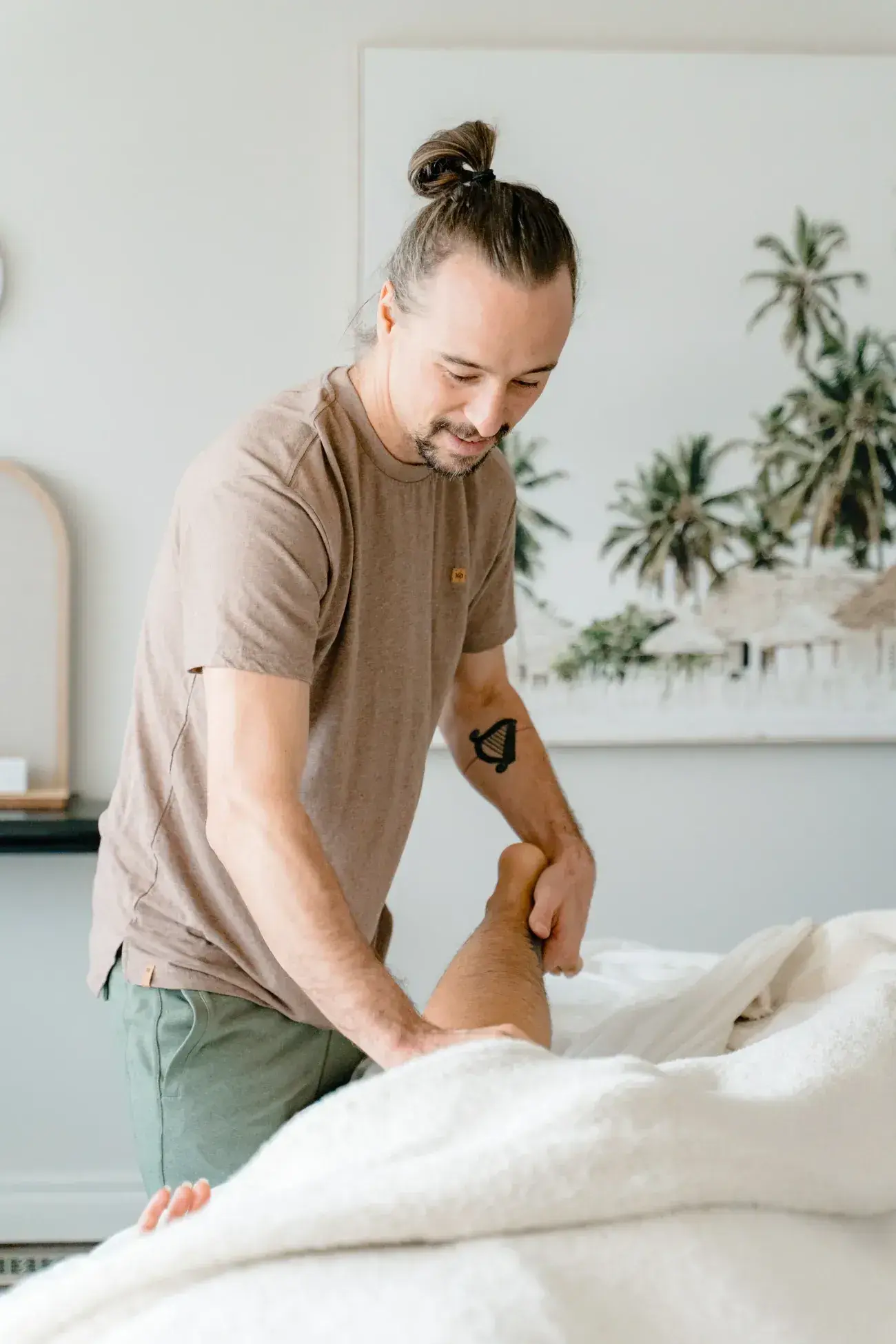
The honest summary is that we work around the veins, not on them. In a prenatal massage or a lymphatic drainage session for heavy, aching legs, the strokes on the lower leg are light and directed upward, and we open the groin and thigh first so the fluid and blood we are encouraging have a clear path. We do not apply deep pressure, friction or kneading directly over a varicose vein, and we will tell you if we are skipping an area. How lymphatic work relates to vein-related swelling is explained in can lymphatic drainage help swelling from varicose veins.
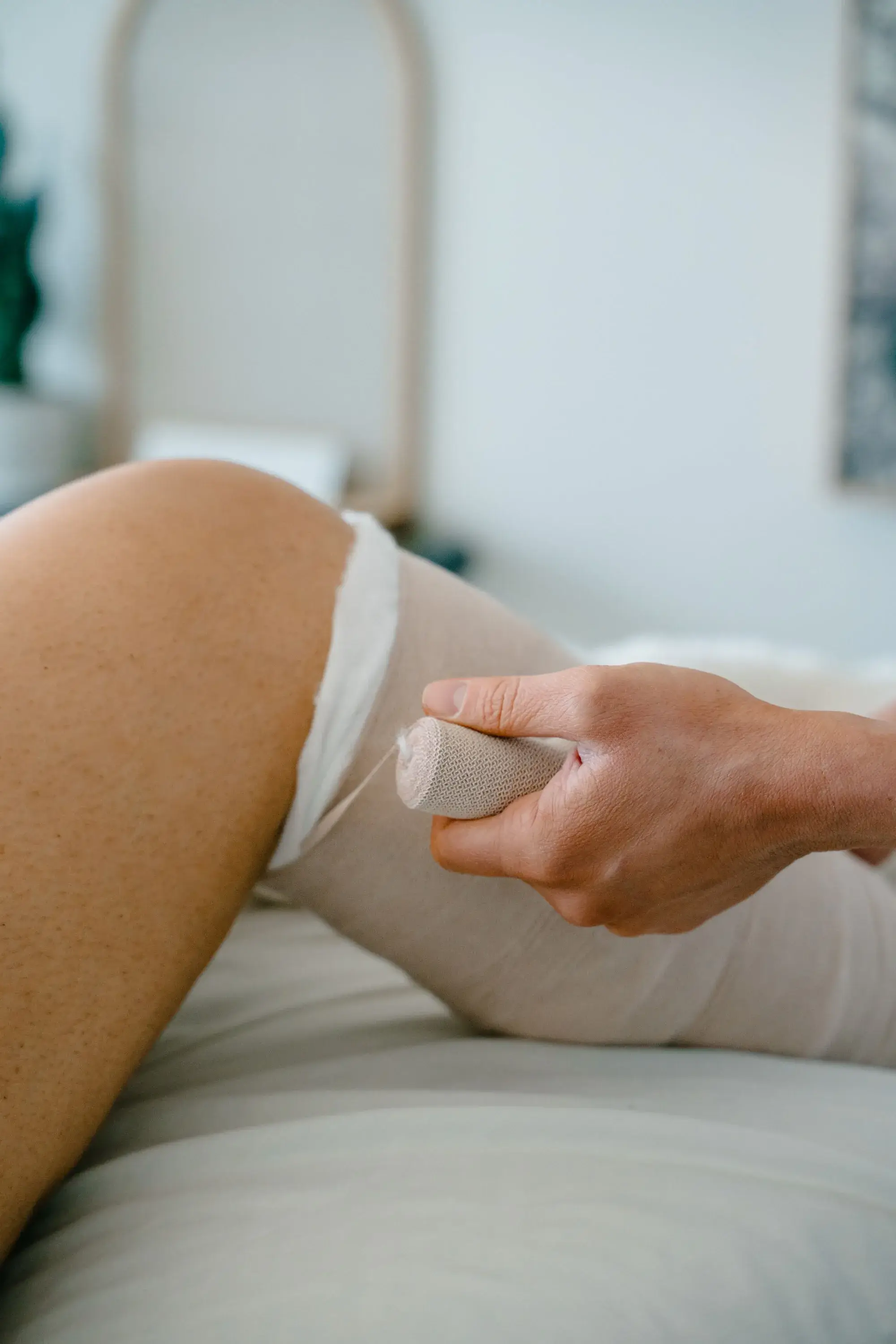
For stockings, a fitted pair is a different experience from a pharmacy pair pulled from a box. Meeghan Mackenzie is a Certified Compression Fitter and a compression fitting at Renu is a 30-minute, $25 appointment. Our compression garments guide covers garments generally, and compression stockings in pregnancy goes into the pregnancy specifics. We do not make any claims about insurance or funding; ask your plan.
When a sore leg is not a varicose vein
Varicose veins rarely cause serious trouble, but the NHS lists bleeding, varicose eczema, venous leg ulcers, superficial vein thrombosis and deep vein thrombosis among the complications, and pregnancy itself raises the risk of a clot.
Get urgent help if a varicose vein is bleeding; the NHS says to seek urgent care for that. See your GP or family doctor if the veins are painful, itching, swelling, if a sore over a vein has not healed after two weeks, or if things are getting worse.
The one we screen for before every leg session is a clot. The NHS describes deep vein thrombosis in pregnancy as throbbing pain in one leg, rarely both, usually in the calf or thigh; swelling in one leg; and red, blue or darkened skin around the painful area. The risk stays raised for six weeks after birth. If that is your leg, ask for an urgent GP appointment or call the nurse line the same day, and call emergency services if you also feel short of breath or have chest pain. ACOG’s shorter version: a tender, red spot on the leg should be checked by your health care professional. We will not massage a leg with those signs, and when to seek medical care lists the other situations where the right first call is a clinician rather than a therapist.
Questions people ask
Can a massage therapist work on legs with varicose veins in pregnancy?
Yes, with limits. We use light, upward strokes on the leg and clear the groin and thigh first, and we never press, rub or apply friction directly over a bulging vein. If one leg is painful, hot or more swollen than the other, we do not touch it until a clinician has ruled out a clot.
Do varicose veins from pregnancy go away?
Often. The NHS says varicose veins that appear in pregnancy often get better or go away after the baby is born, and ACOG describes them as mostly a cosmetic problem that resolves after delivery. Veins that are still bothering you months later can be assessed by your GP, who can refer you for treatment once you are no longer pregnant.
Are compression stockings worth wearing for varicose veins in pregnancy?
The NHS says you may be able to use compression stockings during pregnancy, and ACOG lists support hose among its tips. The Cochrane review found no meaningful benefit from stockings over rest in the single trial it had, so the evidence is thin; many women still find the heavy, aching feeling eases in them. A measured fit matters, and Meeghan Mackenzie is a Certified Compression Fitter.
Can I have a procedure for varicose veins while pregnant?
The NHS says procedures or surgery to treat varicose veins are not usually recommended while you are pregnant, partly because the veins often improve on their own after birth. Treatments such as endothermal ablation, foam sclerotherapy and surgery are options later if needed.
Is a tender red spot on a varicose vein serious?
It needs looking at. ACOG says a tender, red spot on the leg should be checked by your health care professional, and the NHS lists superficial vein thrombosis and deep vein thrombosis among the complications of varicose veins. Pain, swelling and darkened skin in one leg should be assessed the same day.
Sources
- NHS: Varicose veins
- ACOG: Skin conditions during pregnancy (FAQ169)
- Cochrane (Smyth, Aflaifel and Bamigboye 2015): Interventions for varicose veins and leg oedema in pregnancy
- Ismail, Normahani, Standfield and Jaffer 2016, Journal of Vascular Surgery: Venous and Lymphatic Disorders: A systematic review and meta-analysis of the risk for development of varicose veins in women with a history of pregnancy (abstract via Europe PMC)
- NHS: Deep vein thrombosis in pregnancy
Page reviewed October 4, 2026. This page is education, not a diagnosis. For your own situation, talk to your doctor, surgeon or care team, or ask us.
Keep reading
Related pages