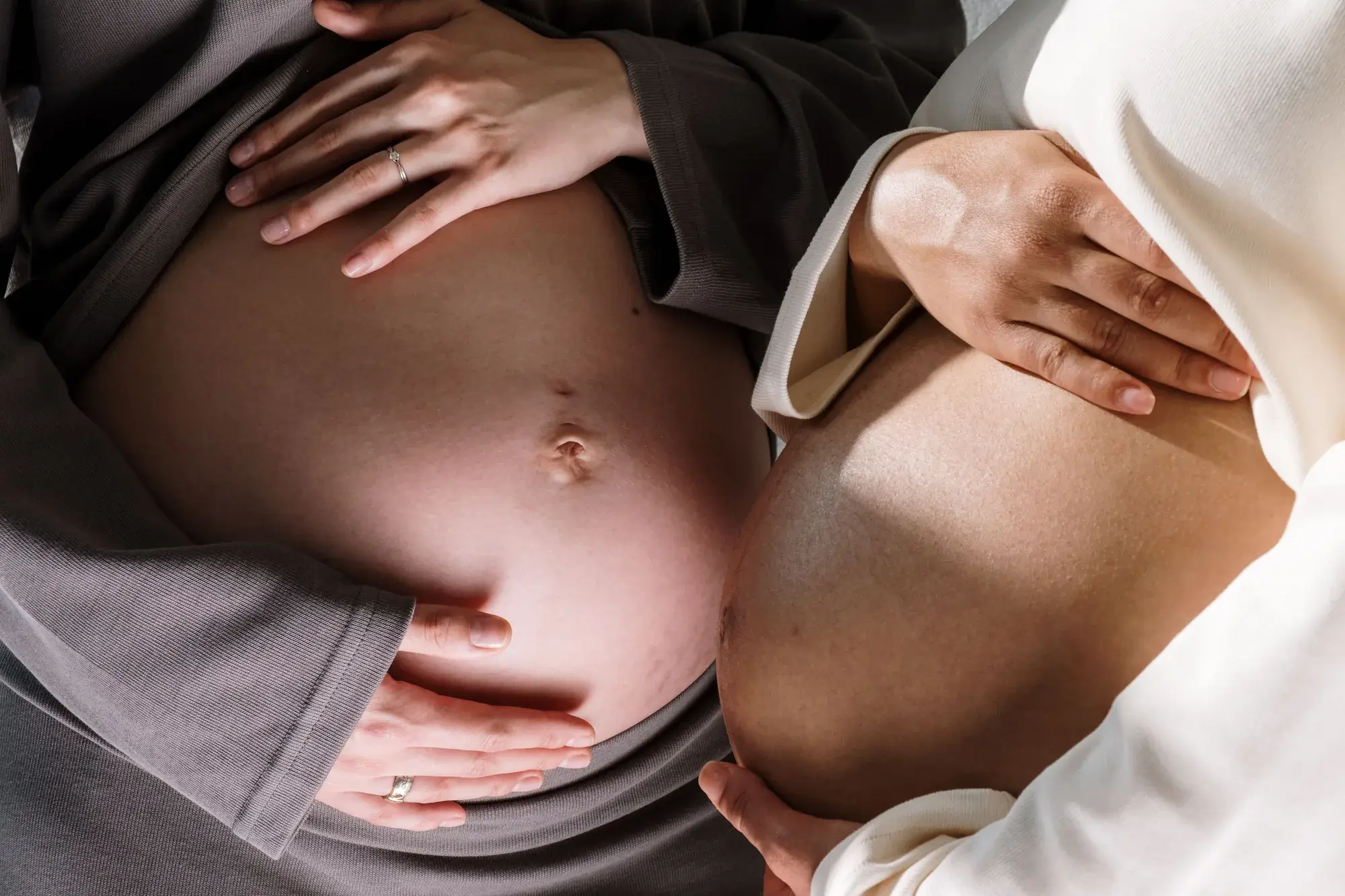


Headaches in pregnancy
Headaches in pregnancy are common early on and usually ease. Non-drug care first, paracetamol if needed, and the red flags that point to pre-eclampsia.
By The Renu lymphatic and massage team · 6 min read
Headaches in pregnancy are common, especially in the first trimester, and most are tension-type or migraine headaches that improve as pregnancy goes on. The European Headache Federation review recommends non-drug approaches first, such as regular sleep, regular meals, hydration and managing stress, with paracetamol as the safest painkiller when one is needed, taken for the shortest time. Massage of the neck, shoulders, jaw and scalp eases the muscle tension behind a tension-type headache, although it is not among the treatments the review assessed. After 20 weeks, a severe headache that painkillers do not touch, with vision changes, pain under the ribs, vomiting or sudden swelling, can be pre-eclampsia and needs your maternity unit immediately.
A pregnancy headache has two problems attached to it. The first is that the usual answer, a couple of ibuprofen, is off the table. The second is that somewhere in the back of your mind is the warning you were given about pre-eclampsia, so every headache carries a small question. This page handles both: what ordinary pregnancy headaches are and how to ease them without medication, and the short, specific list of symptoms that mean a headache needs a clinician today.
Common, and usually improving
The NHS says headaches can be common in early pregnancy, that they usually improve as the pregnancy goes on, and that they do not harm your baby. The 2017 systematic review from the European Headache Federation, by Negro and colleagues, fills in the pattern for women who already had headaches before conceiving. Across the studies it gathered, 66.9 percent of women with migraine improved or went into remission during pregnancy, with the greatest relief in the second and third trimesters; about 8 percent got worse, more often those who have migraine with aura. For tension-type headache the improvement rate was around 82 percent, and worsening was rare. New-onset migraine does occur, in roughly 1 to 10 percent of pregnant women for migraine without aura.
The review draws a line that matters more than any statistic: a primary headache is one where the pain is the disease, and a secondary headache is one where the pain is a symptom of another disease. Migraine and tension-type headache are primary, and they account for most headaches in pregnancy. The job for you and your care provider is to make sure a new or different headache is not secondary.
Non-drug care comes first
The review’s recommendation is that lifestyle and non-pharmacological measures are the first line. Its specifics: avoid the triggers of sleep deprivation, skipping meals and emotional stress; keep a balanced lifestyle with attention to physical activity and regular eating and sleeping habits; and consider acupuncture and behavioural therapies such as biofeedback and yoga.
The NHS self-help list for pregnancy headaches is shorter and overlaps: drink plenty of fluids to prevent dehydration, get enough sleep, and rest and relax, with a pregnancy yoga class as its example.
Where sleep is the broken piece, insomnia in pregnancy goes through the evening habits that help. Where posture is the trigger, especially for anyone working at a screen while exhausted, our desk set-up for neck and shoulder pain page is the place to start.
If you need a painkiller
The NHS says paracetamol is the first choice of painkiller if you are pregnant, and that for safety you should take it for the shortest possible time. It advises avoiding painkillers containing codeine and non-steroidal anti-inflammatory drugs such as ibuprofen. The headache review agrees that paracetamol is considered the safest option for acute pain in pregnancy and breastfeeding, while noting emerging data on prenatal exposure, which is one more reason to use the lowest dose for the shortest time. On NSAIDs such as ibuprofen, naproxen and diclofenac, the review is specific: avoided in the first trimester, a relatively safe choice in the second, and not recommended in the third. Your midwife, doctor or pharmacist should have the final word on any medicine in pregnancy.
What massage does for a tension-type headache
The honest framing first. The headache review’s list of non-drug options names lifestyle measures, acupuncture, biofeedback and yoga; it does not assess massage, so we cannot tell you a trial shows massage treats pregnancy headaches. What we can describe is what massage does to the tissues involved in a tension-type headache, which is a headache with a large muscular component.
In a massage therapy or prenatal massage session for headaches we spend most of the time above the shoulders: the suboccipital muscles at the base of the skull, the upper trapezius and the muscles along the side of the neck, the scalp, and the jaw. Jaw clenching often sits underneath a headache in the temples, in our experience, and Sasha’s TMJ massage, which includes gentle intra-oral work on the chewing muscles, is the option for anyone who wakes with a tight jaw and a headache in the temples. You can be seated or semi-reclined for all of this, so it is available from the first trimester, when headaches are most frequent and positioning is not yet an issue.
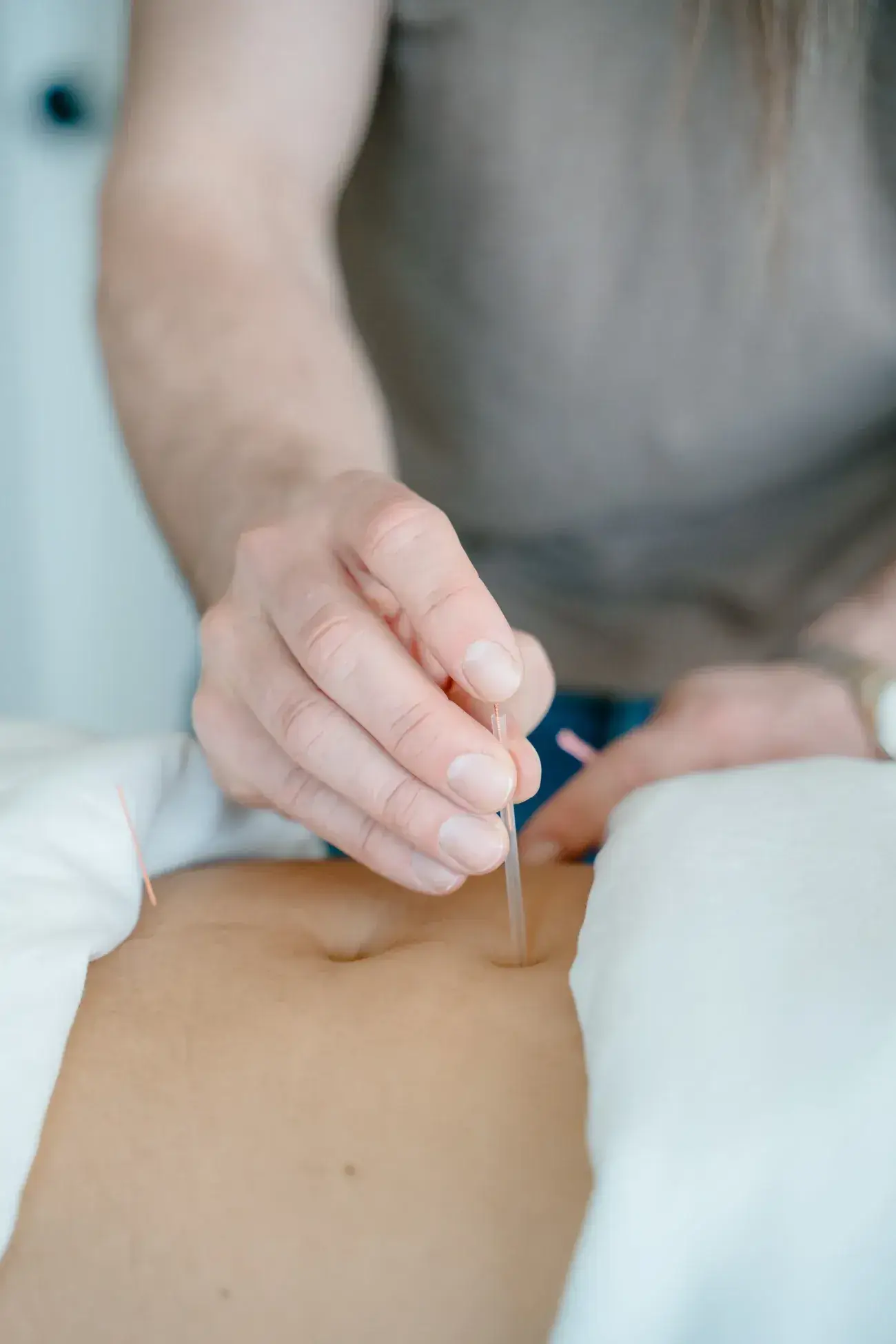
For the acupuncture the review does name, Dr. Will Tanner offers acupuncture at the clinic and treats pregnant clients. Tell him about your headache pattern and your stage of pregnancy when you book.
What we will not do is treat a headache that fits the list below. If you arrive with one, we will ask you to call your maternity unit from our reception.
The headache that is not a tension headache
Pregnancy changes the body in ways that raise the risk of several dangerous secondary headaches, particularly those linked to high blood pressure, and the review lists the conditions a clinician has to rule out: pre-eclampsia and eclampsia, clots in the veins of the brain, stroke, bleeding around the brain, and a handful of rarer causes. Its red flags include a headache that reaches peak severity in under five minutes, a new type of headache, one that changes with posture or wakes you from sleep, one brought on by exertion or straining, any neurological symptom, fever, and raised blood pressure.
Pre-eclampsia is the one that applies to most pregnancies. The NHS says it is most likely from 20 weeks onward, can happen at any point, and can also develop in the days or weeks after the birth. ACOG adds that it usually develops after 20 weeks, often in the third trimester, and can appear in the weeks after childbirth. Its early signs, high blood pressure and protein in the urine, are picked up at your appointments; the symptoms you can feel are the ones below.
Contact your maternity unit, or call the nurse line, immediately if you have:
- a severe headache that does not go away with simple painkillers
- problems with your vision, such as blurring or flashing lights, or seeing spots
- pain just below the ribs, or in the upper abdomen or shoulder
- vomiting, or nausea and vomiting in the second half of pregnancy
- a sudden increase in swelling of the face, hands, feet or ankles
- heartburn that does not go away with heartburn medicine
- sudden weight gain, difficulty breathing, or feeling very unwell
Those lines are drawn from the NHS and ACOG lists combined. ACOG’s advice is to call your obstetric provider right away if any of them appear, especially in the second half of pregnancy. The NHS says that in most cases pre-eclampsia is not severe, and it can be managed once it is found, but it has to be found by someone who can measure your blood pressure and test your urine. That is never us, and a headache with any of these companions should go to them first.
Questions people ask
Why do I get more headaches in early pregnancy?
The NHS says headaches can be common in early pregnancy and usually improve as pregnancy goes on, and that they do not harm the baby. The headache review identifies sleep deprivation, skipped meals and emotional stress as the triggers to avoid, all of which tend to pile up in a nauseated, exhausted first trimester.
Will my migraines get worse while I am pregnant?
For most women they get better. The European Headache Federation review found that around two-thirds of women with migraine improved or went into remission during pregnancy, mostly in the second and third trimesters, and that tension-type headache improved in about 82 percent. Roughly 8 percent of migraine sufferers got worse, more often those with aura.
Can I take ibuprofen for a headache in pregnancy?
The NHS says to avoid painkillers containing codeine and non-steroidal anti-inflammatory drugs such as ibuprofen in pregnancy, and that paracetamol is the first choice, taken for the shortest possible time. The headache review describes NSAIDs as a relatively safe choice only in the second trimester, to be avoided in the first and not recommended in the third. Check with your midwife or pharmacist before taking anything.
Does a neck and shoulder massage help pregnancy headaches?
It helps the muscle component of a tension-type headache, which is what we treat: the suboccipital muscles at the base of the skull, the upper trapezius, the jaw muscles and the scalp. The headache review's list of non-drug options names lifestyle measures, acupuncture, biofeedback and yoga, and does not assess massage, so we offer it as relief for the tightness rather than as a proven headache treatment.
Sources
Page reviewed October 4, 2026. This page is education, not a diagnosis. For your own situation, talk to your doctor, surgeon or care team, or ask us.
Keep reading
Related pages