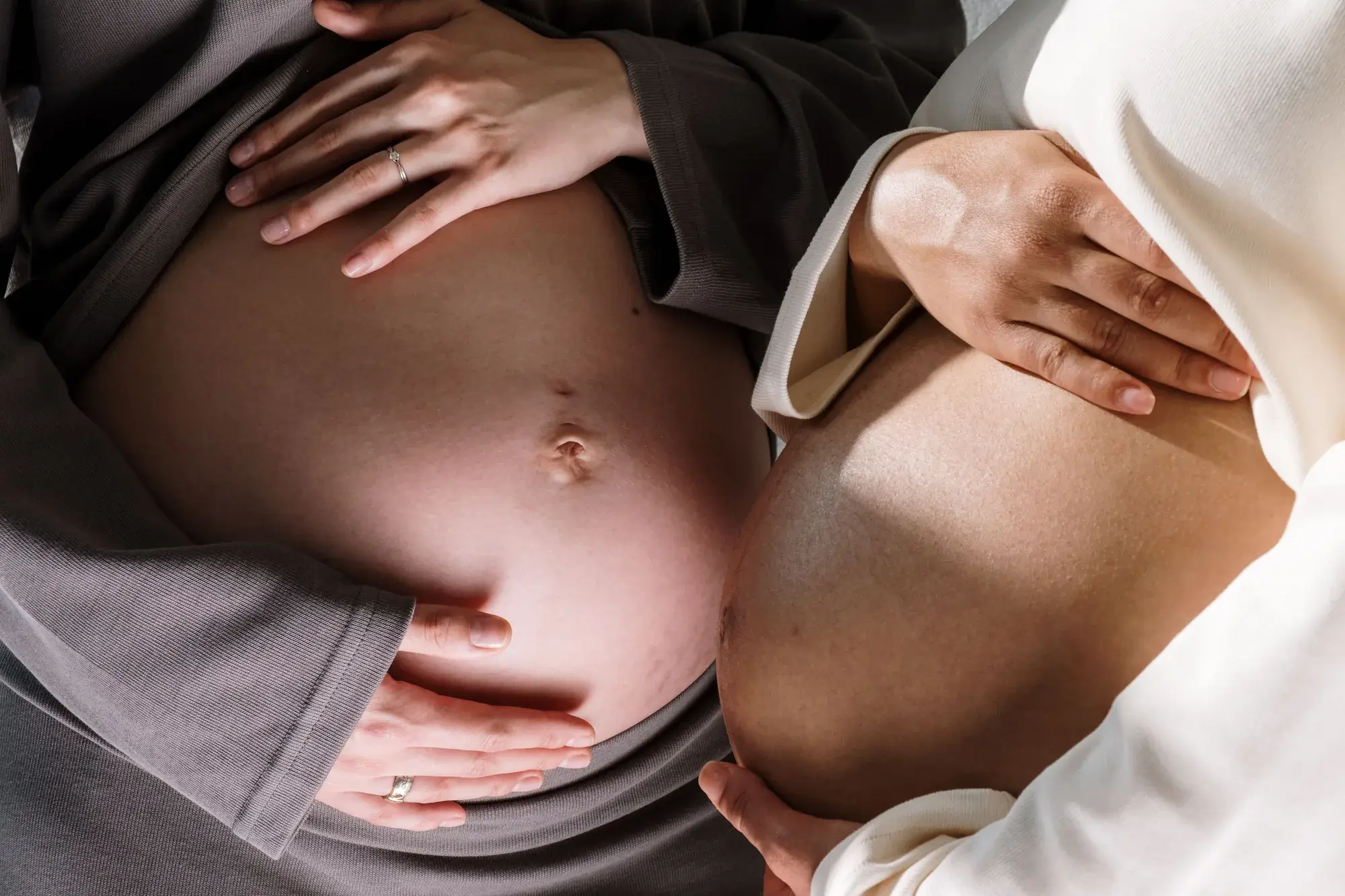

Pregnancy and postpartum
Massage in the first trimester
Massage in the first trimester is unstudied rather than shown harmful: no trial started before 12 weeks, and massage is not a listed cause of miscarriage.
By The Renu lymphatic and massage team · 6 min read
There is no evidence that a gentle massage in the first trimester harms a pregnancy, and massage does not appear on the NHS list of things that cause or raise the risk of miscarriage. What is true is that the research has not looked at these weeks: every trial in the 2021 systematic review of prenatal massage enrolled women at 12 weeks or later, so the honest word is unstudied, not unsafe. Many therapists prefer to begin in the second trimester for that reason. If you want a massage before 12 weeks, tell us you are pregnant, let your care provider know, and expect a quieter, lighter session with no work on the belly.
The fear behind this question is usually a specific one: that a massage could end an early pregnancy. We want to answer it carefully, because the truthful answer has two halves. Nothing in the published research links massage to miscarriage. And the published research has not looked at the first trimester at all.
What the evidence covers, and what it leaves out
The most complete review of prenatal massage is a 2021 systematic review of 12 randomized controlled trials. Its authors state plainly that all the women were at least 12 weeks pregnant when their study began. Most trials ran between the 16th and the 36th week. One trial’s enrolment window opened at 11 weeks, but no study set out to examine the first trimester, and none reported on it.
So the review can tell us a great deal about weeks 12 to 40: in that window, regular relaxation massage reduced stress, back and leg pain, depression and anxiety, and the only side effect attributed to massage was mild, passing tiredness. It cannot tell us anything about weeks 4 to 11, because nobody measured them.
That gap is the whole story. It is not a finding of harm. It is an absence of data, and we think you deserve to hear it described that way rather than dressed up as a rule.
Massage is not a listed cause of miscarriage
The NHS page on the causes of miscarriage lists the factors that raise the risk: being 35 or over, the baby’s father being 45 or over, polycystic ovary syndrome, diabetes, blood clotting conditions, thyroid conditions, a problem with the womb, low progesterone, vitamin D deficiency, smoking, drinking a lot of caffeine, drinking alcohol, obesity or being underweight, and exposure to harmful chemicals or high air pollution.
Massage does not appear anywhere on that page. Neither does lying on a treatment table, having your shoulders worked on, or having your feet rubbed. If a loss happens in the weeks after a massage, the two events sit side by side in time without one causing the other, which is painful to live through and worth saying out loud in advance.
Why many therapists still wait until the second trimester
If the evidence is silent rather than negative, why is “come back after 12 weeks” such a common policy? A few honest reasons:
- The data start at 12 weeks. Clinics that follow the research closely can say “studied and reassuring” from the second trimester, and only “unstudied” before it.
- Losses in these weeks have their own causes. A clinic does not want a coincidence to feel like a cause, for you or for them.
- Training varies. HealthLinkBC’s precautions begin with telling the therapist you are pregnant and making sure they have special training in pregnancy massage. A therapist without that training may decline rather than adapt.
- Nausea and fatigue. Many women simply do not want to lie still, smell oil or be touched much in these weeks, and a good therapist would rather you came when it will feel like a gift.
None of these reasons amounts to “massage is dangerous before 12 weeks”. They amount to caution in a period where no one can quote a number.
How we handle a first-trimester booking
If you are under 12 weeks and want a massage, we will see you, and we will treat it as a prenatal session from the first minute. What that changes:
Tell us, and tell your care provider. HealthLinkBC’s first precaution is to tell your massage therapist you are pregnant, and we would add: mention the massage at your next appointment with your midwife or doctor, or call them first if anything about your pregnancy has already been flagged. If you have had bleeding, pain or a previous loss this pregnancy, we would rather you have that conversation before you come in; our page on when to wait on prenatal massage explains what we ask about.
No belly work. HealthLinkBC warns that firm massage of the pregnant belly could cause serious pregnancy problems, and the 2021 review advises against abdominal massage in pregnancy outright. Your abdomen is not touched, at any stage, in a Renu prenatal session.
Moderate, pleasant pressure. The trials used moderate pressure the women found pleasant and not painful; the review notes that massage that is either painful or feather-light tends to rouse the nervous system rather than settle it. We work the back, neck, shoulders, hips, arms, legs and feet at that comfortable middle.
Positioning. Before 12 weeks you may still lie on your front if that is comfortable; HealthLinkBC advises avoiding the belly-down position after 12 weeks, and much earlier if you are carrying twins. Many early-pregnancy clients prefer to start side-lying or semi-reclined anyway, because a sore chest and a queasy stomach do not enjoy a face cradle. We follow your comfort.
Oils and scent. HealthLinkBC advises talking to your doctor before using aromatherapy oils, because some essential oils may be unsafe in pregnancy. The review found that massages with a diluted 2% lavender oil did not cause adverse effects, and recommends against highly concentrated oils. Our default for a pregnant client is an unscented oil; if smells are turning your stomach, say so and we keep the room neutral.
Nausea and tiredness set the pace. A shorter session, a cooler room, a slower first few minutes and a bolster you can adjust yourself are all normal requests in these weeks. ACOG also advises avoiding becoming overheated, especially in the first trimester, which is one reason we would not pair an early-pregnancy massage with the infrared cocoon pod.
What a first-trimester massage can honestly offer
Because the trials began later, we cannot promise the measured effects on back pain or mood apply before 12 weeks. We can say what the later trials consistently found and let you judge the likelihood that a calm hour has a similar effect earlier: lower anxiety and depressed mood immediately after a session, less back and leg pain, calmer sleep, and lower cortisol. Field’s group, whose work makes up much of the evidence, saw those changes with sessions as short as 20 minutes once a week over five weeks.
If you are coming mainly to be looked after during an anxious, tired, secretive few weeks, that is a good reason, and it is the one most of our early clients bring.
When to call your doctor or midwife instead of booking
A massage is never the right response to a new symptom in early pregnancy. ACOG’s list of warning signs to stop activity and call your obstetric provider is a sensible list for the massage table too:
- bleeding from the vagina
- feeling dizzy or faint
- shortness of breath before you have started anything
- chest pain
- headache
- muscle weakness
- calf pain or swelling
- regular, painful contractions
- fluid gushing or leaking from the vagina
ACOG’s back pain guidance adds that back pain with a fever, burning during urination or vaginal bleeding needs your obstetric provider, not a therapist. If any of these is happening, call them first; the massage can wait, and we will hold your spot.
If everything is going well and you simply want your shoulders eased before the world knows your news, we are glad to see you. Book a prenatal massage and note your weeks in the booking so the right therapist is ready. From 12 weeks on, the evidence gets richer; our page on massage in the second trimester picks up there.
Questions people ask
Can a massage cause a miscarriage in early pregnancy?
Nothing in the research suggests it can. The NHS list of things that raise the chance of miscarriage covers age, certain health conditions, smoking, alcohol, heavy caffeine use, weight and chemical exposure; massage is not on it. The reason therapists are cautious is that no trial has studied massage before 12 weeks, so no one can quote a safety figure either way.
Why do some clinics refuse massage before 12 weeks?
Mostly because the evidence starts at 12 weeks and because losses in these weeks have causes unrelated to touch; a clinic does not want a coincidence to feel like a cause. Some therapists also lack pregnancy-specific training. HealthLinkBC advises choosing a therapist with special training in pregnancy massage and telling them you are pregnant.
What is different about a first-trimester massage at Renu?
We book it as a prenatal session, keep you off your belly, leave the abdomen alone, keep the pressure moderate and pleasant rather than deep, and skip concentrated essential oils. Nausea and tiredness shape the pace: shorter position holds, a cooler room and a slower start if you are feeling queasy.
Should I tell my therapist I am pregnant if I am not showing yet?
Yes, even before you have told family. HealthLinkBC lists it as the first precaution. It changes how you are positioned, which oils are used and what we leave out, and it is kept confidential like everything else in your file.
Sources
- Mueller and Grunwald 2021, Journal of Clinical Medicine: Effects, side effects and contraindications of relaxation massage during pregnancy, a systematic review of randomized controlled trials
- HealthLinkBC (Healthwise): Massage therapy during pregnancy
- NHS: Miscarriage, causes
- Field 2010, Expert Review of Obstetrics and Gynecology: Pregnancy and labor massage
- ACOG: Exercise during pregnancy
Page reviewed October 4, 2026. This page is education, not a diagnosis. For your own situation, talk to your doctor, surgeon or care team, or ask us.
Keep reading
Related pages