
Insomnia in pregnancy
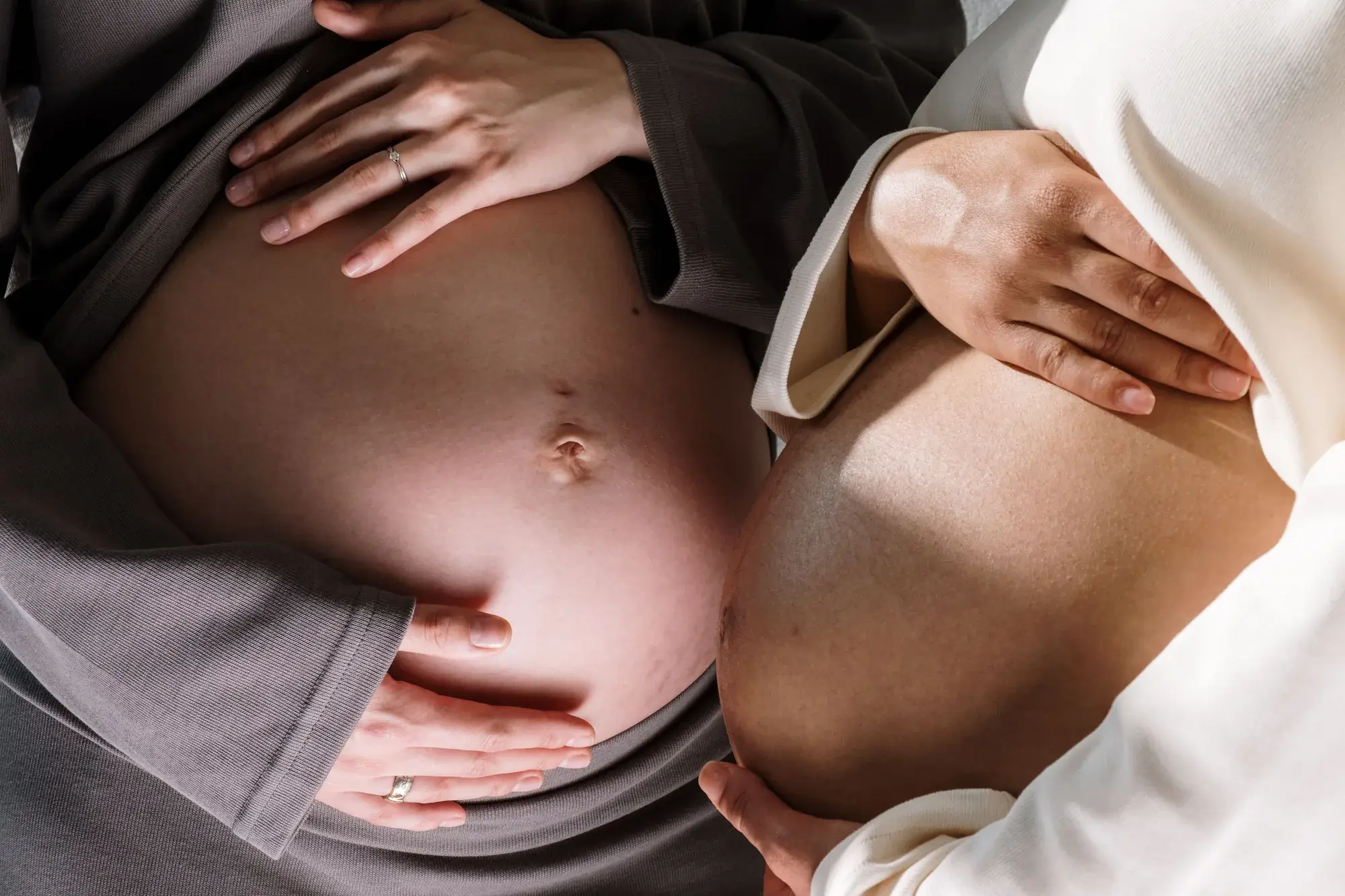
Insomnia affects about four in ten women in the third trimester. What helps: side-lying with pillows, evening habits, and what massage trials showed.
By The Renu lymphatic and massage team · 6 min read
Insomnia is common in late pregnancy: a 2021 meta-analysis of ten studies and 8,798 women put the third-trimester prevalence at 42.4 per cent. The NHS advice is to fall asleep on your side from 28 weeks, support the bump and knees with pillows, keep caffeine out of the evening and build in a wind-down. Massage trials in pregnancy report lower anxiety and depression scores and, in some studies, better sleep, which is why a late-afternoon or evening prenatal massage can be a reasonable part of a sleep plan rather than a replacement for one.
Insomnia is common in late pregnancy: a 2021 meta-analysis of ten studies and 8,798 women put the third-trimester prevalence at 42.4 per cent. The NHS advice is to fall asleep on your side from 28 weeks, support the bump and knees with pillows, keep caffeine out of the evening and build in a wind-down. Massage trials in pregnancy report lower anxiety and depression scores and, in some studies, better sleep, which is why a late-afternoon or evening prenatal massage can be a reasonable part of a sleep plan rather than a replacement for one.
How common insomnia is in the third trimester
Roughly four in ten women report insomnia in the final trimester. The pooled estimate from the 2021 meta-analysis was 42.4 per cent, with a wide confidence interval (32.9 to 52.5 per cent) because the ten studies measured sleep in different ways and in different countries. One of the studies cited within it traced the climb across pregnancy, with insomnia reported by 44.2 per cent of women in the first trimester, 46.3 per cent in the second and 63.7 per cent in the third.
The same review lists what makes insomnia more likely: the woman’s age, how far along she is, symptoms of anxiety or depression, level of education and personality traits. The authors single out one factor above the others: a previous history of insomnia is the most important predictor of insomnia during pregnancy. If you slept badly before you were pregnant, you are not imagining that it has become harder.
The NHS describes the everyday reasons. Early on, hormonal changes make you tired, nauseous and emotional. Later, the extra weight you are carrying is tiring in itself, lying down becomes uncomfortable, and you need the toilet often. None of that is a sign that something is wrong. It is simply the third trimester.
The sleep position that matters from 28 weeks
The safest position to fall asleep in is on your side, either left or right. The NHS states this plainly because research found that after 28 weeks, falling asleep on your back can double the risk of stillbirth. The instruction is about the position you drift off in. If you wake up on your back, turn over and go back to sleep on your side. No alarm, no guilt.
Two pillows do most of the work:
- one under the bump, so the belly is not pulling on the lower back
- one between the knees, so the top hip and knee are level with the bottom ones rather than rolling forward
Some people add a third behind the back so they can lean into it without rolling fully onto the back. A long body pillow does all three jobs at once. If you have found a pillow arrangement that lets you sleep, bring a description of it to your prenatal massage: it is the same arrangement we use on the table, so the session can rehearse the position your body already trusts.
Evening habits the NHS recommends
The NHS list is short and practical:
- avoid tea, coffee and cola in the evening, since the caffeine makes it harder to fall asleep
- try to relax before bedtime, whether that is a bath, reading or a relaxation technique
- stay active in the day with walking, swimming or an antenatal yoga or pilates class
- rest when you can, and let other people help with jobs around the house
A late meal and a late drink both make the two most common night-time wakers worse: heartburn and the bladder. Moving the main meal earlier and front-loading fluids into the morning and afternoon is a small change that many clients find useful. Those two suggestions are ours, drawn from what the NHS lists as the reasons sleep is disturbed, not from a trial.
What the massage research found
Two reviews are worth knowing about, and both are honest about their limits.
The first, published in Midwifery in 2020, pooled eight studies (seven of them randomized) of massage for pregnant women’s anxiety and depression. Across four studies, massage lowered depressive symptoms on the CES-D scale by a mean of 5.95 points compared with usual care. Across five studies, it lowered anxiety by a moderate amount (a standardized mean difference of minus 0.59). None of the trials had a low risk of bias, so the authors conclude only that massage “might be more effective” than usual care and that more research is needed.
The second, a 2021 systematic review of twelve randomized trials of relaxation massage in pregnancy, lists reduced stress, anxiety and depression, less back and leg pain and improved sleep quality among the outcomes reported, along with higher serotonin and dopamine levels in the trials that measured them. Two trials reported side effects, which were minor and passing, mostly tiredness after the session.
Put together: the evidence says massage eases the anxiety and discomfort that keep pregnant women awake, and some trials report better sleep as a result. It does not say massage treats insomnia on its own. If you cannot sleep because of worry, pain or restlessness, a session addresses the things underneath; if you cannot sleep because of reflux or a baby who dances at 2 am, it will not.
How we set up a session for sleep
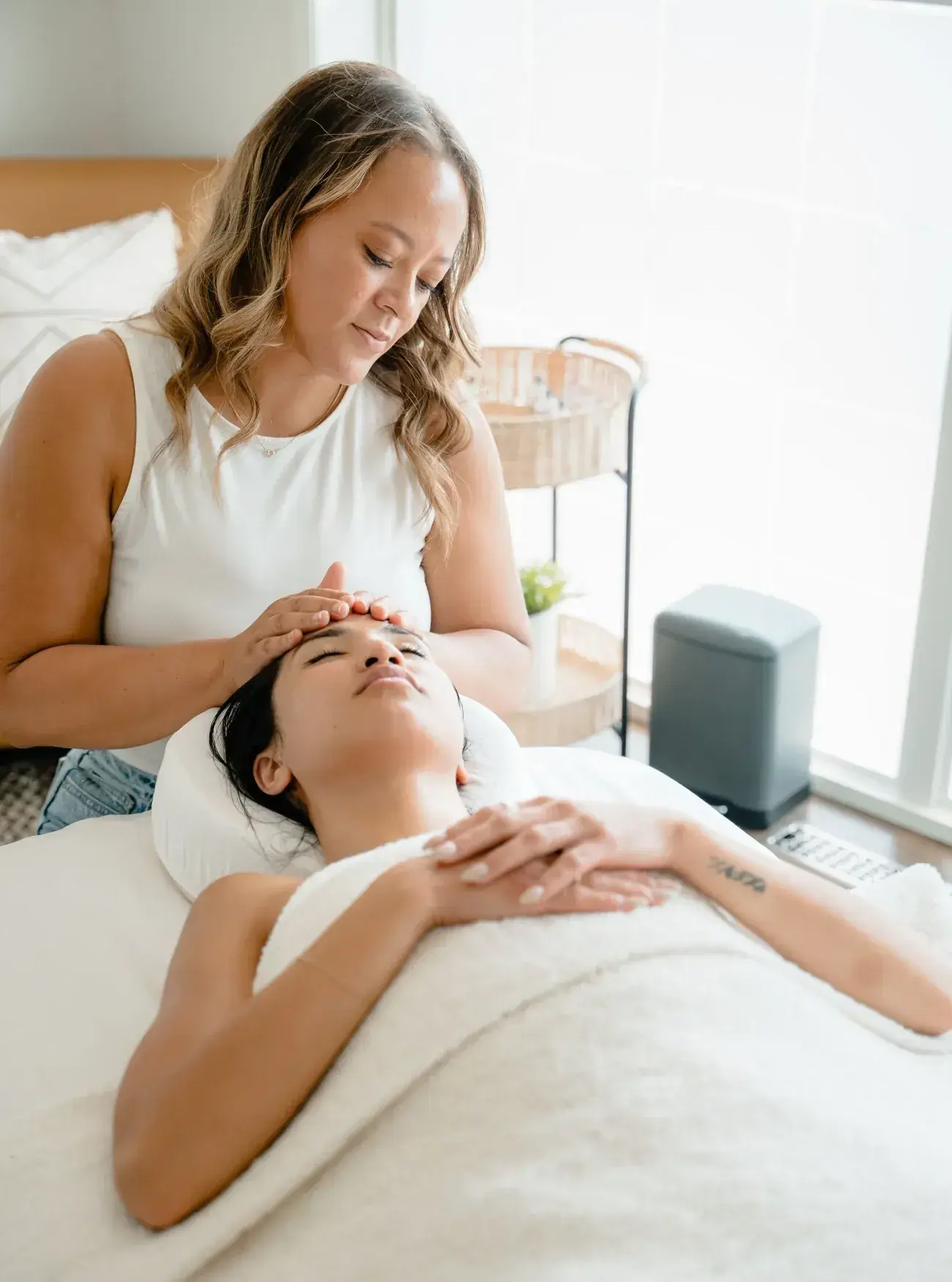
The trials used a particular format: about twenty minutes, once or twice a week, with the woman lying on one side with a pillow at her back and between her legs, massaged on the head, shoulders, back, arms, hands and feet. Pressure was moderate, the kind the women described as pleasant and never painful. A prenatal massage at Renu runs 60 or 90 minutes and uses that same side-lying set-up, so you can take the positioning home.
A few things we do differently when sleep is the goal:
- Timing. We book the session for late afternoon or the last slot of the evening so that the calm carries into bedtime. The clinic is open until 8:30 pm on weekdays.
- Where we work. Hips, low back, between the shoulder blades and the feet, because those are the places that ache when you lie still for hours. The neck and scalp finish the session because that is where most people let go.
- What we leave out. No deep work on the legs, since the review’s safety guidance is to avoid deep muscle work on the limbs in pregnancy, and no concentrated essential oils. Unscented oil only unless you ask.
- After. Tiredness after a massage is the most commonly reported side effect in the trials. On a sleep night, that is a feature rather than a problem.
For how we position you and why we never use a flat face-down position late in pregnancy, see how you lie on the table.
When to talk to your midwife or doctor
Lack of sleep on its own is worth raising with your care provider whenever it is bothering you; the NHS suggests talking to your partner, a friend, your doctor or your midwife. Speak up sooner if any of these apply:
- you feel low, flat or hopeless most days, or have lost interest in things you usually enjoy, since sleeplessness and depression often travel together
- you are breathless lying down, or wake gasping
- you have a headache that painkillers do not touch, changes in your vision, or sudden swelling of the face or hands, which are warning signs of pre-eclampsia rather than sleep problems
- you had insomnia before pregnancy and it has become severe
A massage therapist is not the person to assess any of those. We can be a good part of the plan once your care provider has ruled them out.
Questions people ask
Is it normal to wake up on my back after 28 weeks?
Yes, and the NHS says not to worry about it. Fall asleep on your side, either left or right, and if you wake on your back simply turn over and go back to sleep on your side. The advice is about the position you fall asleep in, not about policing every hour of the night.
Does prenatal massage actually help you sleep?
The trials mostly measured anxiety, depression and pain rather than sleep itself, and on those measures massage did better than usual care. A 2021 review of twelve randomized trials lists improved sleep quality among the reported outcomes, with the caveat that the studies were small. Many clients book the last appointment of the day for that reason.
How late in the evening can I book a prenatal massage at Renu?
The clinic is open until 8:30 pm Monday to Friday and until 5:00 pm on weekends, so a session that ends an hour or two before bed is possible on weekdays. A 60 minute prenatal massage is $120 and a 90 minute session is $157, both booked online through Jane App.
When should I tell my midwife or doctor about not sleeping?
The NHS suggests talking to your partner, a friend, your doctor or your midwife whenever lack of sleep is bothering you, and sooner if sleeplessness comes with low mood, loss of interest or other signs of depression. A previous history of insomnia is the strongest predictor of insomnia in pregnancy, so mention that too.
Sources
- Salari et al. 2021, BMC Pregnancy and Childbirth: Global prevalence of insomnia in the third trimester (meta-analysis)
- NHS: Tiredness and sleep problems in pregnancy
- PubMed (NIH): Hall et al. 2020, Midwifery, the effectiveness of massage for reducing pregnant women's anxiety and depression (systematic review and meta-analysis)
- Mueller and Grunwald 2021, Journal of Clinical Medicine: Effects, side effects and contraindications of relaxation massage during pregnancy (systematic review of 12 RCTs)
Page reviewed October 4, 2026. This page is education, not a diagnosis. For your own situation, talk to your doctor, surgeon or care team, or ask us.
Keep reading
Related pages