
Compression sleeve to prevent lymphedema after breast cancer
A preventive sleeve after axillary dissection reduced and delayed arm swelling in a 307-woman trial: 42% vs 52% at one year. Who it is for.
By The Renu lymphatic and massage team · 6 min read
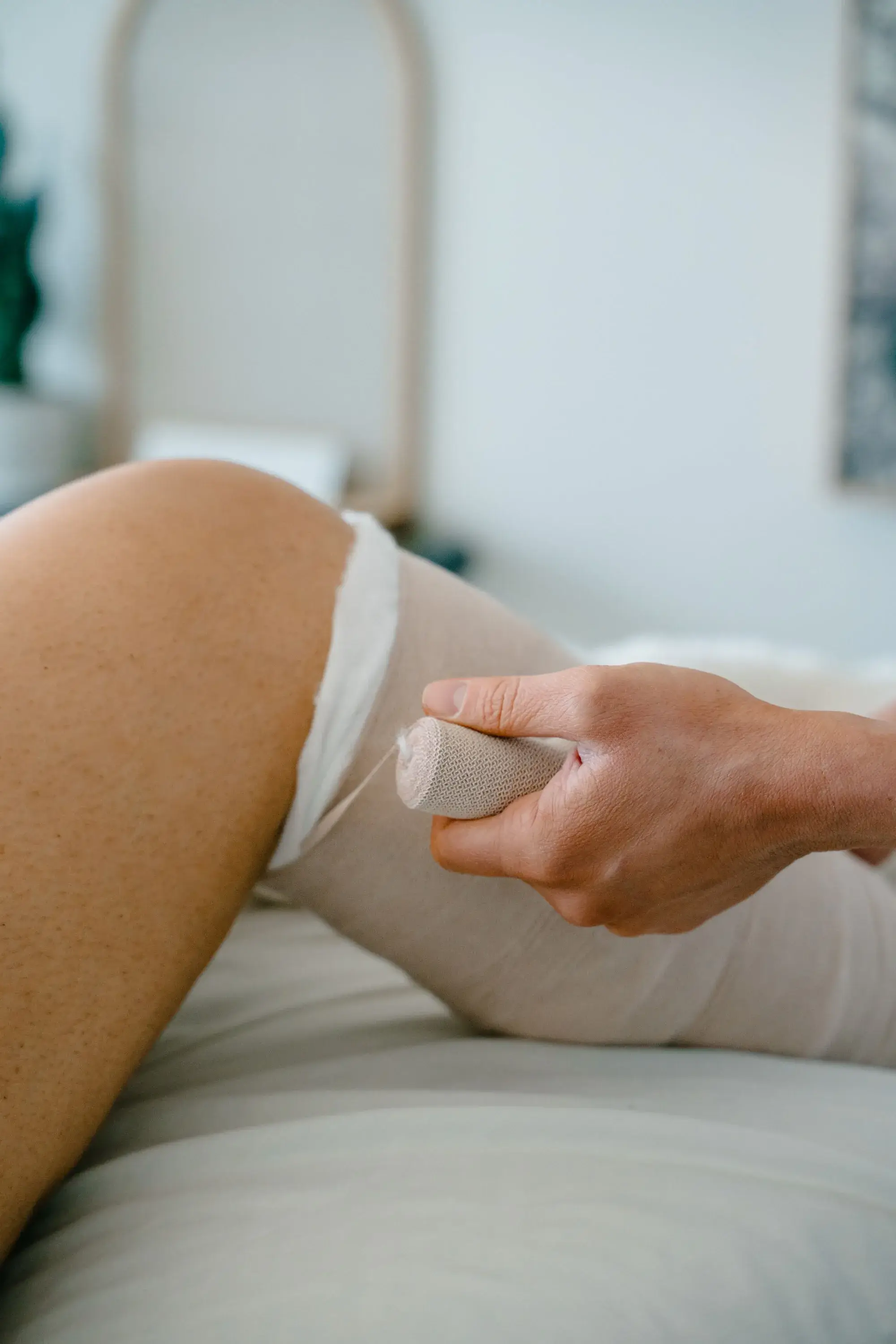
After an axillary lymph node dissection, wearing a light compression sleeve from soon after surgery until three months after adjuvant treatment reduced and delayed arm swelling in a randomised trial of 307 women: 42% versus 52% by bioimpedance at one year, and 14% versus 25% by arm volume. The National Lymphedema Network now supports a class 1 or 2 sleeve, worn at least eight hours a day during waking hours, for this high-risk group only. It lowers the odds; it does not remove them, and it is not a routine recommendation after a sentinel node biopsy or for flying.
“It might help” is an unsatisfying thing to hear about a garment you are being asked to wear all day for the better part of a year. This page gives you the trial behind that sentence, the schedule the National Lymphedema Network (NLN) has drawn from it, and the limits of what a sleeve can do, so the decision you make with your team is an informed one.
The trial that changed the advice
For years the preventive sleeve was a matter of opinion. In 2022 the Journal of Clinical Oncology published a randomised controlled trial from Mumbai that gave it evidence. Three hundred and seven women who had undergone an axillary lymph node dissection for breast cancer were randomly assigned to usual care, or to usual care plus two compression sleeves to be worn after surgery until three months after they had completed their adjuvant treatments.
Arm swelling was measured two ways: bioimpedance spectroscopy (BIS), which reads extracellular fluid, and relative arm volume increase (RAVI), which compares the two arms. Over the first year:
| Measure | Compression group | Usual care | Hazard ratio |
|---|---|---|---|
| Arm swelling by bioimpedance | 42% | 52% | 0.61 (95% CI 0.43 to 0.85, P = .004) |
| Arm swelling by arm volume | 14% | 25% | 0.56 (95% CI 0.33 to 0.96, P = .034) |
The authors’ conclusion was measured: prophylactic sleeves “reduced and delayed the occurrence of arm swelling in women at high risk for lymphedema in the first year after surgery.” Reduced and delayed, not prevented. Quality-of-life scores did not differ significantly between the groups, which tells you the sleeve was tolerable but not transformative in how the women felt day to day. The National Cancer Institute’s professional summary reports the same figures.
What the NLN now recommends
The NLN’s 2026 risk-reduction statement turned that trial into practical guidance. The core sentence is that “prophylactic compression sleeves may decrease or delay lymphedema onset for individuals at high risk,” and high risk is defined as “having undergone axillary lymph node dissection during breast cancer surgery.”
The schedule it describes:
- Pressure: a low (class 1) or mild (class 2) compression sleeve. Prevention does not need the firmer garments used for established lymphedema.
- Start: as soon after surgery as possible.
- Hours: during waking hours, at least eight hours a day. Night wear is not part of the recommendation.
- Duration: until three months after adjuvant treatment (chemotherapy, radiation) ends, or for as long as feasible.
- Activity: for people using a sleeve this way, the NLN recommends wearing it during exercise and repetitive arm motion.
- Replacement: generally every six months with daily wear, following the manufacturer’s guidance.
- Fit: fitted by a certified lymphedema therapist, since ill-fitting garments “have the potential to cause harm.”
The statement adds that the same approach “may also be considered” for people at risk of leg lymphedema after groin or pelvic node dissection, though the trial evidence is for the arm.
Who this is not for
The recommendation is specific, and it is worth being clear about its edges.
After a sentinel node biopsy. The NLN’s prophylactic sleeve guidance applies to the high-risk group it defines by axillary dissection. A sentinel biopsy puts you in a lower-risk category where the NLN’s emphasis is symptom awareness and less frequent screening rather than a daily garment. If your biopsy removed many nodes or regional radiation is planned, that is a conversation for your surgeon and a lymphedema therapist, not a reason to buy a sleeve online.
For flights. The NLN states that studies have not shown air travel to be a risk factor for people at risk, and that “prophylactic compression garments are not routinely recommended for air travel.” If you are already wearing a sleeve as post-surgical prophylaxis, you simply continue wearing it on the plane as part of your routine. Our flying after lymph node removal page goes through this in detail.
As a substitute for measurement. The sleeve lowers risk; it does not detect lymphedema. In the trial, 42% of the compression group still showed bioimpedance changes within a year. Screening with a pre-operative baseline and regular follow-up remains the way early changes are found, with or without a garment.
How this differs from a sleeve prescribed after a measurement change
People sometimes confuse two uses of the same garment. The preventive sleeve above is worn before anything has changed, by everyone in the high-risk group, for months. The other use is a short, targeted course once screening detects a small early change.
That second model comes from a 2008 study in Cancer, in which 196 women were measured before surgery and every three months afterwards. When an arm’s volume rose more than 3% above its own pre-operative baseline, a compression garment was prescribed for four weeks. The average time to that trigger was 6.9 months after surgery, and the four-week course brought volume down by a mean of 48 mL (4.1%), a reduction that held at follow-up averaging 4.8 months. Afterwards the garment was worn only during strenuous activity, when the arm felt heavy, or when swelling was visible. The 2022 PREVENT trial used a similar design: a four-week, 12-hour-a-day sleeve and gauntlet when screening by tape measure or bioimpedance flagged subclinical change.
So there are two evidence-based ways a sleeve enters your life after breast surgery: continuous prevention after dissection, or a short course triggered by your own numbers. Many high-risk programs use both. Our baseline arm measurements page explains the measuring half.
Getting fitted
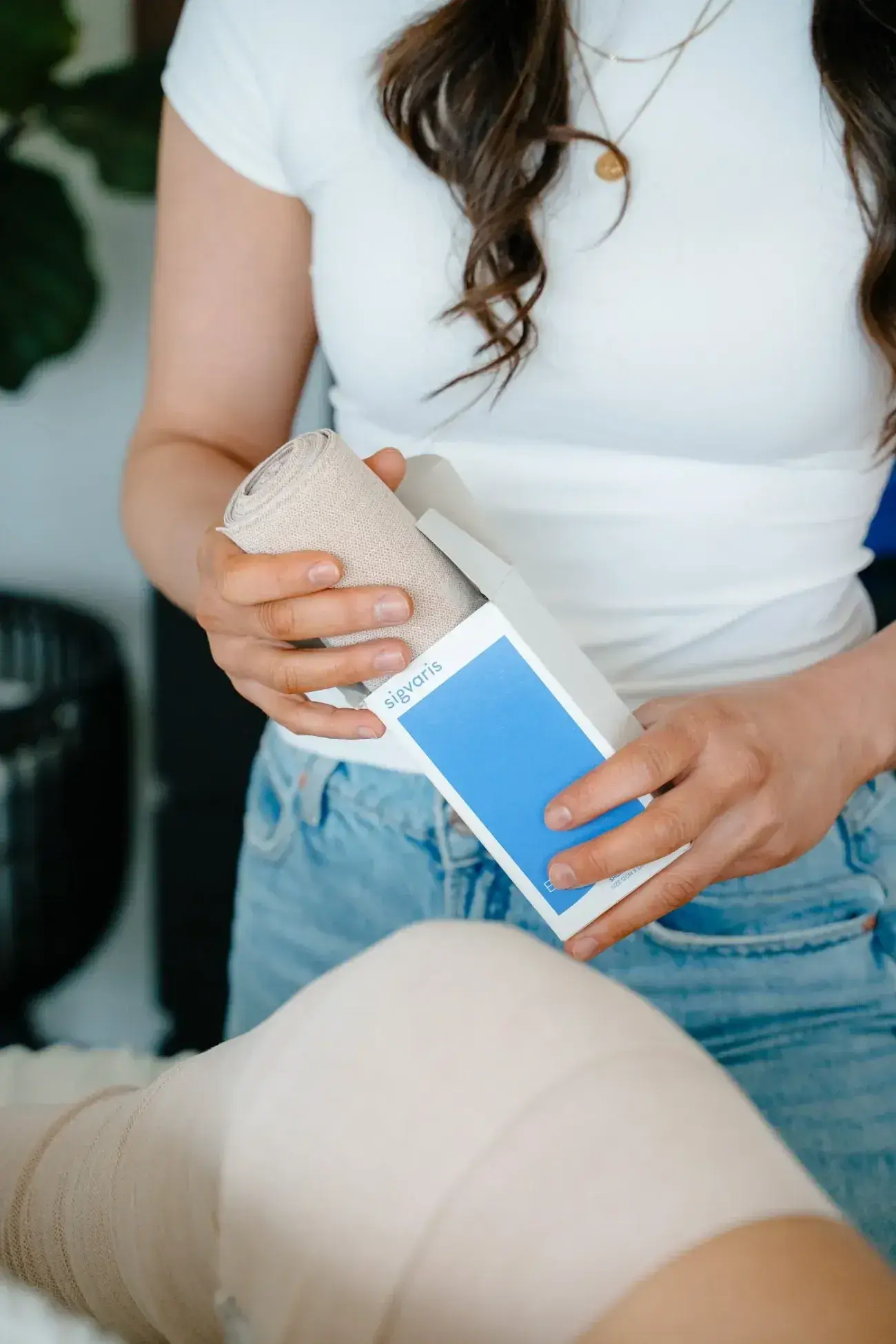
Compression sleeves come in classes, lengths, knits and brands, and the pressure a garment delivers depends on the fit at every point along the arm. The NLN asks that preventive sleeves be fitted by a certified lymphedema therapist. At Renu, Meeghan Mackenzie is both a Certified Lymphedema Therapist and a Certified Compression Fitter; a compression fitting is 30 minutes and $25, and it is the same appointment whether your surgeon has recommended a preventive sleeve or a lymphedema therapist has flagged an early change. Our compression garments guide covers classes and care, and the complete decongestive therapy page describes what we do if a garment alone is not enough.
What we do not do is decide for you whether to wear one. That decision sits with you, your surgeon and your oncology team, informed by the trial above.
When to call your surgeon or oncology team
Take the sleeve off and call the same day if the arm or hand develops redness, warmth, pain, new swelling, fever or chills. The NLN treats suspected cellulitis in an at-risk limb as an urgent medical event needing prompt antibiotics, and a garment should never be worn over an infection until your team says so.
Also remove the sleeve and ask for a refit if it digs in at the wrist or elbow, leaves deep marks, causes numbness or tingling in the fingers, or if the hand below it swells. Those are fit problems, and the NLN’s warning that ill-fitting garments can cause harm is exactly about this.
Report heaviness, tightness or a feeling that the arm is bigger to your team promptly, even while wearing the sleeve. The garment lowers the odds of lymphedema; your own attention is still what catches it early.
Questions people ask
How many hours a day should a preventive compression sleeve be worn?
The National Lymphedema Network's 2026 statement says a prophylactic sleeve should be worn during waking hours for at least eight hours a day, starting as soon after surgery as possible and continuing until three months after adjuvant treatment ends, or for as long as is feasible. It does not need to be worn to bed. Your own team may adjust this to your treatment plan.
Should I wear a compression sleeve to prevent lymphedema after a sentinel node biopsy?
The NLN recommendation is written for people at high risk, which it defines as having had an axillary lymph node dissection. The trial that supports it enrolled only women after dissection. A sentinel biopsy carries a much lower risk, and no prophylactic sleeve is routinely recommended for it; ask your surgeon or a certified lymphedema therapist if your situation is unusual, for example if radiation to the nodes is planned.
What compression class is used for prevention?
Low. The NLN describes the practical approach as a class 1 (low pressure) or class 2 (mild pressure) sleeve for prevention, rather than the firmer garments used to control established lymphedema. The class and the fit should be chosen by a certified lymphedema therapist or compression fitter, because a poorly fitting garment can do harm.
How often does a preventive sleeve need replacing?
The NLN gives every six months with daily wear as the general replacement interval, while noting that the manufacturer's own guidance should be followed. Garments lose their compression with use and washing, so a sleeve that still looks fine may no longer be doing its job. The trial above issued each woman two sleeves so one could be worn while the other was washed.
Sources
- Paramanandam VS et al., Journal of Clinical Oncology 2022: Prophylactic Use of Compression Sleeves Reduces the Incidence of Arm Swelling in Women at High Risk of Breast Cancer-Related Lymphedema, a randomized controlled trial
- National Lymphedema Network, March 2026: Position Statement, Evidence-Based Practices for Lymphedema Risk Reduction
- National Cancer Institute: Lymphedema (PDQ), health professional version
- Stout Gergich NL et al., Cancer 2008: Preoperative assessment enables the early diagnosis and successful treatment of lymphedema
- Ridner SH et al., Lymphatic Research and Biology 2022: A Comparison of Bioimpedance Spectroscopy or Tape Measure Triggered Compression Intervention in Chronic Breast Cancer Lymphedema Prevention
Page reviewed October 3, 2026. This page is education, not a diagnosis. For your own situation, talk to your doctor, surgeon or care team, or ask us.
Keep reading
Related pages