
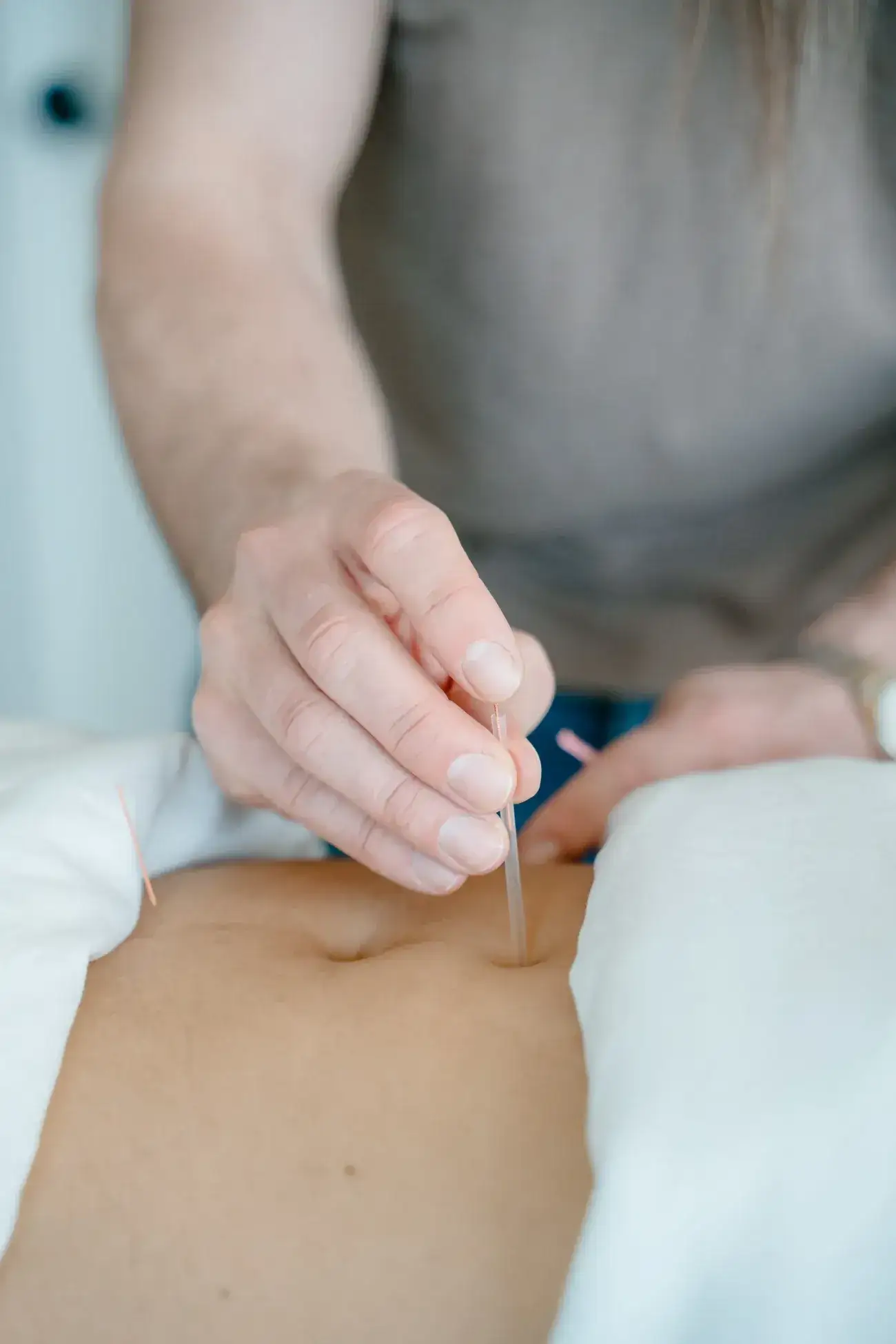
Acupuncture on the arm after lymph node removal
You can have acupuncture after lymph node removal; the open question is whether needles go in that arm. The advice differs, the trial data is small and calm.
By The Renu lymphatic and massage team · 8 min read
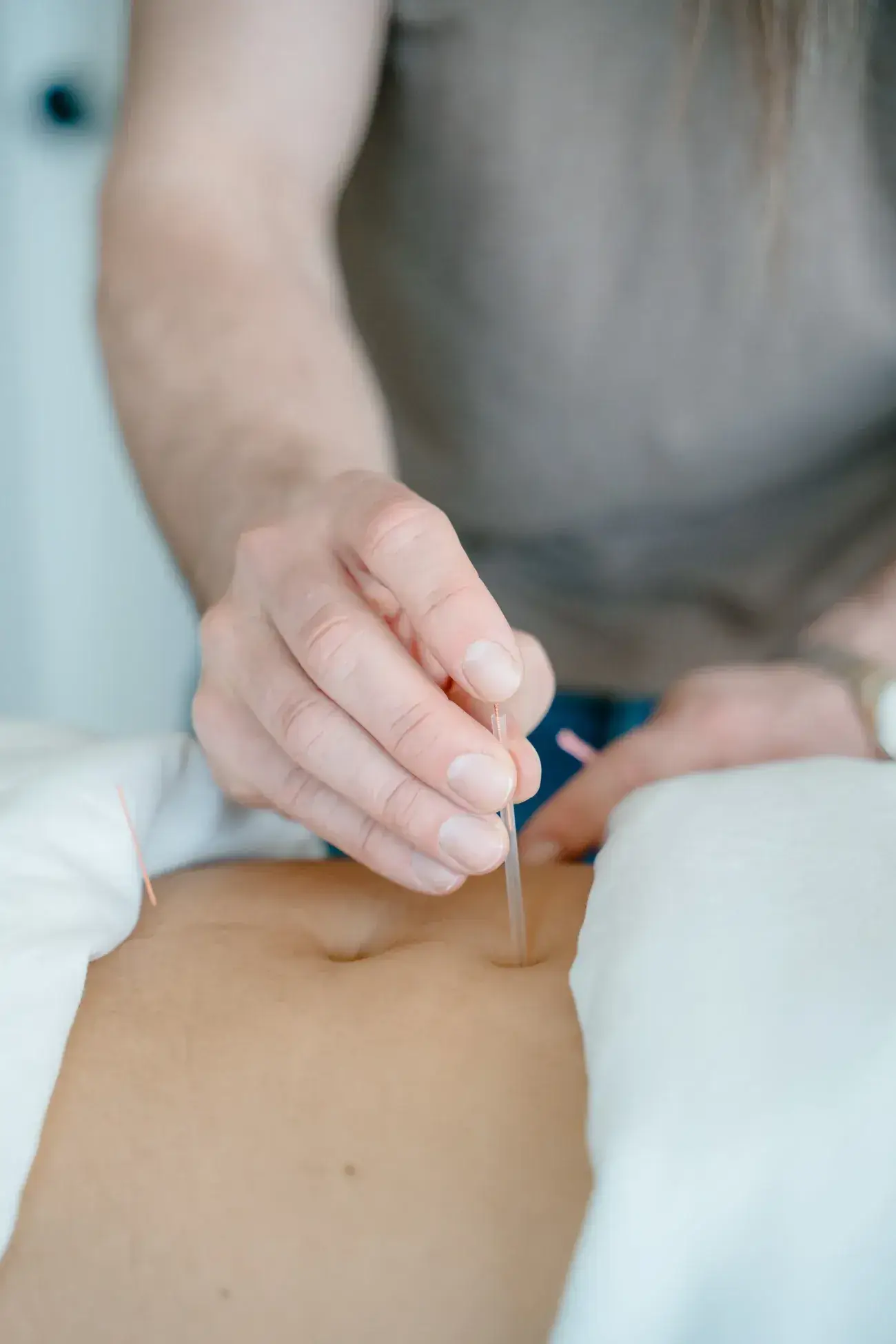
Acupuncture is not off the table after lymph node removal. The question is where the needles go. The Canadian Cancer Society still lists acupuncture among the needle sticks to avoid in the affected limb, while a 2023 systematic review of 2,965 acupuncture treatments in people with breast cancer-related lymphedema, 1,390 of them in the affected arm, recorded no serious adverse events and a single minor skin infection. Most of the symptoms people seek acupuncture for, such as hot flashes, nausea and joint pain, are treated through points elsewhere on the body, so the arm can usually be left alone, and the final call belongs to you, your oncology team and your acupuncturist together.
Acupuncture is not off the table after lymph node removal. The question is where the needles go. The Canadian Cancer Society still lists acupuncture among the needle sticks to avoid in the affected limb, while a 2023 systematic review of 2,965 acupuncture treatments in people with breast cancer-related lymphedema, 1,390 of them in the affected arm, recorded no serious adverse events and a single minor skin infection. Most of the symptoms people seek acupuncture for, such as hot flashes, nausea and joint pain, are treated through points elsewhere on the body, so the arm can usually be left alone, and the final call belongs to you, your oncology team and your acupuncturist together.
The fear underneath this question is specific: that one fine needle in the wrong arm could start the swelling you were warned about on the day of surgery. It is a reasonable fear, and here is the evidence behind it.
Why the pamphlet and the research disagree
They answer slightly different questions. The Canadian Cancer Society’s lymphedema page says to “avoid having needle sticks of any type in the affected limb”, and names “a blood sample taken, an intravenous (IV), an injection and acupuncture on the affected limb or in affected areas”. That is a precaution covering every kind of puncture at once, and the authors of the 2023 Lymphology review acknowledge that current clinical guidelines recommend avoiding needling in the upper extremity affected by lymph node dissection.
The National Lymphedema Network’s March 2026 position statement does not mention acupuncture by name. It says that isolated blood pressure measurements, injections and venipuncture have not been associated with increased limb swelling in prospective studies of people at risk for breast cancer-related lymphedema, that these procedures may be done on the at-risk limb when indicated, and that the person at risk should be an active participant in the decision. For a limb that already has lymphedema, the NLN takes the opposite line: there is a paucity of research on safety there, and it recommends that injections and venipuncture be avoided.
So a needle drawing blood from an arm that has never swollen is, on the current evidence, a choice rather than a prohibition, and a needle in an arm with established lymphedema is still something to avoid. Acupuncture has its own small body of evidence, which comes next. How the needle rules changed more broadly is on blood pressure and needles on the affected arm.
What the acupuncture trials recorded
The 2023 review by Kim and colleagues searched PubMed, Ovid, CINAHL and the Cochrane library for clinical trials of acupuncture in breast cancer-related lymphedema and found eight, with 189 participants and 2,965 acupuncture treatments between them. There were no serious adverse events “regardless of treatment laterality or protocol”. The one event of note was a single grade 2 skin infection, which the authors put at 0.034 percent of treatments. Of the 2,965 sessions, 1,390 involved the affected limb: 1,165 were bilateral and 225 were on the affected side only.
Three things keep that number honest:
- Every participant already had lymphedema; these were not people at risk.
- A trial is a controlled setting, with protocols, trained practitioners and systematic tracking of side effects.
- 189 people is a small population. One infection among them is a reassuring signal, not a safety record.
The second study is smaller still. Friedman and colleagues, also in 2023, randomized 14 people with breast cancer-related lymphedema to acupuncture or control. The acupuncture group received needles only in the unaffected extremity, twice a week for six weeks. Eight of the ten completed all twelve sessions and two completed eleven, no severe adverse events occurred, arm volumes showed no consistent improvement, and every person who received acupuncture improved on a functional quality-of-life score. A full course was given to people with a swollen arm without a single needle going into it.
Points elsewhere on the body do most of the work
This is the part that dissolves most of the dilemma. The goals people bring to acupuncture after cancer treatment rarely need the arm at all.
| What you want help with | What the evidence says | Needs the affected arm? |
|---|---|---|
| Nausea and vomiting from chemotherapy | The NCI calls this the strongest evidence for acupuncture, from clinical trials | No |
| Hot flashes after breast cancer | Six randomized trials found acupuncture safe and that it decreased hot flashes (NCI) | No |
| Joint pain from aromatase inhibitors | The 2022 SIO-ASCO guideline says acupuncture “should be recommended”, moderate strength | No |
| Cancer-related fatigue | Randomized trials found improvement compared with standard care alone (NCI) | No |
| Dry mouth during radiation | Fewer dry mouth symptoms and better saliva flow than standard care (NCI) | No |
| Chemotherapy-induced neuropathy | Some trials show promise; more evidence is needed (NCI) | Depends on where the numbness is |
| Arm lymphedema itself | Mixed; one trial may have slowed worsening without reducing swelling (NCI) | Trials have used both sides and the opposite arm |
The Society for Integrative Oncology and ASCO guideline drew on 227 studies and judged its acupuncture recommendations, for aromatase inhibitor joint pain and for general or musculoskeletal cancer pain, to rest on an intermediate level of evidence with benefit outweighing risk. If your neuropathy is in the hand of the affected side, the question becomes individual, and that is exactly the decision your oncology team and acupuncturist should make together rather than either one alone.
Two arms, two different conversations
The NLN’s framework rests on separating two groups, so know which one you are in before you book.
At risk, never swollen. You have had nodes removed, perhaps radiation too, but no signs or symptoms of lymphedema. The NLN says needle procedures have not been linked to swelling in prospective studies and the decision is yours, ideally made within a screening program that measures the arm over time. Keeping the arm needle-free anyway is a legitimate choice.
Diagnosed lymphedema. The arm has swollen and a clinician has confirmed why. The NLN recommends avoiding injections and venipuncture in that limb, and notes that people with lymphedema are at significantly increased risk of skin infections, particularly cellulitis, which can accelerate the condition. The trials above all involved this group and recorded one infection in nearly three thousand treatments, under trial conditions. If you want acupuncture, the opposite arm, the legs and the trunk offer plenty of points, and the Friedman protocol shows it can be done that way. Why infection matters so much in a swollen limb is explained on cellulitis risk with lymphedema after cancer.
Not sure which group you are in? Heaviness, tightness or a sleeve that fits differently can come before any visible change; early signs of arm lymphedema walks through them.
How to settle it with your team
- Tell your oncologist or breast care nurse that you want acupuncture, and why. Your team may already have a view on acupuncture for your symptom.
- Ask one direct question: “Is there any reason, for me, that needles should stay out of that arm?” Radiation fields, a port, low blood counts or an infection history may change the answer.
- Ask the acupuncturist about training and needles. The NCI states that sterile, single-use needles are required and that a strict clean needle method must be used for people with cancer because chemotherapy and radiation weaken the immune system. Cancer Research UK advises making sure the person treating you has had proper training.
- Agree the map before the first needle. Say which arm had the surgery and whether it has ever swollen, and ask for points that avoid it unless you and your team have decided otherwise.
- Watch the arm afterwards. Not anxiously, just attentively, as the NLN asks everyone at risk to do.
When to call your oncology team
Call the same day if, after a session or at any other time, you notice:
- redness, warmth, pain or new swelling in the at-risk arm, especially around a needle site;
- fever or chills, which the NLN lists with those skin signs as symptoms of infection to treat as urgent in a limb at risk;
- a feeling of fullness, puffiness or heaviness in the arm, an aching or burning feeling, or a tight or warm feeling in the skin, which the Canadian Cancer Society lists among the signs of lymphedema;
- trouble moving a joint in the arm, or hardening or thickening of the skin.
If the swelling is in an arm that has never swollen before, the NLN says your healthcare provider should refer you for lymphedema evaluation and treatment. The Learning Centre’s when to seek medical care covers the broader warning signs after cancer treatment.
Acupuncture at Renu
Dr. Will Tanner, Registered Massage Therapist and acupuncturist, delivers acupuncture at the clinic. The first visit is a 90-minute initial consultation and treatment ($150), with 60-minute return visits ($120) and 45-minute follow-ups ($85); an acupuncture and massage combination runs 90 minutes ($167). The people who know your surgery, your radiation and your blood counts are your oncology team, so bring their advice with you and tell Will about the surgery before the first needle.
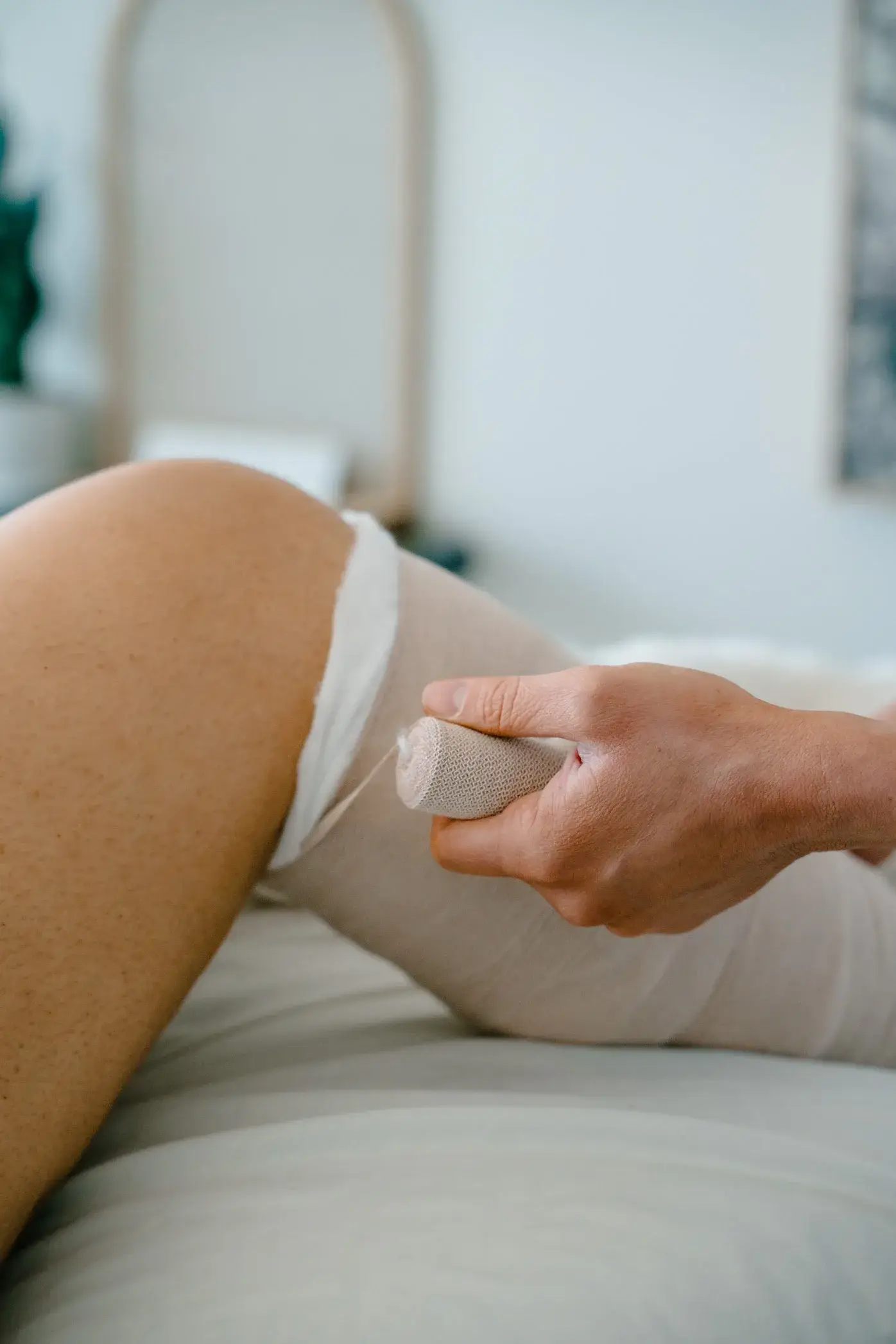
If what you really want to know is whether the arm has started to change, that is a separate appointment. Meeghan Mackenzie, our Certified Lymphedema Therapist, can assess the arm and, if lymphedema is present, treat it with complete decongestive therapy. Acupuncture for your hot flashes and a plan for your arm can happen under one roof, and neither one is decided for you.
Questions people ask
Is acupuncture safe at all after breast cancer surgery?
The National Cancer Institute reports randomized trials in which acupuncture was safe and reduced hot flashes, nausea and fatigue in people treated for cancer, and Cancer Research UK describes it as generally safe with minor bleeding and bruising as the most common side effect. The two cautions that matter after cancer treatment are sterile single-use needles with a strict clean needle method, and a plan for the limb where nodes were removed. Tell both your oncology team and your acupuncturist before the first session.
Will acupuncture give me lymphedema?
No study we read has shown that. The NLN's 2026 statement says injections and blood draws have not been associated with increased swelling in prospective studies of people at risk, and the 2023 Lymphology review found no serious events across 1,390 acupuncture treatments in affected arms. That is reassuring without being a promise, which is why the arm is still watched afterwards and the choice stays yours.
I already have lymphedema in my arm. Can acupuncture treat it?
The evidence is thin and mixed. A 2023 randomized pilot that needled only the unaffected arm found no consistent improvement in arm volume, although every participant's functional quality-of-life score improved, and the NCI notes one trial where acupuncture may have kept lymphedema from worsening without reducing swelling. Compression and complete decongestive therapy remain the treatment with the track record; acupuncture, if you want it, sits beside them.
If the needles stay out of my arm, where do they go?
Acupuncture points sit all over the body. The randomized pilot of acupuncture for arm lymphedema placed every needle in the opposite arm, and the trials the NCI summarises for hot flashes, nausea and fatigue do not depend on the at-risk limb. A practitioner can plan a treatment for most goals that leaves that arm untouched.
Does acupuncture help the hot flashes from tamoxifen or an aromatase inhibitor?
The NCI's summary describes six randomized trials of acupuncture for hot flashes in breast cancer survivors that found it safe and that it decreased hot flashes. For the joint pain that aromatase inhibitors can cause, the 2022 Society for Integrative Oncology and ASCO guideline recommends acupuncture, with moderate strength and benefit judged to outweigh risk. Neither finding requires a needle in the affected arm.
Sources
- Canadian Cancer Society: Lymphedema
- Kim et al., Lymphology 2023: Can acupuncture be a part of the treatment for breast cancer-related lymphedema? A systematic review of the safety and proposed model for care
- Friedman et al., Lymphatic Research and Biology 2023: Acupuncture treatment for breast cancer-related lymphedema, a randomized pilot study
- National Lymphedema Network: Position Statement, Evidence-Based Practices for Lymphedema Risk Reduction (March 2026)
- National Cancer Institute: Acupuncture (PDQ), patient version
- Mao et al., Journal of Clinical Oncology 2022: Integrative medicine for pain management in oncology, Society for Integrative Oncology-ASCO guideline
- Cancer Research UK: Acupuncture
Page reviewed October 4, 2026. This page is education, not a diagnosis. For your own situation, talk to your doctor, surgeon or care team, or ask us.
Keep reading
Related pages