

Lymphatic drainage: what it is, and what it isn't
It's lighter than you'd think. Much lighter.
By Meeghan Mackenzie, RMT, CLT · 9 min read
Manual lymphatic drainage is a very gentle, rhythmic hands-on technique that stimulates the lymphatic system and reroutes stagnant fluid toward healthy pathways. At Renu it is delivered by Registered Massage Therapists and a Certified Lymphedema Therapist trained in the Vodder, Földi and Chikly methods.
Where it comes from
Because lymph is clear and its vessels are so fine, the lymphatic system was one of the last parts of the body to be mapped. Manual lymphatic drainage, often shortened to MLD, has a longer and more interesting history than most people expect.
- 1622. Italian physician Gaspare Aselli spots “milky veins” in the intestines of a dog after a meal. They are lymph vessels, full of absorbed fat.
- 1650s. Jean Pecquet in France describes the thoracic duct, the body’s largest lymph vessel. Olaus Rudbeck in Sweden is the first to see the lymphatics as one complete system.
- Late 1800s. Belgian surgeon Alexander von Winiwarter introduces the first hospital protocol for draining lymphedema by hand, using heavy pressure.
- 1922. F.P. Millard, a Canadian osteopath, uses the term “lymphatic drainage” in his book on the anatomy of the lymphatics.
- 1932 to 1936. In Cannes, Danish therapists Emil and Estrid Vodder develop a precise, gentle technique while treating clients with chronic sinusitis and acne. They call it manual lymph drainage and compare it to draining a marsh.
- 1967. German physician Johannes Asdonk studies the technique with about 20,000 patients, establishing its medical effects, indications and contraindications. It becomes a standard hospital therapy across much of Europe.
- Since then. French physician Bruno Chikly becomes the first to describe feeling the specific rhythm of lymph flow by hand and teaching others to follow it. His Lymph Drainage Therapy is one of the methods our team trains in.
Why so light
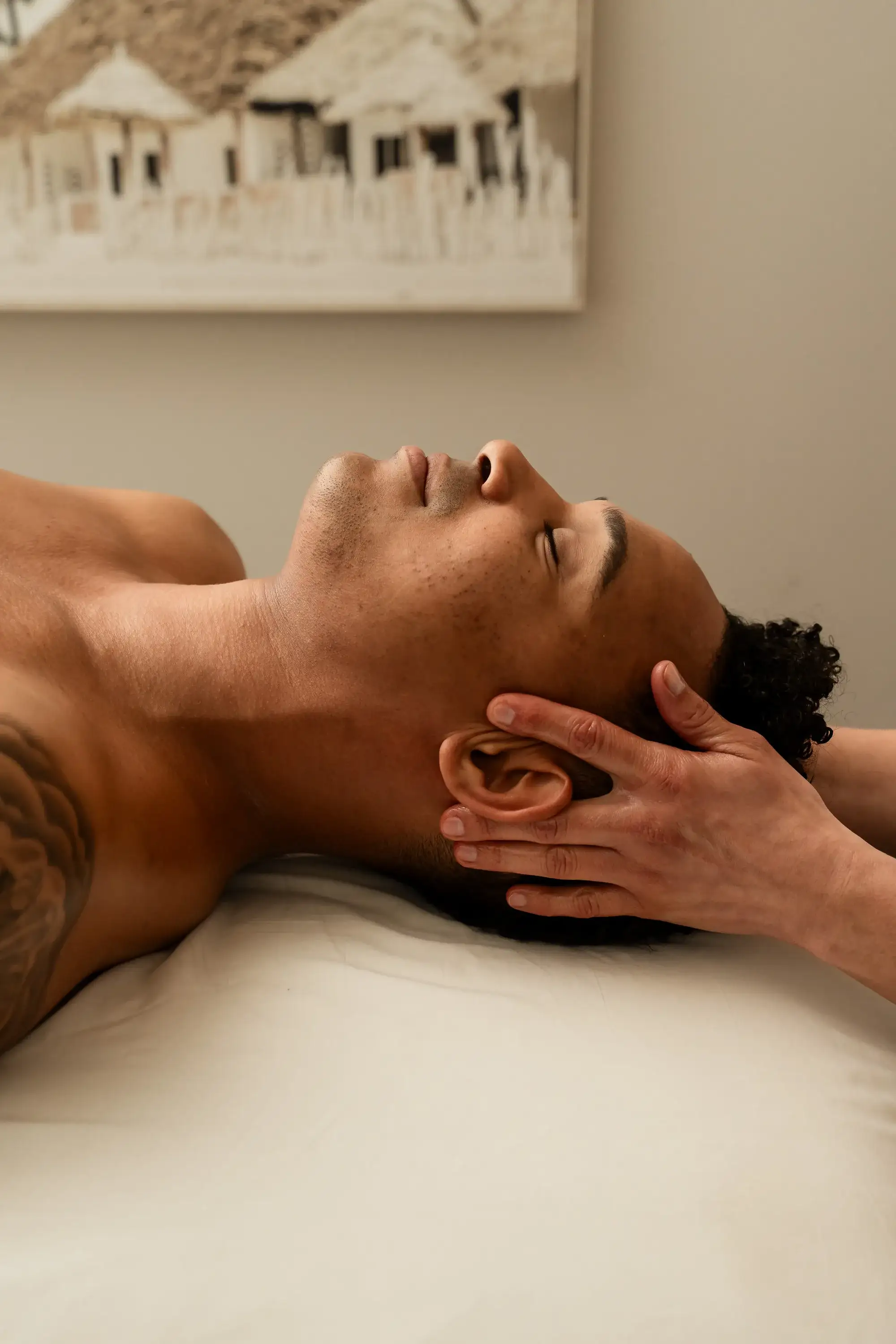
About 70 per cent of your lymph flows through vessels just beneath the skin. Deep pressure can flatten them, like stepping on a garden hose. So our therapists use flat hands, all fingers, and about five grams of pressure, roughly the weight of a nickel, in slow, wave-like movements that gently stretch the skin.
That stretch tugs on tiny anchoring filaments that tie the smallest lymph vessels to the tissue around them. The filaments pull the vessel walls open, fluid flows in, and the vessels are prompted to contract and carry it along.
What it does
Manual lymphatic drainage works in three main ways:
- Fluid. It encourages lymph to move, and indirectly supports the circulation of fluid in the small blood vessels and veins.
- Immunity. It moves lymph through the lymph nodes, where immune cells do their work.
- The nervous system. Slow, light, repetitive touch stimulates sensory nerve endings in the skin that calm the nervous system. It shifts you toward your “rest and digest” state and can ease pain and muscle tension.
That third effect is why so many people fall asleep on the table.
Clear the drain first
A session doesn’t start where you are swollen. It starts at the neck and collarbones, where lymph re-enters the bloodstream. Then we open the lymph nodes closest to the area we are treating. Only then do we work the swollen area, guiding fluid back toward those open pathways.
Think of it as clearing the drain before you turn on the tap.
With Chikly training, a therapist also listens through their hands for the rhythm, direction and quality of the lymph flow. That lets us map where fluid is moving well and where it is stuck. When a pathway is blocked, after lymph node removal for example, we can guide fluid across natural dividing lines in the lymphatic system, called watersheds, toward a healthy group of nodes.
What a session feels like
- Quiet, slow and deeply relaxing. Your nervous system tends to settle quickly.
- Very light touch. No digging, very little oil.
- You may need to use the washroom soon after. That’s normal.
- Most people describe feeling lighter and looser, sometimes a bit sleepy.
Who it can help
- People recovering from cosmetic, orthopedic or cancer surgery
- People living with lymphedema or lipedema
- Swelling after injuries, sprains or long-haul travel
- Facial puffiness and sinus congestion
- Anyone whose nervous system needs a long exhale
When we pause, or ask for medical clearance
Manual lymphatic drainage is gentle, but it isn’t right for everyone at every moment. We’ll hold off, or ask you to check with your doctor first, if you have:
- An active infection, such as cellulitis, or a fever
- A known or suspected blood clot (DVT), or an acutely inflamed vein (phlebitis)
- Heart failure or kidney disease that isn’t well controlled
- New swelling that hasn’t been assessed by a doctor
That’s why every first visit begins with a full health history. It isn’t paperwork for its own sake. It keeps you safe.
Training matters
You’ll see “lymphatic massage” offered in lots of places. For post-surgical, oncology, lymphedema and lipedema care, look for a Certified Lymphedema Therapist (CLT). Our post-op and lymphedema program is led by Meeghan Mackenzie, RMT since 2005 and CLT since 2016. She earned her CLT through the Academy of Lymphatic Studies’ 135-hour Complete Lymphedema Certification and is one of roughly 350 CLTs in Canada, with further training in the Vodder, Földi and Chikly methods.
Whoever you see, look for:
- A regulated health licence (in Alberta, an RMT, physiotherapist, occupational therapist or nurse)
- Formal lymphatic or lymphedema certification, not a weekend course
- Light, comfortable technique. If it hurts, it isn’t lymphatic drainage.
- No pushing fluid out of incisions
- Clear, published pricing, and a willingness to work with your surgeon
The most common thing I hear after a first session: “I didn’t think something that gentle could do anything.” Then they stand up, and notice their rings are looser.
Meeghan Mackenzie, RMT, CLT
Bruno Chikly, M.D. Lymph Drainage Therapy. UI Publishing, 1996.
Never had lymphatic drainage and not sure it’s for you? Send us your questions. We’ll help you decide, with no pressure… in every sense.
Page reviewed September 27, 2026 by Meeghan Mackenzie, RMT, CLT
Keep reading
Related guides


West Hillhurst, NW Calgary
Give fresh life or strength to.
Book online in a minute, or call the clinic. New clients can begin with the 60-minute intro massage, which includes a complimentary infrared cocoon session.
200, 209 19 St NW · Monday to Friday 8:00 am to 8:30 pm · Saturday and Sunday 10:00 am to 5:00 pm