
Who should avoid deep tissue massage?
Avoid deep tissue massage with blood thinners or a bleeding disorder, a fracture, severe osteoporosis, an arthritis flare or acute inflammation, or frailty.
By The Renu lymphatic and massage team · 6 min read
Firm, vigorous massage is the wrong choice if you take blood thinners or have a bleeding disorder, have a fracture or severe osteoporosis, are in an arthritis flare or have acutely inflamed or injured tissue, or are an older adult with fragile bones or skin. It also needs a doctor's okay with uncontrolled high blood pressure, cancer or pregnancy. In nearly every case the answer is a gentler technique, not no massage at all.
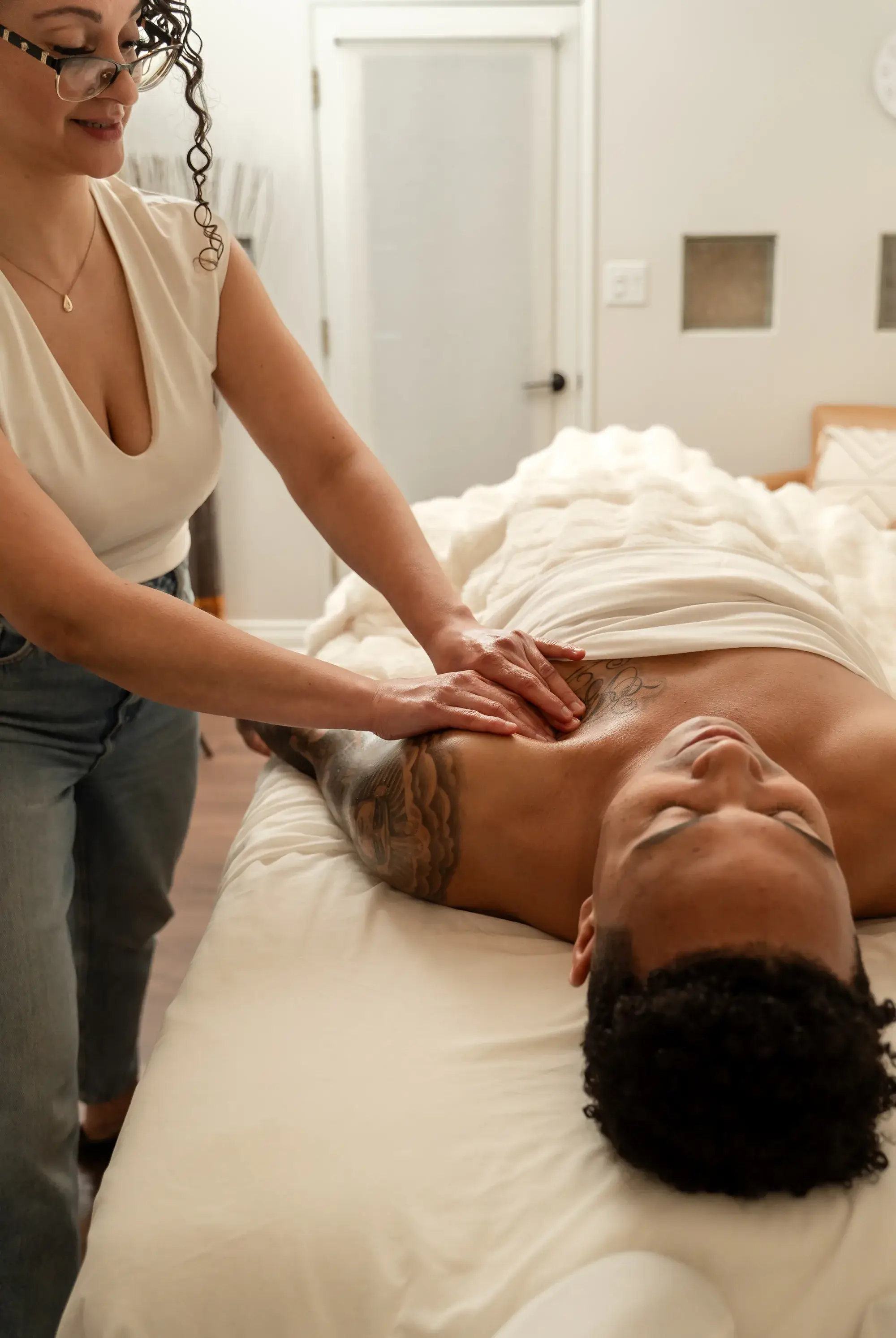
Deep tissue massage is firm, slow work into muscle and the tissue around it. For most people it is a pleasant, useful way to deal with stubborn tension. For a smaller group it is the wrong tool, and the reason is always the same: the pressure that makes it work is the pressure that can do harm when bones, vessels or tissue are more fragile than usual. This page is the umbrella list. Each entry links to a fuller answer where we have one.
Why pressure is the issue
The NCCIH’s summary of massage safety is reassuring and specific. The risk of harm appears to be low, but there have been rare reports of serious side effects, including a blood clot, a nerve injury and a bone fracture, and some of those cases involved vigorous types of massage, such as deep tissue, or people at increased risk of injury, such as older adults.
Read that carefully and the list below almost writes itself. Vigorous pressure is the common factor, so anyone whose body is less able to absorb it should have something gentler. Cleveland Clinic’s general rule covers the rest: if you have a medical condition, check with your doctor and have a conversation with your massage therapist before the first session.
The list
Blood thinners and bleeding disorders
Firm pressure breaks small vessels; that is what a bruise is. If your blood clots slowly, a mark that would have been nothing becomes a real bruise, and a bleed that should stop may not. Healthline lists blood-thinning medication and bleeding disorders among the circumstances to discuss with a doctor before a massage. Lighter techniques are the answer, and our page on massage, cupping or acupuncture on blood thinners covers all three treatments.
Fractures, including suspected ones
The Institute for Integrative Healthcare Studies is unambiguous: massage is contraindicated for fractures. If you have had a fall or an impact and a fracture is possible, it advises seeing your physician for imaging first. Deep work near a healing bone is not a judgment call; it waits until the bone has healed and your doctor is content.
Severe osteoporosis
Brittle bones and firm pressure do not mix. The Arthritis Foundation lists severe osteoporosis among the conditions requiring caution, and the fractures in the NCCIH’s list of rare harms are the reason. Gentle work is usually fine; our page on massage with osteoporosis explains what changes.
An arthritis flare, acute inflammation or a fresh injury
When tissue is actively inflamed, pressing into it tends to add pain rather than relieve it. The Institute for Integrative Healthcare states that massage should not be done when arthritis is in an acute stage, because the inflammatory response is too high and treatment may cause more pain than it resolves. The Arthritis Foundation lists a flare of inflammation, a fever or a skin rash, and damaged or eroded joints as reasons for caution, and quotes a rheumatologist’s rule that is worth memorising: if it hurts, don’t do it. Our page on massage when you have arthritis goes further.
Older adults with fragile bones or skin
Age on its own is not a reason to avoid massage. But the NCCIH names older adults as the group at higher risk in the rare cases of serious harm, so vigorous technique is the thing to drop. Moderate pressure, a slower pace and a shorter session keep everything that is good about the treatment.
Uncontrolled high blood pressure
The Arthritis Foundation lists high blood pressure among the conditions needing caution, and massage educators distinguish between controlled hypertension, where massage is fine, and uncontrolled, where the doctor’s permission comes first. Painful techniques are the ones to avoid either way. Our page on massage with high blood pressure explains the reasoning.
Cancer, pregnancy, wounds and recent surgery
These are not deep tissue questions so much as “talk to your doctor first” questions. Healthline lists cancer, pregnancy, wounds and fractures alongside bleeding disorders as reasons to consult a doctor before a massage. The NCCIH notes that massage can be part of supportive care for people with cancer with appropriate precautions, and that therapists may need to use less pressure in sensitive areas. For pregnant clients, Renu offers prenatal massage, which is positioned and paced for pregnancy, rather than a standard deep session, and after surgery the right treatment is usually post-op lymphatic drainage, which is light by design.
The list at a glance
| Situation | Deep tissue | What to book instead |
|---|---|---|
| Blood thinners or a bleeding disorder | Avoid | Lighter massage, lymphatic drainage |
| Fracture, or a suspected one | Avoid until healed | Nothing on that area until your doctor clears it |
| Severe osteoporosis | Avoid | Gentle, moderate-pressure massage |
| Arthritis flare, acute inflammation, fresh injury | Avoid during the flare | Wait, then gentle work away from the joint |
| Frail older adult | Avoid vigorous work | Moderate pressure, shorter session |
| Uncontrolled high blood pressure | Doctor’s okay first; no painful work | Relaxation massage |
| Cancer, pregnancy, wounds, recent surgery | Doctor’s okay first; modified | Prenatal massage, modified pressure, or post-op lymphatic work |
What to book instead
Almost nobody on this list needs to go without hands-on care. The choice is between pressures, not between massage and nothing.
- Moderate-pressure relaxation massage suits most of the situations above. The Arthritis Foundation notes that moderate pressure, as opposed to light surface touch, is what stimulates the pressure receptors that reduce pain, so “gentler” does not mean “does nothing”.
- Lymphatic drainage is the lightest treatment we offer: a slow stretch of the skin that moves fluid rather than pressing into muscle. It is the usual answer for anyone who cannot tolerate pressure at all. The lymphatic drainage massage page describes it.
- A shorter session is a reasonable way to find out how your body responds before committing to longer. The massage therapy page lists the lengths.
Whatever you book, write the condition on your intake form and say it out loud at the start. A therapist who knows is a therapist who can adapt.
When to call your doctor
The NCCIH’s standing advice is not to use massage therapy to postpone seeing a health care provider about a medical problem. If a pain is new, severe, worsening, or came after a fall or impact, see your doctor before you see us. And after any massage, Healthline advises medical attention for neck or back pain, or pain that is severe or long-lasting; we would add shooting or tingling pain down a limb, a spreading bruise, or new swelling, warmth or redness over the area.
If you are unsure which side of the line you are on, call us. Describing the condition takes two minutes, and it is far better spent before the appointment than on the table. The FAQ covers the other practical questions about visiting.
Questions people ask
Can older adults have deep tissue massage?
Often yes, but with more care. The NCCIH notes that the rare serious harms reported from massage, including fractures, have involved vigorous techniques or people at higher risk of injury such as older adults. Moderate pressure, shorter sessions and a therapist who knows your bone health are the sensible version.
Is deep tissue massage safe during pregnancy?
Pregnancy is on Healthline's list of circumstances to discuss with a doctor before a massage. Renu offers prenatal massage, which is positioned and paced for pregnancy, and that is the session to book rather than standard deep tissue work.
I have cancer. Can I still have a massage?
Usually, with your care team's agreement and a therapist who adapts. The NCCIH notes that massage can be part of supportive care for people with cancer, and that therapists may need to modify their techniques, for example using less pressure in sensitive areas. Firm deep tissue work is the kind of technique that gets modified.
What should I book instead of deep tissue?
Tell us the condition and we will suggest the fit. A relaxation-focused massage at moderate pressure suits most of the situations on this page, and lymphatic drainage, which uses the lightest pressure we offer, suits people who cannot tolerate pressure at all.
Sources
Page reviewed October 4, 2026. This page is education, not a diagnosis. For your own situation, talk to your doctor, surgeon or care team, or ask us.
Keep reading
Related pages