
Can I have a massage if I have osteoporosis?
Usually yes, with lighter pressure, no deep work over the spine and ribs, and careful positioning. Severe osteoporosis means checking with your doctor first.
By The Renu lymphatic and massage team · 6 min read
Usually yes, with changes. Bone fractures are among the rare serious events reported after massage, and the risk is higher in older people receiving vigorous deep-tissue work, so the pressure comes down, deep techniques over the spine, ribs and hips are left out, and the way you get on and off the table changes. The Arthritis Foundation lists severe osteoporosis among the conditions to clear with your doctor before booking. With those adjustments, gentle massage and lymphatic-style work remain comfortable options.
Usually, yes. Osteoporosis changes how a massage is given far more than whether it can be given. The National Center for Complementary and Integrative Health describes the overall risk of harm from massage as low, while noting rare reports of serious effects including bone fracture, with elderly people receiving vigorous deep-tissue massage at higher risk. That one sentence is the whole adjustment: no vigorous deep work on fragile bones. Everything gentler stays on the table.
If you have just come home from a bone density scan with a new diagnosis, the rest of this page explains what changes, what does not, and what to ask your doctor before you book.
Why fragile bones change the plan
Osteoporosis weakens bones and makes them much more likely to break. Cleveland Clinic calls it a silent disease: there are no early warning signs, and for many people the first indication is a fracture from a small fall or a minor accident that would not have hurt them before. The hips, wrists and spine are the bones most likely to break. Osteoporosis Canada reports that more than 2.3 million Canadians have the disease, that at least one in three women and one in five men will have a fragility fracture in their lifetime, and that 30,000 Canadians break a hip each year.
For massage, the detail that matters is which bones are vulnerable and how close to the surface they sit. The spine and the ribs lie directly under the hands for most of a back massage. The hips take weight when you lie on your side. The wrists are handled during arm and hand work. None of this rules those areas out; it rules out force through them.
The Arthritis Foundation’s precautions list for massage names severe osteoporosis alongside eroded joints, active inflammation and high blood pressure as reasons to consult your doctor first, and its one-line rule applies to every session: if it hurts, don’t do it.
What your therapist adjusts
| Area or technique | What changes with osteoporosis |
|---|---|
| Pressure overall | Moderate to light throughout; no vigorous deep-tissue techniques, which carry the reported fracture risk in older clients |
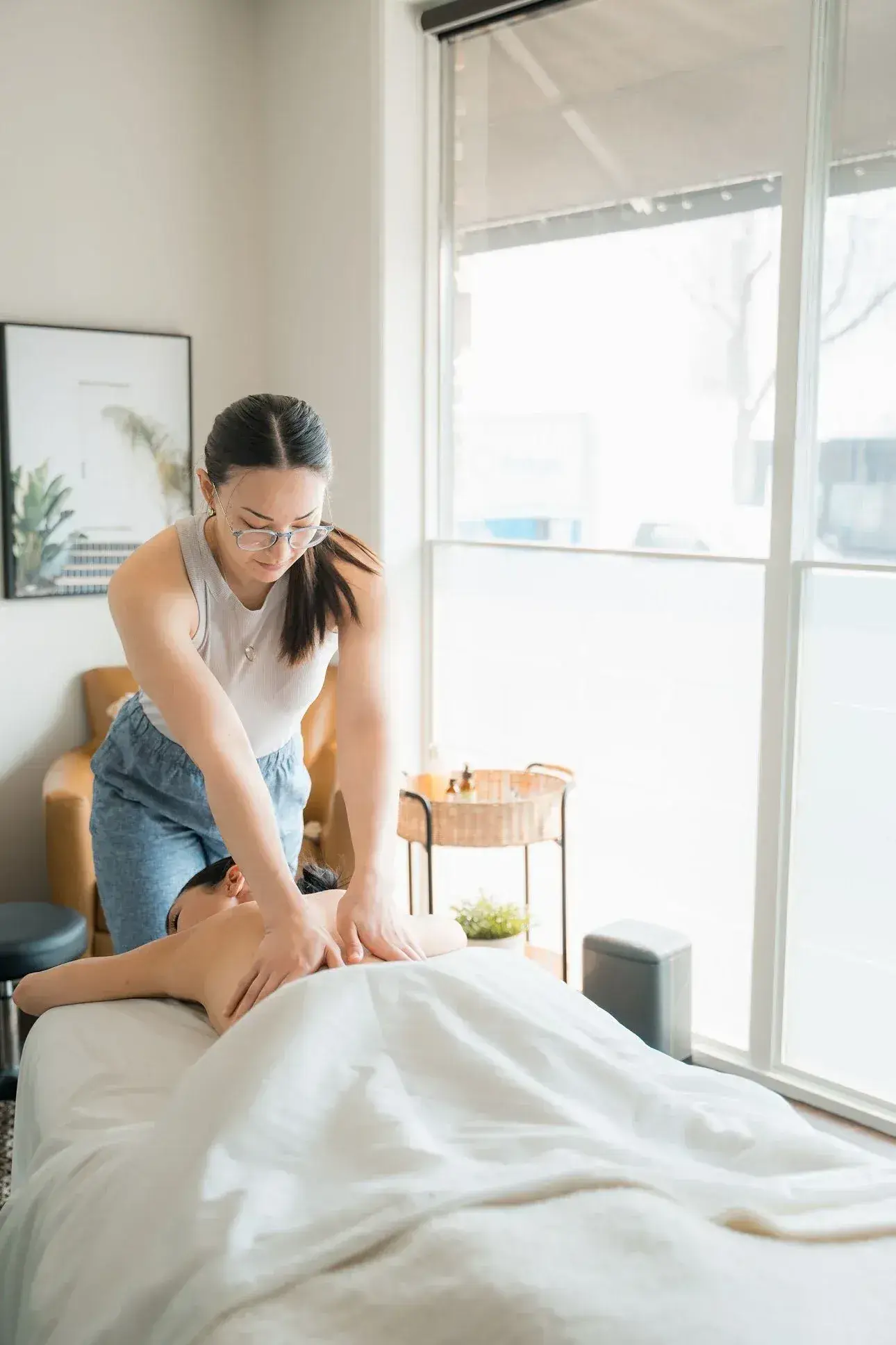
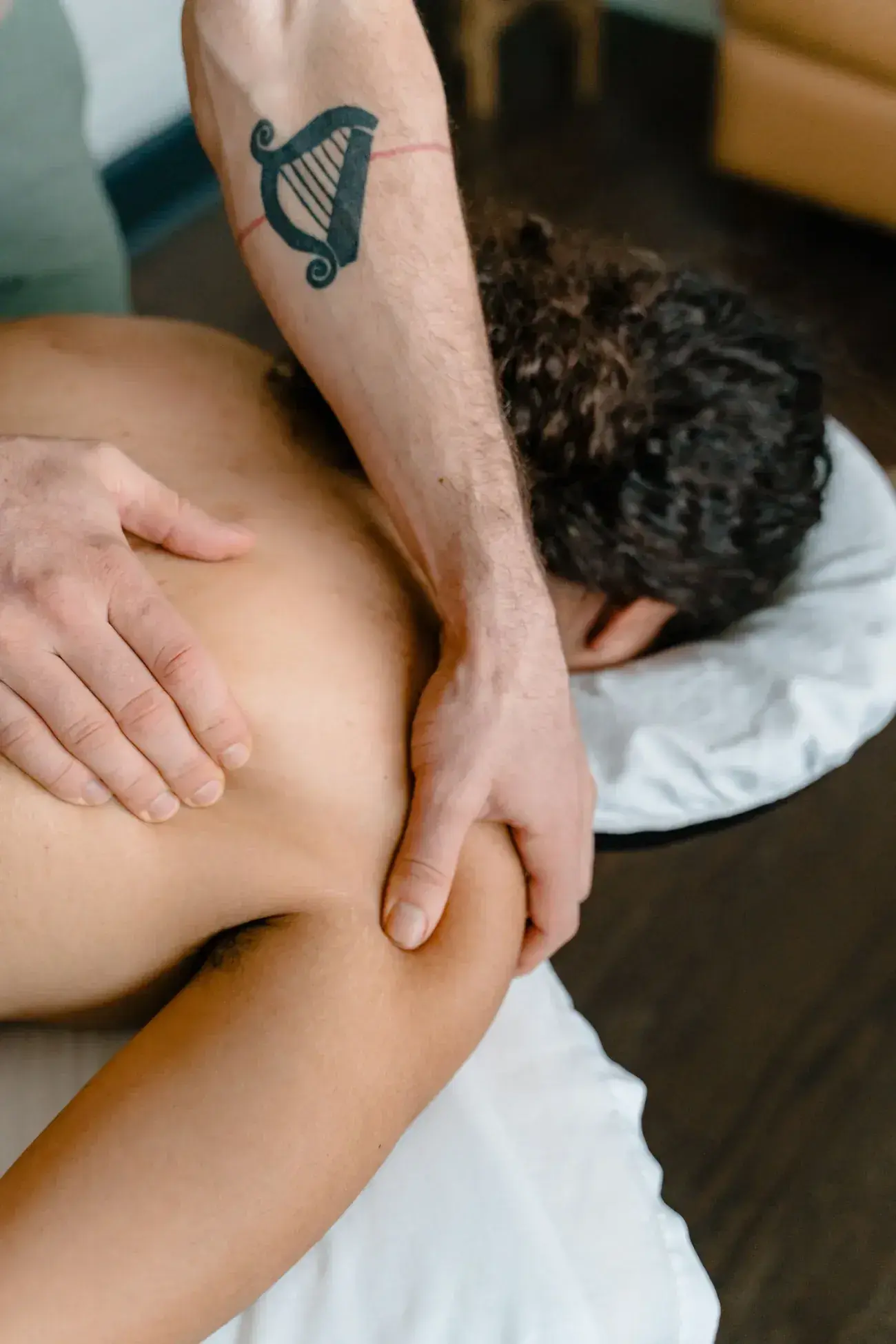
| Spine and ribs | Broad, flat-handed strokes along the muscles beside the spine; no direct pressure, leaning or elbow work over the vertebrae or rib cage |
| Hips and pelvis | Light work only, with pillows under the top knee in side-lying so the hip is not bearing pressure from the table and the hands at once |
| Wrists and hands | Gentle gliding strokes rather than joint compression or firm traction |
| Stretching and mobilising | Minimal; no end-range forward bending or twisting of the spine, in line with Osteoporosis Canada’s guidance for people at high fracture risk |
| Lymphatic-style strokes | Unchanged; these work at the surface and suit fragile tissue well |
Two things on that list deserve a word. First, broad strokes beside the spine are not a lesser massage. Much of the tension people come in with lives in those long muscles, and they respond to warmth and slow, even pressure without any need to press into bone. Second, “light” is not a fixed setting. You still choose the pressure. Ontario’s regulator reminds the public that clients can request their preferred pressure and ask the therapist to stop or modify treatment at any time, and that right is more useful, not less, when bones are fragile.
Getting on and off the table
The movements that worry Osteoporosis Canada are not the massage itself but the bending and twisting around it. Its Too Fit to Fracture recommendations ask people at high fracture risk to limit repetitive spinal bending and twisting, full forward or side bending, and held twisted positions, and to bend with the hips and knees instead of the spine using slow, controlled movement.
On a treatment table that means:
- Sitting down first, then lowering onto your side with the knees bent, rather than bending forward to climb on.
- Rolling as one unit from side to back, with the therapist’s help, instead of twisting the trunk.
- Side-lying or face-up positions with pillows if lying face down is uncomfortable or your doctor has asked you to avoid it.
- Sitting up by pushing with the arms from side-lying, so the spine is not folded forward on the way up.
If you have had a vertebral fracture, loss of height or a stooped posture, which Cleveland Clinic lists among the signs of advanced bone loss, tell your therapist before the first session so the room can be set up for these positions from the start.
Gentler options that still feel like treatment
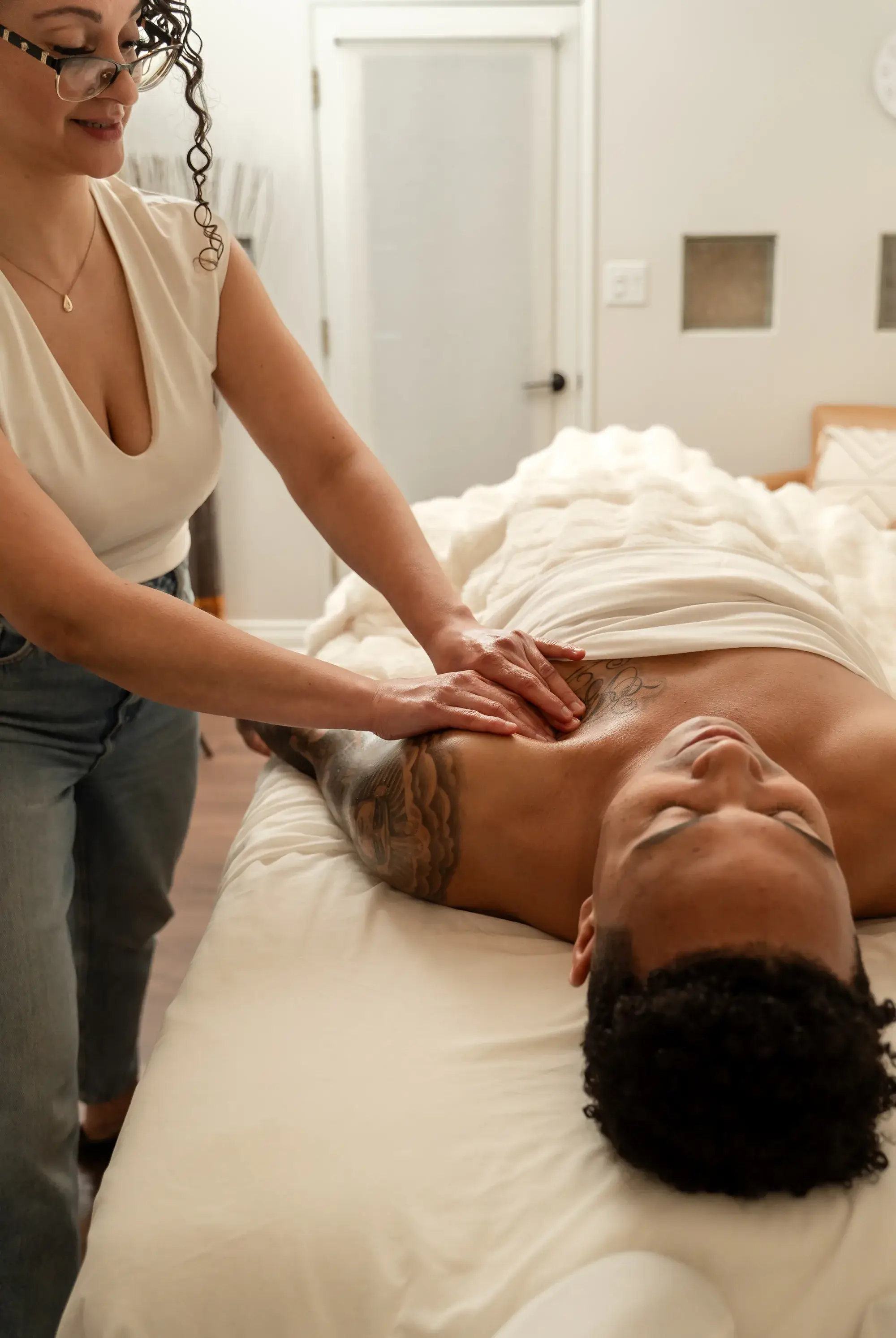
Many people with osteoporosis want the calm of a massage more than the depth of one, and there is no reason to go without it. Our massage therapy sessions can be given entirely at the lighter end of the range, and the relaxation effects of massage described in the research do not depend on force. Lymphatic drainage massage is a different treatment, with its own goals, but its strokes are gentle by design and suit people for whom pressure is the concern. Sessions of both run from 30 to 60 minutes, and a shorter first appointment is a sensible way to find out what feels right.
Questions for your doctor, and when to call
Before your first massage with a new diagnosis, three questions to your doctor will settle most of the planning: have I had any spinal fractures, are there positions I should avoid, and is deep pressure anywhere off limits for me? Bring the answers to your therapist. Cleveland Clinic notes that a DEXA scan can detect osteoporosis before any fracture occurs, so a recent result is useful information rather than a reason to stay away.
Call your doctor, and skip the next massage until you have, if you notice:
- new or sudden back pain, especially after bending, lifting or a minor stumble, which can signal a vertebral fracture
- pain in a hip, wrist or rib that started after a fall or a knock, however small
- a noticeable loss of height or a change in posture over recent months
- soreness after a massage that is intense or lasts longer than a day or two, which Healthline and Cleveland Clinic both treat as a reason to see a provider
Healthline also lists fractures among the conditions to clear with a doctor before any massage. If a bone has been broken recently, the massage waits until the doctor says otherwise, and we are happy to hold the appointment until then.
Questions people ask
Can massage cause a fracture if I have osteoporosis?
It is rare, but it has been reported. NCCIH lists bone fracture among the rare serious side effects of massage and notes that elderly clients receiving vigorous deep-tissue work face the higher risk. That is why pressure over the spine, ribs and hips is kept light when bones are known to be fragile, and why deep techniques are left out altogether.
I have osteopenia, not osteoporosis. Does any of this apply?
Less strictly, but mention it. Cleveland Clinic describes osteopenia as an early warning stage that can progress to osteoporosis, affecting around one in three adults over 50 who do not yet have osteoporosis. Your therapist will likely moderate pressure over the spine and ribs as a precaution while treating the rest of the body normally.
Is lying face down safe with a spinal fracture history?
Often it is not the best choice. Osteoporosis Canada's exercise guidance asks people at high fracture risk to limit full forward bending and held twisted positions, and a face-down position on a table can load the spine in ways some people with vertebral fractures find uncomfortable. Side-lying and face-up positions with pillows are the usual alternatives; ask your doctor what they prefer for you.
Do I need a doctor's note for massage with osteoporosis?
A note is not required to book with us, but a conversation with your doctor is sensible, and for severe osteoporosis the Arthritis Foundation specifically advises checking first. Useful things to ask: whether you have had any vertebral fractures, whether any positions should be avoided, and whether deep pressure anywhere is off limits.
Sources
- NCCIH: Massage therapy, what you need to know
- Arthritis Foundation: Benefits of massage
- College of Massage Therapists of Ontario: Five things to know before booking a massage
- Cleveland Clinic: Osteoporosis
- Osteoporosis Canada: About the disease
- Osteoporosis Canada: Too Fit to Fracture exercise recommendations
- Healthline: Why am I sore after a massage?
Page reviewed October 4, 2026. This page is education, not a diagnosis. For your own situation, talk to your doctor, surgeon or care team, or ask us.
Keep reading
Related pages