
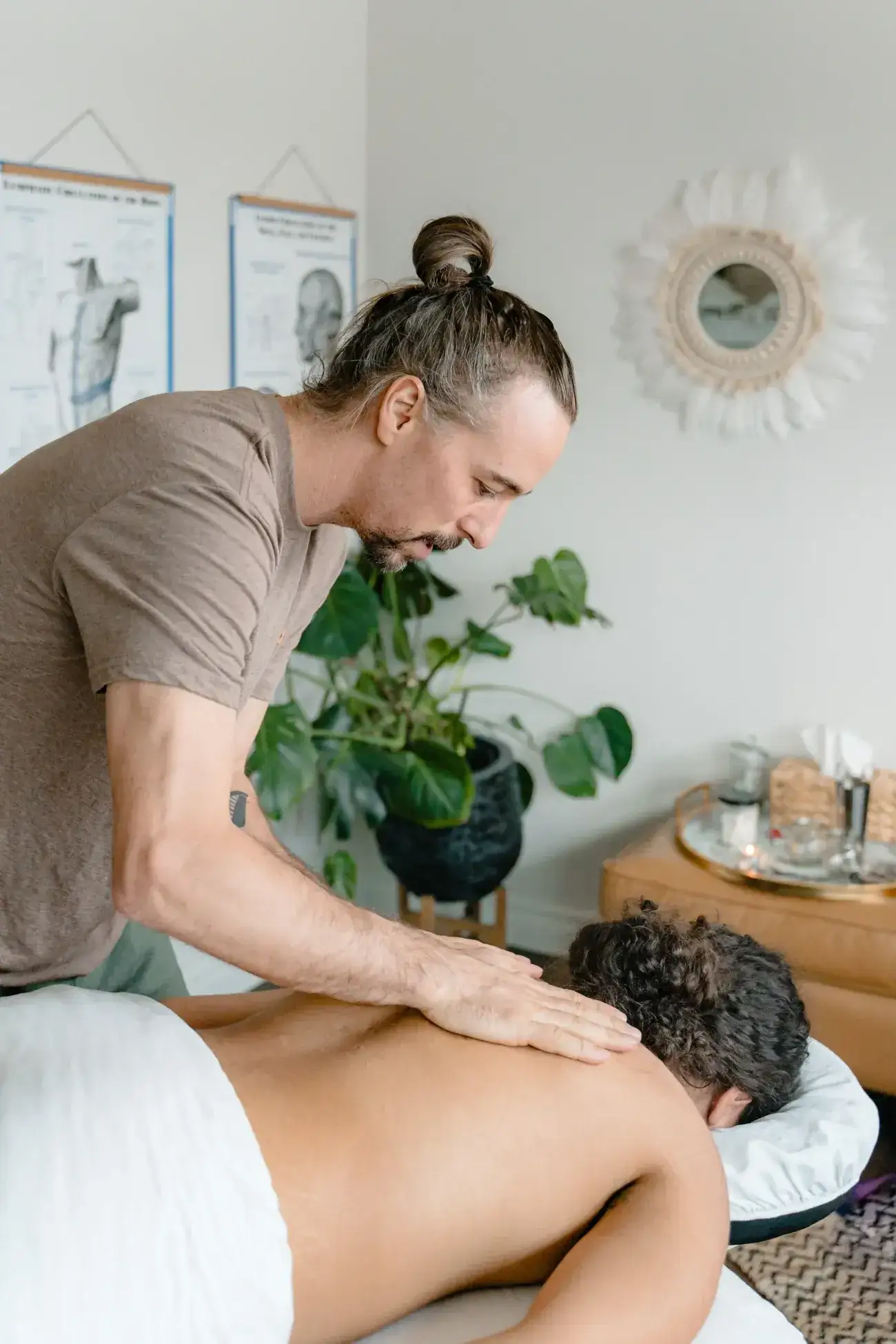
How soon after a race or hard workout can I get a massage?
If you are used to massage, a recovery session within 48 hours of a race is fine. If you are new to it, wait three to four days until the soreness eases.
By The Renu lymphatic and massage team · 5 min read
It depends on how sore you are and how used to massage your body is. Runner's World's guidance is that experienced massage clients can book a recovery-focused session within 48 hours of a race, while newcomers do better waiting three to four days, once the soreness has eased. Either way the session should be lighter than a training-block massage, because muscles that are already inflamed do not need to be worked hard to benefit.
You have done the race or the hardest session of the block, and now the stairs are the enemy. A massage sounds like the obvious next step. The only real questions are which day, and how firm.
Pick your day by your history
Runner’s World’s sports massage guide separates two groups, and the distinction is the most useful thing you will read on this subject:
- If you get massage regularly, a recovery-focused session within 48 hours of the race is fine. Your body knows the treatment, and the aim is to help the legs settle rather than to work them.
- If massage is new to you, wait three to four days, until you are less sore. A first session on legs that are already inflamed adds one kind of soreness to another.
The guide also describes the light-touch massages offered at finish lines as calming to the nervous system, which is a reasonable thing to accept on the day. It is not the same as a treatment.
What is happening in the legs
The soreness that arrives the day after a hard effort has a name and a timetable. A 2017 systematic review in Frontiers in Physiology describes delayed onset muscle soreness as commonly starting within the first 24 hours after exhaustive or intense exercise and peaking between 24 and 72 hours. It is often accompanied by muscle swelling, reduced muscle performance and a smaller range of motion, and the most accepted explanation is mechanical damage to muscle fibres from the exercise, followed by inflammation.
That timetable is why the two-group rule exists. Day two or three is the peak. If your body is accustomed to massage, a gentle session there is tolerable and can help. If it is not, you are adding a new stimulus at the worst moment, and Healthline notes that people having their first massage, or their first in a long while, are the ones most prone to feeling sore afterwards.
Runner’s World’s own figure for post-massage tightness is that it should pass within 48 hours. Stack that on top of a soreness peak and a newcomer can feel rough for most of a week, which is the outcome the three-to-four-day wait avoids.
Lighter than you think
A post-race massage is not the place to chase old tension. The same review that describes DOMS also pooled eleven randomised trials, 504 participants in all, and found that massage after strenuous exercise reduced soreness ratings at 24, 48 and 72 hours compared with no treatment, with modest improvements in muscle strength measures as well. Its proposed mechanisms are increased blood and lymphatic flow, a shift toward parasympathetic activity, and the psychological effect of relaxation, which it suggests may be larger than the physiological one. None of those requires force.
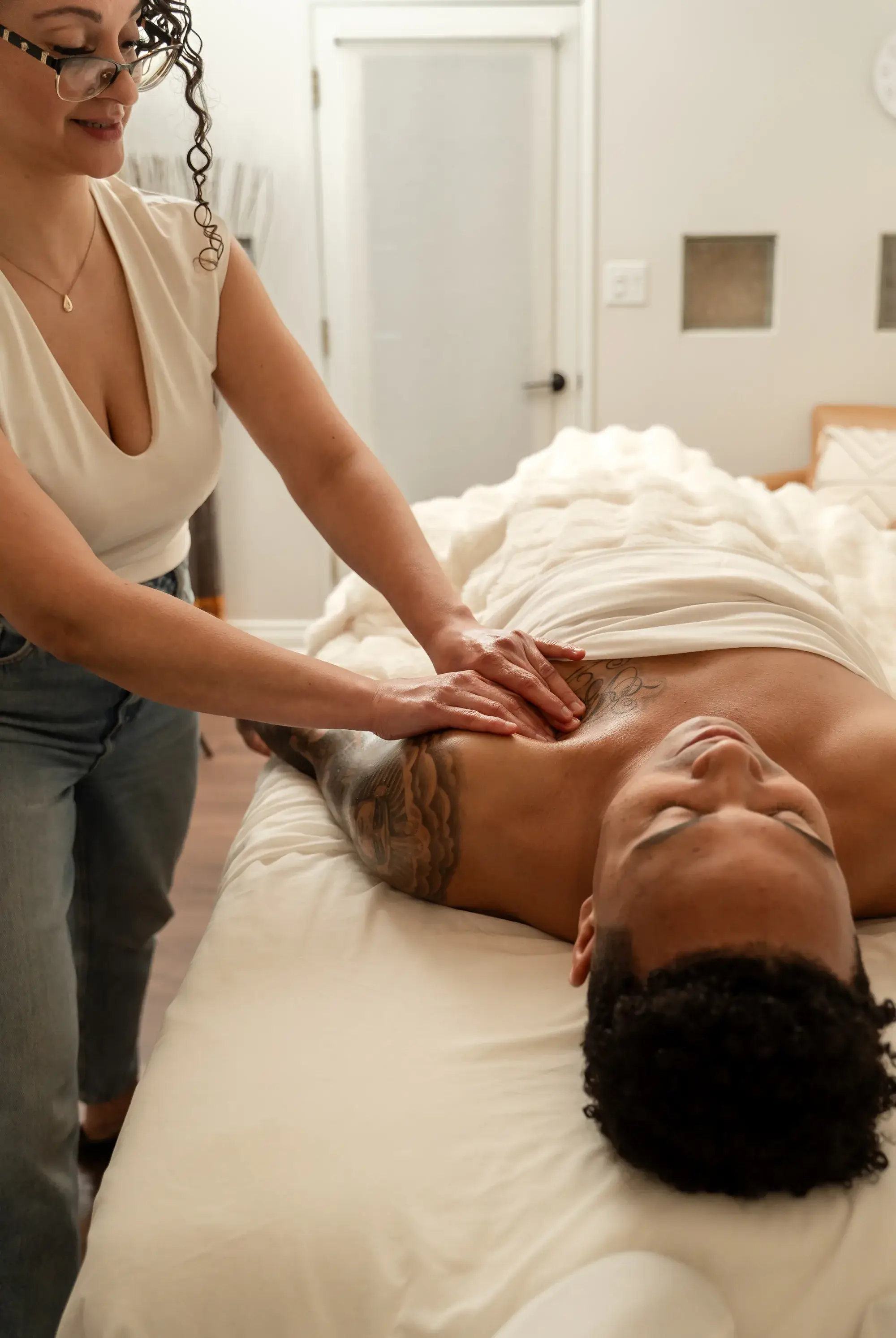
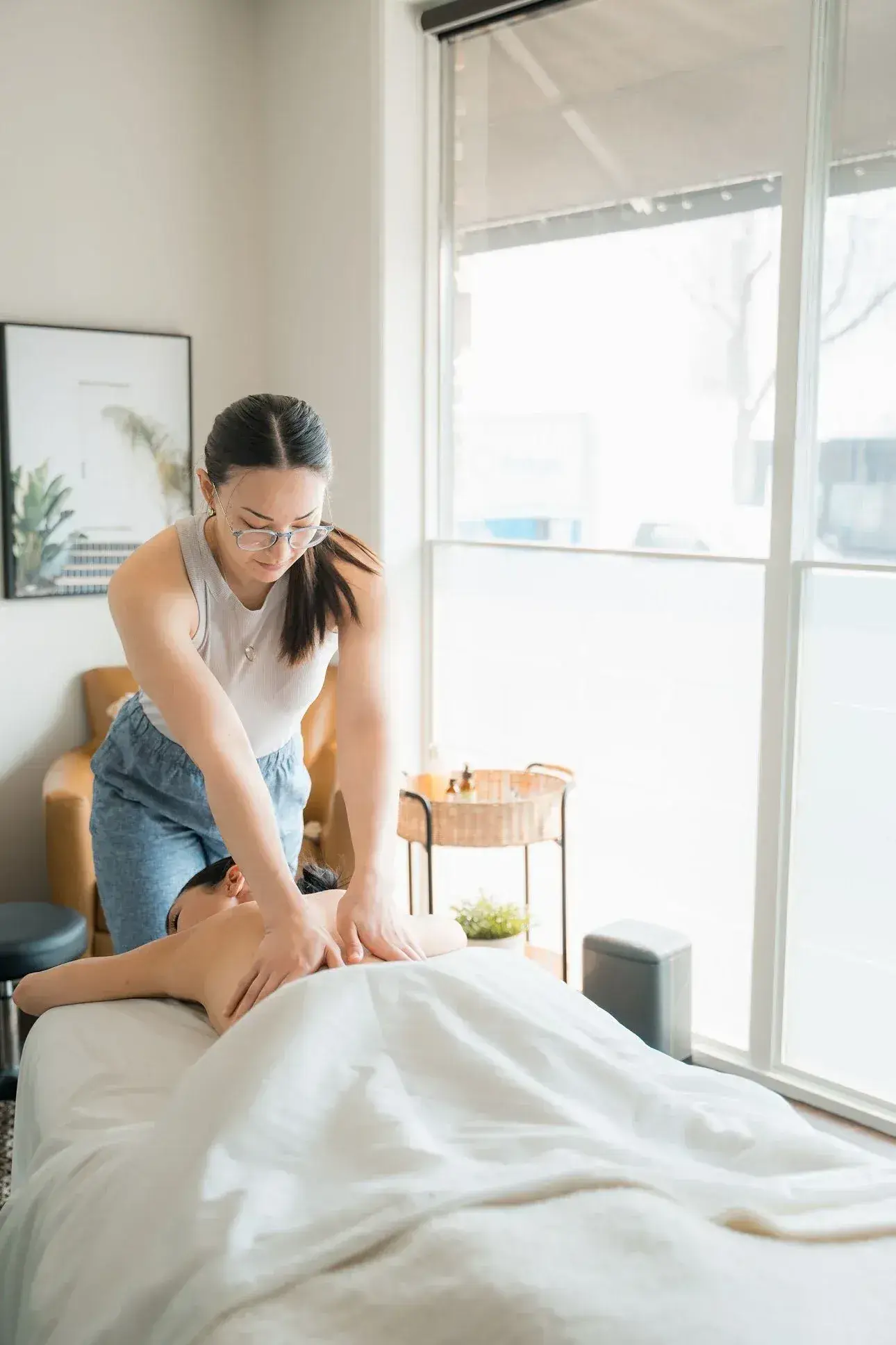
Runner’s World’s therapists say it directly: massage does not have to hurt to be beneficial, and the useful work happens when the client’s body is not bracing against the pressure. On muscle that is already tender, bracing starts early. So the session is slower, broader and lighter than a mid-training deep tissue appointment, and the pressure is set by what you can relax under, not by what you can tolerate.
If you want the longer answer on whether massage changes soreness at all, our page on whether massage helps sore muscles after exercise goes through the evidence. This page is about timing.
The practical plan
Day of the race. A light flush at the finish if one is offered. Eat, drink, walk a little. No deep work.
Days one and two. Soreness is building toward its peak. Regular massage clients can book a recovery session; tell us it is post-race so we plan it as one. Newcomers wait. Everyone keeps moving gently: Healthline’s relief list for sore muscles after massage, which transfers well to sore muscles after racing, includes gentle stretching, a warm shower or bath, heat for short spells, cold packs in short intervals and rest.
Days three and four. The first good day for a newcomer’s massage, and a fine day for anyone’s. The legs are past their worst and the session can do more.
The week after. Runner’s World suggests that a massage can reveal areas of weakness that need attention, and this is when that information is most useful, before the next block starts.
A few other points from the same guide carry over: arrive hydrated, because dehydrated tissue is stiffer and the session is less comfortable; keep any heavy meal at least three hours before; and do not plan a hard workout for after the appointment. If you are a few days post-race, the last one takes care of itself.
Which session to book
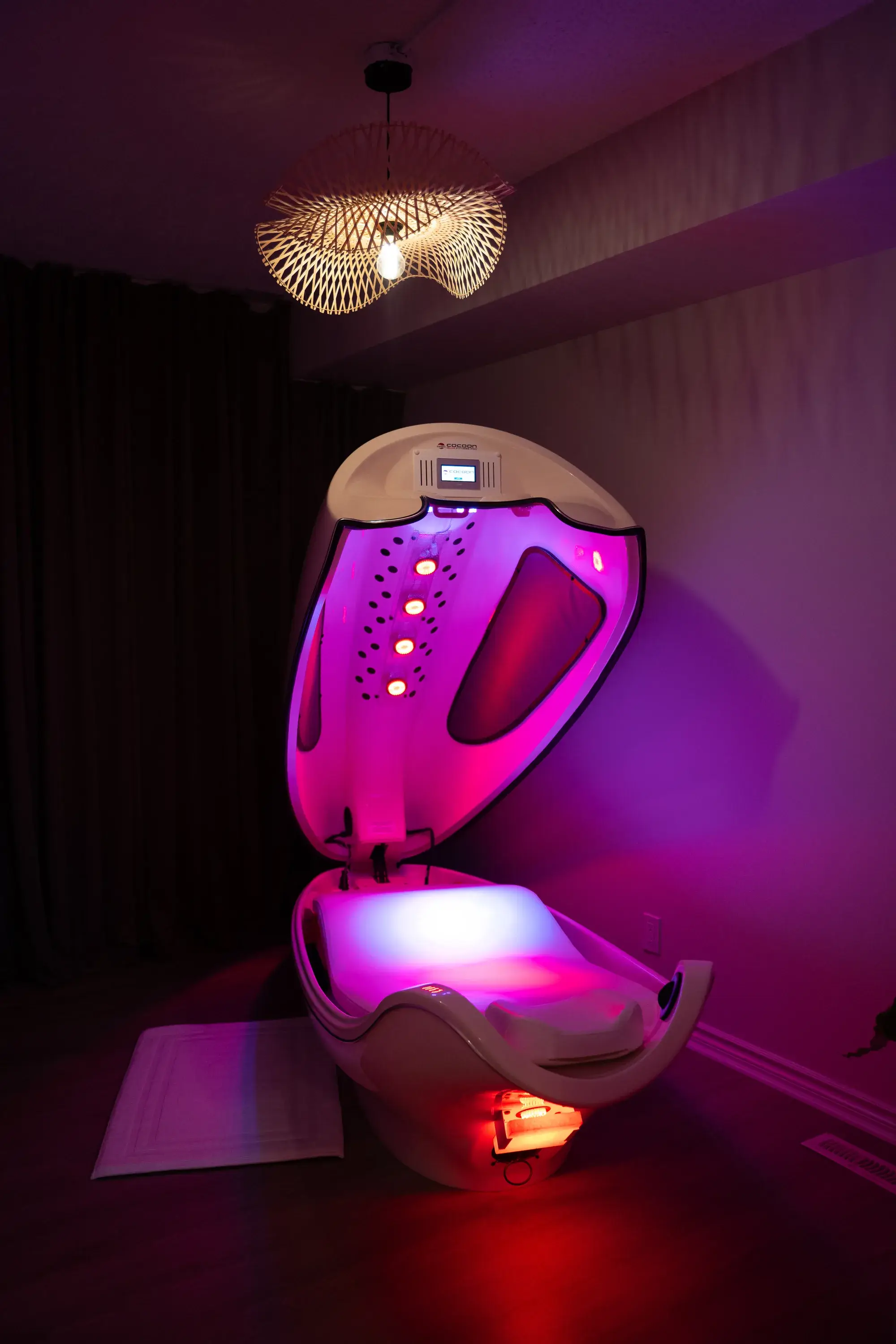
Any of our massage therapy lengths works for recovery; the treatment menu lists them, and the 60-minute slot is enough to cover both legs and the back properly. A 20-minute infrared cocoon session can be added to a massage, and many people find the warmth pleasant on tired legs, though we make no recovery claims for it. Cleveland Clinic’s description of sports massage as work focused on muscles affected by athletic activity is a fair description of what you will get, just set gently.
For the other side of the calendar, see our page on how long before a race to get a sports massage.
When to see a doctor first
Runner’s World’s advice is that your massage therapist is not your GP: for a serious injury that has not been diagnosed, see a doctor, and if a problem persists for three days after a massage, consult a sports physician. We would add the signs that a post-race ache is more than soreness. Normal DOMS is dull, spread across the muscles you used, and improving by day three or four. Pain that is sharp or in one small spot, pain in a bone rather than a muscle, swelling in one calf that is warm or tender, a joint that will not bear weight, or soreness that is getting worse after day three instead of better all warrant a medical opinion before anyone massages the area.
Questions people ask
Is a massage right after crossing the finish line a good idea?
The light-touch kind, yes. Runner's World describes finish-line massage as calming to the nervous system, and that is all it should try to do. A deep session on legs that have just run a race is a different matter, and we would not do one the same day.
My legs are at their worst on day two. Should I book then or wait?
That timing is normal: the meta-analysis we read describes soreness peaking between 24 and 72 hours after hard exercise. If you have regular massage, a gentle recovery session on day two is reasonable. If you are new to massage, Runner's World suggests waiting until day three or four, when there is less to be sore about.
Should a post-race massage be deep to be worth it?
No. Runner's World's therapists are clear that massage does not have to hurt to help, and that the useful work happens when your body is not bracing against the pressure. On inflamed muscle, bracing comes early, so a lighter, slower session does more than a heavy one.
Can I use the infrared cocoon instead of, or with, a massage after a race?
You can add a 20-minute cocoon session to a massage at Renu, and the cocoon is also available on its own. We cannot tell you it speeds recovery, because the sources we read do not cover it. Many people simply find warmth pleasant on tired legs, and that is a fair enough reason.
Sources
- Runner's World Australia: 14 things to know before you get a sports massage
- Healthline: Why you might feel sore after a massage and what to do about it
- Guo J et al., Frontiers in Physiology 2017 (Europe PMC): Massage alleviates delayed onset muscle soreness after strenuous exercise, a systematic review and meta-analysis
- Cleveland Clinic: What are the health benefits of massage?
Page reviewed October 4, 2026. This page is education, not a diagnosis. For your own situation, talk to your doctor, surgeon or care team, or ask us.
Keep reading
Related pages