
How long before a race should I get a sports massage?
Not within 48 hours of the start. Experienced massage clients can book two to seven days out; first-timers should go several weeks before or wait until after.
By The Renu lymphatic and massage team · 6 min read
Leave at least 48 hours between a sports massage and the start line, and more if the massage is new to you. Runner's World's guidance is that experienced massage clients do well two to seven days before an event, while newcomers should book several weeks out or wait until afterwards, because a first deep session can leave you tight for a day or two. In the final days, lighter work that leaves the legs feeling fresh is the only kind that belongs on the schedule.
Calgary’s running calendar fills up from late spring, and every year a few people book a well-meant massage three days before their race and spend the first ten kilometres wondering why their calves feel wooden. Timing is the whole question here, and the answer depends on one thing: whether your body already knows what this treatment feels like.
The three windows
Runner’s World’s sports massage guide, built on interviews with therapists who work with runners, gives three timings that we find hold up well on the table:
| Your situation | When to book | Why |
|---|---|---|
| You have regular sports massage | Two to seven days before the event | Your body is used to it; a session in that window can leave you loose without lingering tightness |
| You have never had one, or not for a long time | Several weeks before, or after the race | A first session can leave you sore for a day or two, and race week is not the time to learn that |
| Anyone | Never inside 48 hours of the start | Post-massage tightness can take up to two days to clear |
One of the therapists interviewed makes the comparison we repeat most often: just as you would not try new socks or shoes on race day, you should not experiment with new bodywork before a race. Race week is for the familiar.
Why 48 hours
Runner’s World describes post-massage tightness as normal and says it should dissipate within 48 hours, which is where the rule comes from. Healthline, writing about soreness after any firm massage, says it usually subsides within a day or so and that deep tissue, trigger point and sports massage, which use stronger pressure, bring more of it than a gentle Swedish session.
Two days is the buffer that lets the stiffness pass before the gun goes. Book inside it and you may still be in the window where the legs feel heavy rather than fresh.
Healthline also notes who is more prone to soreness: people having their first massage, people who have not had one in a while, and people carrying a lot of tension. That is the group Runner’s World sends several weeks out, and it is the reason we ask new clients when their race is before we book them.
A pre-race session is a different treatment
The word “massage” covers two quite different sessions, and only one belongs in race week.
The training-block session is the one most runners picture: Cleveland Clinic describes sports massage as focusing on muscles affected by athletic or repetitive activity, and deep tissue work as going into muscles and tendons to release tightness. That is useful work, and it is the kind that can leave you tender afterwards. It belongs in the weeks when a sore day costs nothing.
The pre-race session is lighter and shorter. The aim is to leave the legs feeling fresh and relaxed, settle the nervous system, and change nothing your body has to adapt to. Cleveland Clinic lists increased parasympathetic activity, the rest-and-digest side of the nervous system, among massage’s general effects, and that calming effect is the most useful thing a pre-race session offers. If your therapist starts working deep into a stubborn calf four days before your race, it is fair to ask them to lighten off; Runner’s World’s point that massage does not have to hurt to be beneficial applies doubly in the taper.
Tell us at booking that it is a pre-race session. We will plan it as one.
What the massage will not do
Runner’s World is firm that massage does not flush toxins out of the body and that the idea you need extra fluids afterwards is a myth. Pre-race massage will not “clear” anything from your legs; what it can do is leave them looser and you calmer. NCCIH’s summary of the research describes massage’s benefits for muscle and joint pain as generally short-term, which is fine for our purposes: short-term is exactly the window a race sits in.
We also will not claim it makes you faster. None of the sources we read supports that, and your training plan is what carries the day.
A race-week checklist
- Hydrate before the session. Runner’s World notes that dehydrated fascia and muscle are stiffer and make a massage more uncomfortable.
- Eat light beforehand. Its advice is to keep any heavy meal at least three hours before the appointment, because lying face down on a full stomach is unpleasant.
- Skip the post-massage workout. Runner’s World suggests waiting until the next day, which in the taper is no hardship.
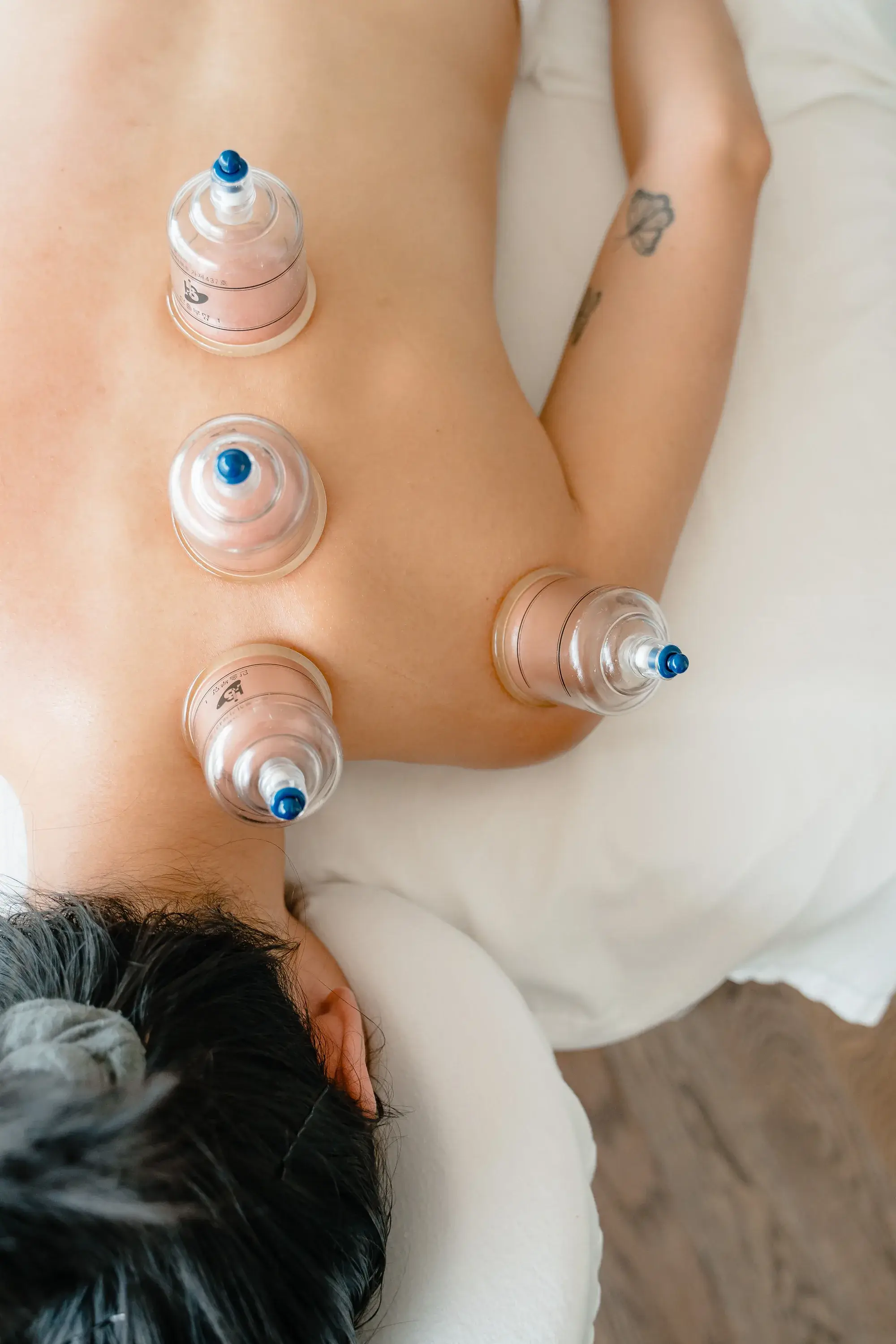
- Keep anything new out of the week. No new techniques, no first-time cupping, no change in pressure. Myofascial cupping, which lifts tissue with suction and can leave temporary marks, is a training-block treatment.
- Mention the race at booking. It changes how long we work and how deep.
Fitting massage into a training block
Runner’s World’s longer view is that regular monthly sessions, even 30 minutes, help athletes head off injuries, and one of its therapists describes massage as an investment rather than a luxury. Cleveland Clinic’s reading of the research is that longer, more frequent sessions outperformed shorter and rarer ones for pain relief.
For most runners in a build, that looks like a session every few weeks through training, a last proper one at least a week out, and then either nothing or a light flush in the two-to-seven-day window if your body knows the drill. Our massage therapy sessions run from 30 to 90 minutes; the treatment menu lists what each includes. For the other end of the race, our page on how soon after a race you can get a massage covers recovery timing.
When to see a doctor instead
Runner’s World’s reminder applies in race week more than ever: your massage therapist is not your GP, and we do not diagnose. A pain that showed up in the taper and does not settle with a few easy days, a sharp or localised pain in a bone, swelling that is warm or one-sided, or anything that changes how you walk deserves a doctor or sports physician before a massage, not instead of one. NCCIH’s advice is the same: do not use massage to put off seeing a health care provider about a medical problem. A massage will not fix a stress injury, and working over one is the one way to make race week worse.
Questions people ask
Can I get a massage the day before a race?
Not a proper one. The 48-hour rule exists because post-massage tightness can take up to two days to clear, and race morning is the wrong time to find out you are still stiff. If you want touch the day before, keep it to a short, light flush with no deep work, and only if you have had that exact treatment before.
Should I ask for deep tissue before a race?
No. A pre-race session is about leaving the legs loose and the nervous system calm, not about working through old tension. Save the deep work for the weeks of training and the recovery period after; book it close to the race and you risk soreness on the start line.
Does a pre-race massage improve performance?
The sources we read do not claim that, and we would not either. Runner's World frames pre-race work as leaving you feeling fresh and relaxed, and Cleveland Clinic describes sports massage as focused on muscles affected by athletic activity. A good session makes the start line more comfortable; your training is what makes you fast.
I have never had a sports massage. Should I try it before my race?
Try it several weeks before, not in race week. Healthline notes that people having their first massage are more prone to soreness afterwards, and Runner's World tells newcomers to book weeks ahead or wait until after the event for exactly that reason.
What about a massage and cupping together before a race?
Treat cupping as new bodywork unless you have had it before, which means weeks out, not days. Myofascial cupping lifts tissue with suction and can leave temporary marks and tenderness, so it belongs in the training block rather than the taper.
Sources
Page reviewed October 4, 2026. This page is education, not a diagnosis. For your own situation, talk to your doctor, surgeon or care team, or ask us.
Keep reading
Related pages