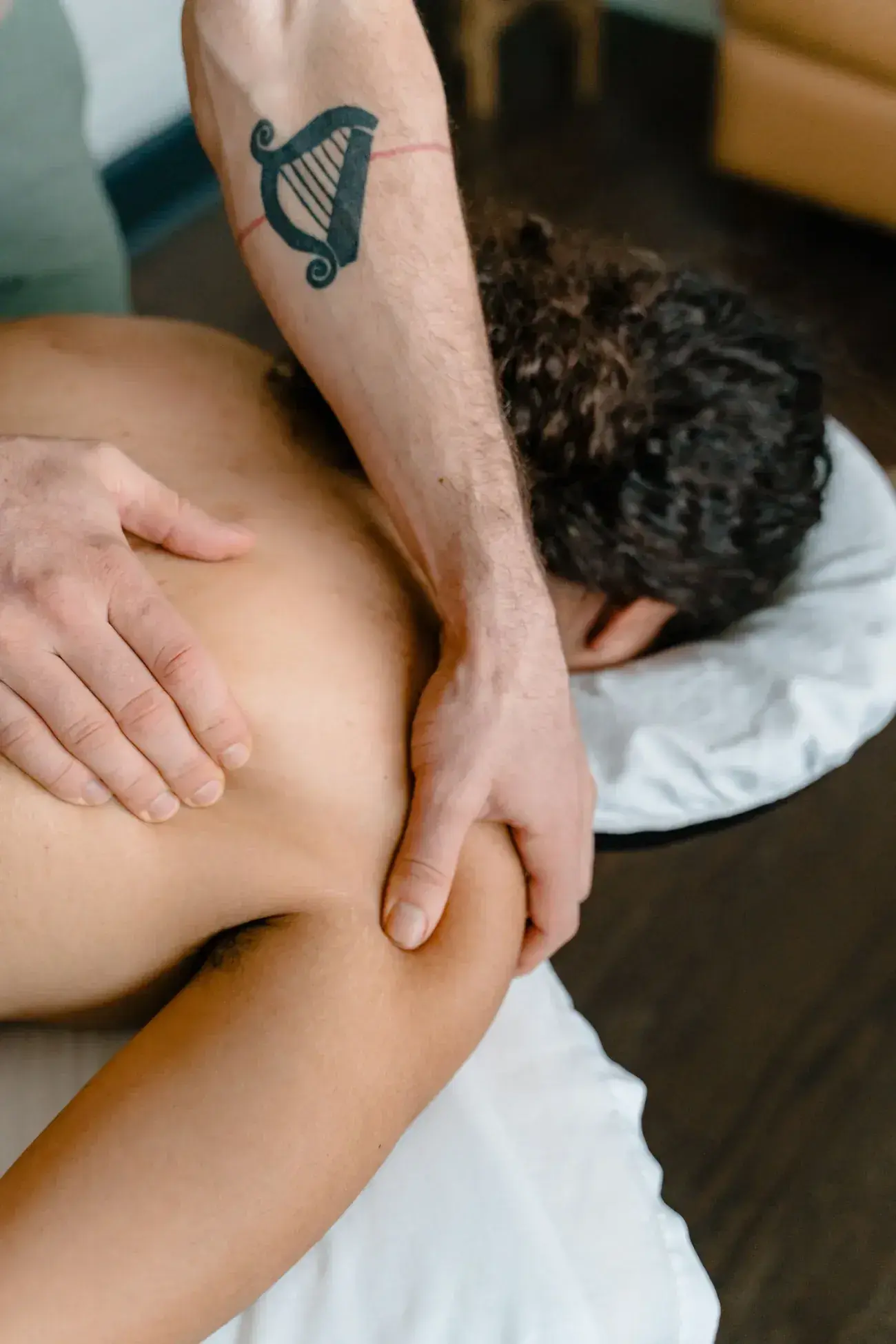

Does massage help sore muscles after exercise?
Yes, modestly. A meta-analysis of eleven trials found massage lowered post-exercise soreness at 24, 48 and 72 hours. It eases the ache, not the recovery.
By The Renu lymphatic and massage team · 5 min read
Yes, within limits. A 2017 systematic review that pooled eleven randomised trials found that massage after strenuous exercise reduced muscle soreness ratings at 24, 48 and 72 hours compared with no treatment, with small gains in muscle strength measures too. The effect is relief, not repair: the microdamage that causes the soreness still has to heal on its own timetable. Cleveland Clinic's broader reading of massage research is that pain relief tends to be short-term, and that fits what we see after a hard session.
Two days after a hill session or a first week back in the gym, the question arrives in our inbox in some version of the same words: will a massage actually help, or will it just feel nice? The answer is that it does both, and the evidence is better than it used to be, but it is worth being precise about what “help” means.
What the research found
The clearest evidence we could read is a 2017 systematic review and meta-analysis published in Frontiers in Physiology. It searched seven databases up to December 2016, kept only randomised controlled trials, and pooled eleven studies with 504 participants in total.
Its findings, in plain terms:
- Soreness ratings were lower in the massage groups than in the no-treatment groups at 24 hours, 48 hours and 72 hours after intense exercise, and lower overall.
- Two measures of muscle performance, maximal isometric force and peak torque, were modestly better after massage.
- Creatine kinase, a blood marker that rises when muscle fibres are damaged, was lower in the massaged participants.
The authors’ conclusion is measured: the current evidence suggests massage after strenuous exercise “could be effective” for easing delayed onset muscle soreness and improving muscle performance. They also note that earlier reviews found little support for massage improving performance, and that the psychological effect of massage may be larger than the physiological one. We think that is the right level of confidence.
What soreness is, and why it has a timetable
The same review describes delayed onset muscle soreness, or DOMS, as the result of exhaustive or unaccustomed exercise, particularly exercise involving eccentric contractions (the lengthening-under-load that happens running downhill or lowering a weight). It commonly begins within the first 24 hours and peaks between 24 and 72 hours. The most accepted explanation is mechanical damage to the muscle fibres followed by inflammation, which is why soreness arrives late rather than during the workout.
That matters for expectations. Massage cannot un-tear a fibre. What it can do, on the review’s account, is raise skin and muscle temperature, increase blood and lymphatic flow, shift the nervous system toward its parasympathetic state, and relieve tension and stiffness. The result is a sore muscle that feels less sore and moves more freely while it heals.
Cleveland Clinic puts the same idea in general terms: across the pain conditions it summarises, relief from massage “may be short-term, rather than long-term”. For soreness that is going to resolve on its own within a few days anyway, short-term is the only term that matters.
When massage can add to the soreness
There is an irony worth knowing. Healthline explains that a massage can itself cause delayed soreness, because it stimulates areas you have not targeted recently and the muscles need time to adjust, much like a workout. That is more likely after deep tissue, trigger point or sports massage than after gentle Swedish work, and more likely for people who are new to massage or carrying a lot of tension.
So a heavy session on already-inflamed legs can leave you with two overlapping sorenesses. Runner’s World’s therapists make the point that massage does not have to hurt to be beneficial and that the useful work happens when the body is not bracing against pressure. On tender muscle, that means lighter and slower than usual. Our page on how soon after a race or hard workout to get a massage covers the day-by-day timing.
What we actually do in a recovery session
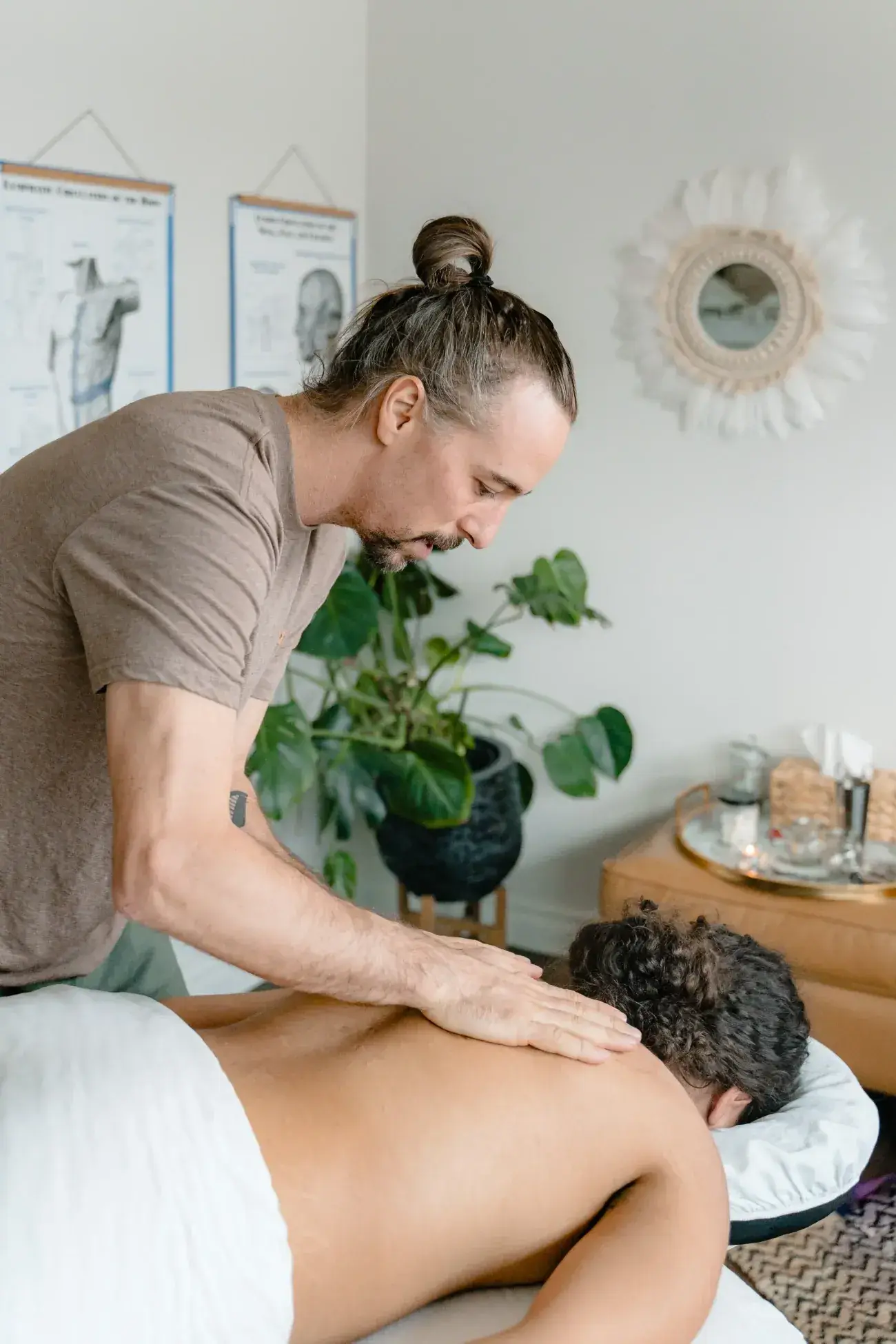
A post-exercise massage at Renu is not a deep tissue appointment with a different name. Expect:
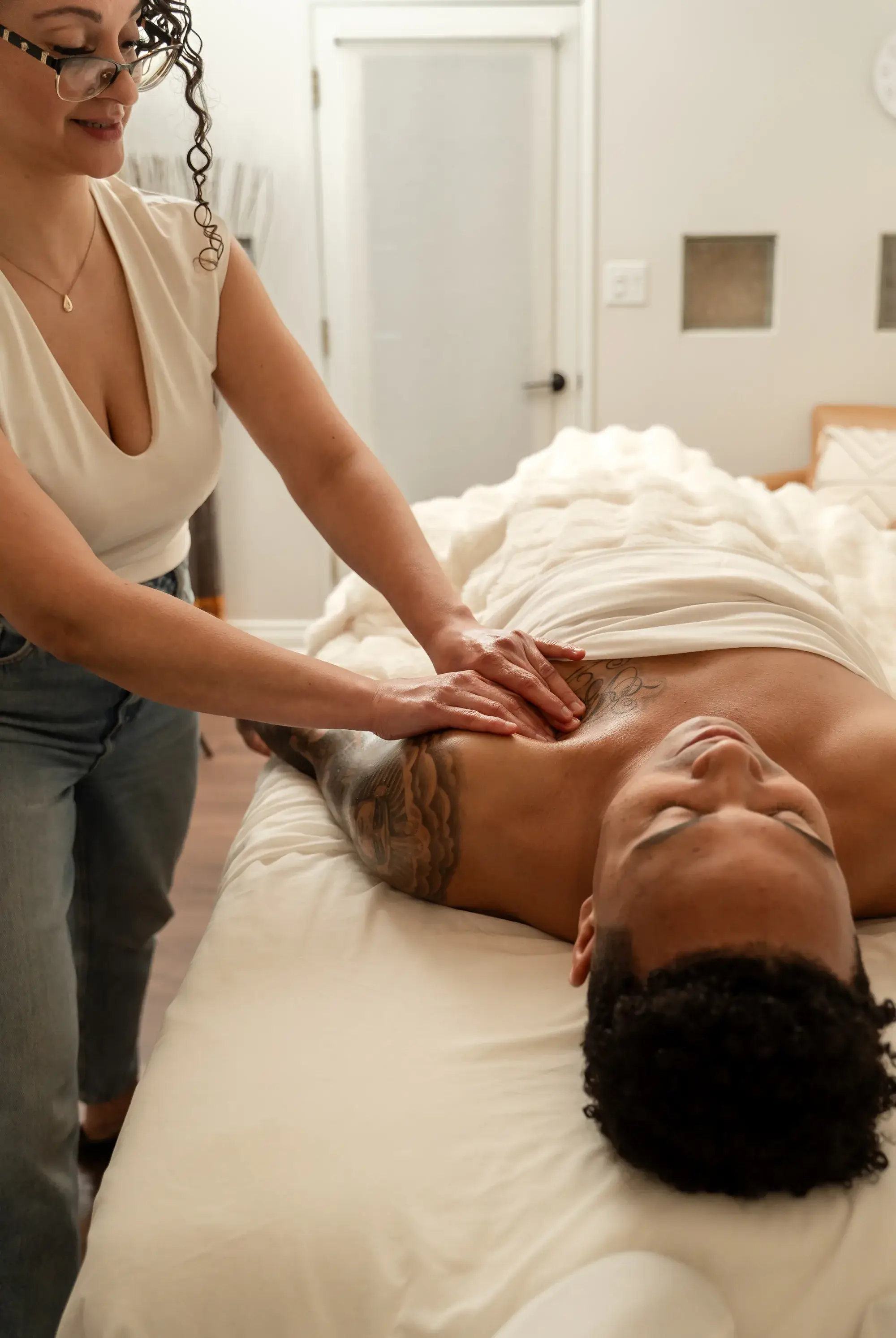
- Broad, warming strokes first. Long, flat work along the muscle groups you used, which Cleveland Clinic would file under the gentler Swedish end of the spectrum.
- Pressure set by relaxation, not tolerance. If your leg tenses under the hand, we are pressing too hard for the day.
- Attention to the whole chain. Runner’s World notes that fatigue produces unconscious tension in the arms, shoulders and back, not only the legs, so the session covers more than the sorest spot.
- No chasing knots. Old tension can wait a week. Inflamed muscle is not the place to dig.
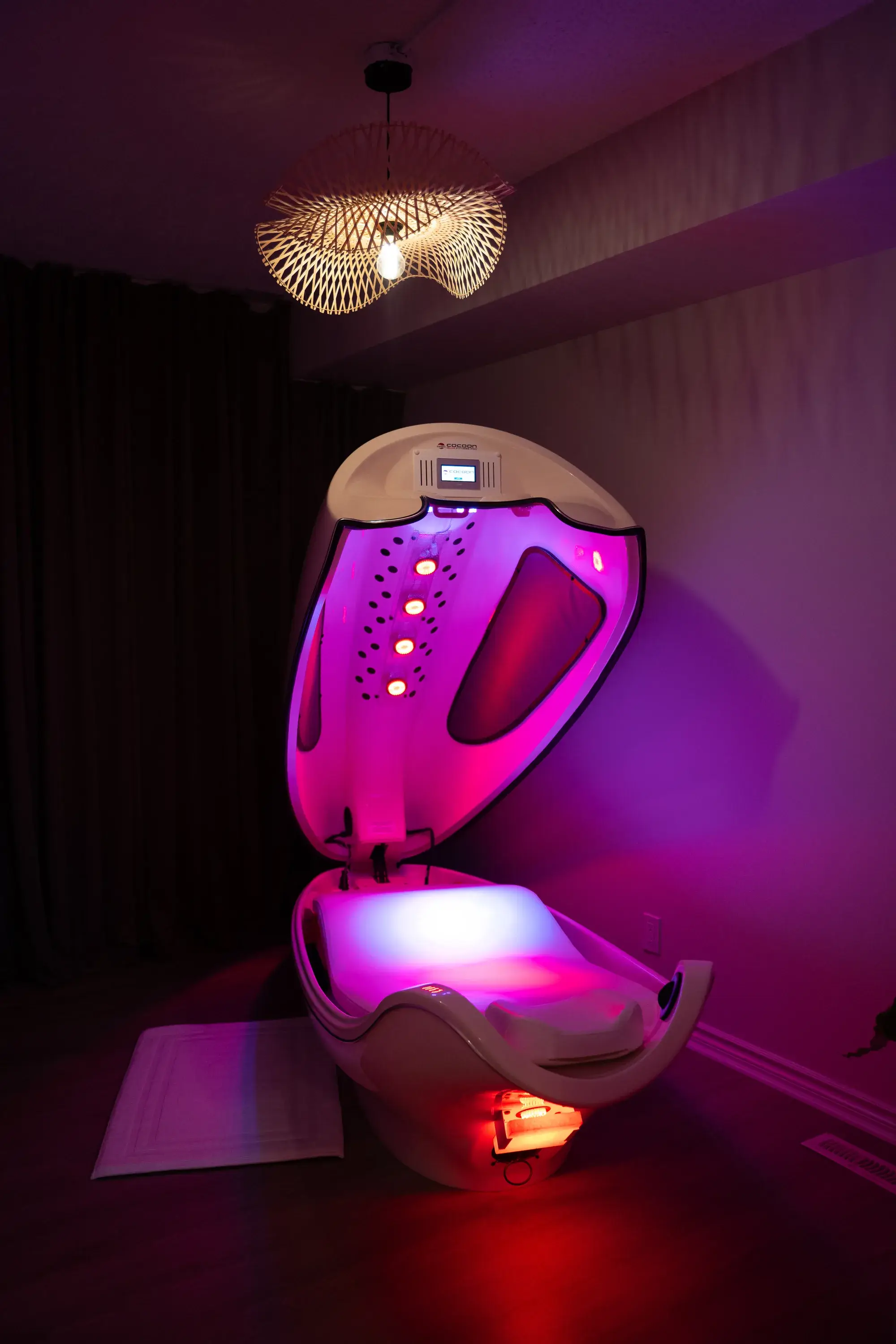
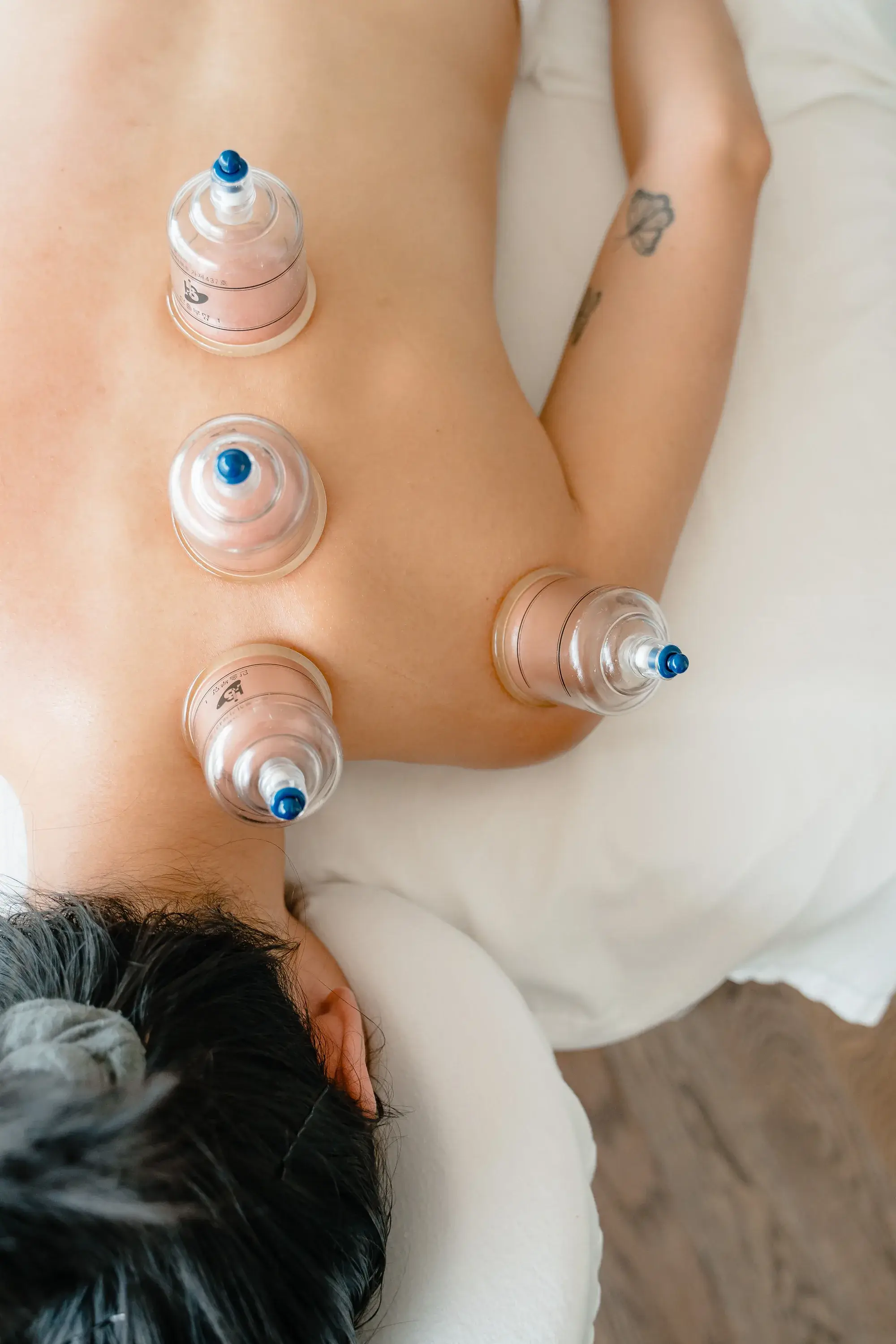
Any of our massage therapy lengths can be booked as a recovery session; just tell us that is what it is. A 20-minute infrared cocoon can be added before or after, though we make no claim that it speeds recovery, because the sources we read do not address it. Myofascial cupping is better saved for the week after, when the muscle is no longer tender.
Between sessions
Healthline’s relief list for sore muscles is sensible and inexpensive: drink water, stretch gently, use heat (a warm shower, a bath, or a heating pad for about 15 minutes) or cold packs in 15-minute intervals, and rest with the legs elevated. Runner’s World adds an Epsom salt bath on the day of a massage and a light meal rather than a heavy one beforehand. Gentle movement generally feels better than complete stillness, and soreness that is easing by day three is behaving normally.
One myth to set aside: Runner’s World is explicit that massage does not flush toxins from the body and that you do not need extra fluids afterwards. Drink normally, and drink well before a session, because dehydrated tissue is stiffer and makes the massage less comfortable.
When to see a doctor
Ordinary DOMS is dull, spread across the muscles you worked, worst on day two or three, and better by day four. NCCIH’s advice is not to use massage to postpone seeing a health care provider about a medical problem, and Runner’s World says plainly that your massage therapist is not your GP. See a doctor rather than booking a massage if the pain is sharp, sits in one small spot or in a bone, comes with a joint that will not bear weight, involves swelling in one limb that is warm or tender, or is getting worse after day three instead of better. Healthline also lists conditions that call for medical advice before any massage, including fractures, bleeding disorders, blood-thinning medication and deep vein thrombosis. Those are not soreness, and a massage is not the answer to them.
Questions people ask
Does massage speed up muscle repair, or only make the soreness feel better?
The honest reading of the evidence is mostly the second. The meta-analysis we cite reports lower soreness ratings and lower levels of creatine kinase, a blood marker of muscle damage, after massage, but it also notes that the psychological effect may be larger than the physiological one. Treat it as relief that makes the recovery days more comfortable, not as a shortcut through them.
Will a massage make my soreness worse?
It can if it is too firm. Healthline explains that massage stimulates muscle you may not have used recently and can trigger its own delayed soreness, especially after deep tissue work. A recovery massage on tender legs should be lighter than a normal session; if it hurts, say so and the pressure comes down.
Is foam rolling as good as a massage for sore muscles?
We cannot say from what we read. The review notes that other reviews found self-myofascial release with a foam roller could ease post-exercise muscle pain, but that none of those pooled trials into a meta-analysis. If a roller works for you between sessions, there is no reason to stop.
Should I use heat or ice on sore muscles after a massage?
Either, in short spells. Healthline's relief list includes heat such as a warm bath or a heating pad for about 15 minutes, and cold packs in 15-minute intervals. Our page on heat versus ice after a massage goes through when each is the better choice.
Sources
- Cleveland Clinic: What are the health benefits of massage?
- Runner's World Australia: 14 things to know before you get a sports massage
- Healthline: Why you might feel sore after a massage and what to do about it
- Guo J et al., Frontiers in Physiology 2017 (Europe PMC): Massage alleviates delayed onset muscle soreness after strenuous exercise, a systematic review and meta-analysis
- NCCIH: Massage therapy, what you need to know
Page reviewed October 4, 2026. This page is education, not a diagnosis. For your own situation, talk to your doctor, surgeon or care team, or ask us.
Keep reading
Related pages