
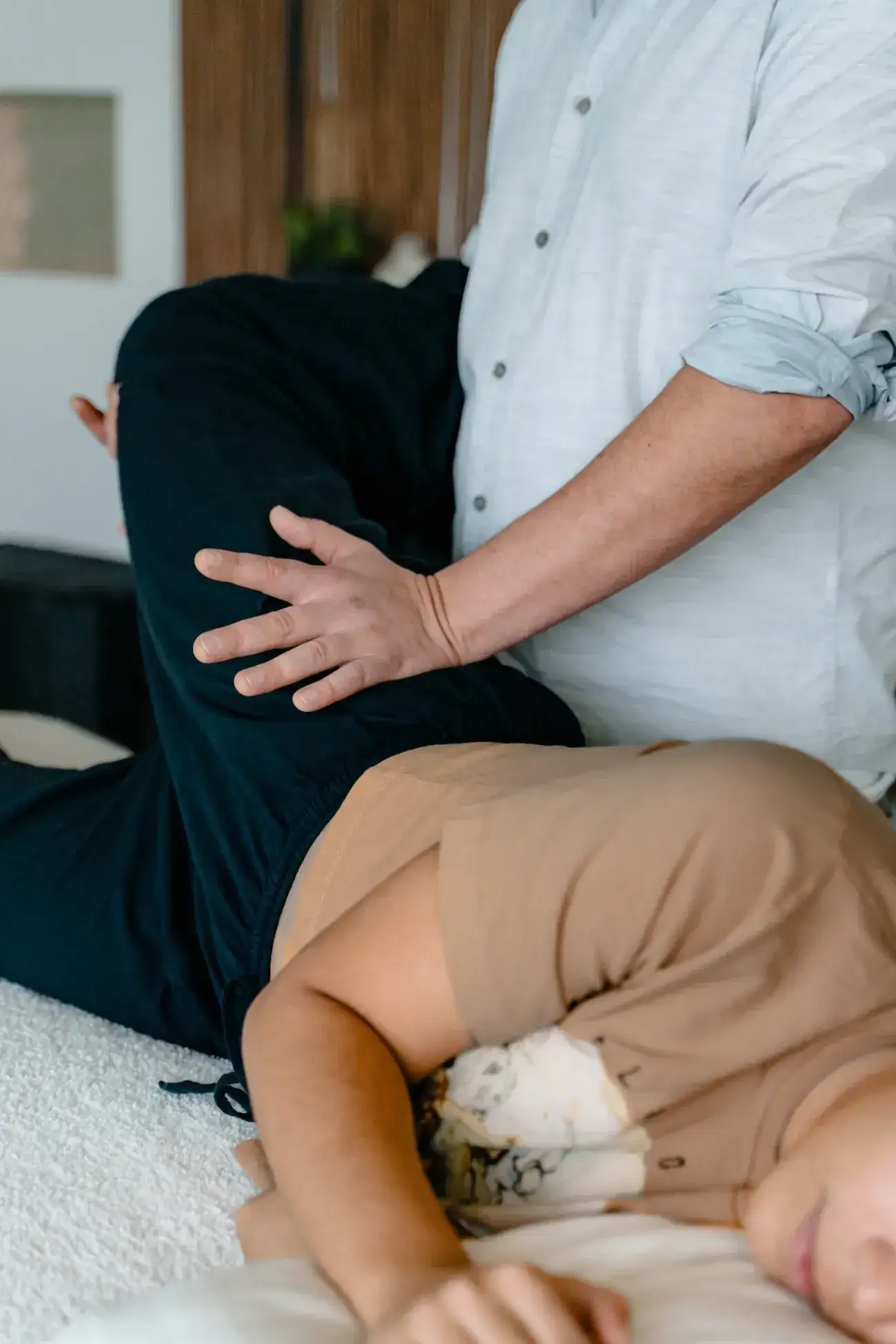
Can I work out after a massage?
Light movement is fine after a massage; hard training is best left until tomorrow. Why the order matters and how to fit a massage into your training week.
By The Renu lymphatic and massage team · 6 min read
Light activity, yes; a hard workout, better tomorrow. Sports-massage therapists advise against training straight after a session so the body can process the work, and the muscles that were pressed and stretched can be tender for up to 48 hours. A walk, mobility work or an easy spin are fine the same day. Heavy lifting, a hard run or a race belong on the other side of that window.
Plenty of our clients train seriously, and the massage often gets squeezed into the same day as a workout because that is where the time is. Whether that works depends on which comes first and how hard the workout is. The rule of thumb is short: train, then massage, then rest. Here is why, and what to do when the day does not cooperate.
Why hard training straight after a massage is a poor idea
The sports-massage therapists interviewed by Runner’s World put it in one line: do not work out after a massage. Let your body process what has just happened, and leave the training until the next day. Their reasoning is practical. Massage presses, stretches and loads muscle, and the tissue needs a short recovery from that, much as it does from a workout. Stack a hard session on top and you are asking tired, tender muscle to perform, with the soreness of both arriving together the next morning.
There is a second, smaller reason. For a while after a session many people feel loose, slightly floaty and not quite sharp. Healthline describes the brief drop in blood pressure that can follow standing up after lying down, and Cleveland Clinic lists dizziness, light-headedness and blurred vision among its symptoms, with dehydration as a common cause. That is not the state in which to load a barbell or set off on a tempo run.
What “light” means
None of this is a reason to sit still. Healthline’s guidance on post-massage soreness recommends gentle stretching, which it credits with easing tension and improving circulation, and ordinary movement tends to make the post-massage ache fade faster than lying on the couch. The line we draw:
| Same day is fine | Better tomorrow |
|---|---|
| A walk, the dog, the school run | Heavy lifting or a max-effort session |
| Easy mobility work or gentle yoga | A hard, long or fast run |
| A relaxed bike ride or swim | Hill sprints, intervals, a race |
| Light housework and errands | A heated or power yoga class |
If you are not sure where something falls, ask whether you would describe it as a workout to a friend. If yes, it waits.
The 48-hour window
Soreness after massage, particularly firmer work, follows a predictable arc. Runner’s World’s therapists describe it clearing within 48 hours, and Healthline puts the typical course at about a day. Most people wake up the next morning a little tender and are ready to train normally; some, especially after their first deep session, want a second easy day.
The practical rule is to let the ache decide. Train on tissue that feels normal. If a muscle that was worked is still clearly sore, make the first session back a lighter one, and treat any sharp or shooting pain as a stop sign rather than something to push through. Our page on what to do after a deep tissue massage covers the evening and the next day in detail.
Massage after a workout: the better order
Runner’s World’s advice for races applies to hard training generally: a recovery massage sits best within hours to 48 hours after the effort, with newcomers to massage waiting three or four days until the worst of the soreness has passed. The logic is that massage then becomes the start of recovery rather than an obstacle to performance.
A few things make a post-workout massage go better:
- Arrive hydrated. Runner’s World’s therapists note that dehydration stiffens fascia and muscle and makes the massage more painful. Drink after training, not just before the session.
- Shower first if you can. Not for our sake, but because cooling down and changing out of damp kit makes it easier to relax on the table.
- Eat, but not just before. Runner’s World suggests a light meal three or more hours before a session; a full stomach is uncomfortable face down.
- Tell your therapist what you did. A long run, a heavy squat day and a climbing session leave very different tissue, and the session changes with it.
Pre-event flush versus a deep session
The one time the order flips is before a race or competition, and it comes with a strong caveat. Runner’s World’s therapists describe a light massage at a finish line as helping the body’s repair process begin, and they distinguish that from a deep session, which has no place in the 48 hours before an event because it risks soreness on the day. Those who are used to massage can benefit from a session two to seven days out; first-timers should book either weeks before or the day after.
The key word is light. A pre-event flush is light work that leaves nothing to recover from. It is not the time to finally deal with the stubborn calf. Our page on how long before a race to get a sports massage sets out the timings, and how soon after a race or hard workout you can get a massage covers the other side.
Planning the week
If you train on a schedule, the massage slots in most easily on a rest day or the evening of a training day, with the next hard session at least a day away. A typical pattern:
- Hard session in the morning or the day before.
- Massage in the afternoon or evening, hydrated and fed.
- Easy day: walk, stretch, sleep well.
- Normal training resumes when the tissue feels normal, usually the next day.
Cleveland Clinic notes that, in some research, 60-minute massages several times a week outperformed shorter or less frequent ones for pain, though the benefit was short-term. For most recreational athletes a regular session every few weeks is the realistic version, timed so it never lands the day before something that matters.
When to see a doctor
Massage and training are both ordinary stresses, and ordinary soreness is their ordinary result. See a doctor rather than booking another session if you have pain that is severe or keeps building, pain that shoots or tingles down a limb, a swollen, hot or red area, or a joint that will not take weight. Healthline advises medical advice for severe or long-lasting pain after a massage, and those signs point to an injury that neither massage nor training will fix.
Our massage therapy page lists the session lengths, with current prices on the treatment menu. Tell us what your week looks like and we will help you find the slot that does not cost you a training day.
Questions people ask
Is it better to get a massage before or after the gym?
After, with a gap. A massage on freshly trained muscle is the order the sports-massage therapists in Runner's World recommend, and the session then starts your recovery. Massage first and then a hard workout asks tired, tender tissue to perform, which is the combination they advise against.
Can I go for a walk or do yoga after a massage?
Yes. Gentle movement is on Healthline's list of things that ease post-massage soreness, and a walk or a slow, unforced yoga practice is a good way to spend the afternoon. Save the heated or power classes for the next day.
Can I lift weights the day after a massage?
Usually, yes. Runner's World's therapists describe post-massage soreness fading within 48 hours, and most people feel ready to train normally the next day. If you are still noticeably tender, make the first session lighter and let the ache guide you.
Does a massage undo the benefits of my workout?
No. There is no evidence that a massage reverses training. What it does is add a second demand on the same tissue, which is why the sensible order is train, then massage, then rest, rather than massage, then train.
Sources
Page reviewed October 4, 2026. This page is education, not a diagnosis. For your own situation, talk to your doctor, surgeon or care team, or ask us.
Keep reading
Related pages