
Yoga with lymphedema: adaptations and what the evidence shows
Yoga with lymphedema: what the Loudon pilot trial found at eight weeks and after stopping, and how to adapt a class: breathing first, props, garment on.
By The Renu lymphatic and massage team · 7 min read
Yoga is on Cancer Research UK's list of suitable exercise for lymphoedema, and the only randomised trial, a 2014 pilot by Loudon and colleagues, found that eight weeks of weekly classes plus daily home practice reduced tissue hardness in the affected upper arm and improved symptom scores, without changing arm volume. Four weeks after the practice stopped, arm volume had risen more in the yoga group, so the benefit depended on keeping it up. Adapt the practice rather than avoid it: breathing first, props under the arm, no long holds with the arm overhead, compression on, and tell the teacher.
Yoga and lymphedema get along, with adaptations. Cancer Research UK, Macmillan and the Lymphoedema Support Network all list yoga among suitable activities, and the one randomised pilot trial to test it, published by Loudon and colleagues in 2014, found that eight weeks of practice made the affected upper arm less hard and its symptoms less bothersome. It did not reduce arm volume, and the gains faded within a month of stopping. So the evidence supports yoga as a way to make a lymphedematous limb feel and move better, kept up daily, inside the ordinary lymphedema rules: compression on, no overheating, nothing that constricts the limb, and a teacher who knows.
What the Loudon trial did
It was a small, careful study. Twenty-three women with breast cancer-related lymphoedema completed an eight-week program (12 in the yoga group, 11 controls) and 19 returned for a follow-up at 12 weeks; the mean age was 57.6 years. The yoga group attended a weekly 90-minute teacher-led class in the Satyananda tradition and did a daily 40 to 45 minute home practice from a DVD. The practice combined breathing, physical postures, meditation and relaxation, described by the authors as gentle, rhythmic stretching and compression focused on the shoulders, spine, arms and chest, with slow, controlled breathing coordinated with movement. Modifications were offered in the class and on the DVD. Wearing the compression sleeve during practice was optional, and the sleeve was replaced immediately afterward.
The team measured arm volume by circumference, extracellular fluid by bioimpedance, tissue hardness (induration) by tonometry, symptoms by visual analogue scales, and quality of life with the LYMQOL questionnaire.
What it found, and what happened when it stopped
| Measure | At 8 weeks | At 12 weeks (4 weeks after practice ended) |
|---|---|---|
| Arm volume | No significant difference between groups | Increased more in the yoga group than in controls |
| Tissue hardness, affected upper arm | Significantly reduced in the yoga group | Benefit did not persist |
| Quality of life, symptoms sub-scale | Significantly improved in the yoga group | Benefit did not persist |
| Pain, sensations, fatigue | No significant change | No significant change |
The authors concluded that the eight-week program reduced tissue induration of the affected upper arm and improved the symptoms sub-scale, and that these benefits did not last once the intervention ceased, when arm volume increased. They were careful about limits: a small sample, participants with low baseline lymphedema, and a single style of yoga whose results may not transfer to others. The lesson we take from it is about consistency. A practice that helps while you do it, and lets go when you stop, needs to be short enough to do every day.
The National Lymphedema Network’s exercise paper places yoga, with Pilates, tai chi, qigong and aquatic exercise, among activities with health benefits that have not been adequately studied in people with lymphedema, and asks you to apply its general principles: medical guidance, caution starting anything new, slow progression. It also notes that flexibility exercises should be performed slowly and progressed gradually, and that scars and tight tissue from surgery or radiation may need treatment from a physical or occupational therapist before self-stretching; a specialised stretch may be needed for axillary cording. That is worth a conversation with your therapist before your first downward dog.
Adapting the practice, step by step
Our adaptations, each tied to something in the sources.
- Breathing first, every session. The trial’s practice opened with breathing; Cancer Research UK says deep breathing helps lymph flow by changing the pressure in the abdomen and chest, and Macmillan asks you to include deep breathing in any daily exercise routine. Five slow breaths, hand below the ribs, before the first posture. Our diaphragmatic breathing routine is the longer version.
- Tell the teacher before class. Cancer Research UK: let your instructor know about your lymphoedema or your risk of it, because you may need to adjust the program. Say which limb, and that you will take modified versions without being asked.
- Garment on. The NLN’s position for a confirmed diagnosis; Macmillan’s too. If you choose to practise without it, as the trial allowed, put it back on immediately afterward, as the trial required.
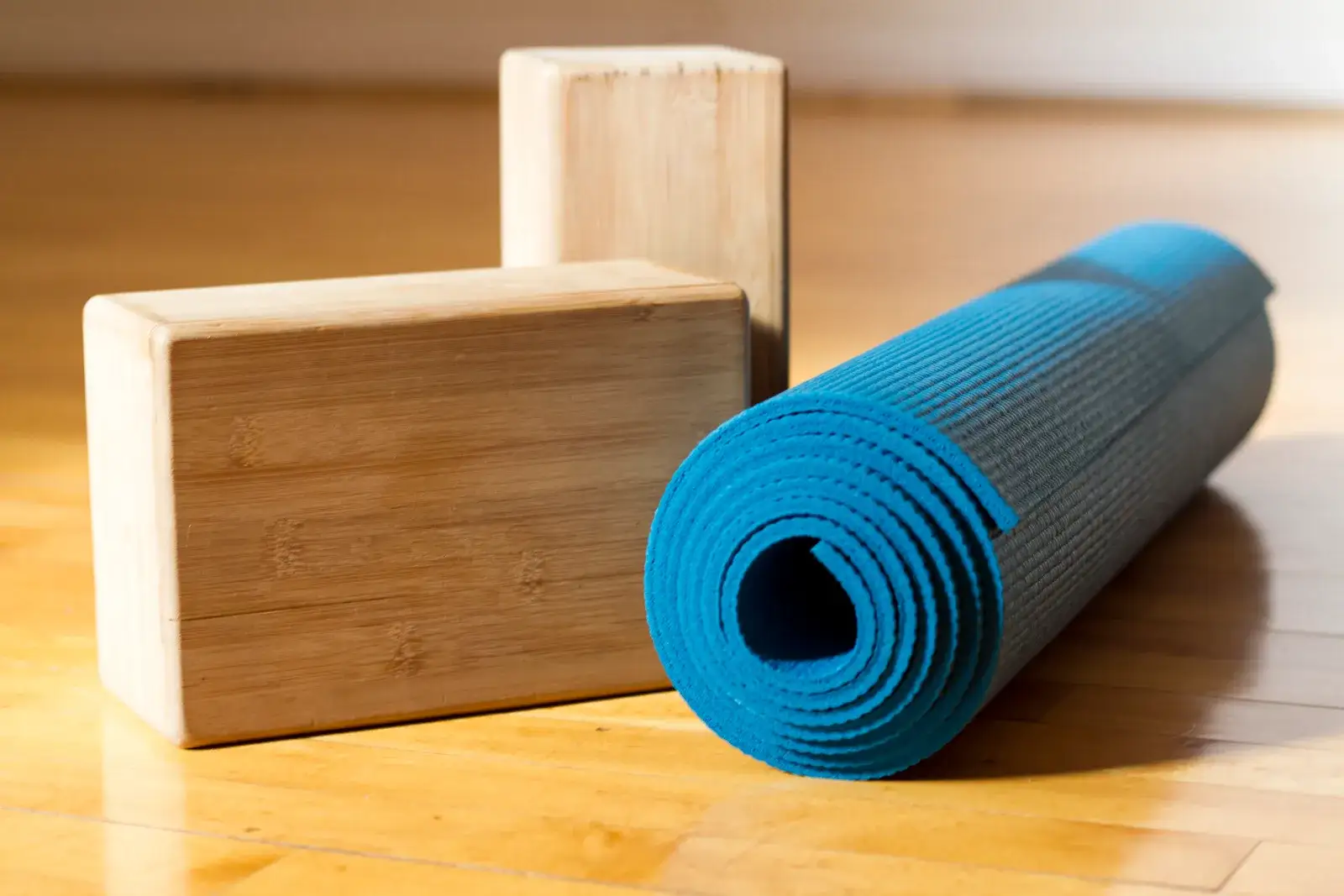
- Props under the arm. Macmillan’s advice for arm lymphoedema at rest is to support the arm on a cushion rather than leave it in one position too long; in class that means a block or bolster under the forearm in seated and side-lying poses rather than letting it hang.
- Keep overhead holds short. Macmillan says not to lift the arm above shoulder height for too long, because it may reduce blood flow and make you more uncomfortable. Reach up, then bring it down; do not camp there.
- No straps or weights cinching the limb. The NLN’s second modification. A yoga strap looped around the swollen arm or leg is exactly what it means.
- Unheated room, water bottle beside the mat. The NLN’s fourth and fifth modifications: hydration, and avoiding extreme heat or overheating.
- Move slowly and rest between poses. The NLN asks for flexibility work done slowly, and adequate rest intervals are its first modification. The trial’s practice was gentle and rhythmic, not athletic.
- Check the limb after class and the next morning. Cancer Research UK asks you to check the area during and after exercise and to stop and contact your specialist about any change.
Your first four classes
A plan for the first month, written to the NLN’s rule that exercise is started gradually and increased cautiously.
- Class 1: Arrive early, speak to the teacher, take the floor options for anything on the hands, leave five minutes before the end if you tire. Diary that evening.
- Class 2: Same class, same options, no additions. The limb’s response to two identical sessions is your baseline.
- Class 3: Add one thing: a full-length relaxation, or one standing sequence you skipped.
- Class 4: Begin a 15-minute daily home practice of breathing and three or four gentle poses. The trial’s benefits came from daily practice, and faded without it.
Pilates and tai chi raise similar questions and sit in the same NLN category; they have their own page, tai chi and Pilates with lymphedema.
Stop and call
Come out of the pose, and contact your lymphedema therapist or doctor before the next class, if:
- The limb throbs, hurts, tingles, or feels heavier or tighter during or after practice. The NLN’s rule is to stop for pain, increased swelling or discomfort; heaviness and a perception of increased size are symptoms it asks you to report immediately.
- Swelling gets worse. Macmillan: stop straight away.
- The skin becomes red, sticky and hot, Macmillan’s sign that you have done too much.
- Redness, warmth, pain, swelling, fever or chills appear: the NLN’s infection signs, to be treated as an urgent medical event. Macmillan says not to exercise at all during a skin infection.
- The garment is noticeably harder to put on the morning after class. Report it, and skip the next session until you have.
The fuller list is on when swelling needs medical care.
Yoga and treatment
The trial’s own numbers make the division of labour clear: yoga improved how the arm felt and how hard its tissue was; it did not change its volume, and the arm swelled again when the practice stopped. Volume is the work of complete decongestive therapy, with compression, manual lymphatic drainage, skin care and remedial exercise together. The NLN’s model is that after the intensive phase, you and your certified lymphedema therapist fold exercise into daily life, and a gentle daily yoga practice is a reasonable thing to fold in. At Renu, that conversation is with Meeghan Mackenzie, our Certified Lymphedema Therapist. Bring the class description; the poses that need a prop or a shorter hold are easier to plan on the table than on the mat. The general rules for any new activity are on how to start exercising with lymphedema, safely.
Questions people ask
Does yoga reduce lymphedema swelling?
Not in the one trial that measured it. Loudon and colleagues found no significant difference in arm volume between the yoga and control groups at eight weeks; what improved was tissue induration (hardness) in the affected upper arm and the symptoms sub-scale of a quality-of-life questionnaire. The NLN lists yoga among activities that have not been adequately studied in lymphedema, so the honest answer is that yoga helps how the arm feels and moves, and the volume work belongs to compression and therapy.
What kind of yoga was tested, and how much?
The Satyananda tradition: a weekly 90-minute teacher-led class plus a daily 40 to 45 minute home practice from a DVD, for eight weeks, combining breathing practices, physical postures, meditation and relaxation. Participants had low levels of lymphedema, and the authors say the findings may not generalise to other styles. A vigorous or heated class is a different thing from what was studied.
Should I wear my sleeve during yoga?
Yes if you have a diagnosis. In the trial the compression sleeve was optional during practice and was put back on immediately afterward; the NLN's position is that people with confirmed lymphedema should use compression during exercise, and Macmillan says you usually need to wear your garment when you exercise. Ask your therapist if a particular pose makes the sleeve dig in rather than leaving it off.
Is hot yoga safe with lymphedema?
The guidance on heat argues against it. The NLN's exercise paper lists avoiding extreme heat or overheating among its modifications, its 2026 risk-reduction paper recommends avoiding saunas, and the Canadian Cancer Society says heat can make lymphedema worse. The trial that showed benefit used ordinary room-temperature classes. Choose an unheated studio.
How soon do the benefits fade if I stop?
Quickly, in the trial. At the 12-week follow-up, four weeks after the classes ended, the gains in tissue hardness and symptom scores had not persisted and arm volume had increased more in the yoga group than in the controls. The authors' own conclusion was that the benefits did not last on cessation of the intervention, which makes a short daily practice more valuable than an occasional long one.
Sources
- Loudon A, Barnett T, Piller N, Immink MA, Williams AD. Yoga management of breast cancer-related lymphoedema: a randomised controlled pilot-trial. BMC Complementary and Alternative Medicine, 2014
- National Lymphedema Network: Position Statement, Exercise (updated November 2013)
- Cancer Research UK: Exercise and lymphoedema
- Macmillan Cancer Support: Managing lymphoedema with physical activity
- Lymphoedema Support Network: Think you may be at risk?
- National Lymphedema Network: Position Statement, Evidence-Based Practices for Lymphedema Risk Reduction (March 2026)
- Canadian Cancer Society: Lymphedema
Page reviewed October 4, 2026. This page is education, not a diagnosis. For your own situation, talk to your doctor, surgeon or care team, or ask us.
Keep reading
Related pages