

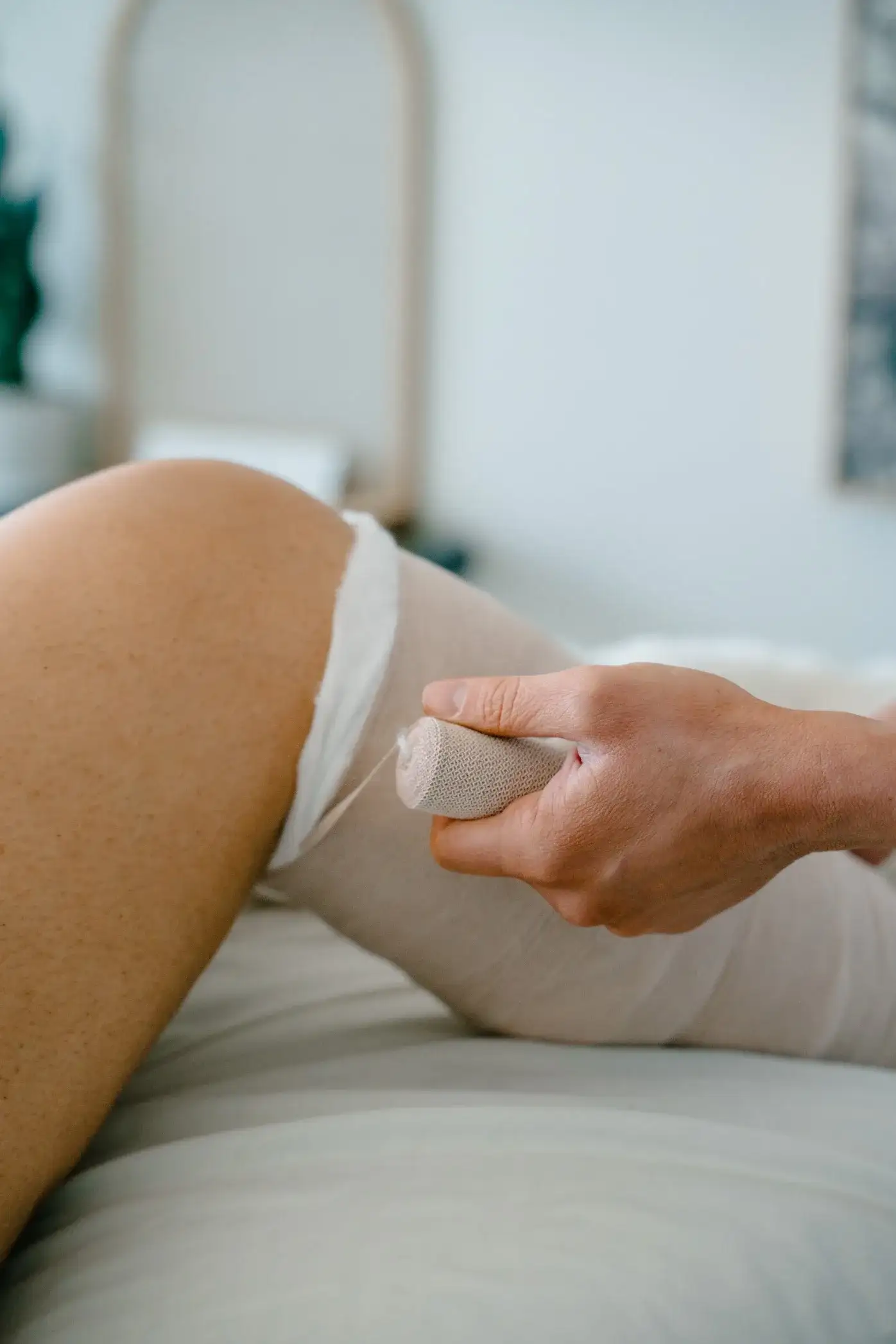
Fibrosis after liposuction: what it is and how we treat it in Calgary
Recovery guide · Meeghan Mackenzie, RMT, CLT
A few weeks out from lipo, you run your hand over the area and… lumps. Ridges. A hard patch that wasn’t there before.
It’s one of the most common worries we hear.
The good news? Fibrosis can often be softened, and it’s much easier to prevent than to fix.
What fibrosis actually is
After liposuction, the treated area fills with fluid, and that fluid is rich in proteins. When the lymphatic system can’t clear it fast enough, it settles and firms up, much like Jell-O setting. If it stays, the body lays collagen fibres through it, and you feel firm, lumpy or ropey tissue under the skin.
Fibrosis is a change in the connective tissue itself, which is why simply draining isn’t always enough once it’s formed.
Some lumpiness in the first few weeks is normal. Swelling itself feels uneven. Fibrosis is firmness that sticks around, or gets harder, as the weeks go on.
Is it fibrosis, or something else?
Firm or nodular areas after plastic surgery can also signal fat necrosis or a seroma, which need your surgeon. Here’s how they typically differ:
| What you feel | Likely | What to do |
|---|---|---|
| Uneven, soft-firm lumps in weeks 1–4 | Normal early swelling | Lymphatic drainage, compression, patience |
| Firm, fixed, ropey areas that persist or harden after 4–6 weeks | Fibrosis | Lymphatic drainage plus fibrosis techniques |
| Soft, squishy pocket that moves or sloshes | Seroma | See your surgeon |
| Hard, round, sometimes tender lump | Possible fat necrosis | See your surgeon |
| Hot, red, increasingly painful lump, fever | Possible infection | See your surgeon today |
Prevention starts early
The best fibrosis treatment is not letting fluid sit.
-
Gentle lymphatic drainage from the first week or two after surgery
-
Consistent compression and foam, exactly as your surgeon prescribes
-
Walking and deep breathing, every day
-
Skipping heat and aggressive deep massage in the early weeks. Experts note these can bring more fluid into the tissue and make it harder to clear.
How we treat established fibrosis
Once fibrosis has formed, we combine methods from the leaders in this field:
-
Manual lymphatic drainage to clear the fluid around the firm area, the same approach CLTs use for fibrosis in lymphedema
-
Fibrosis and connective tissue techniques: specific techniques that soften the collagen fibres before the lymphatic strokes
-
A layered approach, working from the surface down. We start at the skin and outer fascia and only move deeper as each layer releases, so nothing is forced
-
Scar release around healed incision ports, lifting the scar off the tissue it’s stuck to
-
Compression and home care so the gains hold between sessions
How much pressure?
More than lymphatic drainage, but never forceful.
At most, it should feel like the “hurts so good” of a satisfying workout. If you flinch, grit your teeth or hold your breath, it’s too much. Pain switches on your stress response, and that works against healing.
Your recovery timeline
| When | What’s typical | How we support you |
|---|---|---|
| Weeks 1–3 | Lumpy, swollen, tender | Prevention: MLD and compression |
| Weeks 4–8 | Firm areas show up, some softening | Assessment. Start fibrosis techniques if needed. |
| Months 2–4 | Established fibrosis softens gradually | Weekly sessions, home scar work |
| 6+ months | Older, denser fibrosis | Longer series. It’s never too late to start. |
What we will never do
-
Push fluid out through incisions or re-open ports
-
Use aggressive tools, cavitation or painful “breaking up” on fresh tissue
-
Work over a lump that might be infection, seroma or fat necrosis without your surgeon’s input
At home between sessions
-
Wear compression as prescribed
-
Gentle self-drainage as we show you, not hard rubbing
-
Once healed, short scar sessions: a minute or two, a couple of times a day, is often enough
-
Walk, breathe, hydrate
-
Avoid heat on the area in the early weeks
How long does it take?
It depends on how long the fibrosis has been there and how firm it is. Many clients feel a difference within a few sessions. Older, denser fibrosis can take a longer series, often weekly over a couple of months. We’ll reassess regularly and be honest about progress.
Questions
What clients ask about this recovery
Is it normal to have lumps after liposuction?
Some lumpiness in the first few weeks is normal. Firmness that persists or hardens after about 4–6 weeks may be fibrosis.
Can fibrosis after lipo be fixed without surgery?
Often yes. Lymphatic drainage, fibrosis techniques and compression can soften many cases. Severe or long-standing fibrosis may also need your surgeon’s input.
Should I massage hard lumps myself after lipo?
Gentle self-drainage can help, but aggressive rubbing or heat can make swelling worse. We’ll show you what’s safe for your stage of healing.
How is fibrosis different from a seroma?
Fibrosis feels firm and fixed. A seroma is a pocket of fluid that feels soft, squishy or like it moves. Seromas need your surgeon.
Is fibrosis treatment painful?
It should feel like firm, satisfying work, never pain that makes you flinch.
My lipo was over a year ago. Is it too late?
No. Older fibrosis usually takes longer, but it can often still be softened.
Feeling lumps or hard spots after lipo?
Send us a message or call 403.270.2111. Tell us when you had surgery and what you’re feeling, and we’ll help you figure out the next step. Book at renu.janeapp.com.
Page reviewed September 29, 2026 by Meeghan Mackenzie, RMT, CLT


West Hillhurst, NW Calgary
Give fresh life or strength to.
Book online in a minute, or call the clinic. New clients can begin with the 60-minute intro massage, which includes a complimentary infrared cocoon session.
200, 209 19 St NW · Monday to Friday 8:00 am to 8:30 pm · Saturday and Sunday 10:00 am to 5:00 pm