

Jaw exercises for TMJ at home: stretches and gentle strengthening
Relaxed opening with the tongue on the palate, partial and full goldfish openings (six reps, six times a day), chin tucks and resisted opening, all pain free.
By The Renu lymphatic and massage team · 6 min read
The jaw exercises for TMJ that a university dental school's self-care programme gives patients are: a relaxed-jaw opening with the tongue on the roof of the mouth, a partial and a full 'goldfish' opening with a finger on the joint and one on the chin (six repetitions, one set six times a day), chin tucks held for three seconds ten times, and resisted opening and closing against a thumb or fingers for three to six seconds. Every one is done without inducing pain. The American Academy of Family Physicians supports passive stretching and warns that immobilising the jaw has no benefit and may worsen symptoms.
Once a jaw has come out of its sharpest phase, the question changes from how to settle it to how to get it moving well again. These are the exercises a university dental programme hands its TMD patients, reproduced with their instructions and counts, and framed by the one rule the dental sheet prints in bold: done without inducing pain. If you are still in a flare, start with our flare routine and come back here in a week.
Why movement beats splinting the jaw still
It feels logical to protect a painful joint by not using it. The American Academy of Family Physicians (AAFP) review is blunt that this backfires: TMJ immobilisation has shown no benefit and may worsen symptoms as a result of muscle contractures, muscle fatigue and reduced synovial fluid production. The same review lists passive stretching exercises among the adjuncts to first-line care. The National Institute of Dental and Craniofacial Research (NIDCR) frames home treatment as heat or cold on the face in combination with exercises to gently stretch and strengthen the jaw muscles. Gentle, regular, pain-free movement is the treatment; stillness is the thing to avoid.
Before you start
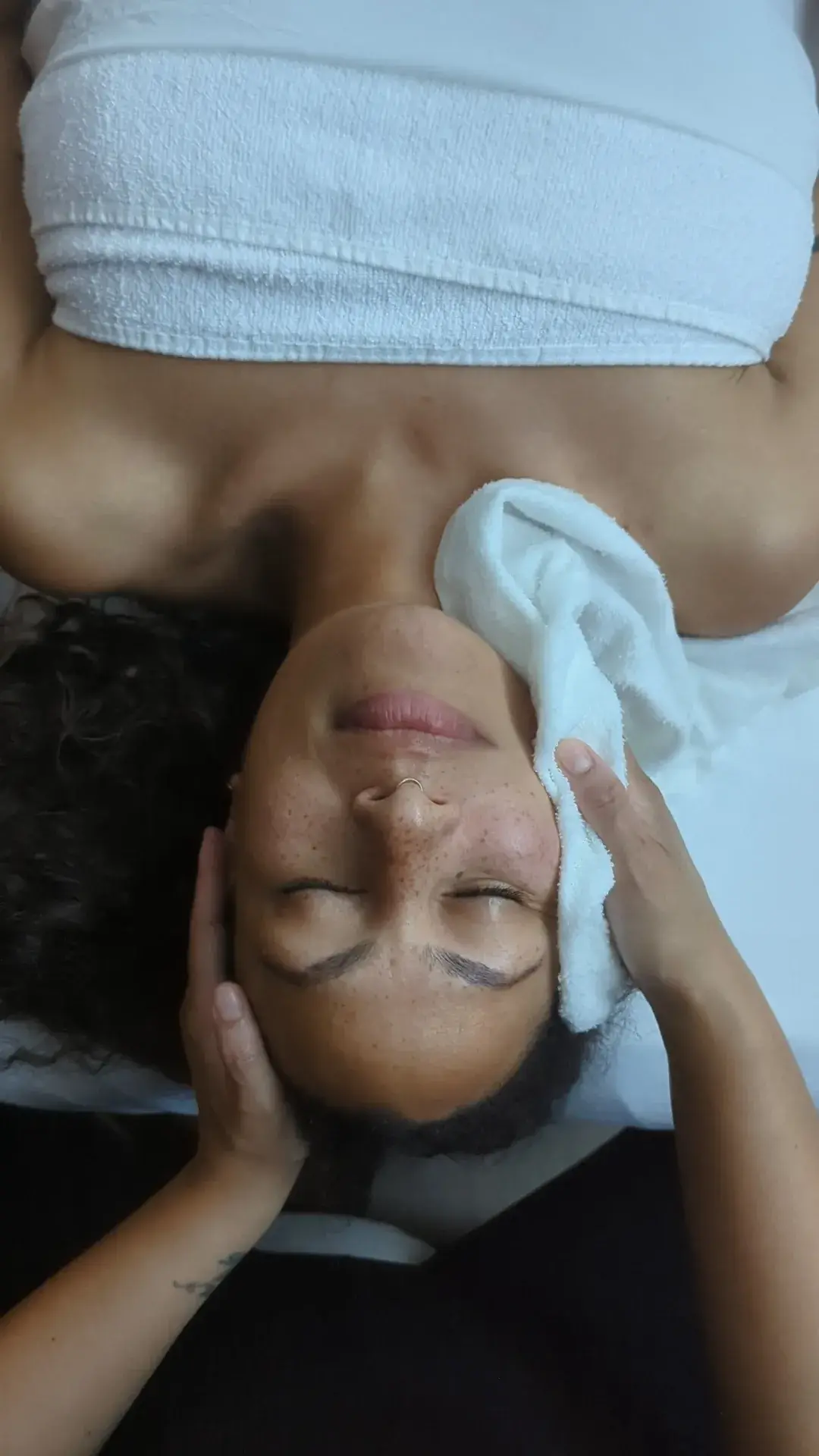
- Warmth first. The AAFP recommends moist warm compresses, and the University of Iowa College of Dentistry programme sequences thermal care as cold for the acute stage and heat for the long term. A warm, damp facecloth over the cheek for a few minutes is enough.
- Rest position between exercises. Teeth apart, tongue resting behind the lower front teeth, lips slightly apart, face still. Our jaw relaxation routine is built on it.
- A mirror for the first week, so you can see the jaw opening in a straight line rather than swinging to one side.
- The diary. The Iowa programme’s first exercise is simply measured stretching, recorded in the diary: how far you can open comfortably, so you can see progress across weeks instead of judging by the day.
The exercises
Each instruction below is the Iowa programme’s, lightly condensed. The counts are theirs where they give one.
1. Relaxed jaw
Place your tongue on the roof of your mouth, behind your upper front teeth. Allow your teeth to separate and your mouth to open while relaxing the muscles in your jaw. The programme asks for natural relaxation rather than forced relaxation, because the objective is to loosen stiff jaw muscles, not to stretch them.
2. Goldfish, partial opening
Tongue on the roof of your mouth. One finger in front of your ear, near the joint; your pointer finger on your chin. Gently lower the jaw halfway, then close it. The programme says it helps if you encounter some resistance, but not pain. A variation places one finger on each joint as you open and close halfway.
3. Goldfish, full opening
One finger on the joint and another on your chin, tongue still on the roof of the mouth (or a finger on each joint at once). Lower the jaw completely, then close it. The programme’s dose: each set is six repetitions, and you perform one set six times per day.
4. Chin tucks
Pull your chin back into a double chin with your chest lifted and shoulders back. Hold for three seconds and repeat ten times. This is the one exercise aimed at the neck rather than the jaw, because where the head sits changes where the jaw hangs.
5. Resisted mouth opening
Place your thumb under your chin and slowly open your mouth while gently pushing against the chin. Close slowly after three to six seconds.
6. Resisted mouth closing
Put one hand on your chin, squeezing your thumb and index finger together on it. Apply gentle pressure while closing your mouth. The programme notes this strengthens the muscles that assist in chewing.
7, 8 and 9. Tongue up, side to side, forward
The Iowa sheet lists three further movements by name only: tongue up, side-to-side movements and forward jaw movements. Because it gives no instructions or counts for them, we leave the detail to your dentist, physiotherapist or massage therapist rather than fill it in ourselves.
A daily shape
This is our suggested arrangement, not a sourced schedule: warmth, then relaxed jaw, then one set of partial and one set of full goldfish openings, six times through the day; chin tucks and the two resisted exercises once a day, in the evening, when the muscles are warm from use. Note the comfortable opening in the diary once a week. Six short sessions sound like a lot, but each one is under a minute, and the programme’s logic is frequency rather than effort.
Stop rules
- Pain is the stop signal. The dental sheet’s heading is done without inducing pain; the goldfish instruction allows some resistance but not pain. If an exercise hurts, drop the range, not the exercise, and if it still hurts, leave it for a few days.
- A click is information, not a target. The Iowa habit list asks you not to intentionally make jaw sounds. If the full opening clicks, work in the partial range.
- One side at a time is fine. If the jaw swings to one side on opening, a finger on each joint gives you feedback, and the mirror shows the line.
When to see a dentist or doctor first
Some jaws need assessment before exercises. The NHS says to get urgent help if you cannot eat or drink, if your jaw locks, or if you have severe headaches, vision problems, or pain or tenderness at the side of the head or on the scalp. The AAFP recommends referral when there is a history of trauma or fracture to the jaw complex, when severe pain and dysfunction do not respond to conservative measures, or when pain with no identifiable source persists for more than three to six months. The Cleveland Clinic’s rule for the rest of us is to talk to a healthcare provider if jaw pain, clicking or stiffness does not improve. Our page on TMJ disorders explains the different patterns a clinician will be looking for.
Where hands-on care fits
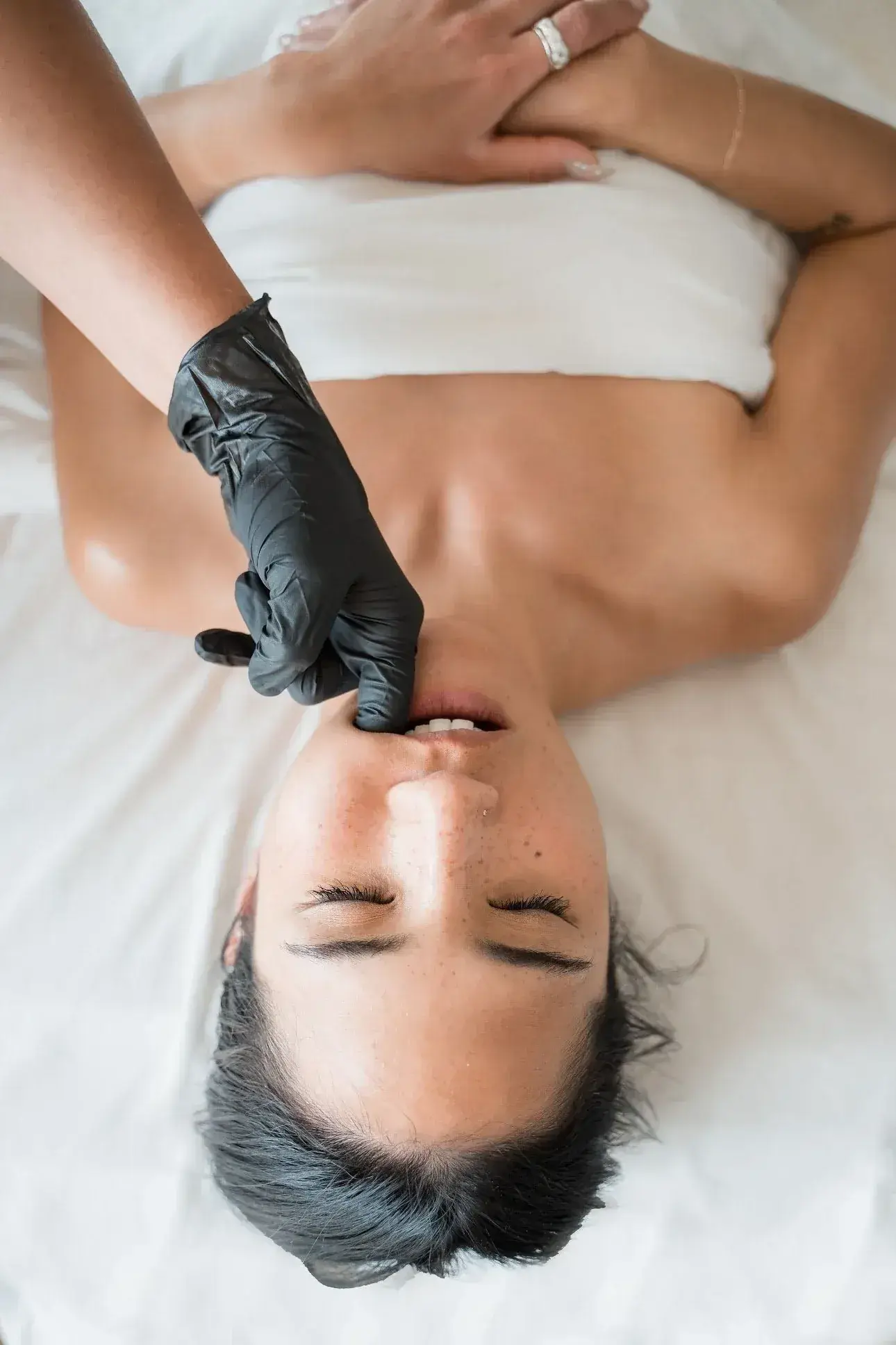
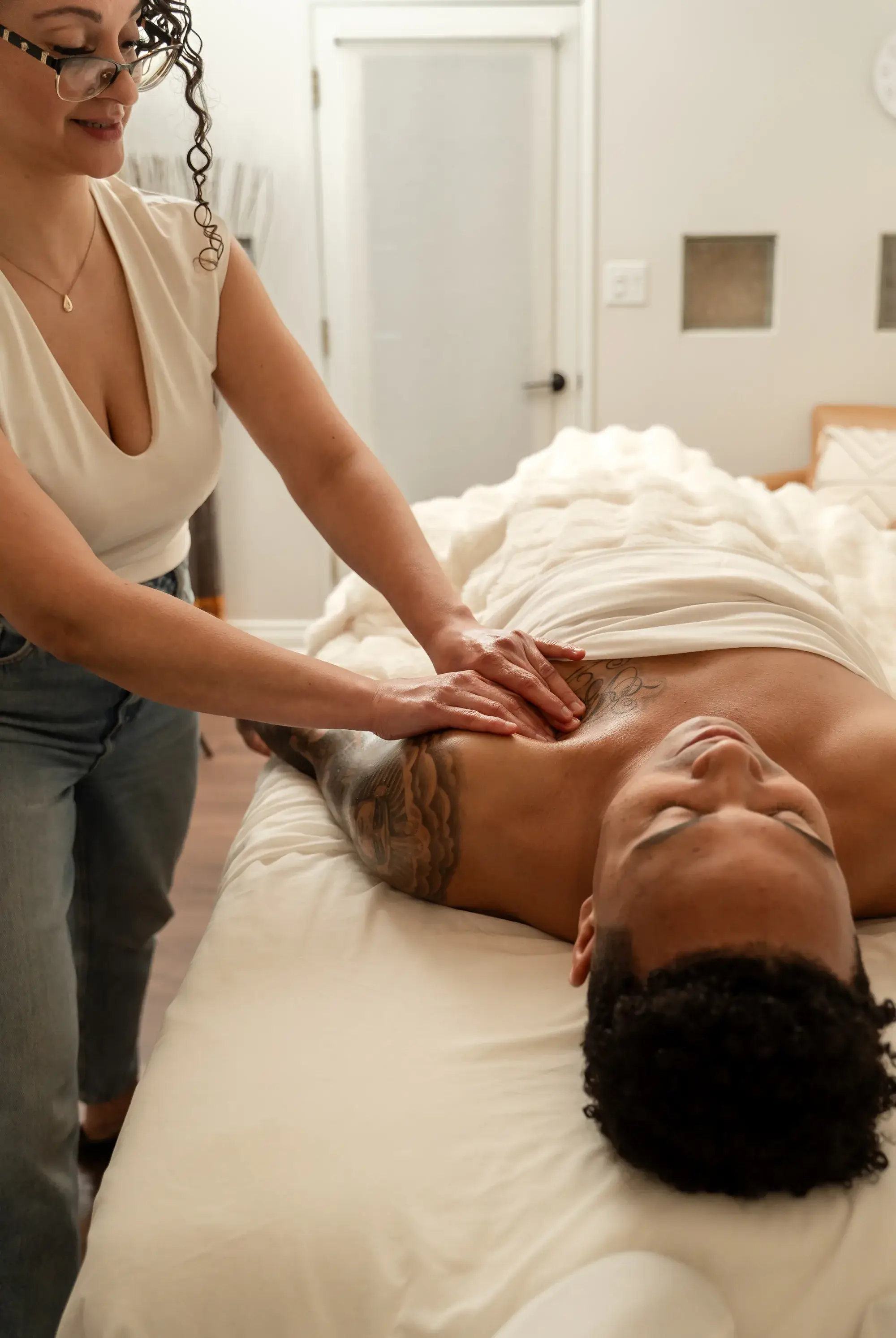
Exercises move the joint; they do not release a masseter that has been locked for months. Sasha Bernard’s TMJ massage includes gloved intra-oral work on the chewing muscles from inside the mouth, and Monica Von Gaza’s RAPID NeuroFascial Reset is an active, movement-based option for the neck and jaw. Bring your diary to the appointment: the opening measurements tell us more than a description.
Questions people ask
How many times a day should I do TMJ exercises?
The Iowa programme's full goldfish opening is prescribed as one set of six repetitions, performed six times a day, and chin tucks as ten repetitions held for three seconds. The other exercises are given without a count, so we suggest pairing them with the goldfish sets rather than inventing a number. Every repetition is pain free or you stop.
Is it better to rest the jaw completely or keep it moving?
Keep it moving, within comfort. The AAFP review states that TMJ immobilisation has shown no benefit and may worsen symptoms through muscle contractures, muscle fatigue and reduced synovial fluid production, while passive stretching is one of the recommended adjuncts. Rest means no clenching and no wide opening, not a jaw held still.
Should I use heat before jaw exercises?
The NIDCR suggests applying heat or cold to the face in combination with exercises to gently stretch and strengthen the jaw muscles, and the AAFP recommends moist warm compresses. The Iowa programme's sequence is cold for the acute stage and heat for the long term, so for the exercise phase a warm, damp cloth over the cheek for a few minutes beforehand is the usual choice.
Why is my finger on the joint during the goldfish exercise?
To feel what the joint is doing. The Iowa instructions place one finger in front of the ear, near the TMJ, and the pointer finger on the chin while the jaw lowers halfway or fully; the finger on the joint tells you if the condyle is tracking smoothly or jumping, and a little resistance from the chin finger is expected, but not pain.
Sources
- University of Iowa College of Dentistry (Stanford and Clark): Patient TMD self-care and exercises
- American Family Physician: Diagnosis and treatment of temporomandibular disorders (2015)
- NHS: Temporomandibular disorder (TMD)
- National Institute of Dental and Craniofacial Research: TMD (temporomandibular disorders)
- Cleveland Clinic: Temporomandibular disorders (TMD)
Page reviewed October 4, 2026. This page is education, not a diagnosis. For your own situation, talk to your doctor, surgeon or care team, or ask us.
Keep reading
Related pages