
Massage in the second trimester
Massage in the second trimester is the best-studied window: trials from 12 weeks found less back and leg pain, anxiety and stress. How the session is set up.
By The Renu lymphatic and massage team · 6 min read
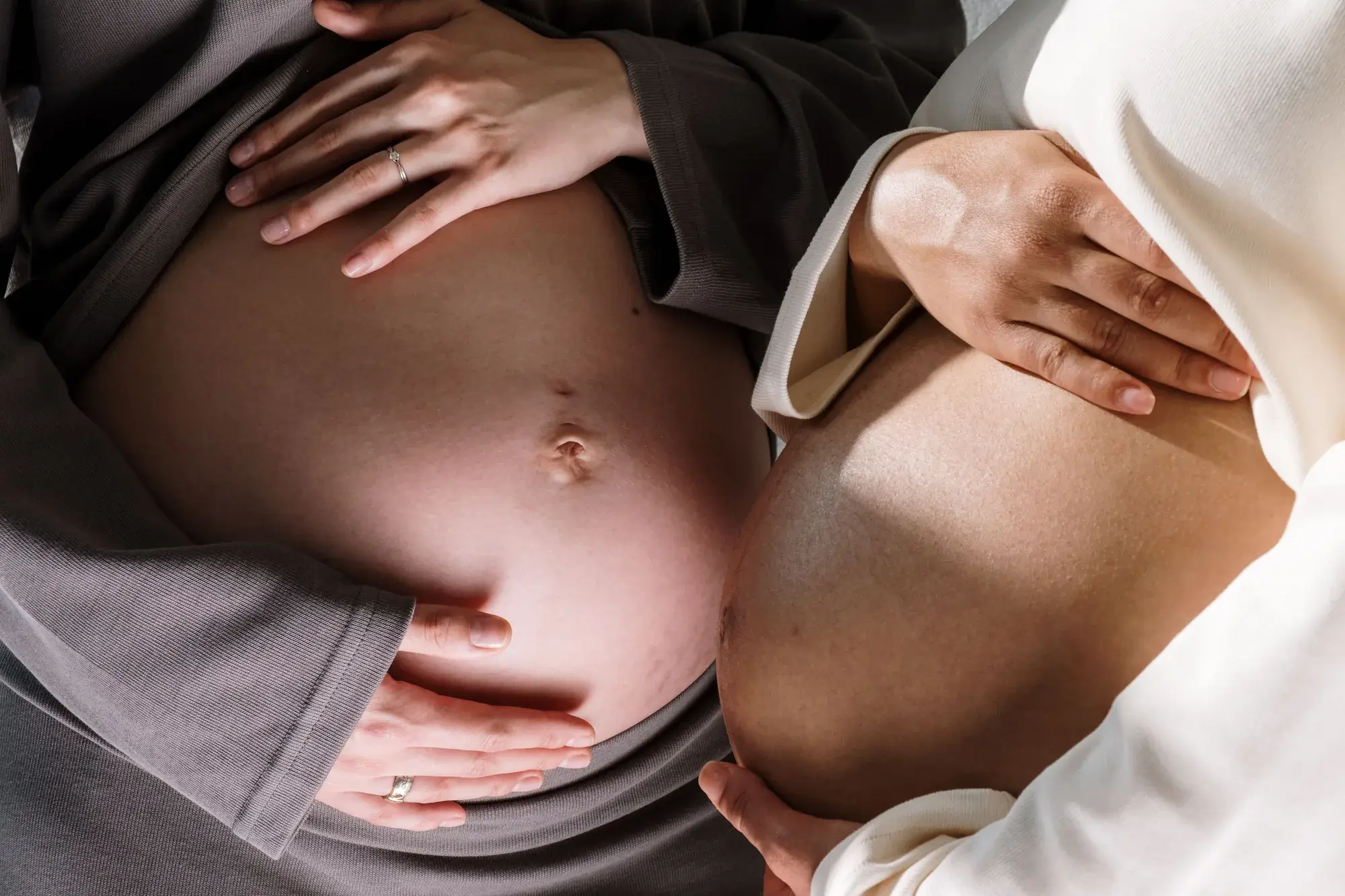
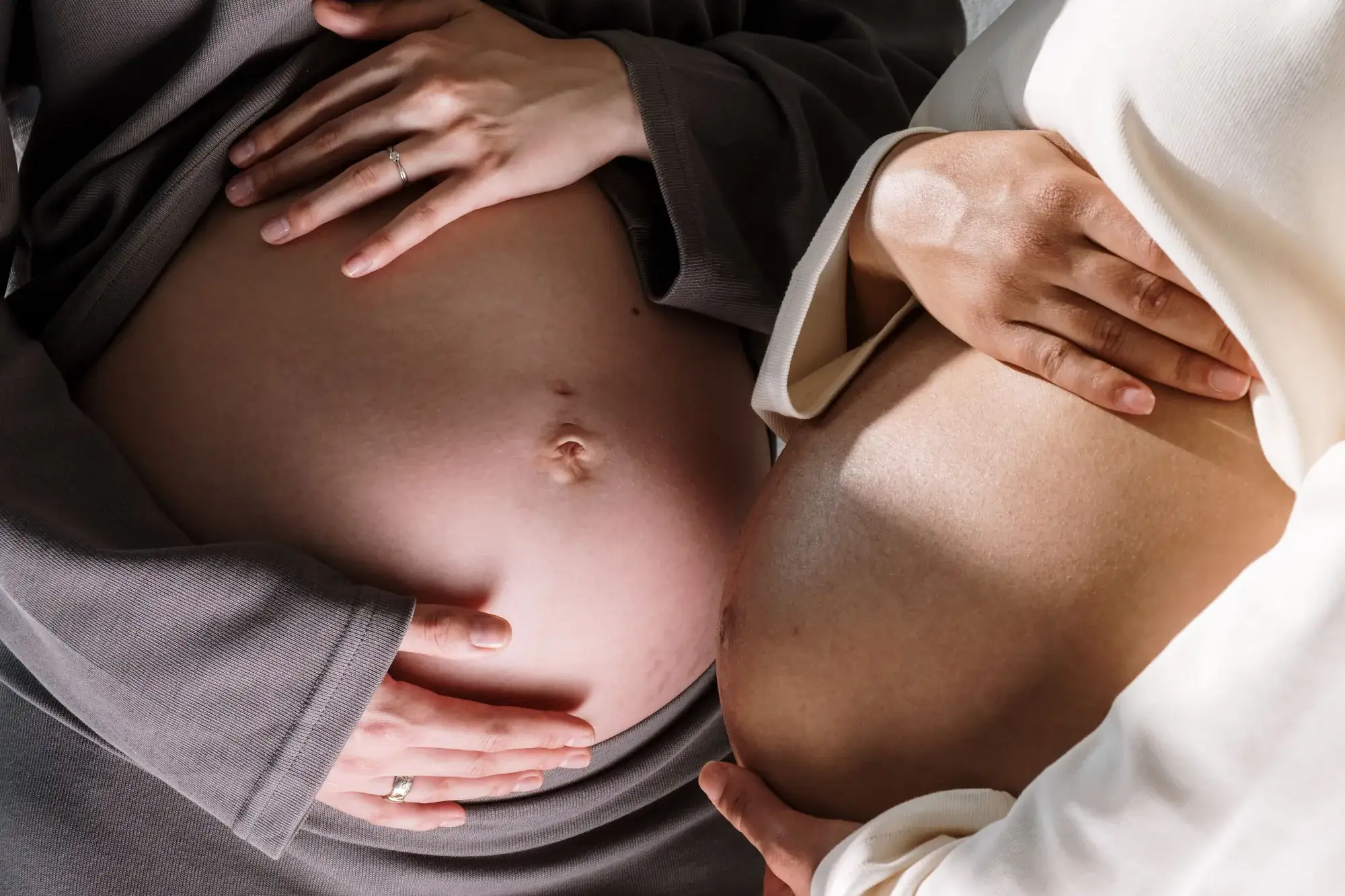
The second trimester, weeks 13 to 27, is where nearly all the research on prenatal massage was done, and it is the natural time to begin a regular rhythm. Trials that enrolled women from 12 weeks onward found less back and leg pain, lower anxiety and depressed mood, calmer sleep and lower cortisol, with mild tiredness the only side effect attributed to the massage. From the fourth month you are positioned on your side or semi-reclined rather than flat on your back, the belly is left alone, and pressure stays at the moderate, pleasant level the trials used.
Somewhere around week 14 the nausea lifts, energy returns, and a different set of complaints arrives: a low back that aches by dinner, hips that feel loose, a tug along the side of the belly when you stand up quickly. This is the trimester prenatal massage was built for, and it is the one the research actually measured.
What is changing in your body between weeks 13 and 27
Three shifts explain most of what you are feeling, and ACOG describes each of them.
Looser ligaments. A hormone made during pregnancy relaxes the ligaments that support your joints, particularly those of the pelvis, to prepare for birth. ACOG notes this makes joints more mobile and more prone to strain, and that back pain can occur if the pelvic joints become too flexible.
A new centre of gravity. As the uterus grows forward, the extra weight in front shifts your centre of gravity and loads the muscles and joints of the pelvis and lower back. Your abdominal muscles, which normally help support the spine, stretch and weaken. ACOG’s phrase for the result is that your back may feel worse at the end of the day.
Circulation. From the fourth month, lying flat on your back lets the uterus press on the large vein that returns blood to the heart, which can drop your blood pressure for a short time. This is why the position you lie in starts to matter now, not just later.
Swelling in the feet and ankles can begin in this window too, though it is usually a third-trimester story; the page on swollen feet and ankles in pregnancy covers it on its own.
What the trials found from 12 weeks onward
The 2021 systematic review by Mueller and Grunwald gathered 12 randomized controlled trials of relaxation massage in pregnancy. All participants were at least 12 weeks pregnant when their trial began, and most studies ran between the 16th and 36th weeks, so this trimester sits squarely inside the evidence.
The pattern across those trials:
| Outcome | What the trials reported |
|---|---|
| Back and leg pain | Reduced after single sessions and over the course of treatment |
| Anxiety and depressed mood | Lower immediately after a massage and lower by the end of the programme |
| Sleep | Women receiving massage reported calmer, deeper sleep in the earliest trial, and less sleep disturbance in a 150-woman trial |
| Stress chemistry | Lower cortisol and noradrenaline; higher dopamine and serotonin |
| Headache and muscle cramp | Fewer in the massage group of the 150-woman trial; no difference in joint pain |
| Side effects | Only mild, transient tiredness attributed to massage |
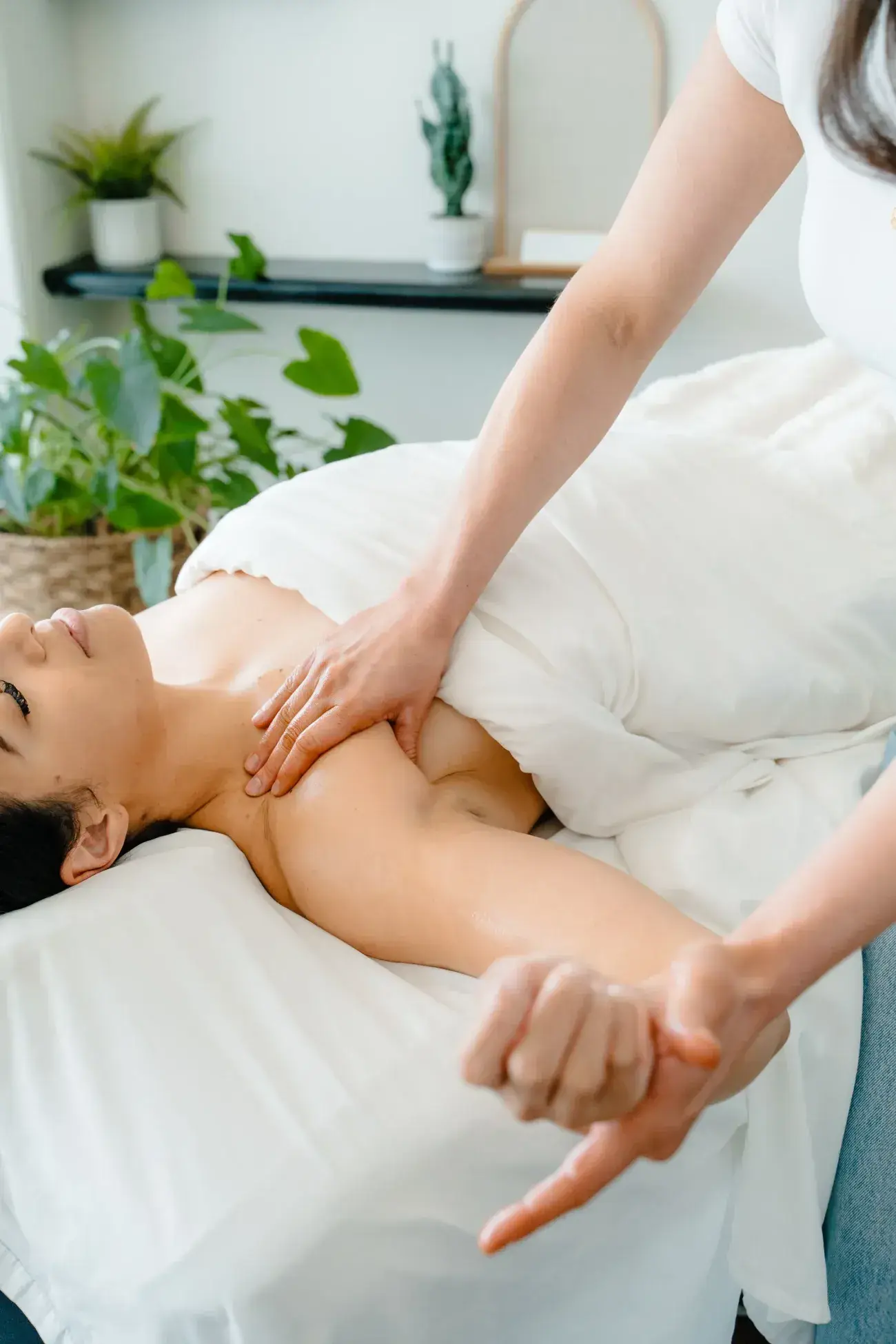
The sessions behind these numbers were modest: about 20 minutes, once or twice a week, five to ten times in total. The women lay on one side with a pillow behind the back and one between the legs, were massaged on the head, shoulders, back, arms, hands and feet, then turned after ten minutes to repeat on the other side. Pressure was moderate, perceived as pleasant and not painful; the review notes that massage that is either painful or too light tends to rouse the nervous system rather than calm it.
Field’s research group, which ran most of those trials, saw decreases in depression, anxiety, and leg and back pain with as little as 20 minutes of professional massage once a week for five weeks. In their later studies the massage was given by the woman’s partner twice a week, which says something useful: the effect does not require a specialist’s hands every time. It requires regularity and pleasant pressure.
One caution we repeat on every pregnancy page: the review found that seven of the twelve trials excluded women with complicated pregnancies. The reassurance above belongs to healthy, uncomplicated pregnancies. If yours has been flagged, read when to wait on prenatal massage before booking.
How a second-trimester session is set up at Renu
Position. From the fourth month, HealthLinkBC advises against lying on your back, and against lying on your belly from 12 weeks (much earlier with twins). We use side-lying with cushions under the belly, between the knees and behind the back, and a semi-reclined position for the neck, shoulders and face. You switch sides partway through, as the trial protocol did. Our page on how you lie on the table in prenatal massage walks through every position and why.
Pressure. Moderate and pleasant, the level the trials used. Deep, grinding work on the legs is not part of a prenatal session, for the reasons explained on blood clots and prenatal massage. Deep work through the low back and gluteals is often what people expect to want and rarely what their loosening pelvis needs.
Areas. The low back and the muscles alongside the spine, the gluteals and hip rotators, the upper back and neck, the hands and forearms, the calves and feet. The belly is never massaged; HealthLinkBC warns that firm massage of the pregnant belly could cause serious pregnancy problems.
Oils. HealthLinkBC advises asking your doctor before using aromatherapy oils because some are unsafe in pregnancy. We use an unscented oil unless you ask otherwise.
Length. Sixty minutes covers the back, hips and legs well; 90 minutes adds unhurried time for the neck, hands and feet. Prenatal massage at Renu is $120 for 60 minutes and $157 for 90, and Sasha Bernard and Will Tanner both offer it.
Starting a rhythm now
There is a practical reason this trimester is the time to begin rather than the last. The trials measured two kinds of effect: immediate (how you feel walking out) and cumulative (how you feel after weeks of regular sessions). Depression scores, cortisol and sleep moved with the cumulative pattern, and that takes a run of appointments, which is easier to build while you still feel well enough to keep them.
The trials used short sessions once or twice a week; a clinic hour covers far more of the body at a time, so most clients space visits further apart and bring them closer in the third trimester as the back and hips ask for more. Seeing you at regular intervals also lets us notice changes early: new ankle swelling, a hip that has started to catch, sleep that has slipped. The page on how often to book a prenatal massage goes further.
When to call your doctor or midwife first
Back pain in pregnancy is usually mechanical, but ACOG asks you to contact your obstetric provider if it is severe, if it lasts more than two weeks, or if it comes with a fever, burning when you pass urine or vaginal bleeding, because back pain can be a sign of a urinary infection or of preterm labour.
ACOG’s warning signs to stop activity and call your provider apply before any massage as well: bleeding, feeling dizzy or faint, chest pain, headache, calf pain or swelling, regular painful contractions, or fluid leaking from the vagina. We ask a short version of this list at the start of every prenatal appointment and will send you to your care provider rather than treat if anything on it is new.
If everything is settled and your back is simply tired of carrying the news, book a prenatal massage and tell us your weeks. The third trimester brings its own adjustments, covered on massage in the third trimester.
Questions people ask
Is the second trimester the safest time for a prenatal massage?
It is the best-studied time. The 2021 review of 12 randomized trials notes that all participants were at least 12 weeks pregnant at the start, and most trials ran between the 16th and 36th weeks. Healthy women with uncomplicated pregnancies in those trials had no harm from massage, which is why clinics are most relaxed about booking from here on.
How often should I come in the second trimester?
The trials typically gave 20-minute massages once or twice a week for five to ten sessions. A clinic hour covers more of the body in each visit, so visits can be further apart; what matters more than the exact interval is that it is regular enough for the back and sleep effects to build. Start with the gap that fits your budget and adjust.
Why does my back hurt more now when I felt fine at 10 weeks?
ACOG explains that a pregnancy hormone loosens the ligaments of the pelvic joints, your expanding uterus shifts your centre of gravity, and the abdominal muscles that support the spine stretch and weaken. All three accelerate in the second trimester, which is why the back often feels worse at the end of the day.
Can I still lie on my front at 16 weeks?
HealthLinkBC advises avoiding lying on your belly after 12 weeks, and much earlier if you are carrying twins or more. From the fourth month it also advises against lying flat on your back. At Renu you are side-lying or semi-reclined from the second trimester, with cushions that make both positions comfortable for an hour.
Sources
- Mueller and Grunwald 2021, Journal of Clinical Medicine: Effects, side effects and contraindications of relaxation massage during pregnancy, a systematic review of randomized controlled trials
- HealthLinkBC (Healthwise): Massage therapy during pregnancy
- ACOG: Exercise during pregnancy
- ACOG: Back pain during pregnancy
- Field 2010, Expert Review of Obstetrics and Gynecology: Pregnancy and labor massage
Page reviewed October 4, 2026. This page is education, not a diagnosis. For your own situation, talk to your doctor, surgeon or care team, or ask us.
Keep reading
Related pages