

Massage after birth: when to start
There is no fixed waiting period for massage after an uncomplicated vaginal birth. How to judge readiness, what a postnatal session does, and the red flags.
By The Renu lymphatic and massage team · 6 min read
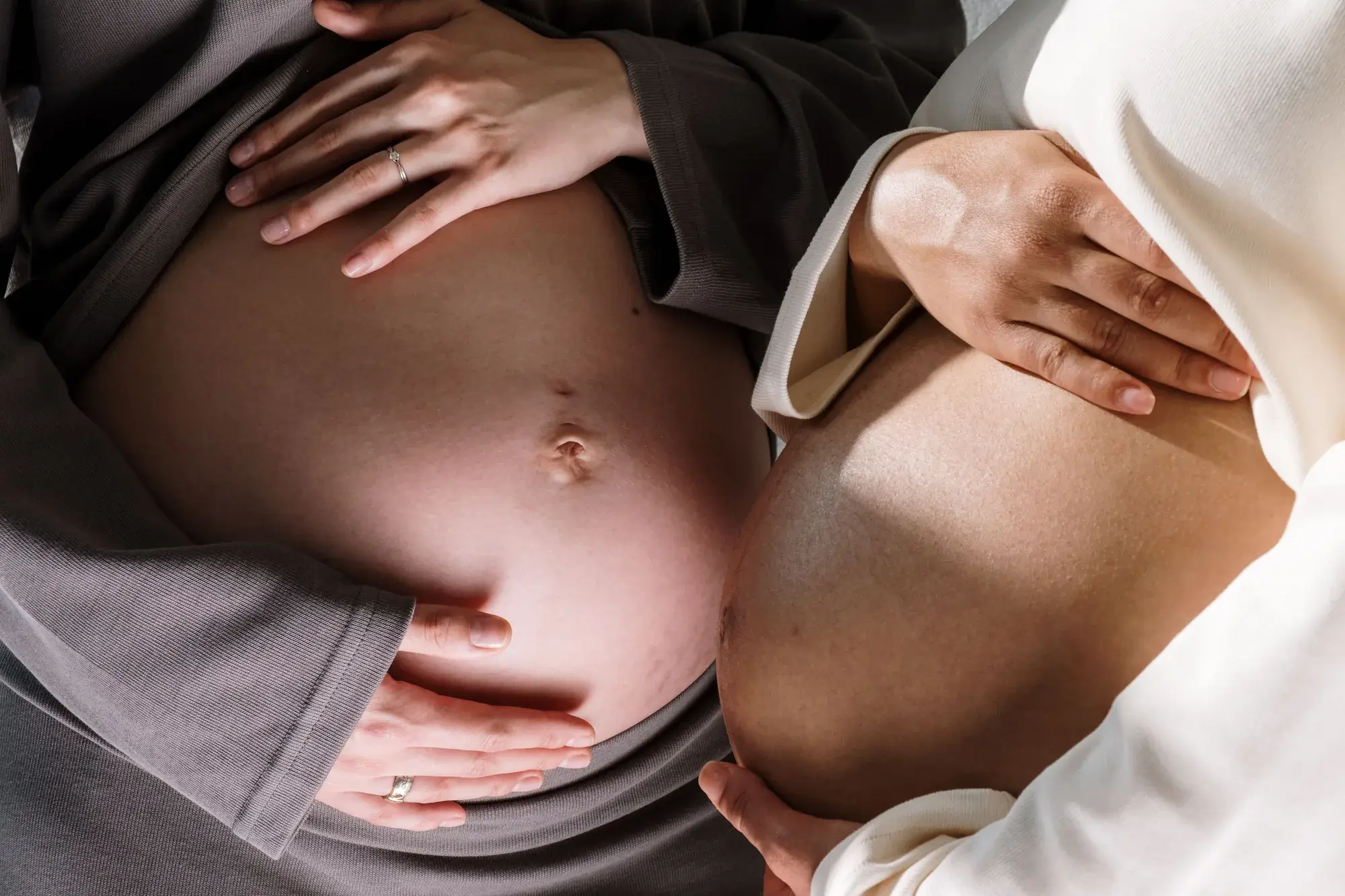
None of the guidance we read sets a waiting period for massage after an uncomplicated vaginal birth; readiness is about how you feel, whether bleeding is settling on the expected timeline, and the absence of warning signs. After a caesarean the surgical restrictions come first. The weeks after birth are what ACOG calls the fourth trimester, with provider contact recommended within three weeks and a full visit by twelve, and a postnatal massage fits inside that recovery as comfort for a body that is bleeding, cramping, healing and feeding a baby around the clock.
None of the guidance we read sets a waiting period for massage after an uncomplicated vaginal birth; readiness is about how you feel, whether bleeding is settling on the expected timeline, and the absence of warning signs. After a caesarean the surgical restrictions come first. The weeks after birth are what ACOG calls the fourth trimester, with provider contact recommended within three weeks and a full visit by twelve, and a postnatal massage fits inside that recovery as comfort for a body that is bleeding, cramping, healing and feeding a baby around the clock.
The fourth trimester is a process, not a checkpoint
The American College of Obstetricians and Gynecologists revised its postpartum guidance in 2018 to say that care after birth should be an ongoing process rather than a single encounter. Its recommendations: contact with an obstetric care provider within the first three weeks, ongoing care as needed, and a comprehensive visit no later than twelve weeks after birth that covers mood, infant feeding, sexuality and contraception, sleep and fatigue, physical recovery, and any chronic conditions. Women with hypertensive disorders, diabetes, thyroid or kidney disease or mood disorders are to be counselled on the importance of timely follow-up.
In Canada, the SOGC describes newborns and mothers being seen by a knowledgeable caregiver within the first week, and a check-up with the family doctor or midwife at around four to six weeks, where incisions, perineal healing, bleeding, bowel and bladder function and mood are reviewed.
We mention this because a massage sits inside that process, not outside it. If something in your recovery is not going to plan, your provider sees you first.
What your body is doing in the early weeks
A rough map, from the NHS and SOGC pages, of what is normal:
- Bleeding. Heavy at first with some clots, slowing over the first week to ten days, then a light pink or brown discharge. By six weeks it should have stopped. Breastfeeding can make it redder and heavier for a while because feeding makes the womb contract.
- Cramps. Period-like pains, often during feeds, for the same reason.
- The perineum. Swollen, bruised and tender after a vaginal birth; for some women the soreness lasts up to six weeks. Ice packs for ten to twenty minutes each hour in the first twenty-four hours, warm sitz baths a few times a day afterward, and stitches that usually dissolve as the tear or cut heals.
- Bladder and bowel. Leaking a little urine when you laugh or cough is common, piles are common and usually settle within days or weeks, and constipation is easier to prevent than to treat.
- Everything above the waist. Nobody warns you about this part. Feeding, carrying, lifting a car seat and sleeping in whatever position the baby allows load the neck, upper back, forearms and wrists in a way that has nothing to do with the birth.
When to come in after a vaginal birth
There is no number of days in any of the sources we read. We have looked for one and there is not one, so we will not invent it. What we use instead is a short set of questions at booking:
- Are you feeling well in yourself, without fever or feeling faint?
- Is bleeding tapering the way the SOGC timeline describes, rather than getting heavier?
- Is there any pain, swelling or redness in one calf, any chest pain or breathlessness, any severe headache or vision change? (If yes, see the last section and call your provider, not us.)
- Did your birth involve anything that needs clearance: a caesarean, a significant tear or repair, high blood pressure, a clot or a blood-thinner?
If the answers are well, tapering, no and no, you can book whenever you want the hour. Some people come in the first fortnight because their shoulders have seized; others wait until the six-week visit because they prefer to. Both are fine. If you had a caesarean, lifting and activity limits apply for weeks and the incision needs to be closed and cleared before any work near it; that is covered on C-section recovery and lymphatic drainage.
What a postnatal session is for
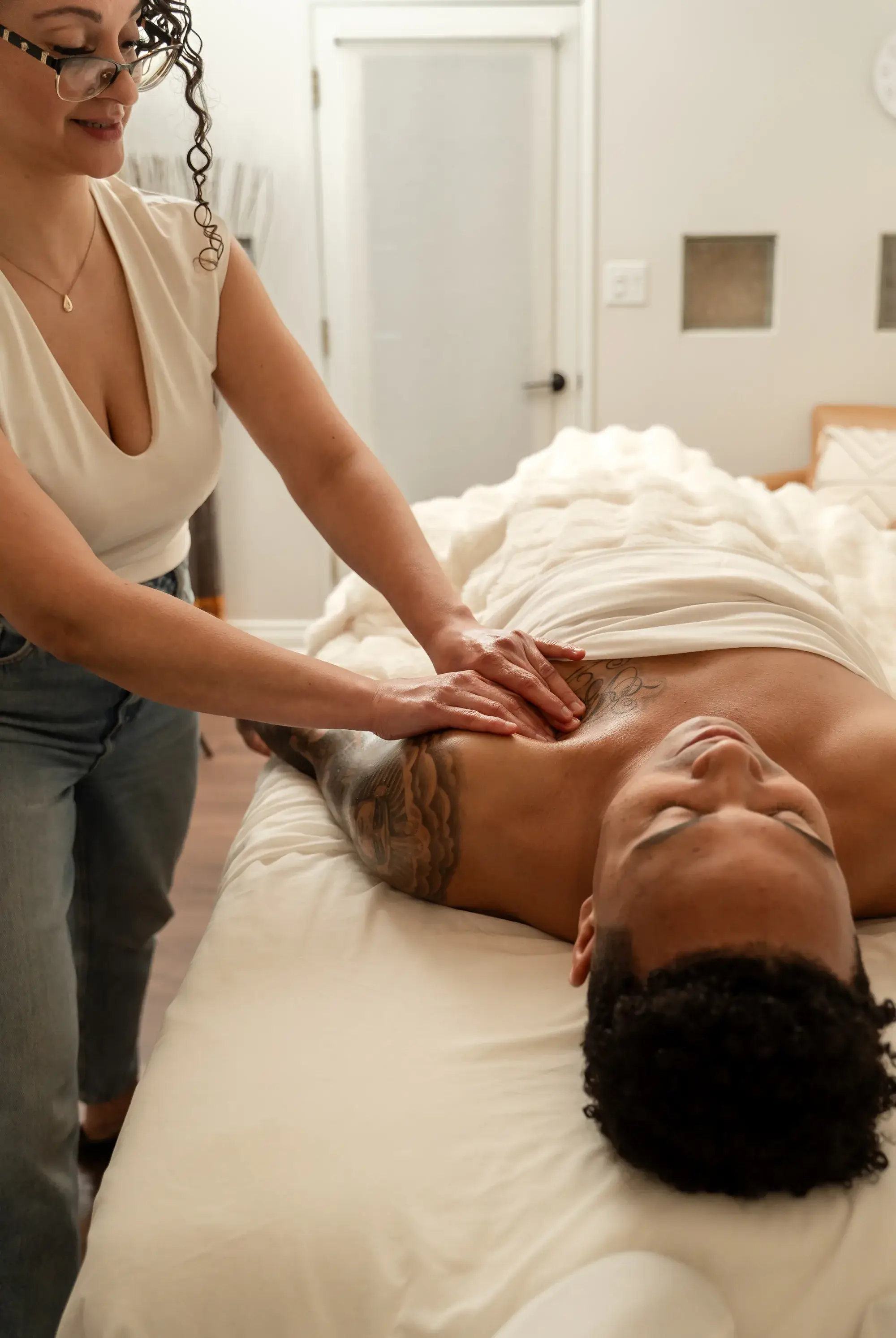
Sasha Bernard delivers postnatal massage at Renu; her credentials include prenatal and postnatal massage and lymphatic drainage therapy. A session in the early weeks is built around three things.
Positioning that respects what is sore. Full or tender breasts make lying face down unpleasant, so we use side-lying with pillows or a semi-reclined set-up. A tender perineum is kept off the table with a pillow under the hips or by staying on the side. You will not be asked to hold any position that hurts.
The feeding posture. Rounded shoulders, a forward head and a chin tucked toward a baby for hours a day tighten the chest and overwork the muscles between the shoulder blades and up the neck. Forearms and thumbs take the strain of supporting a head. This is where most of the hour goes: upper back, neck, chest opening, forearms and hands. Our self-care page on postpartum posture for feeding and carrying has the between-session habits.
Rest. Sleep is one of ACOG’s named domains of postpartum well-being, and for many new parents an hour lying still in a quiet room is the first uninterrupted rest since the birth. We do not fill the whole session with technique if what you need is to be left to drift.
What a general postnatal massage is not: it is not treatment for a diastasis (see diastasis recti after pregnancy), not breast massage, and not abdominal work in the early weeks. Gentle lymphatic drainage for post-birth puffiness is a separate conversation covered on swelling after birth.
A 60 minute massage is $120 and 90 minutes is $157. If you want to bring the baby, this answer explains how that works.
When to call your doctor or midwife instead
The NHS and SOGC lists of symptoms that need urgent attention in the weeks after birth, which we also screen for at booking:
- sudden or very heavy blood loss, soaking a pad within an hour, clots larger than a golf ball, feeling faint or a racing heartbeat
- a high temperature with a sore, tender tummy, or discharge that smells bad
- pain, swelling or redness in the calf of one leg; the six weeks after birth carry a raised risk of deep vein thrombosis
- chest pain or difficulty breathing, which can mean a clot has travelled to the lungs: call 911
- a headache, changes in your vision or vomiting, which can be pre-eclampsia developing after the birth
- a low or hopeless mood that is not lifting, which the postpartum visit is designed to catch and which is worth raising sooner
Any of these takes priority over a massage, and we would rather you cancel at the last minute than come in with one of them unmentioned.
Questions people ask
Do I need my six-week check before I can have a massage?
Not for an uncomplicated vaginal birth; nothing we read makes the check a prerequisite. The SOGC describes the routine visit as happening at around four to six weeks, with mother and baby seen by a caregiver within the first week, and ACOG recommends provider contact within three weeks. If you had a caesarean, a tear that needed repair, high blood pressure or a clot risk, wait for your provider's clearance.
Can I lie on my front for a postnatal massage?
If your breasts are full or tender, lying face down is uncomfortable, so we use side-lying or a semi-reclined position with pillows instead. Some people are fine face down with a folded towel under the collarbones a few weeks in. You choose, and you can change your mind halfway through.
What if I am still bleeding?
Bleeding after birth is heavy at first and carries on for a few weeks, turning brownish and tapering. Light, tapering bleeding is not a reason to postpone. Bleeding that is suddenly heavier, soaks a pad within an hour, or comes with clots larger than a golf ball is a reason to call your provider instead of us.
Who does postnatal massage at Renu?
Sasha Bernard, a Registered Massage Therapist whose credentials include prenatal and postnatal massage as well as lymphatic drainage therapy. A 60 minute massage is $120 and 90 minutes is $157, booked online through Jane App.
Sources
Page reviewed October 4, 2026. This page is education, not a diagnosis. For your own situation, talk to your doctor, surgeon or care team, or ask us.
Keep reading
Related pages