
C-section recovery and lymphatic drainage
C-section recovery takes weeks. When gentle lymphatic drainage can ease swelling around a healed incision, what we avoid, and the infection signs to act on.
By The Renu lymphatic and massage team · 6 min read
A caesarean is abdominal surgery, and recovery runs over weeks: a hospital stay of a few days, bleeding for four to six weeks, no lifting heavier than your baby for at least four weeks, no core exercise for six, and a follow-up at six to eight weeks. Lymphatic drainage after a C-section is light, directional work that eases the swelling and heaviness around the lower belly and legs once the incision is closed and your care provider is happy with it; we do not work over the wound itself until then, and scar mobility work comes later still. Fever over 38 C, spreading redness, discharge or an opening wound, heavy bleeding, or calf pain need your care provider, not a massage.
A caesarean is a birth and an operation at the same time, and the second half of that sentence is the one that tends to get lost under a new baby. ACOG describes it plainly: a cut through the skin and the wall of the abdomen, the muscles separated, a second cut in the wall of the uterus, and then closure in layers. Everything we say about post-operative lymphatic care applies, with the difference that you are also bleeding, feeding and not sleeping. This page covers what recovery looks like, when gentle lymphatic work can start, exactly what we avoid, and the signs that mean a call to your care provider.
What recovery actually involves
The sources agree on the shape of it, with small differences in the numbers.
| Milestone | What the guidance says |
|---|---|
| Hospital stay | 1 or 2 days (NHS); usually 2 to 4 days (ACOG); at least 3 to 4 days (Cleveland Clinic) |
| Bleeding (lochia) | About 4 to 6 weeks (ACOG, SOGC); up to 6 weeks (Cleveland Clinic) |
| Stitches or staples | Non-dissolvable ones usually removed by the midwife after 5 to 7 days (NHS) |
| Lifting | Nothing heavier than your baby, for at least 4 weeks (SOGC; NHS) |
| Driving | Not for the first 4 weeks (SOGC) |
| Strenuous exercise and core work | No running, swimming, sit-ups, crunches or planks for at least 6 weeks (SOGC) |
| Follow-up | Typically at 6 to 8 weeks postpartum (SOGC) |
| Overall | A few weeks for the abdomen to heal (ACOG); full recovery four to six weeks (Cleveland Clinic); take things easy for several weeks (NHS) |
The scar itself, the NHS says, is horizontal, about 10 to 20 cm long and just below the bikini line, and it fades with time. ACOG lists pain or numbness in the incision among the ordinary experiences of recovery, alongside mild cramping, especially while breastfeeding.
Wound care in the early days is simple and matters. The NHS says to gently clean and dry the wound every day and to wear loose clothes and cotton underwear. The SOGC says to let the shower water run gently over the incision, not to scrub it, to pat it dry rather than rub, and not to put lotions, creams or bandages on it. The NHS also recommends staying mobile with gentle activity such as a daily walk, which is good for the lymphatic system as well as for the clot risk ACOG describes.
Why the lower belly swells and feels heavy
Any abdominal surgery leaves the tissue around the cut holding more fluid than usual for a while, and after a caesarean that sits on top of the ordinary fluid shifts of the days after birth, which swelling after birth explains. Clients describe a shelf of puffiness above the scar, heaviness in the lower belly, and legs and ankles that are larger than they were in pregnancy. The SOGC adds a longer-term point: the effect of abdominal surgery on the core muscles, and scar tissue and adhesions from the surgery, can restrict muscle flexibility and alter posture. That is the reason scar mobility work matters later, and the reason a pelvic floor physiotherapist is often part of the picture.
What lymphatic drainage does here, and when it can start
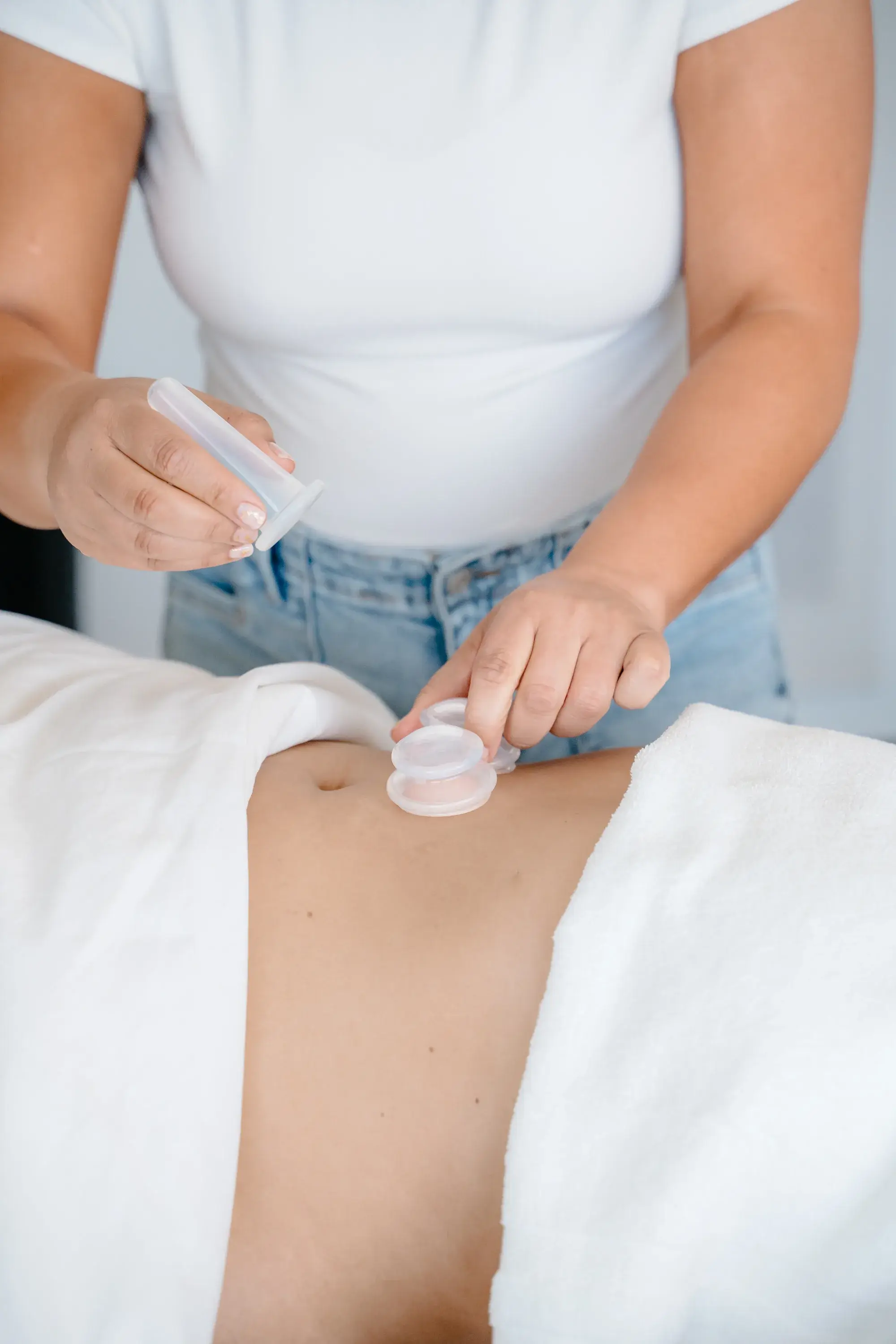
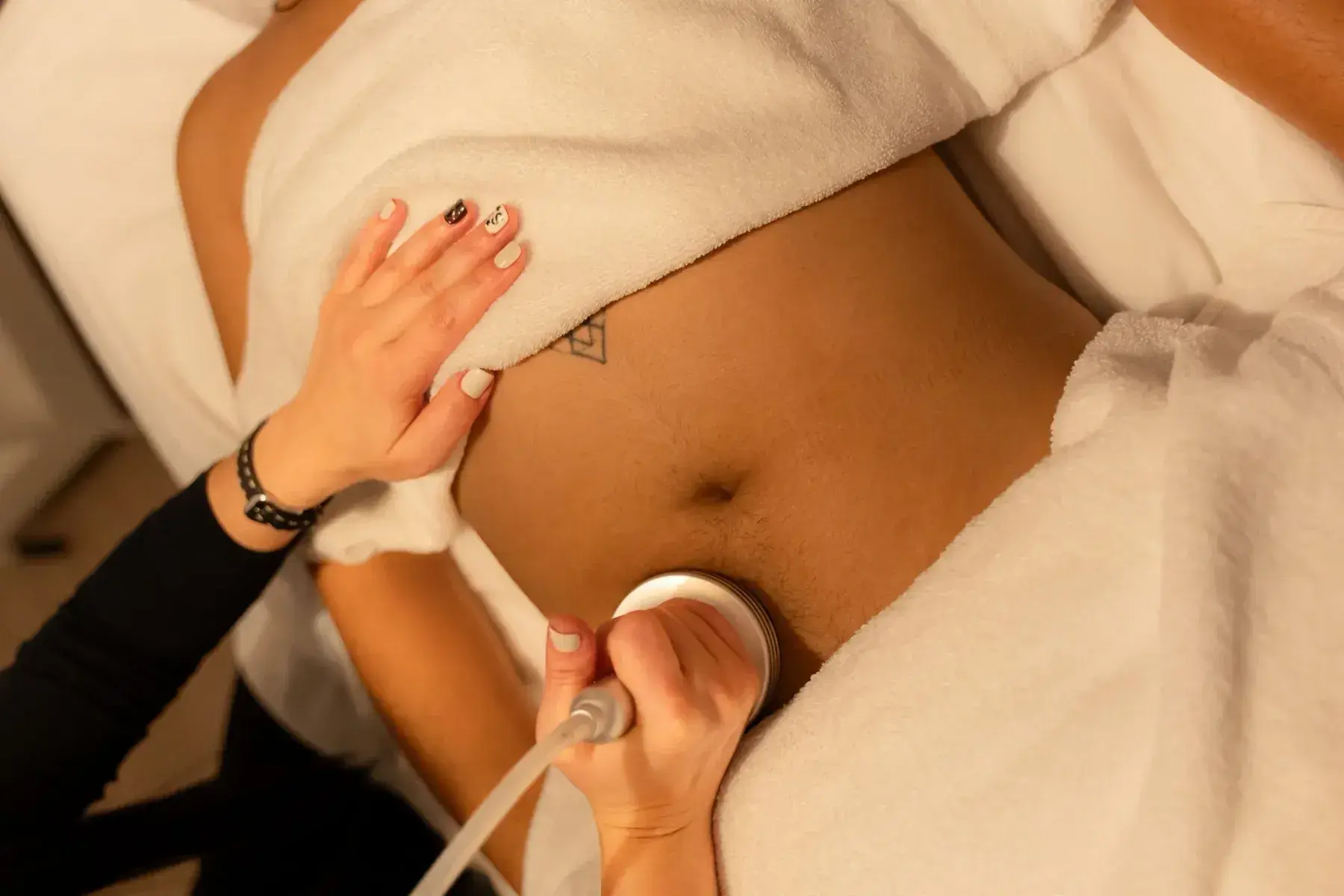
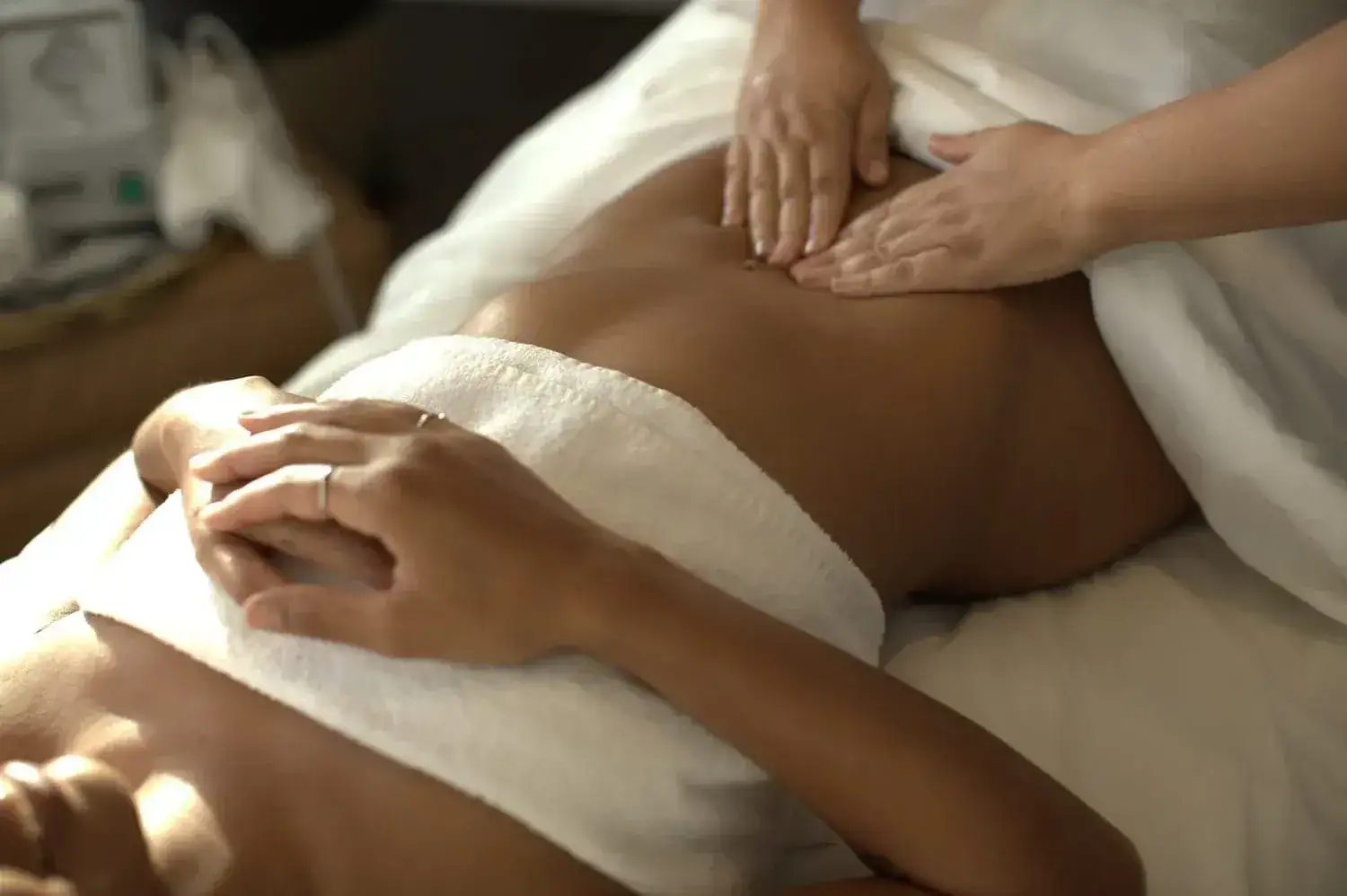
Our post-op lymphatic drainage after a caesarean follows the same principles as after a tummy tuck, adapted to a body that has also just given birth.
- Nothing over the wound until it is closed and cleared. We do not work on or near the incision while it has stitches, staples, a dressing, any discharge or any redness, and not until you tell us your midwife or doctor is happy with it. We look at it before every session.
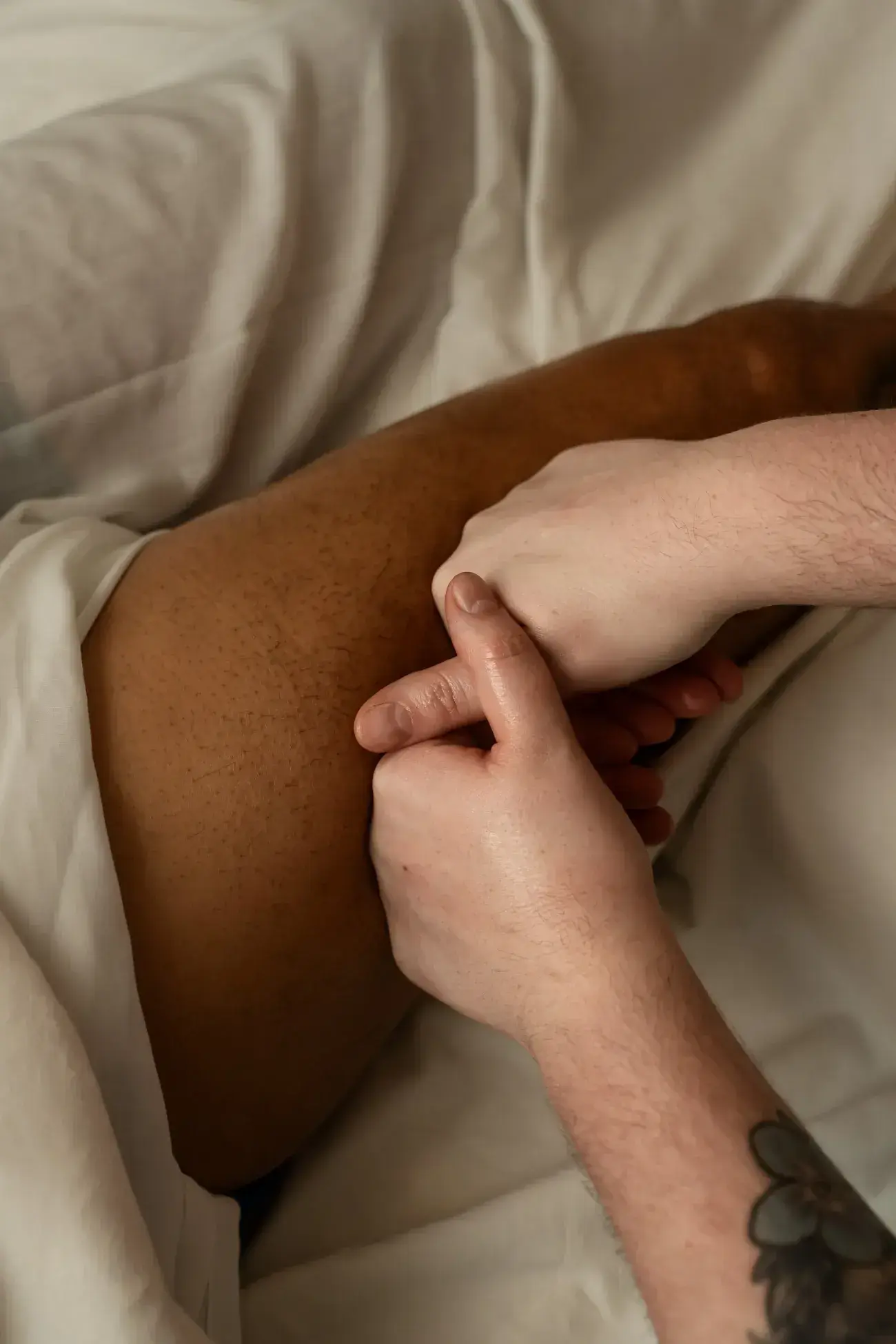
- Legs and the lower trunk first. The strokes are light, slow and directional, closer to a skin stretch than a massage. On the legs they move upward toward the groin, and on the lower belly, away from the scar, toward the groin on each side and up toward the armpits, which are the nodes those regions drain to. The deep abdominal breathing we teach alongside it helps the fluid through the trunk.
- Positioning for a healing abdomen. Semi-reclined, with the knees supported so the belly is slack, or side-lying. Never prone, and never with anything pulling on the incision line.
- Scar mobility later. Only once the wound is fully healed and, in our practice, after your six- to eight-week follow-up. The NHS scar advice is to massage a healed scar with a water-based cream a few times a day for up to ten minutes, keep it covered in the sun for at least a year and use SPF 30 or more. We start that work gently in the clinic and hand it over to you; the home routine is in C-section scar care at home.
Sessions are 30, 45 or 60 minutes, and we usually suggest the shorter lengths in the first weeks, when getting out of the house is the hard part. If you are also sore through the back, neck and shoulders from feeding, the muscular side is covered in massage after birth, and it can be combined with lymphatic work in a single visit.
What we do not claim: that lymphatic drainage speeds wound healing, prevents adhesions or flattens the scar. None of the sources we read tests it after caesarean birth, and the honest basis for the work is what it does for post-surgical swelling generally, which our post-op recovery guide sets out.
Clots, and why the legs are screened first
ACOG lists blood clots in the legs, pelvic organs or lungs among the risks of caesarean birth, and describes inflatable sleeves on the calves during the operation to reduce that risk. The NHS says the risk of a clot stays raised for six weeks after having a baby. Before any leg work we ask about one-sided calf pain, swelling, warmth or discolouration, and a leg with those signs is not treated. The NHS adds swelling or pain in the lower leg, and a cough or shortness of breath, to its list of reasons to contact your care provider after a caesarean.
When to call your doctor or midwife
Infection and bleeding are the two things to watch for in the first weeks, and the three sources give consistent lists. Contact your care provider the same day, or go to emergency if it is severe, for:
- a fever over 38 C, or chills
- worsening pain, or severe pain in the belly or pelvis
- redness spreading or red streaks running outward from the incision, swelling, or the wound becoming more painful
- pus, leaking discharge, or a bad smell from the incision or the vagina
- the incision opening
- heavy vaginal bleeding, which the SOGC defines as soaking through a pad in under an hour
- leaking urine, or pain when you pee
- swelling or pain in the lower leg
- a cough, shortness of breath or chest pain
None of those is a day to come in. If anything on the list appears between booked sessions, call your care provider first and let us know afterwards; the appointment can wait.
Questions people ask
How soon after a C-section can I have lymphatic drainage?
Once the incision is closed, dry and your care provider has no concerns about it. Non-dissolvable stitches or staples usually come out at five to seven days (NHS) and the wound should be clean and dry daily before that. In practice most clients come in somewhere in the second to sixth week for work on the legs and the trunk away from the incision, and we check the wound before every session.
Why is the skin around my C-section scar numb?
ACOG lists pain or numbness in the incision among the normal experiences of recovery, because the skin nerves are cut along with the skin. None of the sources we read gives a timeline for the feeling to return, so we will not guess at one. Numbness alone is not a reason to avoid lymphatic work nearby; we simply work by sight as well as touch over an area you cannot feel.
Is lymphatic drainage the same as a postnatal massage?
No. A postnatal massage works the muscles, usually the back, neck and shoulders that feeding and carrying strain. Lymphatic drainage is a light, slow, directional skin stretch aimed at fluid, and after a caesarean it is the one we use on the lower belly and legs. Many clients do both, on different days or combined in one appointment.
When can I start massaging the scar itself?
Only once the wound is fully healed. The NHS scar guidance is to massage a healed scar with a water-based cream a few times a day for up to ten minutes, and to keep the scar covered in the sun for at least a year. We begin scar mobility work after your six- to eight-week follow-up if your provider is happy, and we show you how to continue it at home.
Sources
Page reviewed October 4, 2026. This page is education, not a diagnosis. For your own situation, talk to your doctor, surgeon or care team, or ask us.
Keep reading
Related pages