
Low back pain in pregnancy
Low back pain in pregnancy affects more than two-thirds of women. Why it happens, why exercise ranks first, and where massage, physio and acupuncture fit.
By The Renu lymphatic and massage team · 6 min read
Low back pain in pregnancy is the most common pregnancy complaint, reported by more than two-thirds of women, and it comes from a growing uterus that shifts your centre of gravity, stretches the abdominal muscles and loosens the ligaments of the pelvis. The strongest evidence is for exercise: a 2026 meta-analysis of 31 trials found it reduced pain at six to twelve weeks with moderate certainty. Massage is listed by the NHS as a comfort measure, and single trials support manual therapy combined with exercise and education, osteopathic treatment and acupuncture. Severe pain, pain lasting more than two weeks, or pain with fever, bleeding or burning urination needs your obstetric provider.
Backache is the complaint we hear most from pregnant clients, and the research agrees: the Cochrane review puts low back pain at more than two-thirds of pregnancies. The good news is that this is one of the best-studied discomforts of pregnancy, so it is possible to say what works best, what helps a little, and what a massage can honestly add. We will go through it in that order.
What the growing uterus does to your back
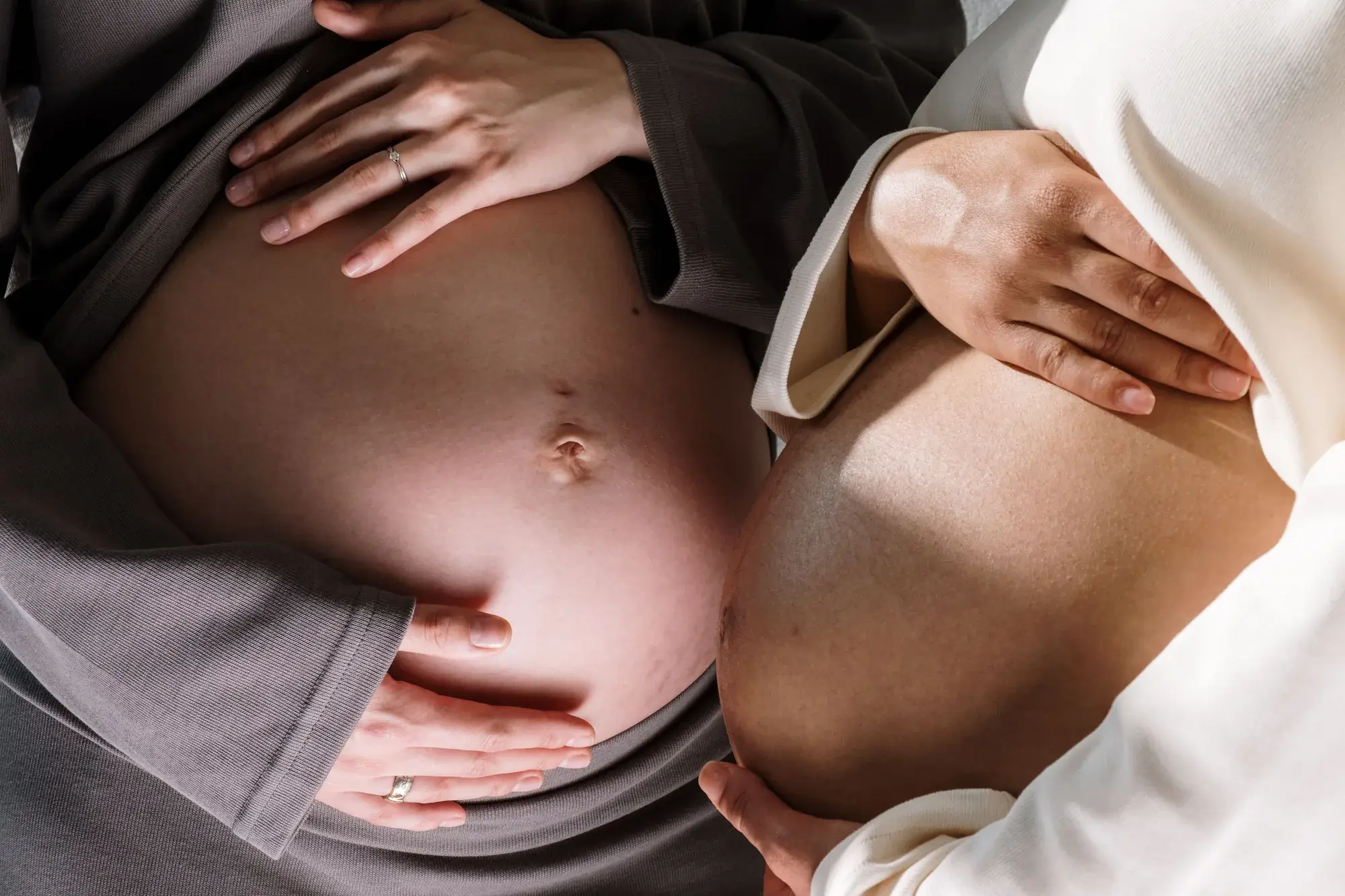
ACOG lays out the mechanics. Your expanding uterus shifts your centre of gravity and stretches and weakens the abdominal muscles, which changes your posture and puts a strain on the back. The extra weight means more work for the muscles and more stress on the joints, which is why the back often feels worse at the end of the day. On top of that, a pregnancy hormone relaxes the ligaments of the pelvic joints to prepare for birth, and pain can follow if those joints become too flexible.
The NHS makes the same point from the other direction: the ligaments naturally become softer and stretch, straining the joints of the lower back and pelvis. It also notes that backache is very common even in the early stages of pregnancy, while ACOG describes it as most troublesome in the later months. Both are true; many women feel a first twinge early on and the real ache from the second trimester onward as the load grows.
ACOG adds one sobering line: the pain usually goes after the baby is born, but for many women it lingers for months afterwards. That is a reason to treat it now rather than wait it out.
What the evidence ranks highest
Three sources let us rank the options rather than list them.
Exercise sits at the top. Cochrane found that land-based exercise significantly reduced pain and functional disability in seven trials of 645 women, and that an eight- to twelve-week exercise programme reduced the number of women reporting combined low back and pelvic pain in four trials of 1,176 women, as well as cutting sick leave. The 2026 meta-analysis by Mladenovic and colleagues, covering 31 randomised trials and 4,690 participants, rated exercise superior at six to twelve weeks with moderate-certainty evidence, the strongest grade in the review.
Manual and combined approaches come next. Cochrane reports single studies suggesting benefit from osteomanipulative therapy, from acupuncture or craniosacral therapy, and from a multimodal intervention combining manual therapy, exercise and education. The 2026 review found low-certainty evidence that manual therapy beat standard obstetric care, with conflicting results against other active treatments.
Comfort measures round it out. The NHS lists having a massage or a warm bath among its back-care tips, alongside rest and a supportive mattress. ACOG recommends heat or cold to soothe sore muscles, and the NHS says paracetamol is safe to take in pregnancy if a painkiller is needed.
Cochrane graded its low back pain evidence as low quality and the combined-pain evidence as moderate, and said further research is very likely to change the estimates. We would rather you knew that than believed anything on this page was settled.
| What | Evidence | What it means for you |
|---|---|---|
| Exercise, 8 to 12 weeks | Moderate certainty (2026 meta-analysis); seven trials in Cochrane | The core of the plan; ask for a prenatal programme |
| Manual therapy with exercise and education | Single trial in Cochrane; low certainty in 2026 review | Worth adding, especially through physiotherapy |
| Osteopathic manipulation, acupuncture | Single trials in Cochrane | Reasonable adjuncts |
| Massage, warm bath, heat or cold | Listed as comfort measures by the NHS and ACOG | Relief and easier movement, not a fix on their own |
Daily habits that protect the back
ACOG and the NHS between them give a practical list, and most of it costs nothing:
- wear supportive shoes; ACOG suggests low-heeled, not flat, shoes with good arch support and says to avoid high heels, which tilt the body forward
- sit in chairs with good back support or tuck a small pillow behind the lower back
- squat, bend the knees and keep the back straight to lift; never bend at the waist
- avoid lifting heavy objects, and split shopping between two bags (NHS)
- move your feet when you turn, rather than twisting the spine (NHS)
- rest one foot on a stool or box if you have to stand for long
- sleep on your side with the knees bent, a pillow between the knees and one under the belly
- consider an abdominal support garment that lifts the weight of the belly off the back muscles (ACOG)
- walk, and swim if you can; ACOG notes water supports your weight so you avoid strain
ACOG’s caution on exercise is simple: it should not cause pain, and if it does, stop and check with your obstetric provider.
What a session at Renu looks like for a sore lower back
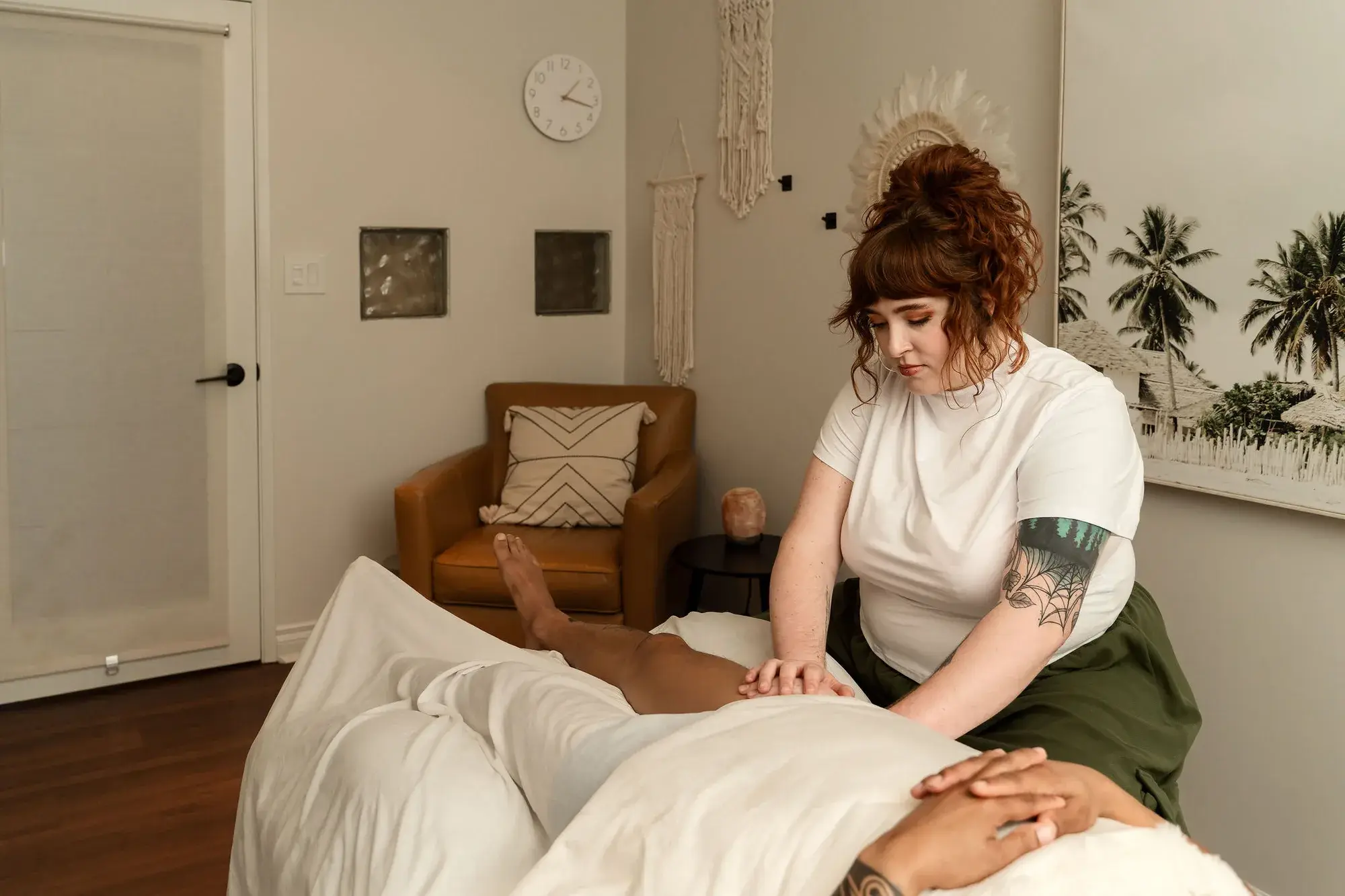
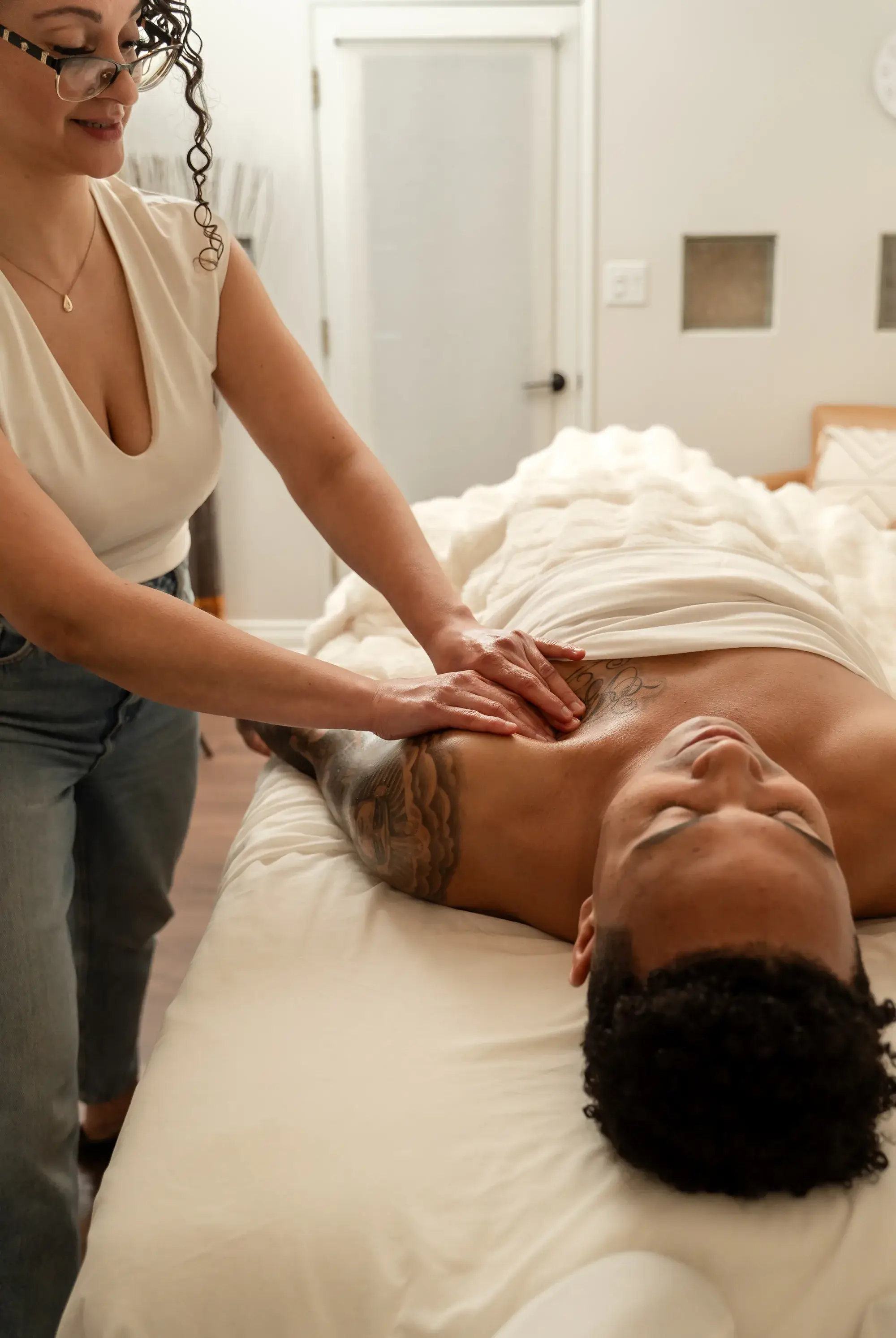
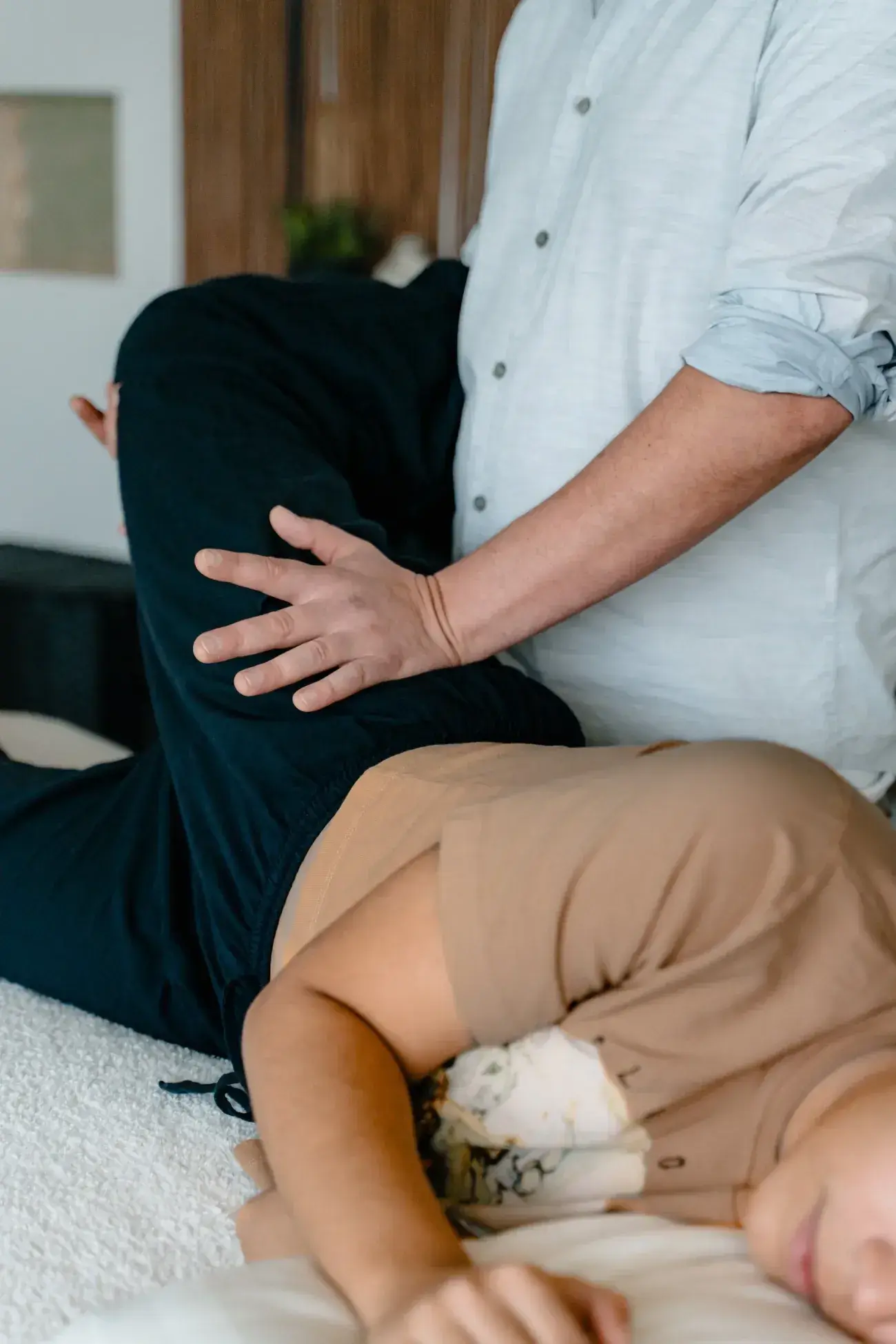
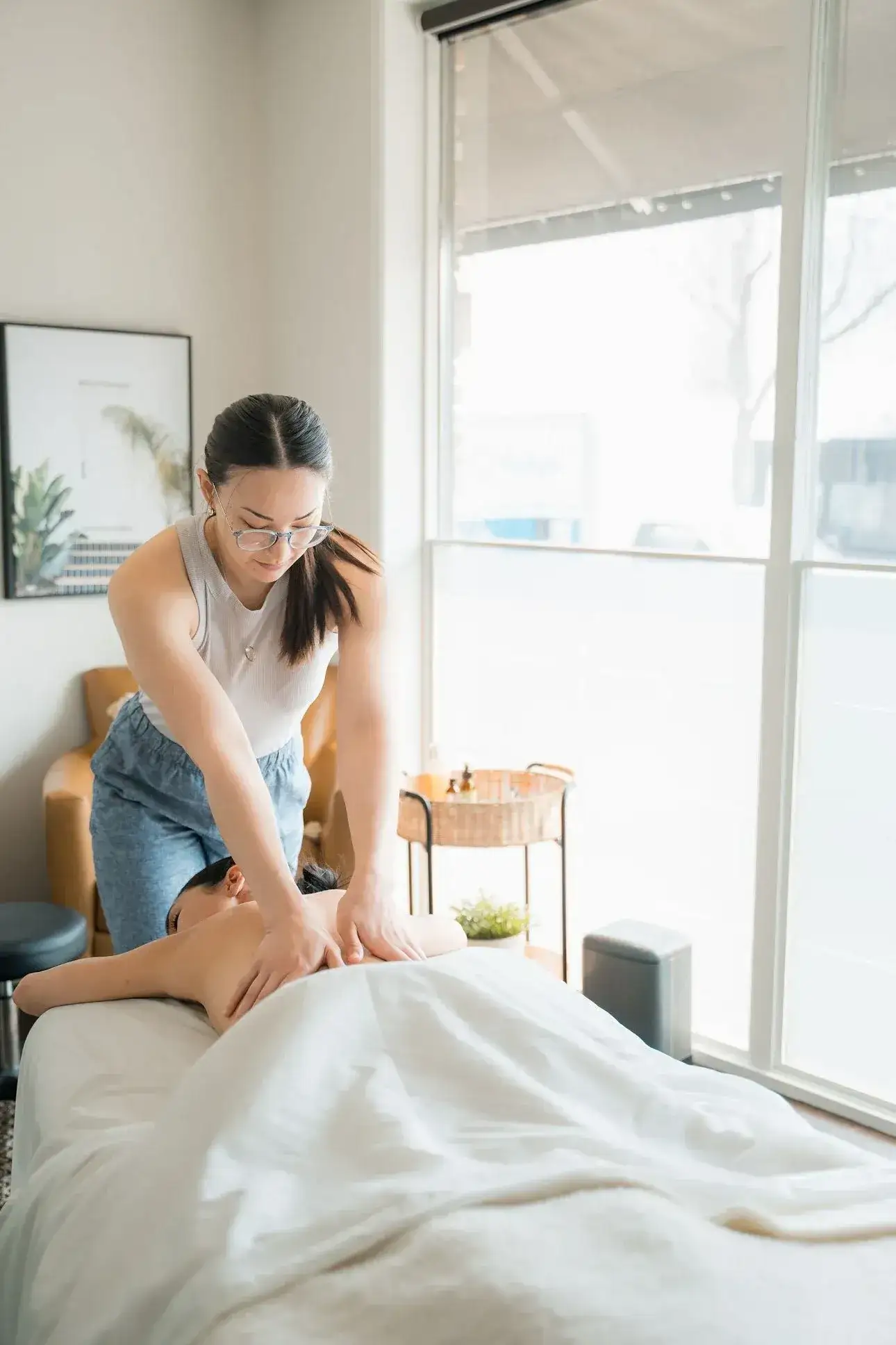
A prenatal massage for back pain is done in side-lying and semi-reclined positions, never prone over the belly. From the side we can reach the whole lumbar region, the muscles along the spine, the gluteals and the outside of the hip, which are the structures doing the extra work ACOG describes. The pressure is firm enough to be useful and adjusted to you; you are the one who tells us whether it is right. We finish with the hip flexors and the front of the thigh where they can be reached, because a pelvis that is tipped forward all day tightens the front as well as the back.
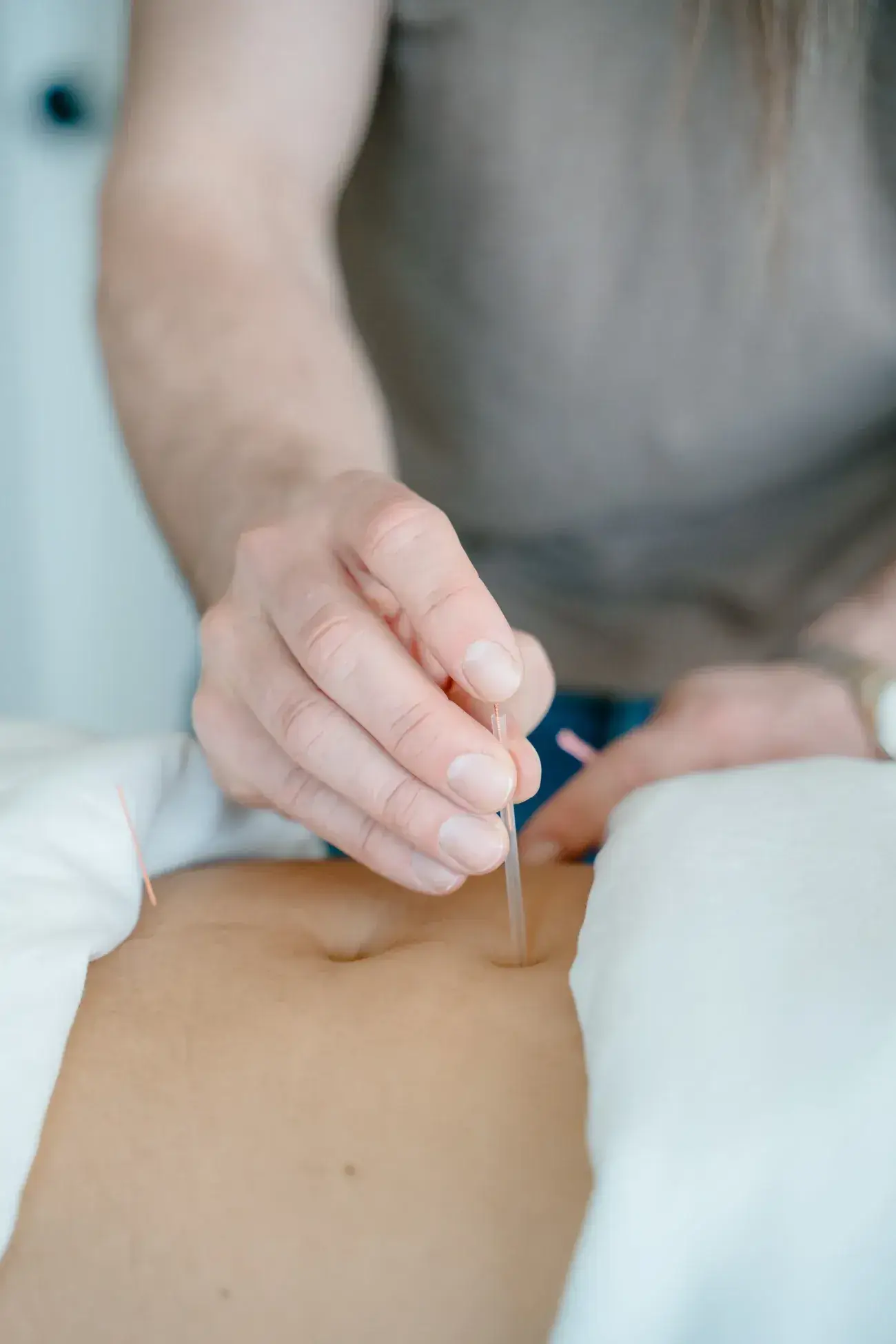
If the pain is more mechanical than muscular, with a feeling of stiffness or catching, we may suggest Monica’s RAPID NeuroFascial Reset, which combines pressure with movement and is offered as shorter sessions. For the acupuncture option that Cochrane mentions, Dr. Will Tanner provides acupuncture at the clinic; the comparison between the two for back pain is set out in acupuncture vs massage therapy for back pain.
None of this replaces an exercise programme. We say that at every first visit, and we are happy to work alongside your physiotherapist, who, as both the NHS and ACOG note, is the referral your care provider is likely to make once other causes are excluded.
Pain that is not ordinary back pain
Sharp pain that travels down one leg is more likely sciatica, and pain concentrated at the pubic bone or across the back of the pelvis is pelvic girdle pain; both are covered on their own pages. Back pain can also be the first sign of something that needs a doctor, which is why ACOG and the NHS both give a short list.
Call your obstetric provider if you have severe back pain or pain that goes on for more than two weeks (ACOG), so that other causes can be ruled out. Contact your GP or midwife urgently if back pain comes with:
- a fever
- vaginal bleeding
- burning or pain when you urinate
- pain in one or both sides
ACOG notes that back pain can be a symptom of preterm labour or a urinary tract infection, and the NHS adds that new back pain in the second or third trimester can be a sign of early labour. If back pain comes with loss of feeling in a leg, the bottom or the genitals, the NHS says to call emergency services. We will not treat on a day any of those are present, and we will ask you to call your care provider instead.
Questions people ask
Why does my back hurt more at the end of the day in pregnancy?
ACOG explains that the expanding uterus shifts your centre of gravity and weakens the abdominal muscles that normally support the spine, so your back muscles work harder all day and tire by evening. The extra weight also adds stress to the joints. Rest with your back supported, and a short walk, usually help more than lying flat.
Is massage or exercise better for pregnancy back pain?
Exercise has the stronger evidence: Cochrane found land-based exercise reduced pain and disability in seven trials of 645 women, and a 2026 meta-analysis rated the six- to twelve-week benefit as moderate certainty. Massage has single-trial support as part of a multimodal programme and is listed by the NHS as a comfort measure. Use both: massage makes the exercise easier to do.
Can I wear a maternity support belt for back pain?
ACOG suggests an abdominal support garment that takes the weight of the belly off the back muscles, and says your obstetric provider may recommend a maternity girdle or brace once other causes of pain are ruled out. It is a daytime aid for long stretches on your feet, not something to sleep in.
Should I get acupuncture or massage first?
Both are available at Renu and they do different things. Acupuncture has single-study support in the Cochrane review for pregnancy back pain and is offered by Dr. Will Tanner. Massage addresses the tired, tightened muscles directly. Many clients alternate; if you are unsure, start with whichever you are more comfortable with and tell us how it responds.
Sources
- Cochrane (Liddle and Pennick 2015): Interventions for preventing and treating low-back and pelvic pain during pregnancy
- ACOG: Back pain during pregnancy (FAQ115)
- NHS: Back pain in pregnancy
- Mladenovic, Coughlan, do Nascimento, Simmons, Dufour, Spadoni and Macedo 2026, Brazilian Journal of Physical Therapy: The effectiveness of physiotherapy interventions for pregnancy-related lumbopelvic pain, a systematic review and meta-analysis
Page reviewed October 4, 2026. This page is education, not a diagnosis. For your own situation, talk to your doctor, surgeon or care team, or ask us.
Keep reading
Related pages