

Lymphedema after prostate cancer treatment
Leg or genital lymphedema after prostate cancer is uncommon after surgery alone and far more likely when pelvic radiation follows a node dissection.
By The Renu lymphatic and massage team · 7 min read
Lymphedema after prostate cancer treatment is swelling of one or both legs, the scrotum or the skin above the pubic bone, caused by damage to the pelvic lymph nodes during surgery or radiation. A 2022 systematic review found leg lymphedema in 0 to 14 percent of men after prostatectomy with node dissection and genital lymphedema in 0 to 1 percent, rising to 18 to 29 percent and 2 to 22 percent when pelvic radiation followed a node dissection. It is treatable with complete decongestive therapy and compression, and new swelling should always be reported to your urologist or radiation oncologist first.
Most men are warned about incontinence and erections before prostate surgery. Very few are told that their legs or scrotum might swell. So when it happens, months after the last appointment, the first feeling is often embarrassment, and the second is not knowing who to ask. This page is the explanation we would give you across the treatment table, with the numbers from the research and a clear line on what belongs to your oncology team.
How prostate cancer treatment leads to swelling
The pelvic lymph nodes drain fluid from the legs, the genitals and the lower abdomen back toward the heart. When a surgeon removes them to check for cancer spread, or when radiation damages them, that fluid has fewer routes home. The American Cancer Society describes the result plainly: fluid “can collect in the legs or genital region over time, causing swelling and pain.”
Two things about the anatomy matter for men in particular. The National Lymphedema Network (NLN) notes that the superficial lymphatics of the lower abdomen, hips, buttocks and genitals are “highly susceptible” once the inguinal nodes are impaired, and that in men the genital swelling tends to be diffuse rather than confined to one side. So the pattern can be one leg, both legs, the scrotum, the penis, the skin above the pubic bone, or a mix.
It is also worth knowing why the nodes were taken. The American Cancer Society notes that removing them “hasn’t been shown to help you live longer or lower the chance of the cancer coming back”; it is done for staging, to see whether cancer has spread and to guide what comes next. That is a conversation to have with your surgeon, not a judgement on your care.
How common it is, in plain numbers
The best summary comes from a 2022 systematic review in Cancers by Clinckaert and colleagues at the University of Leuven, who pooled 18 studies of men treated for prostate cancer.
| Treatment | Leg lymphedema | Genital lymphedema |
|---|---|---|
| Prostatectomy with pelvic node dissection (11 studies) | 0 to 14% | 0 to 1% |
| Pelvic radiation alone (7 studies) | 0 to 9% | 0 to 8% |
| Pelvic radiation after a staging node dissection | 18 to 29% | 2 to 22% |
The pattern is the point: surgery alone and radiation alone each carry a modest risk, and the combination carries by far the highest. The authors also flagged that only one of the 18 studies had a written definition of lymphedema before it started, and that in that study men reported swelling at three months almost three times as often as staff recorded it (14 percent versus 4 percent). The true rate is probably closer to what men report than to what charts capture.
A 2024 meta-analysis of 4,962 men by Ding and colleagues adds that an extended node dissection, which removes more nodes than the standard template, carried a higher lymphedema risk, while overall complication rates and cancer recurrence did not differ between the two templates.
The National Cancer Institute’s PDQ summary is candid that there are “few studies of lymphedema after prostate cancer therapy.” One small survey it cites found 19 of 54 men after prostatectomy reporting swelling in both legs, with a higher body mass index and poorer general health as risk factors.
When it tends to start
Leg swelling after prostate treatment is usually a late effect, not an immediate one. In a 2025 Radiation Oncology study by Facondo and colleagues, 101 men who had radiotherapy after prostatectomy were followed for at least two years. Fourteen (13.9 percent) developed leg lymphedema, defined by a 10 percent or greater volume difference between the legs measured with a tape. Three had swelling before radiation; the other 11 developed it afterwards, and the median time from the end of radiation to the swelling was four months, with the middle half of cases falling between two weeks and about 17 months.
The same study found three independent predictors: diabetes raised the risk sharply, a longer gap between surgery and radiation lowered it, and men who exercised at a medium or high level were much less likely to develop swelling. Those are observations in one cohort, not instructions, but they are worth raising with your team.
What treatment looks like for a leg and the genital region
The ACS puts it simply: lymphedema “can usually be treated with physical therapy, although it may not go away completely.” The standard of care is complete decongestive therapy (CDT), which the NLN describes as a two-phase approach.
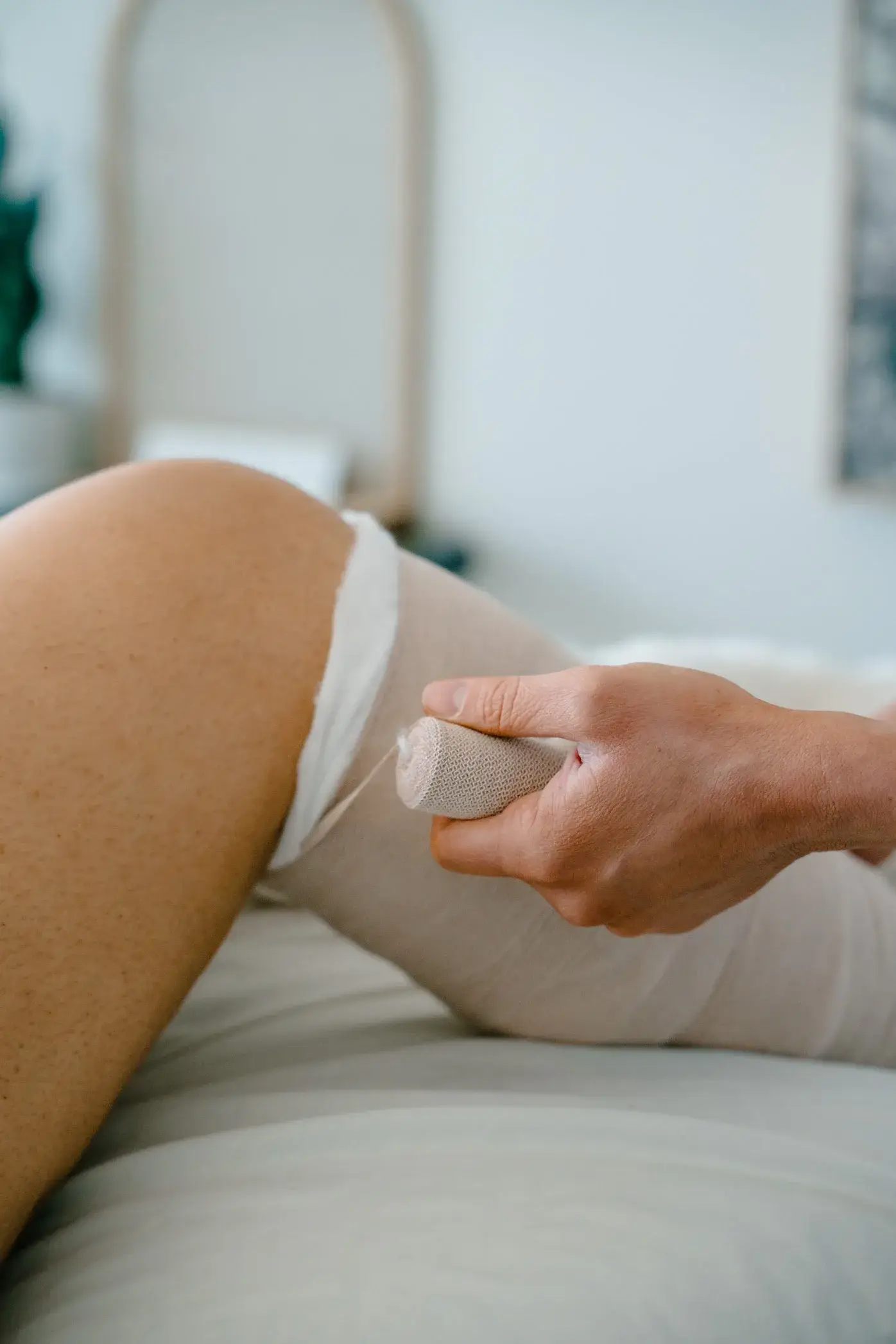
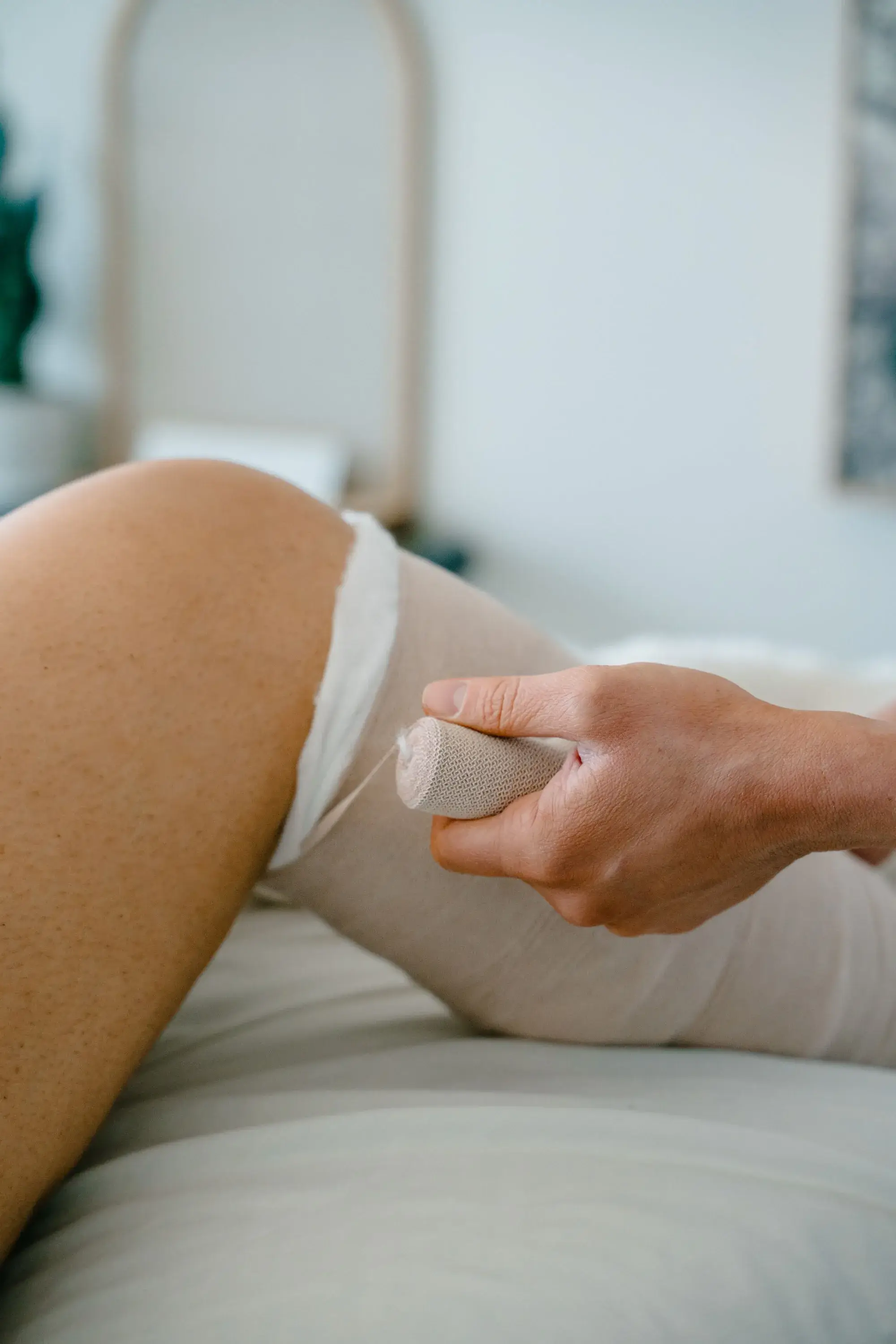
- Phase one is intensive: ideally five days a week, typically over three to eight weeks, combining manual lymph drainage, multilayer short-stretch bandaging, skin care and exercises done with compression on. The bandages stay on between sessions.
- Phase two is maintenance: a fitted compression garment for day and sometimes night, self-drainage you are taught, skin care and activity, with garments replaced about every four to six months as they lose their pressure.
For the genital region the NLN is frank that “safe compression or manual manipulation may be challenging” and that CDT needs adjusting there. In practice that means specialised garments, padding and techniques a Certified Lymphedema Therapist is trained to use, which is why it matters to see someone with that credential rather than a general massage therapist. Our complete decongestive therapy page explains what Meeghan Mackenzie, our CLT and Certified Compression Fitter, does at each phase, and our compression garments guide covers what to expect from a fitting.
The NLN’s 2026 risk-reduction statement also notes that a prophylactic compression garment, which has trial evidence after breast cancer, “may also be considered for patients at risk of lower extremity lymphedema after inguinal or pelvic lymph node dissection.” If you have had a node dissection and radiation is planned, that is a reasonable question for your radiation oncologist and a CLT together, before swelling appears.
Skin and infection: why they matter more with genital swelling
Lymphedema fluid is protein-rich and stagnant, which bacteria like. The NLN reports that chronic genital lymphedema often leads to skin changes such as cysts and small papillomas and to fluid leakage, and that recurrent cellulitis is reported in 85 percent of such cases. Each infection damages more lymphatics, which is the cycle good skin care is meant to break.
The habits are undramatic: daily washing with a mild, pH-balanced product, moisturising to prevent cracking, and treating any cut, bite or fungal patch on the feet or groin promptly. The NLN asks that any suspected skin infection in an at-risk or swollen area be treated “as an urgent medical event” with prompt antibiotics. It also recommends that people at risk of lymphedema avoid saunas.
When to call your urologist or radiation oncologist
Swelling after prostate cancer treatment is a medical finding first. Before you book lymphatic work anywhere, your medical team should see new swelling, because the NCI notes that deep vein thrombosis, infection and recurrent cancer have to be considered and excluded. Call the same day, or go to urgent care, if you notice any of these, which the NLN and the American Cancer Society list as signs of infection or something more serious:
- a leg or the genital area that is red, hot, painful or suddenly more swollen
- fever or chills that are not explained by a cold
- swelling in one leg that appeared quickly, especially with calf pain
- skin that is weeping fluid or has broken down
- new pain in the pelvis or back alongside the swelling
Once your team has confirmed lymphedema and ruled out the rest, that is the point to see a Certified Lymphedema Therapist. We work from what your oncology team tells us and alongside them, and our when to seek medical care page lists the signs we would always send you back for.
A note on asking
Men tell us they waited months to mention scrotal swelling to anyone. It is a known complication of the treatment you had, it has a name, and it has a treatment pathway. Reporting it early changes how it is managed, and the first person to tell is the doctor who treated your prostate.
Questions people ask
Is leg swelling after a prostatectomy always lymphedema?
No. Other causes of a swollen leg, including a deep vein clot, infection and cancer itself, have to be ruled out, and that is a job for your medical team, not a massage clinic. Lymphedema is usually diagnosed once those are excluded, which is why new swelling after prostate surgery should be reported to your urologist before you book anything else.
Why did my swelling only appear months after radiation finished?
Radiation damage to the lymph nodes develops over time. In a 2025 Italian cohort of 101 men who had radiotherapy after prostatectomy, the median gap between the end of radiation and the start of leg lymphedema was four months, with a range from two weeks to about a year and a half. Delayed onset is expected, not a sign that something new has gone wrong.
Can genital lymphedema be treated with massage?
Manual lymph drainage is part of complete decongestive therapy for the genital region, but the National Lymphedema Network notes that compression and manual work there need adjustments because the area is harder to compress safely. A Certified Lymphedema Therapist plans this with you, and your oncology team should know the swelling is there, because genital skin with chronic lymphedema is prone to leakage and repeated cellulitis.
Does having more lymph nodes removed raise my risk?
The evidence points that way. A 2024 meta-analysis of 4,962 men found a higher lymphedema risk after extended pelvic node dissection than after the standard template, and in the 2025 radiotherapy cohort the number of nodes examined was linked to lymphedema on the first analysis, though it did not hold up once diabetes and exercise were accounted for. Your surgeon can tell you which template was used.
Sources
- Clinckaert et al., Cancers 2022: The prevalence of lower limb and genital lymphedema after prostate cancer treatment, a systematic review
- Facondo et al., Radiation Oncology 2025: Incidence and predictors of lower extremity lymphedema after postoperative radiotherapy for prostate cancer
- Ding et al., International Journal of Surgery 2024: Standard versus extended pelvic lymph node dissection in prostate cancer, a meta-analysis
- American Cancer Society: Surgery for prostate cancer
- American Cancer Society: Radiation therapy for prostate cancer
- National Cancer Institute PDQ: Lymphedema (health professional version)
- National Lymphedema Network: Position statement on lymphedema diagnosis and treatment, September 2025
- National Lymphedema Network: Evidence-based practices for lymphedema risk reduction, March 2026
Page reviewed October 4, 2026. This page is education, not a diagnosis. For your own situation, talk to your doctor, surgeon or care team, or ask us.
Keep reading
Related pages