
Leg lymphedema after gynecologic cancer treatment
Leg lymphedema follows cervical, endometrial, ovarian and vulvar cancer treatment in up to half of cases. The drivers, the early peak, and how CDT works.
By The Renu lymphatic and massage team · 6 min read
Leg lymphedema after treatment for cervical, endometrial, ovarian or vulvar cancer is at least as common as the arm lymphedema that follows breast cancer, and far less talked about. A 2025 systematic review of 46 studies found incidence ranging from 7.4% to 55.9% after cervical cancer, 1.2% to 47% after endometrial, 5.6% to 30.4% after ovarian and 10.1% to 43% after vulvar cancer. The strongest drivers are removal of pelvic or groin nodes, the number removed, radiotherapy and a body mass index over 25. It can begin within weeks of surgery and can also start years later.
Leg lymphedema after treatment for cervical, endometrial, ovarian or vulvar cancer is at least as common as the arm lymphedema that follows breast cancer, and far less talked about. A 2025 systematic review of 46 studies found incidence ranging from 7.4% to 55.9% after cervical cancer, 1.2% to 47% after endometrial, 5.6% to 30.4% after ovarian and 10.1% to 43% after vulvar cancer. The strongest drivers are removal of pelvic or groin nodes, the number removed, radiotherapy and a body mass index over 25. It can begin within weeks of surgery and can also start years later, so watching the legs is a long-term habit.
How common it is, by cancer type
| Cancer | Incidence range (2025 systematic review) | Single-cohort figure cited by the National Cancer Institute |
|---|---|---|
| Vulvar | 10.1% to 43% | 43% |
| Endometrial (uterine) | 1.2% to 47% | 34% |
| Cervical | 7.4% to 55.9% | 33% |
| Ovarian | 5.6% to 30.4% | not reported |
The wide ranges reflect how differently studies define and measure lymphedema; the NCI figures use a limb volume increase of more than 10%. The NLN’s diagnosis statement cites incidence after cervical cancer treatment of up to 69% when genital lymphedema is included. The Canadian Cancer Society lists uterine, vulvar and ovarian cancers among those that carry the risk.
What drives the risk
The 2025 review by Decorte and colleagues identified four risk factors that appeared most consistently: lymphadenectomy (removal of the pelvic or inguinal nodes), the number of nodes removed, radiotherapy, and a BMI above 25. Surgical technique did not change the risk. The authors concluded that lower limb lymphedema frequently follows gynaecological cancer treatment and called for careful monitoring and proactive management.
When it starts: the early peak and the long tail
In the cohort the NCI cites, the peak incidence was at the four-to-six-week point after treatment, but new cases were identified at every later time point. That pattern is different from the arm, where onset after a dissection peaks at six to twelve months. For the legs, the first weeks after pelvic surgery are the time to notice a shoe, boot or waistband that no longer fits on one side, and the years afterward are the time to keep noticing.
Signs the Canadian Cancer Society lists: swelling in a leg that may include the toes, a feeling of fullness, puffiness or heaviness, an aching or burning feeling, and hardening or thickening of the skin. Swelling after pelvic treatment is often one-sided, but it can affect both legs, the lower abdomen, the pubic area and the genitals.
How leg lymphedema differs from arm lymphedema
Groin, genital and trunk involvement
The NLN statement explains that the superficial lymphatics of the lower abdomen, hips, buttocks and genitals are highly susceptible when the inguinal nodes are impaired, and that pelvic surgery, radiation and node removal can cause fluid to back up into the genitals as well as the legs. In women the swelling often respects the body’s midline, so one labium swells while the other does not. Chronic genital lymphedema can lead to skin changes such as small cysts and papillomas and to fluid leakage, and recurrent cellulitis has been reported in 85% of cases. These areas are awkward to mention and important to treat; a lymphedema therapist will have seen them before.
Garment choice
A leg needs a different approach from an arm: compression stockings of the right length (knee, thigh or pantyhose styles), with attention to the toes, the groin and whether the trunk is involved, and sometimes shorts or a panel for lower-trunk and genital swelling. The NLN notes that compression and manual work are more challenging in the genital and trunk regions and that CDT is adapted rather than abandoned there. Our plan pages on compression stocking lengths and compression for genital and lower trunk swelling cover the options; the basics are on compression garments.
Exercise and daily habits
The NLN’s 2026 statement notes that individualised progressive exercise is beneficial for lower-limb lymphedema, citing a systematic review in gynaecologic cancer, and recommends ankle pumps and knee bends during long periods of sitting such as flights. The Canadian Cancer Society says gentle exercise helps lymph flow and reduces swelling. A prophylactic compression garment, which has trial evidence for the arm after axillary dissection, may also be considered after inguinal or pelvic node dissection according to the NLN, though the evidence there is thinner.
Five practical habits are in our founder’s post on ways to decrease leg swelling.
What complete decongestive therapy looks like for a leg
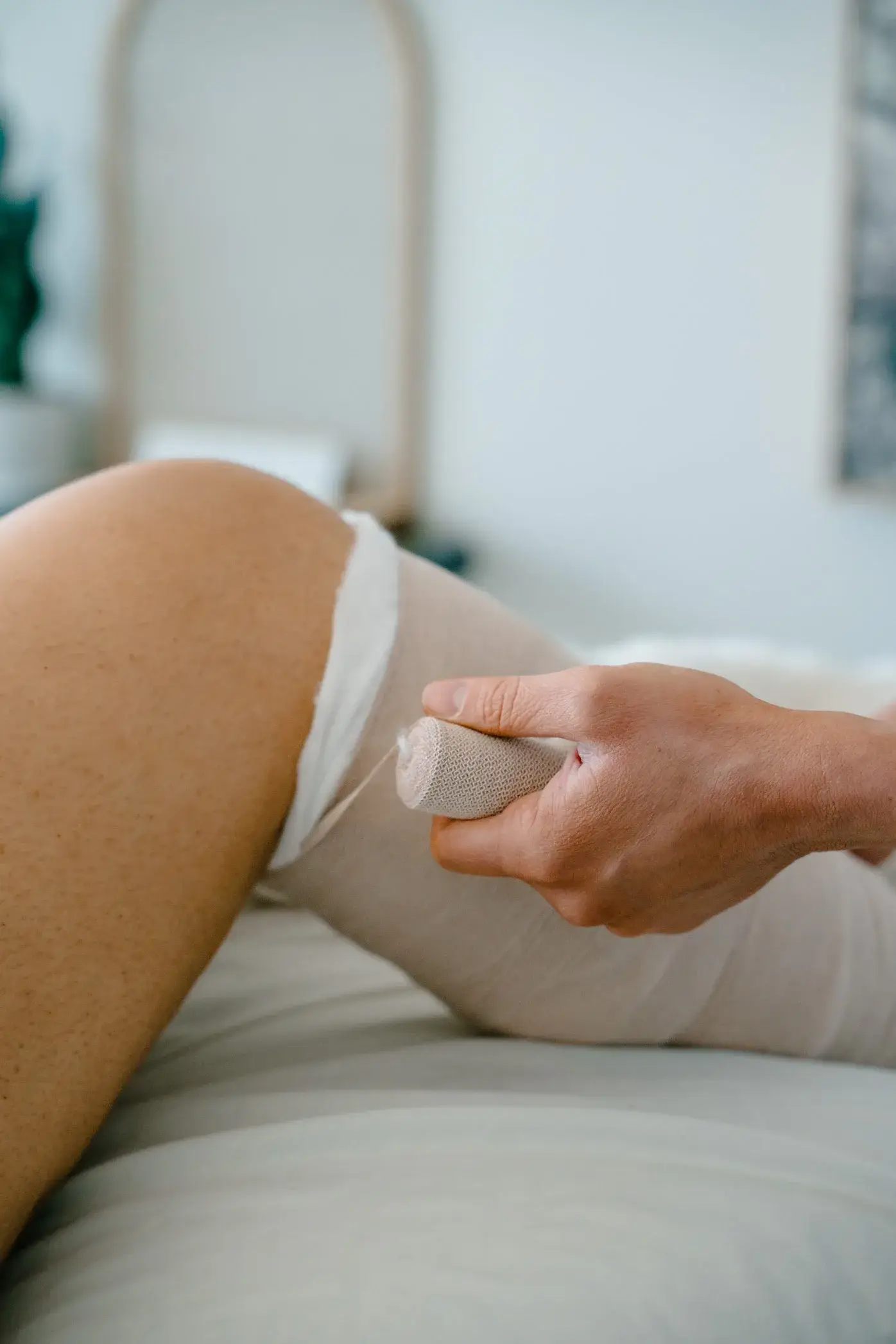
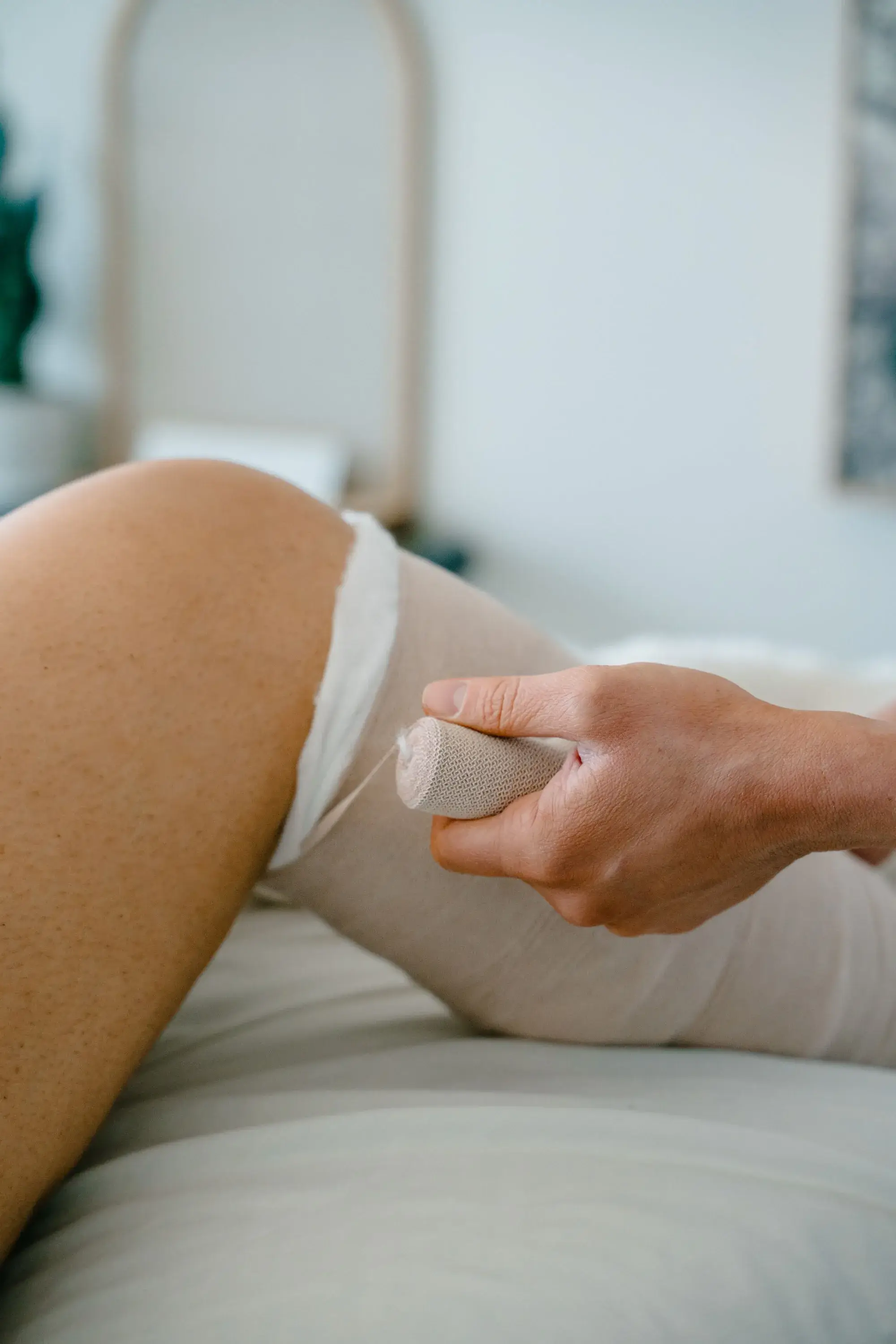
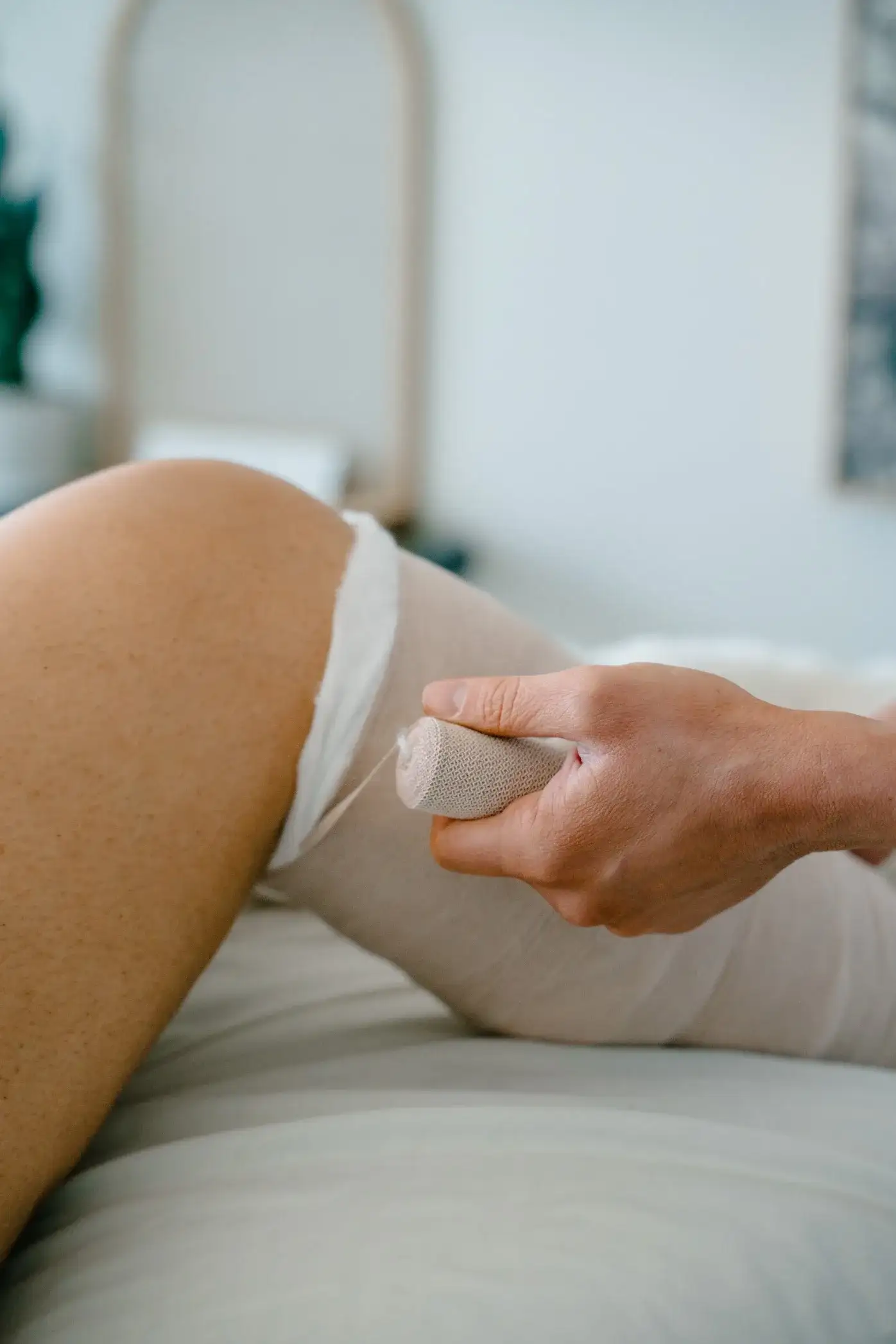
The NLN describes CDT as a two-phase, non-invasive approach and the conservative gold standard. The intensive phase runs ideally five days a week, usually for three to eight weeks until volume plateaus, and combines manual lymphatic drainage, multilayer short-stretch bandaging left in place between sessions, decongestive exercise in the bandages, daily skin inspection and care, and self-care teaching. The maintenance phase moves without a gap into fitted day and night garments, self-drainage, exercise, weight management and garment replacement every four to six months. For a leg, drainage begins at the neck and abdomen, reroutes fluid toward intact pathways, and includes the trunk and genital region where they are involved.
At Renu, complete decongestive therapy is delivered by Meeghan Mackenzie, RMT, Certified Lymphedema Therapist and Certified Compression Fitter, trained in the Vodder and Földi methods. She assesses both legs and the trunk, bandages where the intensive phase is needed, fits garments, and teaches the home routine. We work from your gynaecologic oncology team’s information; we do not diagnose recurrence or clots, and we will send you back to them when something does not fit the pattern. If your node surgery was for melanoma rather than a gynaecologic cancer, see lymphedema after groin dissection for melanoma.
Red flags: when to call your oncology team
Not all leg swelling after cancer treatment is lymphedema, and some causes are urgent.
- Sudden swelling of one leg with throbbing pain, usually in the calf or thigh, skin that is red, blue or darkened, or swollen veins: the NHS lists these as signs of a deep vein thrombosis, and cancer and recent surgery are both risk factors. Seek urgent medical assessment the same day.
- Any of those with shortness of breath or chest pain: call emergency services.
- Redness, heat, pain, swelling, fever or chills in the leg or groin: the NLN treats a suspected infection in a limb at risk as an urgent medical event because cellulitis causes further lymphatic damage.
- Clear fluid leaking from the skin of the leg or genitals, skin that breaks down, or a new lump in the groin.
Gradual, painless swelling without those features is not an emergency, but the earlier it is assessed and treated the better the response. The when to seek medical care guide has the general list, and why one leg is more swollen than the other covers other causes.
Questions people ask
Which gynecologic cancer carries the highest risk of leg lymphedema?
Vulvar cancer in the cohort the National Cancer Institute cites (43%), with cervical cancer showing the widest range across studies, up to 55.9%. The cancer type matters less than what was done: how many pelvic or groin nodes were removed, whether radiotherapy followed, and body mass index.
Can lymphedema affect the genitals after pelvic cancer treatment?
Yes. The NLN explains that the superficial lymphatics of the lower abdomen, hips, buttocks and genitals are highly susceptible when the inguinal nodes are impaired, and in women the swelling often affects one labium. It is treatable with adapted CDT, and recurrent cellulitis is common enough that skin care there matters.
How soon after a hysterectomy with node removal can my leg start to swell?
In the cohort the NCI cites, the peak was four to six weeks after treatment, but new cases were identified at every later time point. Notice a shoe, boot or waistband that fits differently on one side in the first weeks, and keep noticing in the years that follow.
Does losing weight help leg lymphedema after cancer?
A body mass index over 25 is one of the most consistent risk factors, and the NLN recommends a healthy weight with professional support, while acknowledging that cancer treatment can make weight loss harder. It asks for a supportive, multidisciplinary approach rather than a diet handed over at a clinic visit.
Sources
- Decorte et al., Frontiers in Oncology 2025: Risk factors for lower limb lymphedema after gynecological cancer treatment, a systematic review
- National Cancer Institute: Lymphedema (PDQ), health professional version
- Canadian Cancer Society: Lymphedema
- National Lymphedema Network: Position Statement, Lymphedema Diagnosis and Treatment (September 2025)
- National Lymphedema Network: Position Statement, Evidence-Based Practices for Lymphedema Risk Reduction (March 2026)
- NHS: Deep vein thrombosis (DVT)
Page reviewed October 3, 2026. This page is education, not a diagnosis. For your own situation, talk to your doctor, surgeon or care team, or ask us.
Keep reading
Related pages