

Lymphedema after groin dissection for melanoma
Groin dissection carries the highest lymphedema risk of any melanoma node surgery: 24% in the MSLT-II trial vs 6% with observation. Signs, care, red flags.
By The Renu lymphatic and massage team · 7 min read
A groin (inguinal) lymph node dissection carries the highest lymphedema risk of any melanoma node surgery. In the MSLT-II trial, 24.1% of people who had a completion dissection developed lymphedema, against 6.3% of those whose nodes were watched with ultrasound, and the National Cancer Institute quotes 38% permanent lymphedema after inguinal dissection versus 12% after axillary. A sentinel node biopsy on its own is far less likely to cause swelling. Your surgical and oncology team decides what is needed; our part is to help you watch the leg and care for it.
A groin (inguinal) lymph node dissection carries the highest lymphedema risk of any melanoma node surgery. In the MSLT-II trial, 24.1% of people who had a completion dissection developed lymphedema, against 6.3% of those whose nodes were watched with ultrasound, and the National Cancer Institute quotes 38% permanent lymphedema after inguinal dissection versus 12% after axillary. A sentinel node biopsy on its own is far less likely to cause swelling. Your surgical and oncology team decides what is needed; our part is to help you watch the leg and care for it.
The fear, and the numbers behind it
Most people who search this page have been told their leg might swell and want to know how likely that really is. The honest answer is that it depends on which operation you had.
The National Cancer Institute’s PDQ summary on lymphedema reports a permanent lymphedema rate of 38% after inguinal node dissection for melanoma, compared with 12% after axillary (armpit) dissection. The same summary cites a melanoma series of 435 patients with an overall lymphedema prevalence of 25%; of those affected, 44% had stage I (pitting) swelling and 56% had stage II or III.
The MSLT-II trial gives the cleanest comparison. People whose sentinel node contained melanoma were randomised to immediate completion dissection of the whole node basin or to observation with ultrasound. Lymphedema was observed in 24.1% of the dissection group and 6.3% of the observation group.
Those figures are for the whole trial, which included armpit as well as groin basins, so the groin-only rate is likely higher than 24%. That is why your surgeon talked about swelling before you signed the consent form, and why the authors of the prospective study below concluded that consent for melanoma node surgery should include a discussion of lymphedema.
Why many people no longer have a dissection at all
The MSLT-II trial changed practice. Immediate completion dissection gave better control of disease in the regional nodes (92% versus 77% at three years) and more prognostic information, but it did not increase melanoma-specific survival: 86% at three years in both groups, at a median follow-up of 43 months.
The American Cancer Society now puts it plainly: lymphedema and the pain from the surgery are the main reasons a lymph node dissection is not done unless the doctor feels it is really necessary. When the nodes are not enlarged, they are often watched closely with exams and ultrasounds instead. Dissection is still used when nodes are abnormally hard or large and a biopsy confirms melanoma in them.
If you had a sentinel node biopsy and are now on an ultrasound surveillance schedule, you are in the lower-risk group. If you had a full dissection because your team judged it necessary, the rest of this page is written for you.
Sentinel biopsy versus dissection: one study’s odds
Hyngstrom and colleagues at MD Anderson followed 182 people having sentinel node biopsy or therapeutic node dissection for melanoma, measuring limb volume with a perometer before surgery and at 6 and 12 months, with a 19-item symptom questionnaire at each visit.
| Twelve months after surgery | Volume change 5 to 10% | Volume change above 10% |
|---|---|---|
| Inguinofemoral (groin) surgery | 10% | 13% |
| Axillary (armpit) surgery | 9% | 13% |
Two findings matter for you. First, a therapeutic dissection rather than a sentinel biopsy more than tripled the odds of a volume change above 5% (odds ratio 3.18), and lower-limb surgery carried borderline higher odds than upper-limb surgery (1.72). Second, people whose limb grew by more than 10% reported seven to nine times more symptoms than those under 5%. Swelling at this level is not cosmetic; it is felt.
What early leg swelling looks like
Leg lymphedema rarely announces itself with an obviously bigger leg on day one. The American Cancer Society lists the early signs as a feeling of fullness or heaviness, aching or tingling, skin that feels tight, clothing or shoes fitting more snugly than usual, and reduced flexibility at the ankle or knee. On the leg, the first clue is often a sock line that stays, a shoe that is tight by evening, or an ankle that looks rounder on the operated side.
The ACS describes stage 0 as symptoms without visible swelling, and stage 1 as visible swelling that improves with elevation and is usually reversible. That early window is the one to act in. The NLN asks people at risk to report heaviness, a sense of increased limb size or a perception of swelling immediately, because diagnosing and treating lymphedema at the earliest possible time improves outcomes. Our page on when lymphedema starts after cancer treatment covers the timing in more detail.
Compression and manual lymphatic drainage
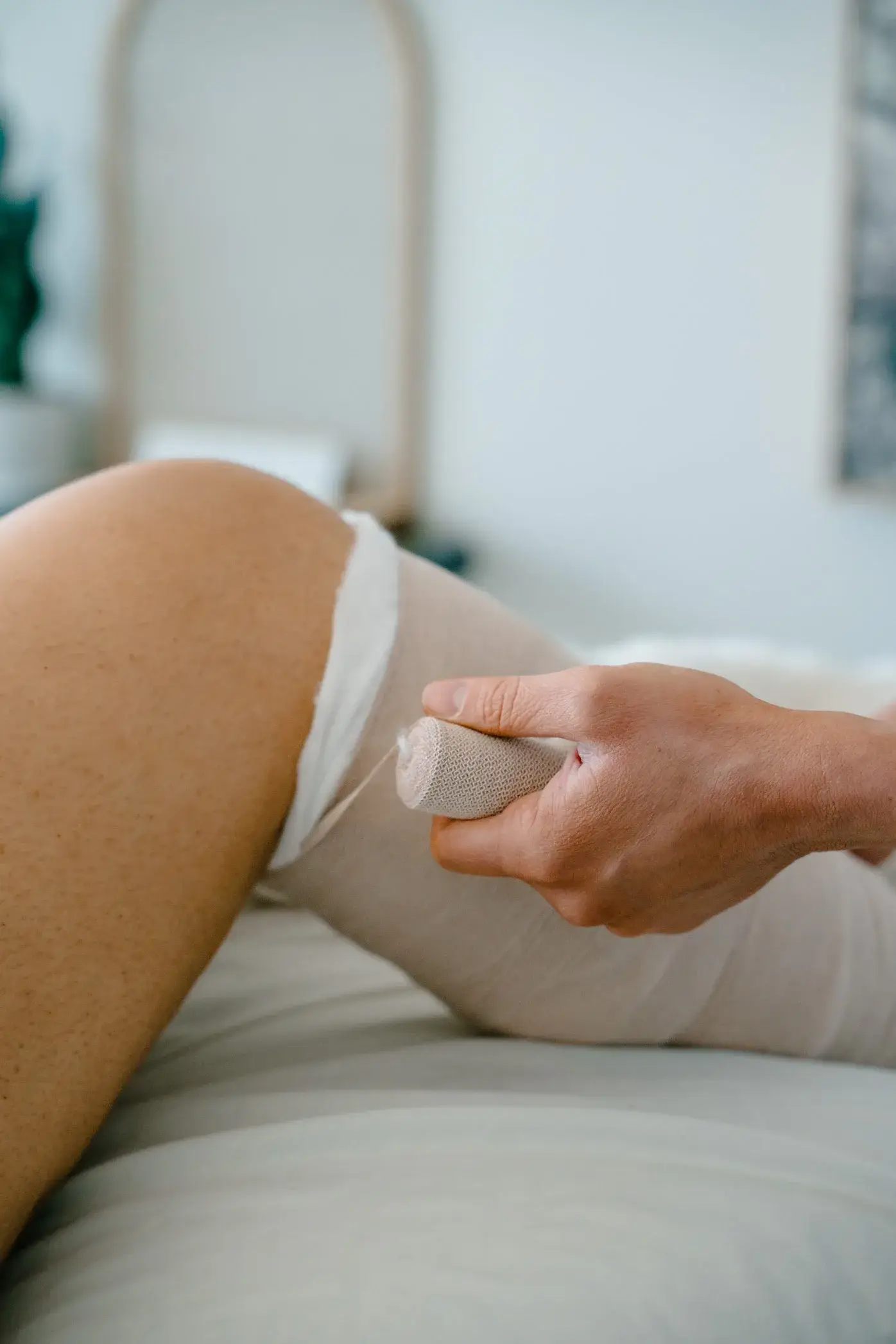
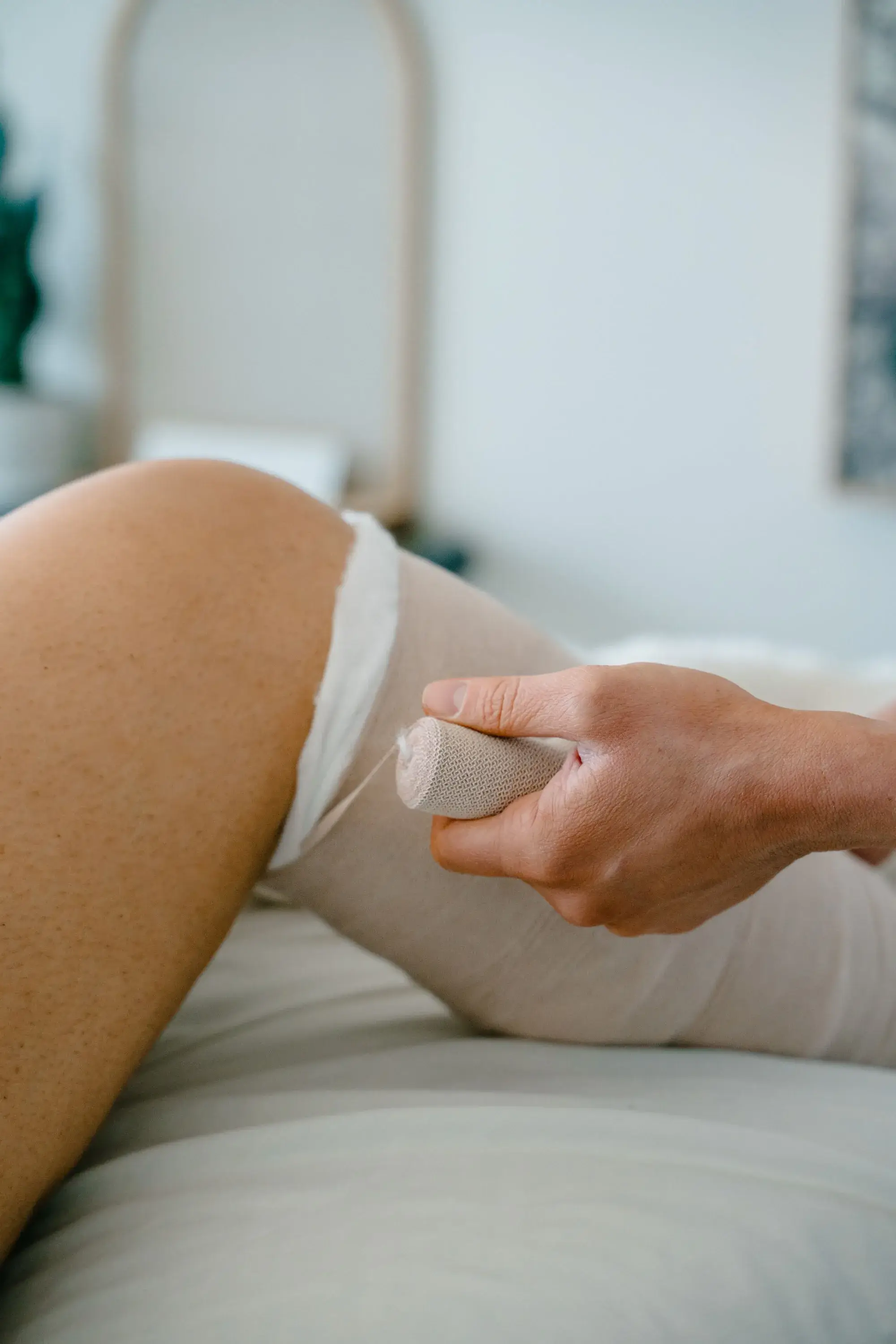
For an arm after axillary dissection, the NLN’s 2026 statement supports a preventive compression sleeve for people at high risk, and it adds that the same approach may be considered for people at risk of leg lymphedema after inguinal or pelvic node dissection. The practical approach it describes is a class 1 or class 2 garment, applied as soon after surgery as possible, worn during waking hours for at least 8 hours a day, until three months after adjuvant treatment or as long as feasible, replaced about every six months, and fitted by a Certified Lymphedema Therapist because an ill-fitting garment can do harm.
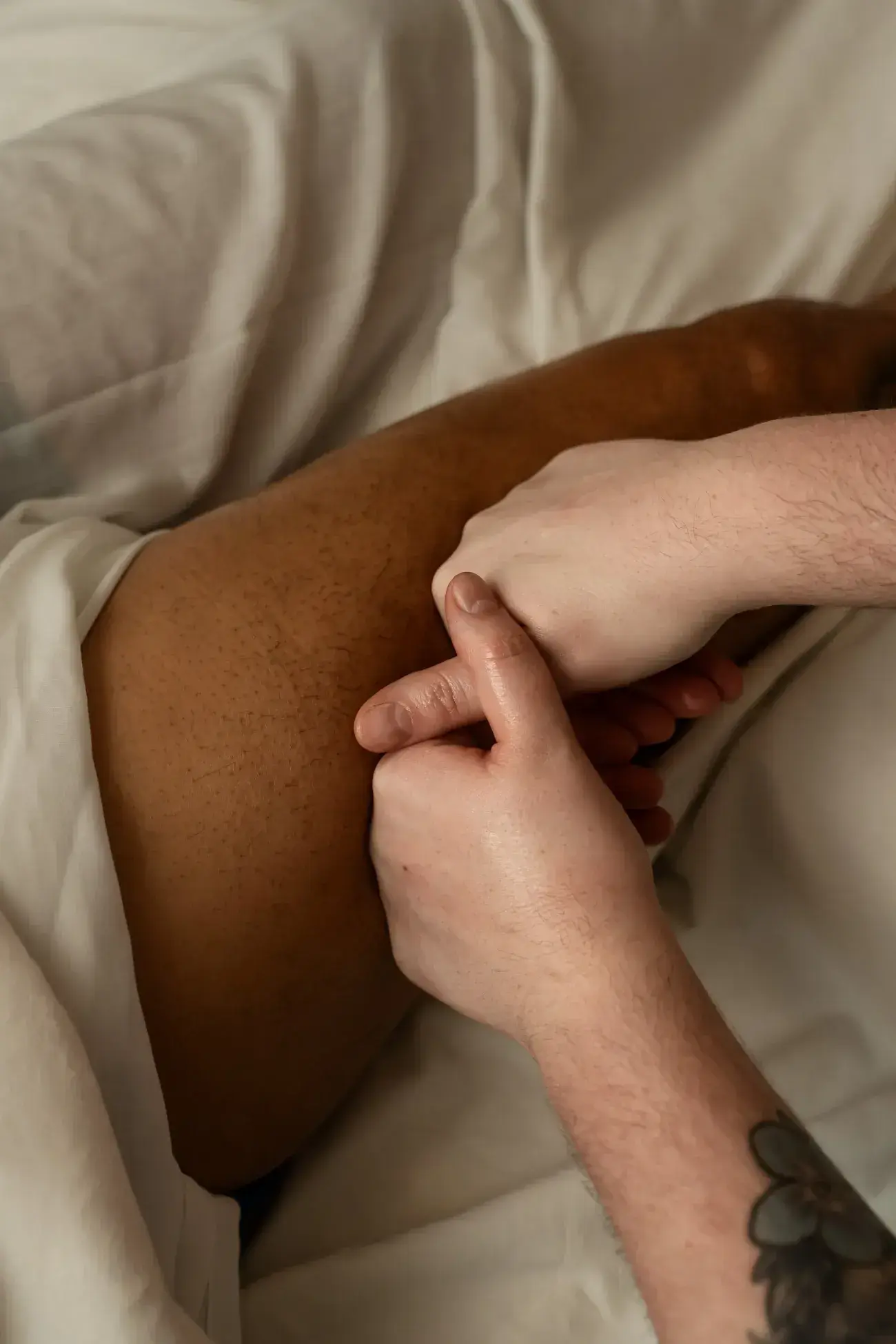
If swelling has already begun, the ACS lists elevation, drainage exercises, skin and nail care, manual lymphatic drainage by a trained therapist and a professionally fitted compression garment for early or mild lymphedema, and complete decongestive therapy for moderate swelling. At Renu that work sits with Meeghan Mackenzie, our Certified Lymphedema Therapist and Certified Compression Fitter, through complete decongestive therapy; a compression fitting is 30 minutes at $25. Our Learning Centre page on compression garments explains the classes and styles.
Skin care matters more on a leg
Feet collect the small injuries that let bacteria in: a nicked cuticle, a blister from a new shoe, a mosquito bite scratched open, a cracked heel. The NLN is direct about why that matters: cellulitis in a limb at risk significantly increases the chance of lymphedema by causing further lymphatic damage, and any suspected infection should be treated as an urgent medical event with prompt antibiotics.
The ACS tips for people at risk translate well to the leg:
- Wear shoes or protective socks; do not go barefoot outdoors.
- Be careful cutting cuticles and toenails.
- Wash any cut, bite or break in the skin with soap and water straight away.
- Wear gloves for yard work and gardening, and consider long trousers in mosquito season.
- Use sunscreen of at least SPF 30 and keep the skin moisturised so it does not crack.
- Avoid extreme heat on the leg: hot compresses, saunas and hot tubs.
- Do not wear anything that squeezes the leg, such as tight socks with a deep elastic band.
Our self-care pages on foot and nail care with leg lymphedema and cuts, bites and first aid go through the routine step by step.
When to call your surgeon or oncology team
Call the same day if any part of the leg or groin feels hot, looks red or swells suddenly, if you have a fever you cannot explain, or if you notice chills, sweats, muscle pain, nausea or dizziness. The ACS also asks you to report new or worsening pain and any cut, bite or injury to the at-risk leg. If you cannot reach your team and the signs point to infection, go to an emergency department.
Sudden one-sided swelling with calf pain needs medical assessment before anyone treats it as lymphedema, because a clot has to be ruled out first. Slow, painless heaviness without heat or redness is not an emergency, but it deserves an appointment within days. More on telling the two apart is in when to seek medical care.
How Renu fits
We are not your surveillance programme; the ultrasound schedule and the decision about further surgery belong to your melanoma team. Where we help is between those visits: examining a leg that feels different, measuring it, fitting a garment your team has recommended, teaching you to care for the skin, and providing lymphatic drainage adapted to a treated groin. Meeghan Mackenzie is a Certified Lymphedema Therapist through the Academy of Lymphatic Studies, with foundations in the Vodder and Földi methods and advanced training at the Chikly Health Institute. If you are early after surgery and simply want a baseline and a plan, that is a reasonable first visit.
Questions people ask
Why did my surgeon leave my groin nodes in and scan them instead?
Because of the MSLT-II trial. It randomised people with melanoma in a sentinel node to immediate completion dissection or to observation with ultrasound, and three-year melanoma-specific survival was 86% in both groups. Dissection gave better control in the regional nodes but caused lymphedema in 24.1% of people, against 6.3% with observation, so many surgeons now watch rather than operate when the nodes are not enlarged.
How soon after groin surgery for melanoma does leg swelling appear?
Often within the first year. In a prospective study that measured limbs before surgery and at 6 and 12 months, 13% of people had a leg volume increase above 10% a year after inguinofemoral surgery, and another 10% were in the 5 to 10% band. Risk does not end at a year, so keep watching the leg afterwards.
Is a sentinel node biopsy in the groin likely to cause lymphedema?
Much less likely than a dissection. In the same prospective study, having a therapeutic dissection rather than a sentinel biopsy more than tripled the odds of a volume change above 5% (odds ratio 3.18). The American Cancer Society describes lymphedema as unlikely after a sentinel node biopsy alone, though not impossible.
Should I wear a compression stocking after an inguinal dissection even if my leg is not swollen?
Ask your team and a Certified Lymphedema Therapist. The 2026 NLN position statement says a preventive garment may be considered after inguinal or pelvic node dissection, following the practical approach used for the arm: a class 1 or 2 garment, from soon after surgery, at least 8 hours a day, fitted professionally. It is a decision to make with your care team, not a rule.
Sources
- Faries et al., New England Journal of Medicine 2017: Completion dissection or observation for sentinel-node metastasis in melanoma (MSLT-II)
- Hyngstrom et al., Melanoma Research 2013: Prospective assessment of lymphedema incidence and lymphedema-associated symptoms following lymph node surgery for melanoma
- National Cancer Institute: Lymphedema (PDQ), health professional version
- American Cancer Society: Surgery for melanoma skin cancer
- National Lymphedema Network: Position Statement, Evidence-Based Practices for Lymphedema Risk Reduction (March 2026)
- American Cancer Society: For people at risk of lymphedema
- American Cancer Society: Lymphedema
Page reviewed October 4, 2026. This page is education, not a diagnosis. For your own situation, talk to your doctor, surgeon or care team, or ask us.
Keep reading
Related pages