
Axillary web syndrome (cording) after breast surgery
Cording is a tight cord under the arm that appears 2 to 8 weeks after breast or node surgery. It is common, not a clot or recurrence; therapy helps.
By The Renu lymphatic and massage team · 6 min read
Axillary web syndrome, usually called cording, is a tight cord or set of cords that appears under the arm in the weeks after breast or lymph node surgery, often running down the inner arm toward the elbow. It pulls when you reach or lift, it can be seen or felt as a rope under the skin, and it is common: reported in up to 86% of people after breast surgery with node removal, with a five-year cumulative incidence of 57% in one study. It is not a clot and not a sign of recurrence, though a clot needs ruling out when symptoms overlap.
Axillary web syndrome, usually called cording, is a tight cord or set of cords that appears under the arm in the weeks after breast or lymph node surgery, often running down the inner arm toward the elbow, and sometimes along the chest wall. It pulls when you reach or lift the arm, it can be seen or felt as a rope under the skin, and it is common: it has been reported in up to 86% of people after breast surgery with node removal, and a five-year study found a cumulative incidence of 57%. It is not a clot and it is not a sign the cancer has returned, although a clot needs to be ruled out when the symptoms overlap.
What cording looks and feels like
The Koehler group at the University of Minnesota, who have followed this condition more closely than anyone, describe a single cord or multiple thin cords in the tissue just under the skin of the armpit on the operated side, which can extend down the arm and along the chest wall. The cords frequently cause pain when the arm is lifted out to the side and limit the shoulder’s range of motion. The American Cancer Society describes a rope-like structure that begins under the arm and can extend toward the elbow, causing pain and limited movement.
People often notice it in the shower or when reaching for a shelf: a sudden pulling line from the armpit to the elbow, tender along its length or almost painless until it is stretched.
When it appears, how common it is, and how long it lasts
| Finding | Figure | Source |
|---|---|---|
| Usual onset | Most often symptomatic 2 to 8 weeks after surgery | Koehler 2019 review |
| Reported incidence after surgery with node removal | Up to 86% | Koehler 2019 review |
| Cumulative prevalence at 18 months | 50% (36 women followed prospectively) | Koehler 2018 |
| Still present at 18 months | 41% of the 32 women assessed | Koehler 2018 |
| Cumulative incidence at five years | 57% | Koehler 2022 |
| Still showing signs at five years | 50% of those who completed every visit | Koehler 2022 |
Two things in those studies surprise people. First, cording can start late: a new case appeared beyond the early postoperative period in the 18-month study, and the review notes it can develop or recur months to years after surgery. Second, it can come back: six of the 36 women had cording recur after it had resolved. Risk factors in the 18-month cohort were a lower body mass index and a higher number of lymph nodes removed, and the American Cancer Society confirms that cording is more common after an axillary dissection than after a sentinel biopsy.
Range of motion is the main cost. Shoulder abduction was significantly lower in women with cording at two and four weeks after surgery, and cording was a risk factor for reduced shoulder movement over the long term. Across the whole five-year group, 75% of women had at least one upper-extremity impairment at five years, whether or not they had cording, a reminder that the shoulder after breast cancer surgery deserves attention in its own right.
Cording and lymphedema
The NLN’s 2026 risk-reduction statement lists cording among the postulated risk factors for breast cancer-related lymphedema, citing a prospective screening cohort in which people who reported cording were at higher risk. The link is not settled, but it is one more reason to treat cording as something to be assessed rather than endured. If you had a dissection, our page on lymphedema after an axillary lymph node dissection explains the measurement schedule.
What helps
The Koehler review recommends physical therapy as the primary treatment: manual therapy, exercise, education and other rehabilitation approaches to restore range of motion and reduce pain. The American Cancer Society notes that cording often goes away without treatment, that some people find physical therapy helpful, and that providers may offer exercises to prevent a lasting movement problem such as frozen shoulder. In practice that means:
- gentle, progressive stretching of the arm overhead and out to the side, within the limits your surgeon has set for the incision and any drains;
- hands-on work along the cord and the tissue around it, done slowly and without forcing;
- range-of-motion exercises for the shoulder every day;
- keeping the arm moving in daily life rather than guarding it.
How Renu’s RMTs fit into post-surgical rehab
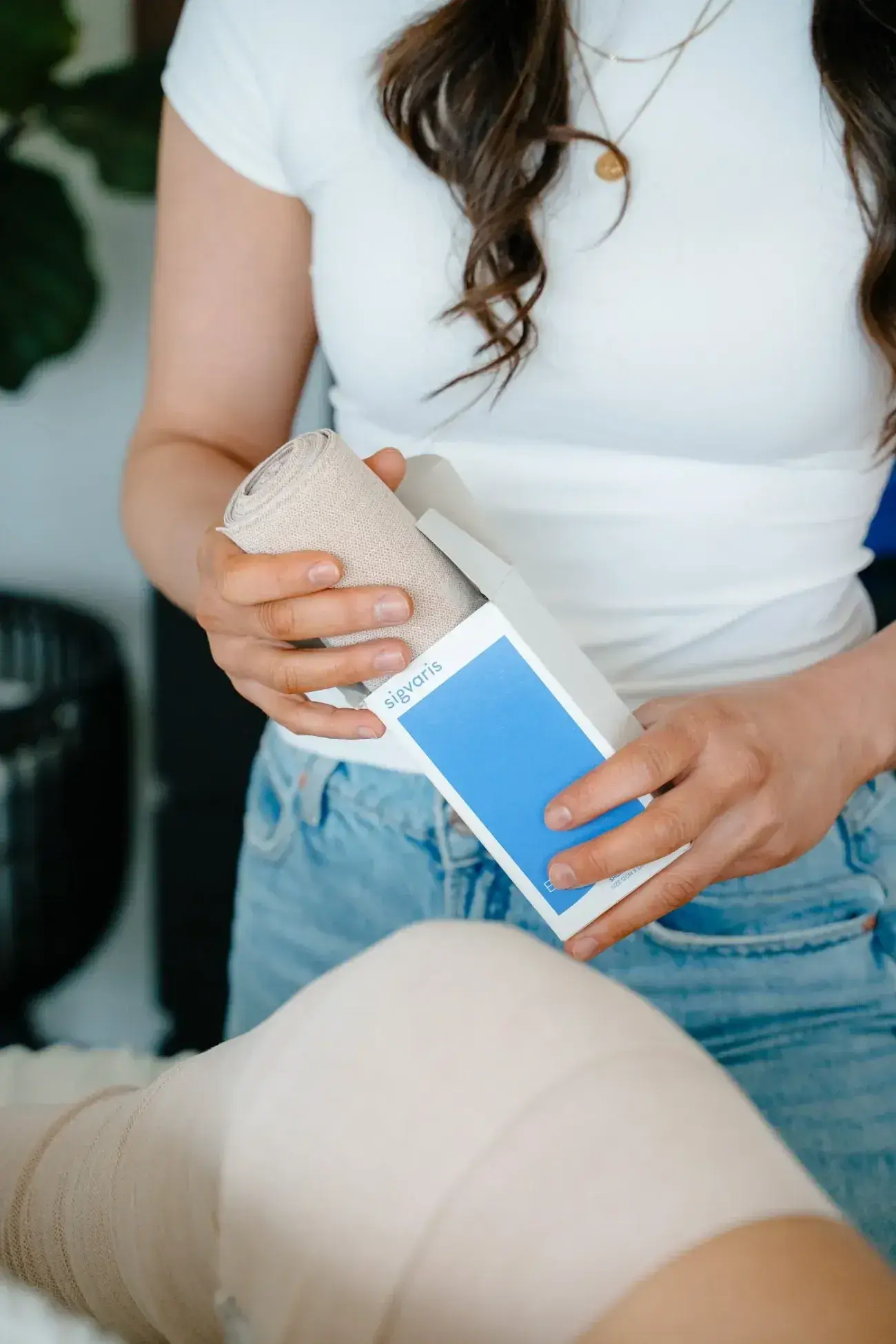
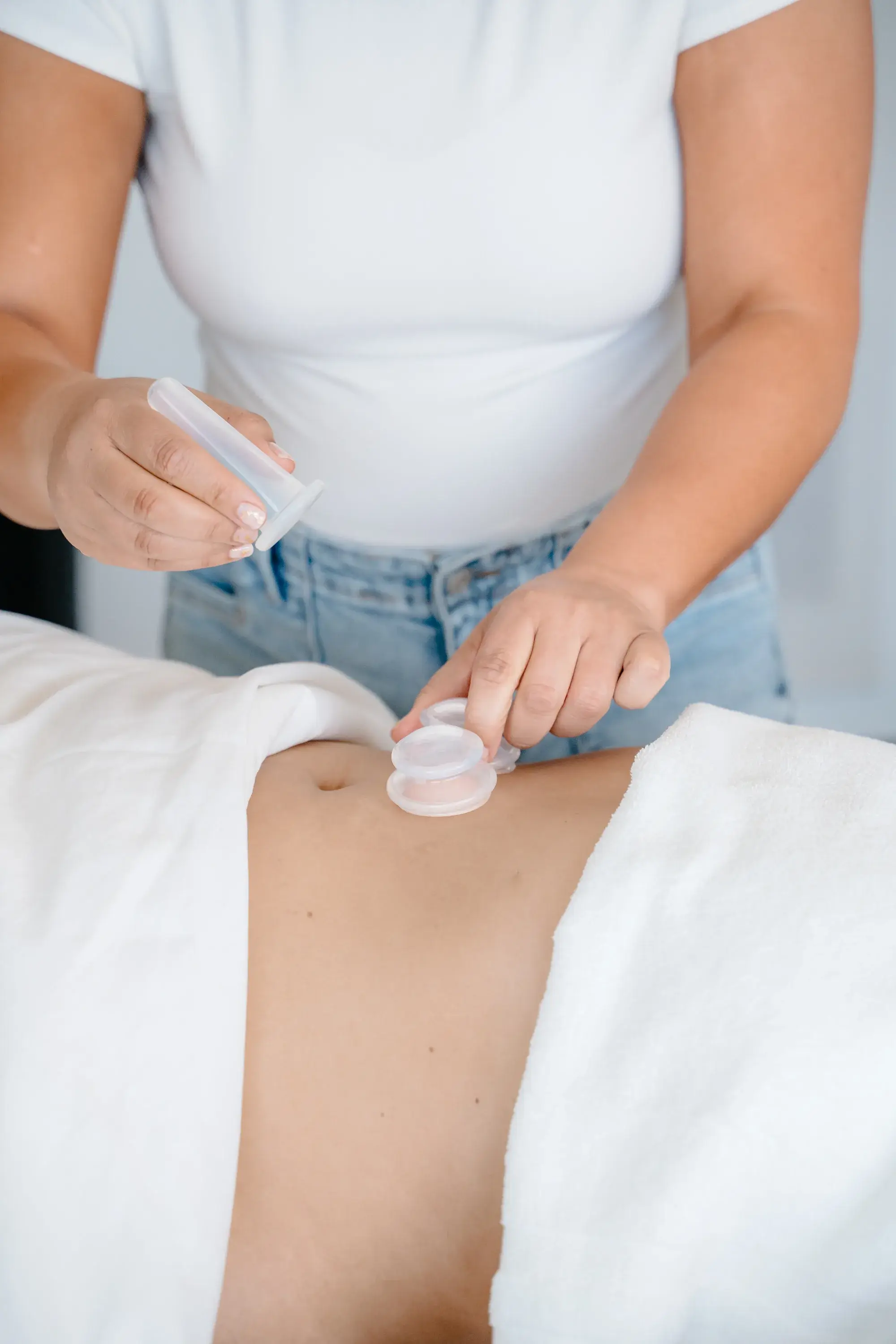
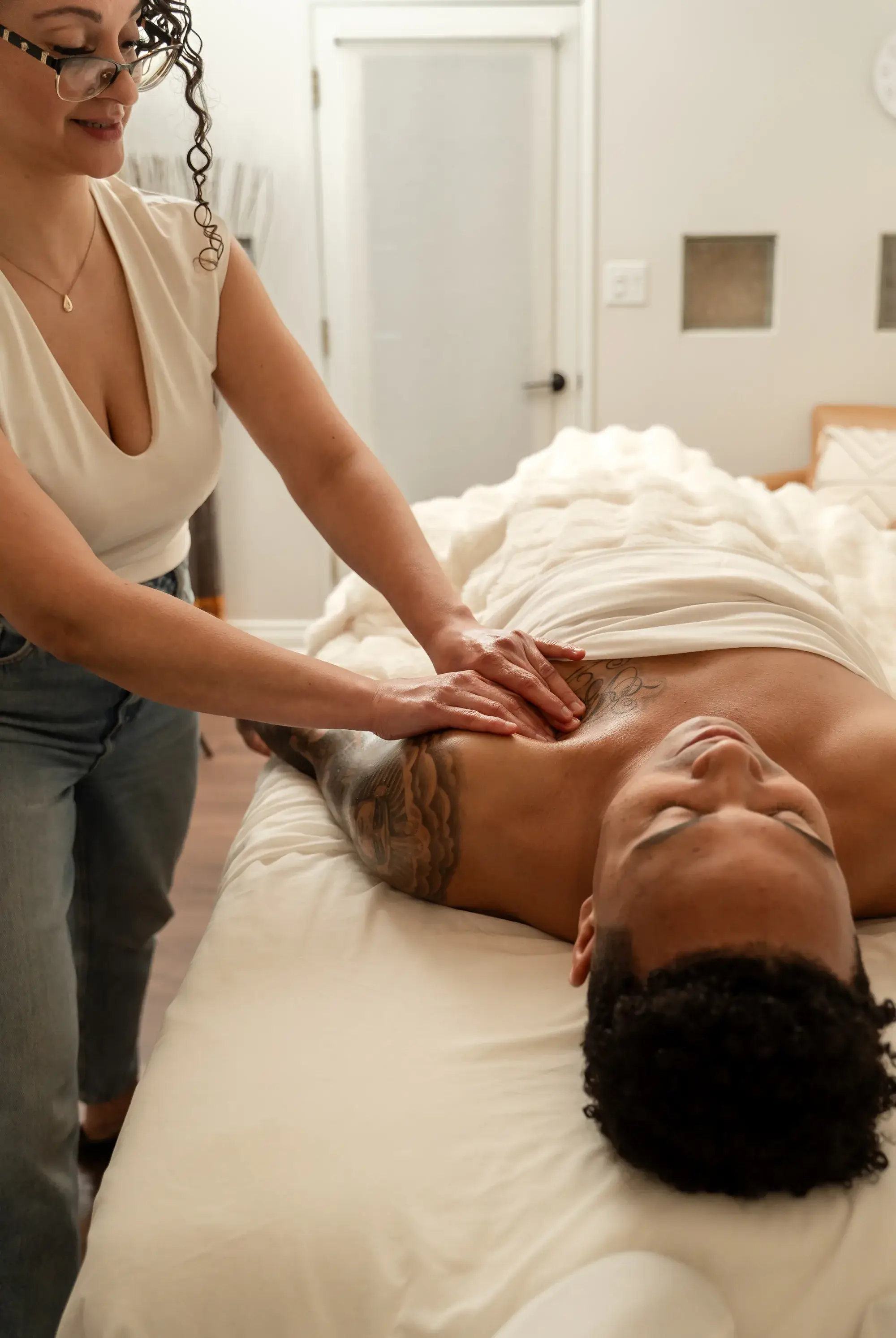
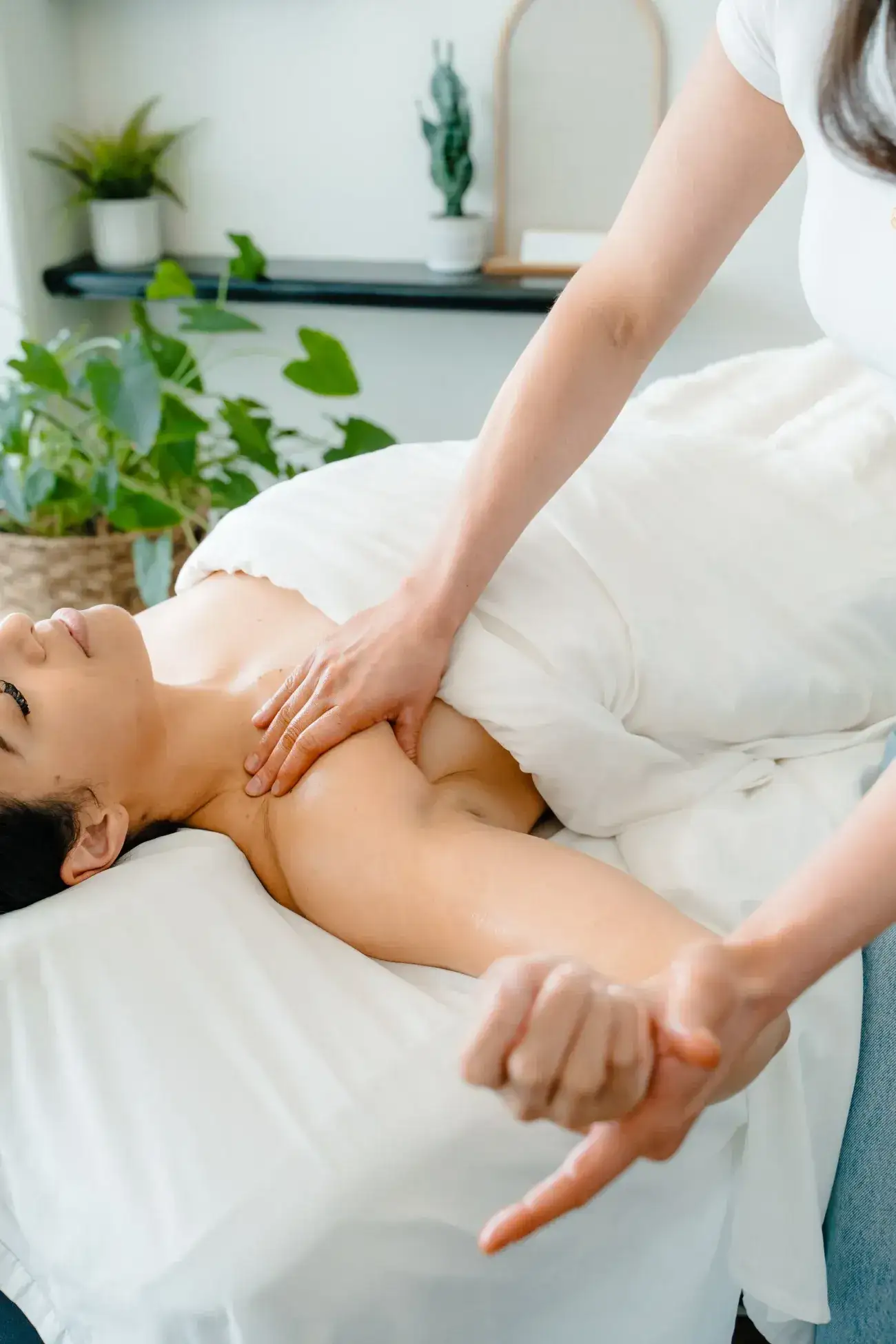
Our Registered Massage Therapists work with cording as part of post-surgical recovery, alongside your surgeon’s follow-up and any physiotherapy you have been referred to, never instead of them. A session for cording is slow and specific: the cord is traced from the armpit down the arm, the tissue around it is softened with the arm supported, and the shoulder is taken gently through its range. Where nodes have been removed, we combine this with manual lymphatic drainage, because the same surgery that produces cording also puts the arm at risk of swelling. Post-op lymphatic drainage is the usual booking in the early weeks; massage therapy suits later stages once the surgeon has cleared firmer work. If a reconstruction is planned or healing, read lymphatic care after mastectomy and reconstruction first.
Cording, a clot or an infection: telling them apart
A cord is firm, thin and linear, most obvious when the arm is stretched, and it hurts along its length when pulled. A deep vein thrombosis in the arm is different. The NHS lists DVT signs as throbbing pain, swelling of the limb, skin that is red, blue or darkened around the painful area, and swollen veins; it notes that clots can occur in the arm and that cancer and recent surgery both raise the risk. Infection looks different again: the American Cancer Society’s signs for people at risk of lymphedema are an area that feels hot, looks red or swollen, with fever, chills, sweats, muscle aches, nausea or dizziness.
Cording, however alarming it looks, is not usually accompanied by a hot, swollen limb or a fever. If you have those, do not wait for a therapist’s opinion.
When to call your surgeon or oncology team
Call the same day for:
- a swollen, warm or discoloured arm, or pain in the arm that is throbbing rather than pulling;
- redness, heat or spreading swelling anywhere on the operated side, with or without fever;
- fluid leaking from the incision, or a wound that opens.
Call emergency services if arm symptoms come with shortness of breath or chest pain, which the NHS flags as possible signs of a clot reaching the lungs.
Book a prompt, non-urgent review with your surgeon or physiotherapist for a cord that limits your shoulder, pain that is not improving after a couple of weeks of gentle stretching, or any new lump you can feel. Our when to seek medical care guide has the full list.
Questions people ask
Is cording dangerous?
Cording itself is not dangerous and the American Cancer Society notes it often goes away without treatment. Its main cost is a stiff, painful shoulder if it is left to restrict movement. A hot, swollen or discoloured arm is a different problem and needs same-day medical review.
How long does cording take to go away?
It varies more than people expect. Many cords ease over weeks with stretching and manual therapy, but in a prospective study 41% of women still had cording at 18 months and half of those followed for five years still showed signs of it. It can also return after it has resolved.
Can I stretch cording myself?
Yes, gently, once your surgeon has cleared movement for the incision and any drains. Slow reaching overhead and out to the side, held without forcing and repeated daily, is the core of the physical therapy approach. A therapist adds hands-on work along the cord and checks your shoulder range.
Does cording mean I will get lymphedema?
Not necessarily. The NLN lists cording among postulated risk factors because people who reported cording in one large screening cohort had a higher lymphedema risk, but the link is not settled. Treat it as a reason to keep measuring and to report heaviness or a change in size promptly.
Sources
- Koehler et al., Breast Cancer (Dove Medical Press) 2019: Axillary web syndrome following breast cancer surgery, symptoms, complications and management strategies
- Koehler et al., Archives of Physical Medicine and Rehabilitation 2022: Five-year cumulative incidence of axillary web syndrome
- Koehler et al., Physical Therapy 2018: Function, shoulder motion, pain and lymphedema in breast cancer with and without axillary web syndrome, an 18-month follow-up
- American Cancer Society: Lymph node surgery for breast cancer
- NHS: Deep vein thrombosis (DVT)
- American Cancer Society: For people at risk of lymphedema
- National Lymphedema Network: Position Statement, Evidence-Based Practices for Lymphedema Risk Reduction (March 2026)
Page reviewed October 3, 2026. This page is education, not a diagnosis. For your own situation, talk to your doctor, surgeon or care team, or ask us.
Keep reading
Related pages