Why does it hurt between my shoulder blades?
Pain between the shoulder blades is usually the rhomboids and trapezius, strained by hours of sitting with arms forward. What helps, and when to worry.
By The Renu lymphatic and massage team · 6 min read
Most often because the muscles that hold your shoulder blades to your spine, the rhomboids and the trapezius, have been working for hours in a stretched position: sitting with the arms forward at a keyboard or phone is the commonest cause Hinge Health names. The spot burns or knots because the muscle stays in a sustained contraction rather than because anything is torn. Massage can relax it, heat and movement settle it, and a change in how you sit stops it coming back. Pain there with chest pain, shortness of breath or sweating is a different matter and needs emergency care.
There is a particular spot, a hand’s width from the spine and level with the top of the shoulder blade, that desk workers point to without being asked. It burns by mid-afternoon, it feels like a knot you could never quite reach, and it is the single most common place our hands are sent on a weekday evening. Here is what is going on there, what a session does about it, and the few times the spot is not what it seems.
The muscles doing the complaining
Hinge Health makes the point that the shoulder blade alone connects to 17 muscles. Two of them do most of the work of holding it in place. Healthline describes the rhomboid muscle as sitting in the upper back, connecting the shoulder blades to the rib cage and spine and helping to maintain posture. Above and over it lies the trapezius, which Houston Methodist names as the commonest place in the body for a knot to form.
When you sit with your arms forward, at a keyboard, a steering wheel or a phone, the shoulder blades drift outward and those muscles spend hours slightly stretched and slightly switched on, holding the blades from sliding further. Hinge Health lists prolonged sitting with the arms forward first among the causes of shoulder blade pain. Healthline’s list for rhomboid strain reads like a day in the life: poor posture, prolonged sitting, side sleeping, carrying a heavy bag or backpack, overhead arm work, heavy lifting, and sports such as rowing, tennis and golf.
The result is what Houston Methodist calls a myofascial trigger point: an area of sustained muscle contraction and increased tension that is painful and tender. It is not a lump to be crushed and nothing is torn. It is a muscle that has been asked to hold on for too long and has forgotten how to let go.
Why it burns in the afternoon
The timing gives the cause away. A strain from lifting hurts from the moment it happens. A postural overload builds through the day as the hours accumulate, eases overnight, and returns the next afternoon. Houston Methodist lists muscle overuse without enough recovery, poor posture and sedentary behaviour, stress and previous injury among the reasons knots form and persist. If your spot keeps the office clock, it is almost certainly this.
Other musculoskeletal causes exist. Hinge Health adds improper lifting technique, rotator cuff injury, shoulder impingement (inflamed tendons rubbing against bone) and pain referred from the neck. Healthline’s broader list includes herniated discs, osteoarthritis, scoliosis, fibromyalgia and myofascial pain syndrome. Most of those have other symptoms attached and are worth a doctor’s look if the pattern does not fit a desk day.
What a massage session does here
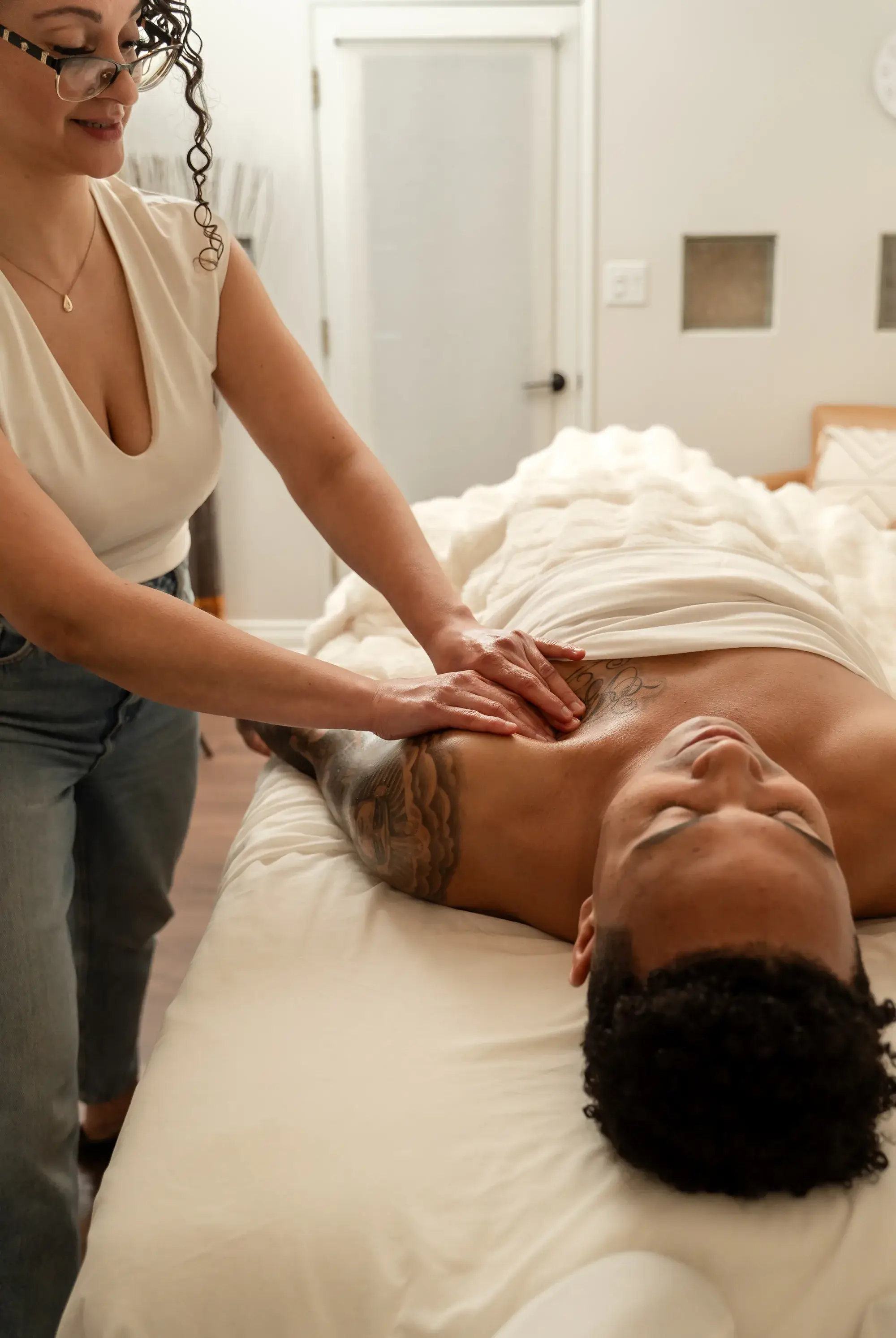
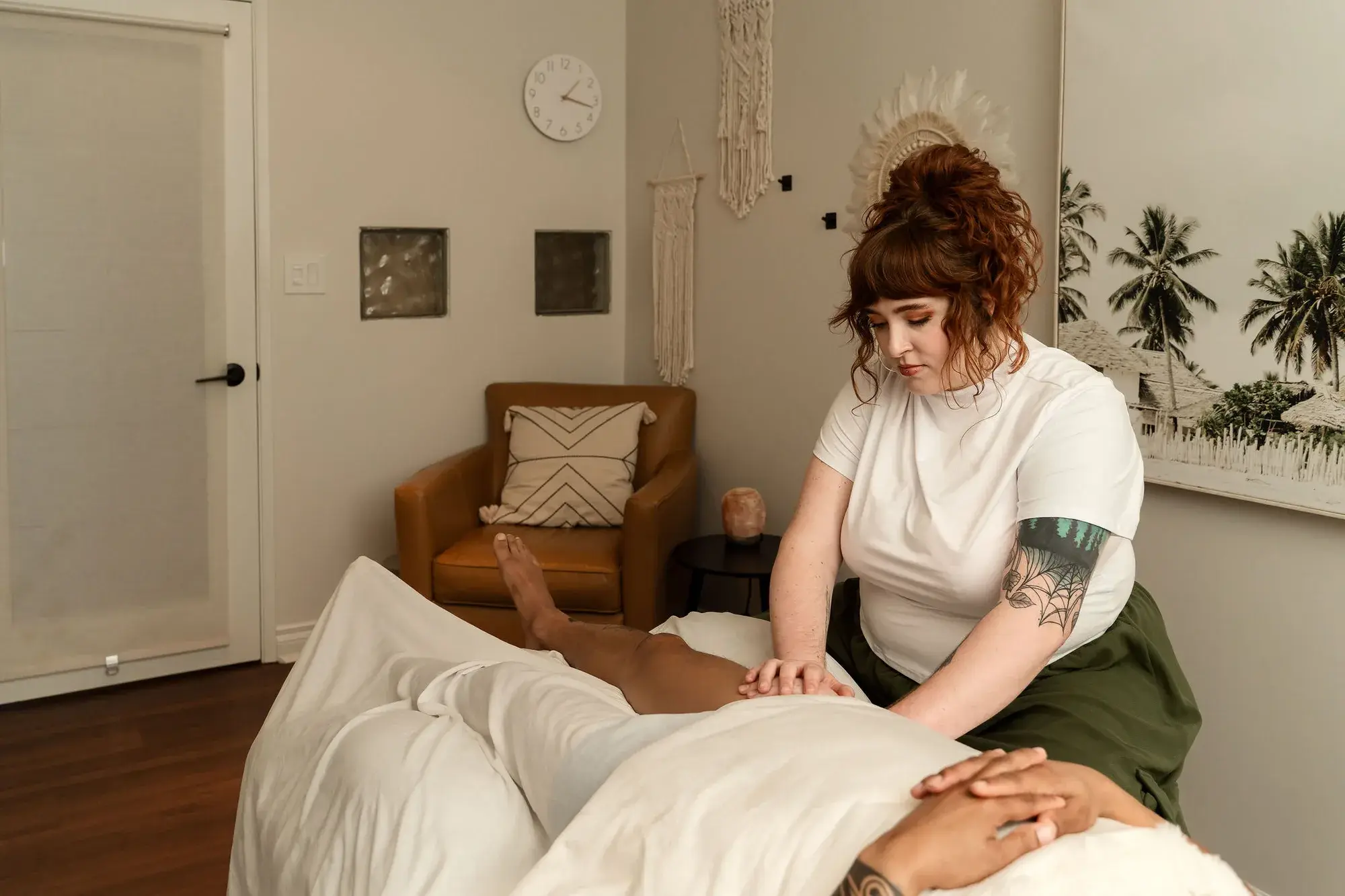
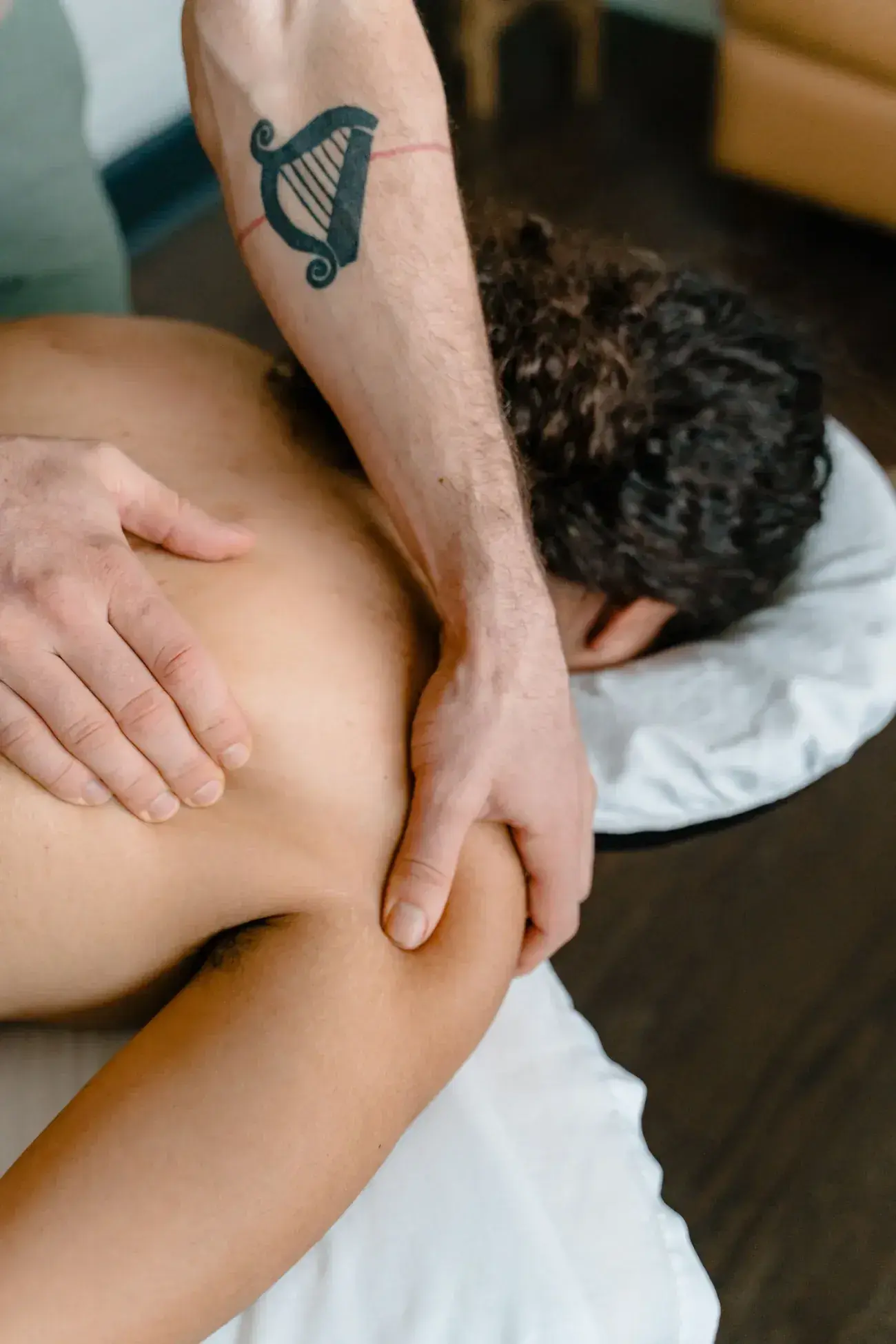
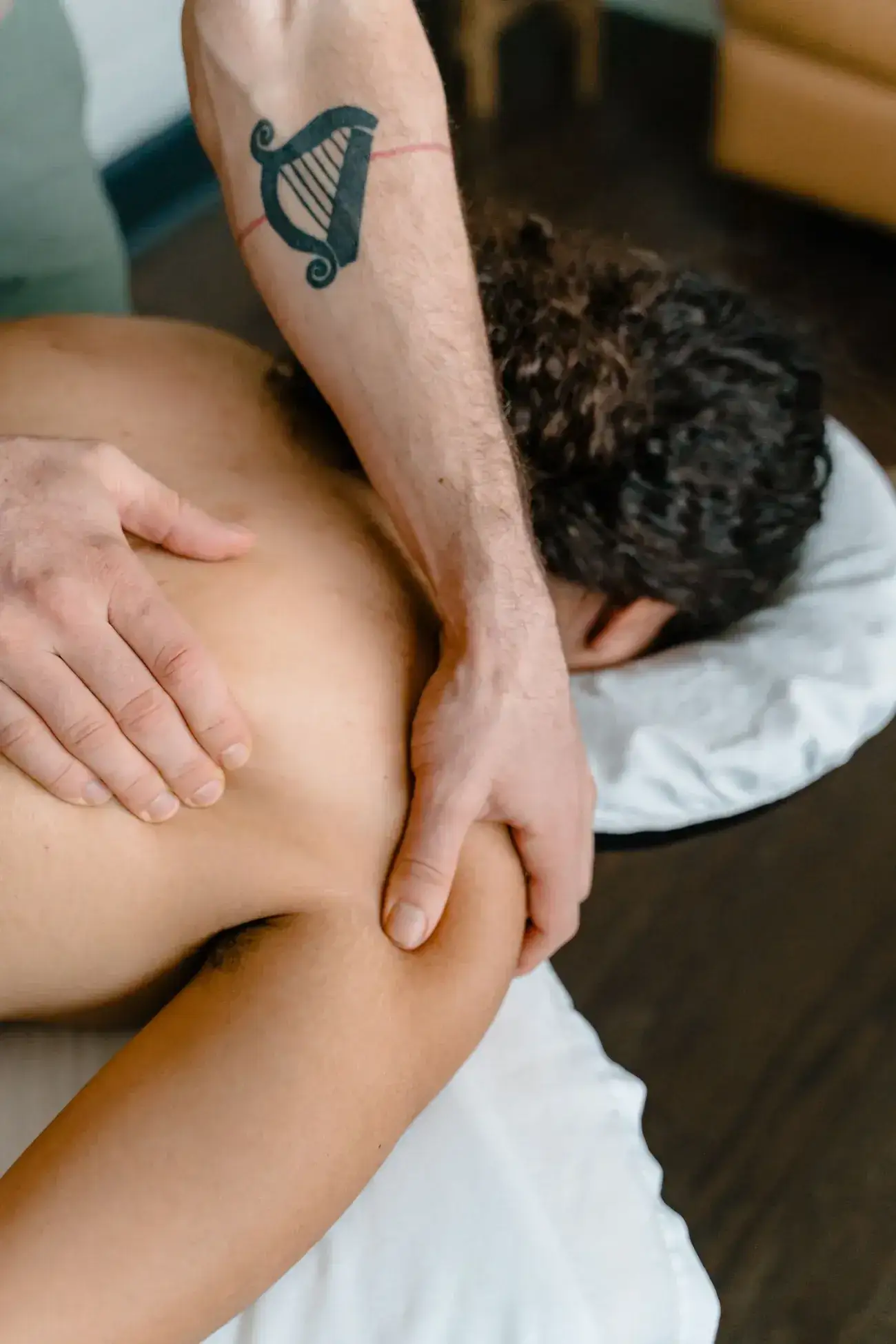
The spot is easy to reach and responds well, which is why it is so satisfying to treat. Hinge Health’s cautious phrasing is fair: massage might help relax tight shoulder blade muscles. Houston Methodist lists massage among the first-line professional treatments for knots, alongside physiotherapy and osteopathic manual medicine.
A session for this complaint at Renu usually looks like this:
- Warming the whole upper back with broad strokes so the trapezius stops guarding
- Slow, specific pressure in the band of muscle between the shoulder blade and the spine, where the rhomboids run, held until the tissue softens rather than driven in
- Work on the front of the shoulders and chest, because muscles that have been pulled forward all day are part of why the blades drift
- Gentle movement of the shoulder blade on the ribs, so the muscles relearn their range
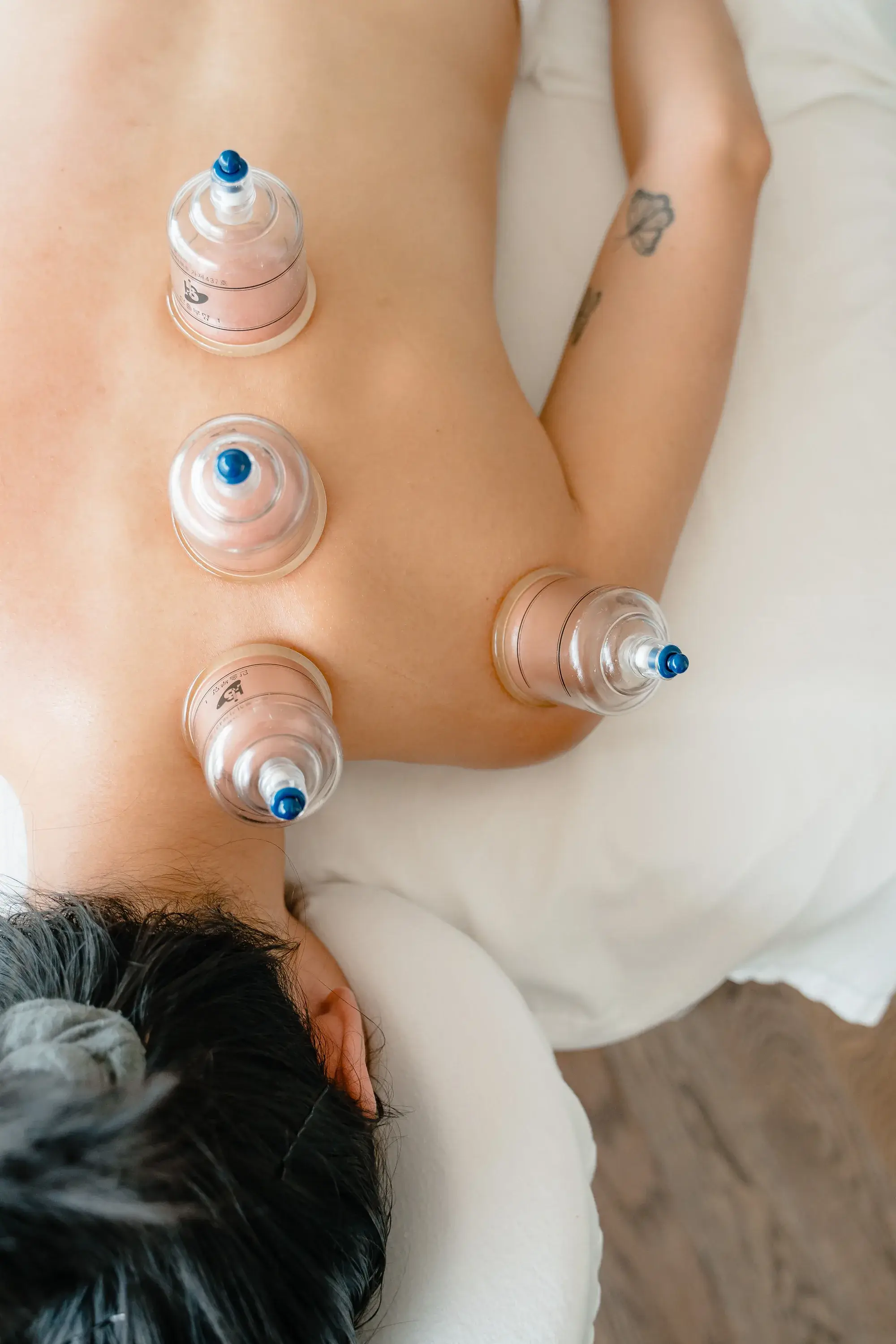
Our page Can massage break up muscle knots? explains why “release” is the honest word and “break up” is not. For stubborn spots, myofascial cupping lifts the tissue instead of compressing it, and Monica’s RAPID NeuroFascial Reset works through movement for people who find direct pressure provoking.
Settling it yourself between visits
Spine-health, in a physiatrist’s guide to this exact problem, and Hinge Health agree on the essentials.
Pause and change position. Spine-health suggests a one- or two-day break from the activity that provokes it and frequent breaks from sitting. Hinge Health’s version is increased movement and regular stretching breaks.
Heat or ice, with the clock running. Spine-health gives precise windows: ice for 10 to 20 minutes with at least a two-hour break between applications, heat for 15 or 20 minutes and no more than once every two hours, always with a layer between the pack and your skin. Hinge Health’s rule of thumb is heat for tight muscles, ice for fresh injuries. Healthline’s rhomboid guidance follows the same order: ice in the first days, heat after.
A ball against the wall. Spine-health describes placing a tennis ball, lacrosse ball or racquetball between your back and a wall and rolling gently to loosen the muscle and bring blood to the area. A foam roller along the mid-back does something similar; Hinge Health includes it in its exercise list.
Strengthen the pull-back. Hinge Health’s exercises are seated back extensions, a T-spine opener, the open book, scapular squeezes and banded pull-aparts, all of which ask the blades to move the opposite way from a day at the desk. It also suggests activities that rotate the mid-back, such as swimming and racquet sports.
Pain relief if needed. Both sources list over-the-counter anti-inflammatories or acetaminophen, with the usual caution to follow the label and check with a pharmacist.
The permanent fix is upstream. Our pages on desk setup for neck and shoulder pain and desk stretches for the neck and shoulders are where the afternoon burn actually gets solved.
How long it should take
Healthline says most mild rhomboid strains heal within three weeks, while severe strains can take several months. Houston Methodist’s threshold for seeing a professional is pain that lasts more than one or two weeks, limits what you can do, or does not respond to self-care. Spine-health suggests a physiatrist, chiropractor or physiotherapist if home treatment does not reduce the pain, because they can look for the source and build a strengthening plan.
When the spot is not a muscle
This section is short because the cases are rare, but they are the reason we ask questions before we start. Healthline notes that shoulder blade pain is sometimes a symptom of heart attack, especially among women; that an aortic dissection can present as a sharp, severe pain in the upper middle back; and that a pulmonary embolism can cause a sudden, sharp pain in the shoulder blades with shortness of breath.
Seek emergency care if pain between the shoulder blades comes with any of the following, from Healthline’s list:
- Shortness of breath or chest pain
- Light-headedness, excessive sweating, or a rapid or irregular heartbeat
- Pain, swelling or redness in a leg, or coughing up blood
- Fever
- Sudden difficulty speaking, loss of vision, paralysis on one side, or loss of consciousness
A muscular spot aches, burns, and changes with position and movement. A spot that arrived suddenly, feels nothing like your usual stiffness, or ignores what you do with your arms deserves a doctor before it deserves a massage.
Booking for it
Tell us it is the spot between the blades, which side, and what your days look like. A 45- or 60-minute massage is usually enough to work the upper back thoroughly, and we will send you home with the one or two desk changes most likely to keep it from reloading tomorrow.
Questions people ask
Why does the pain between my shoulder blades burn rather than ache?
A burning quality usually means a muscle held in a sustained contraction for a long time, which is how Houston Methodist describes a knot: not a lump, but a patch of muscle that will not switch off. Posture and a sedentary day are listed among its causes. The burn tends to fade with movement and heat, which is one way to tell it from the sharp, sudden pains that need a doctor.
How often should I get a massage for pain between my shoulder blades?
Enough to break the cycle, then less. If the pain is new, one or two sessions a week or two apart, paired with the desk changes on this page, is a reasonable trial. If the spot is back within days each time, the cause is in your chair or your hours, and more massage will not fix a setup that reloads the muscle every morning.
Can I use a ball against the wall on the spot between my shoulder blades?
Yes. Spine-health describes placing a tennis, lacrosse or racquetball between your back and a wall and gently rolling side to side or up and down to loosen the muscle and bring blood to the area. Keep it to the muscle beside the spine, not the spine itself, and stop if anything feels sharp or electrical.
Could pain between the shoulder blades be my heart?
Rarely, but yes. Healthline notes that shoulder blade pain is sometimes a symptom of heart attack, especially in women, and that a sudden sharp pain there with shortness of breath can signal a clot in the lung. If the pain came on suddenly, is unlike your usual stiffness, or arrives with chest pain, breathlessness, sweating or light-headedness, call 911 rather than booking anything.
Sources
- Hinge Health: Shoulder Blade Pain: Causes, Treatment, and Exercises
- Spine-health (Dr. Zinovy Meyler): Relieving Pain Under Your Shoulder Blade
- Houston Methodist: Muscles in Knots? Here's How to Get Rid of Them
- Healthline: Rhomboid Muscle Pain: Causes, Symptoms, and Treatment
- Healthline: What Causes Shoulder Blade Pain and How to Treat It
Page reviewed October 4, 2026. This page is education, not a diagnosis. For your own situation, talk to your doctor, surgeon or care team, or ask us.
Keep reading
Related pages