
Can massage break up muscle knots?
Massage does not break anything up, because a muscle knot is not a lump to crush. It is a patch of muscle that will not relax, and massage helps it let go.
By The Renu lymphatic and massage team · 6 min read
Not literally, because there is nothing to break. A muscle knot is an area of sustained contraction, a patch of muscle that has stopped relaxing, not a lump of scar tissue or a tangle of fibres. Massage helps that patch let go by pressing, warming and stretching it, and the relief is real but usually temporary. If the knot keeps returning, the cause is in how the muscle is being used, not in how hard it was rubbed.
“Can you break that up?” is probably the sentence we hear most often from someone pointing at the top of their shoulder. The feeling is real: a firm, tender spot that seems to have been there for weeks. But the picture behind the question, a lump that needs crushing, is not what is going on, and knowing that changes what you should expect from a massage and what you should ask for.
What a muscle knot actually is
Houston Methodist defines muscle knots as areas of sustained muscle contraction and increased tension, also called myofascial trigger points. They form when the body’s normal muscle relaxation mechanisms fail, leaving a patch of muscle persistently tense. Cleveland Clinic describes trigger points as small bumps, nodules or knots in the muscle that hurt when touched, sitting within a taut band of muscle, and notes that pressing one produces pain at the spot or a short distance away, which is called referred pain.
PainScience, which has written about trigger points at length, is careful with the metaphor. There are no actual knots, it says; nothing is tied. The usual explanation is that a trigger point is a small patch of tightly contracted muscle, a micro-cramp, and even that account is uncertain and contested. What everyone agrees on is what a knot is not: it is not scar tissue, not a tangle of fibres, and not an adhesion that has to be torn apart.
So the thing you can feel is firmer muscle, held tight, in a place where muscle is close enough to the surface to feel. Houston Methodist names the upper trapezius, across the top of the shoulders and up the neck, as the most common site, with the buttocks, lower back and neck close behind.
What massage does to it
Massage does not break the patch up. It persuades it to let go.
Cleveland Clinic describes the mechanisms plainly: deep tissue massage works into muscle and tendon to release tightness, a trigger point is a tiny muscle spasm or tight spot in the tissue, and myofascial techniques knead and stretch muscle and fascia to work out tension. Houston Methodist lists massage, physical therapy and osteopathic manual medicine as the first-line treatments for muscle knots, with trigger point injections reserved for cases that resist them. Cleveland Clinic’s home-care list for myofascial pain includes massage, heat or ice, stretching and relaxation techniques.
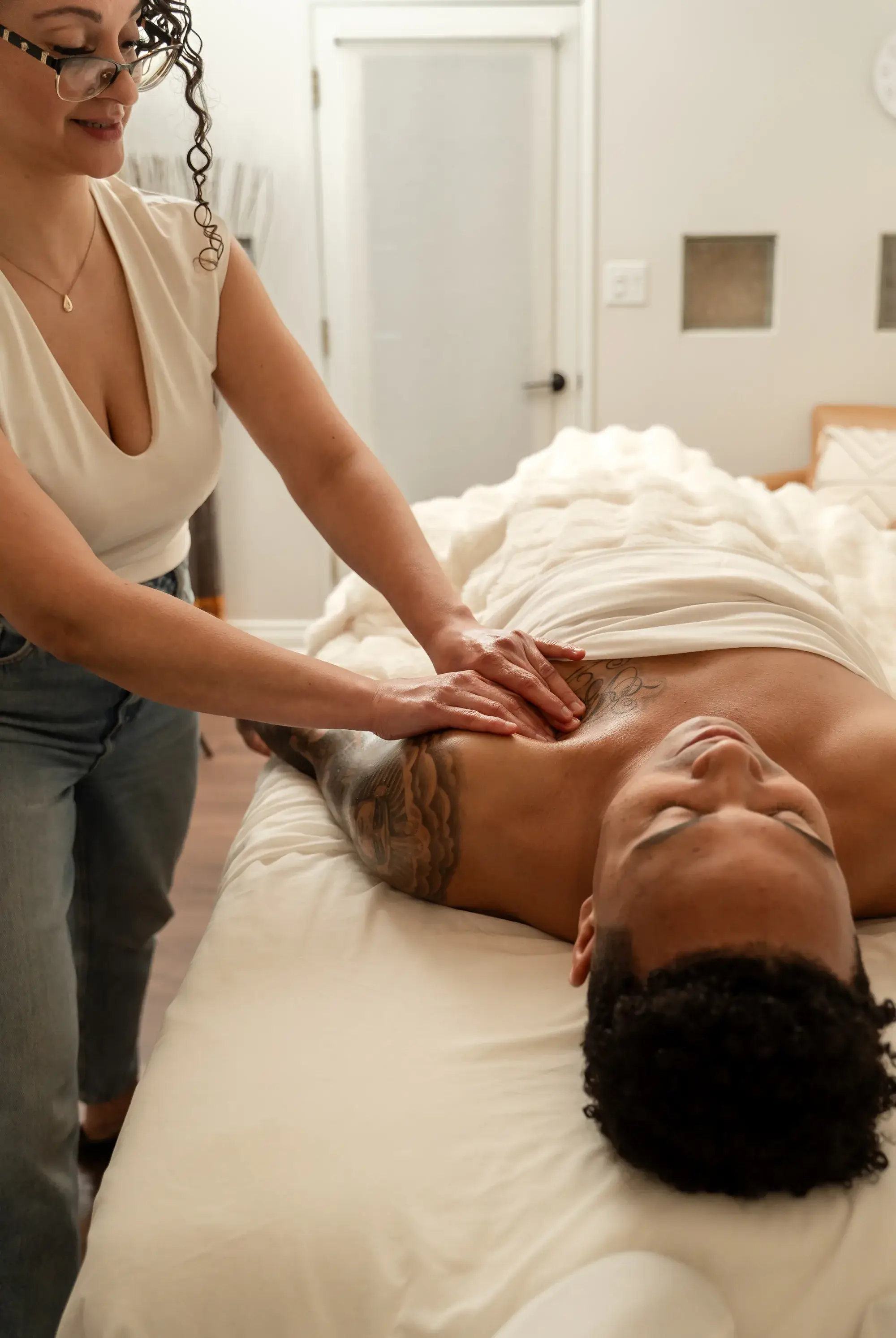
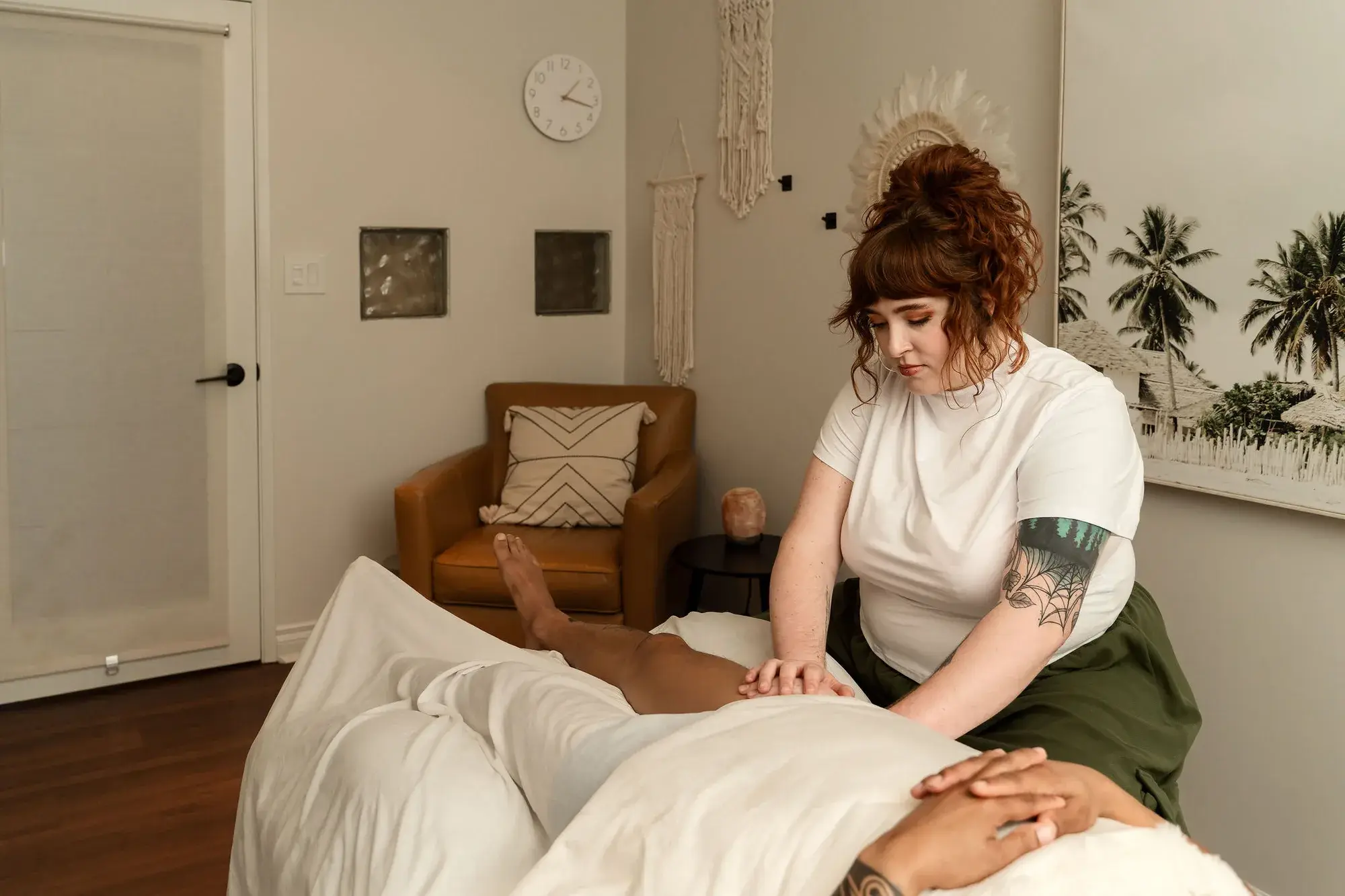
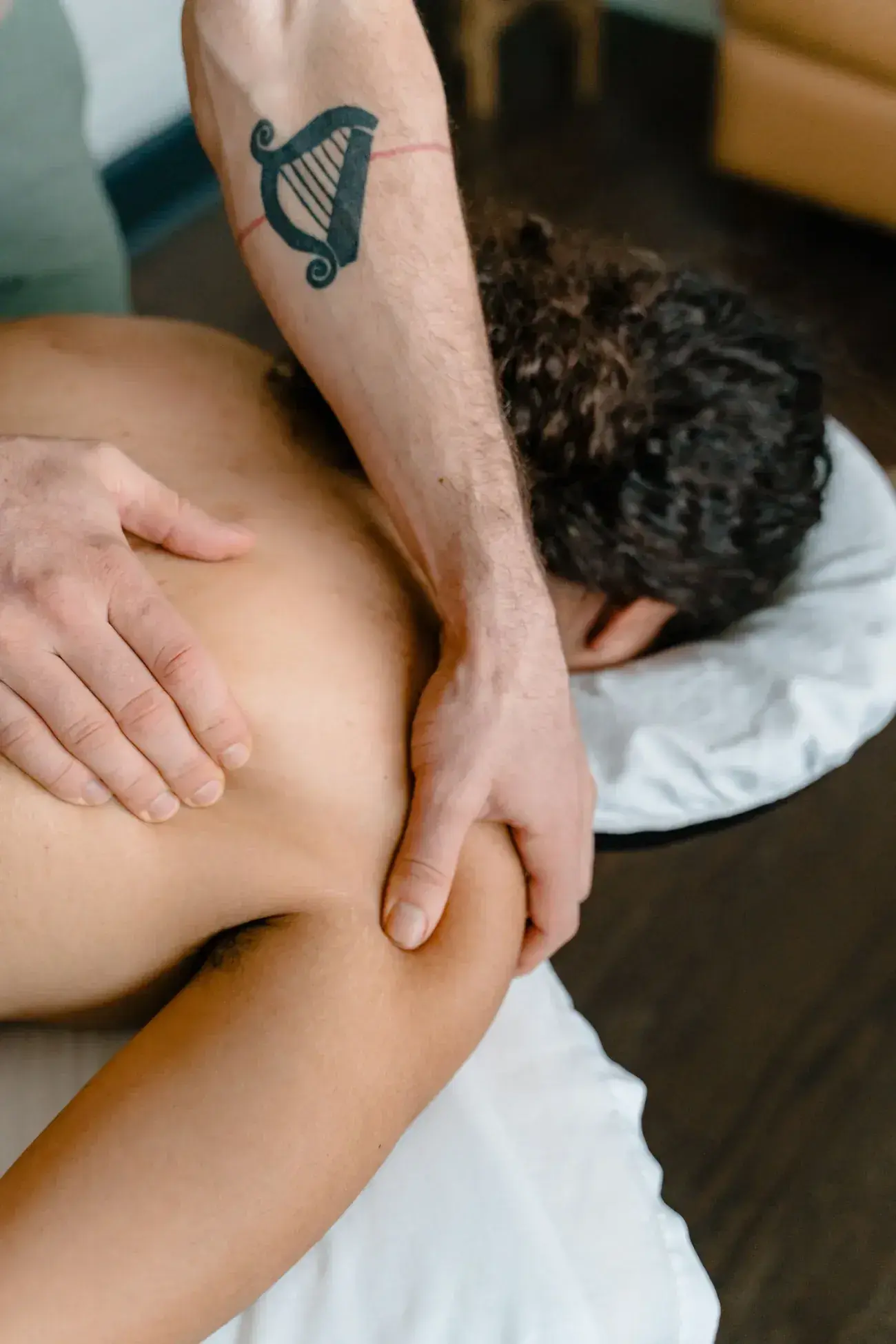
What that feels like on the table is sustained, tolerable pressure into the spot, warmth, and slow stretching of the muscle it sits in. The muscle softens; the tenderness eases; the referred ache often fades with it. Nothing has been destroyed. A contracted patch of muscle has relaxed, which is what it was supposed to do on its own.
PainScience adds the honest caveat: trigger point treatment provides temporary relief, results vary with factors nobody fully controls, and there is no technique so skilled that it reliably works every time. We find that an accurate description. Relief after a session is common; permanence is not, which is why the next section matters more than the pressure.
Why “harder” is the wrong request
If the goal were to crush something, more force would make sense. Since the goal is to get a muscle to relax, force works against you: pressure that makes you brace, hold your breath and tense the surrounding muscles is pressure that keeps the contraction going. Our page on whether deep tissue massage has to hurt to work covers the evidence; the short version is that it does not.
There is also a safety edge. PainScience notes that intense massage applied too quickly, especially with tools, can injure a nerve before the warning sensation kicks in, and that an electrical, zappy, funny-bone sort of pain is the nerve’s signal to ease off. The upper trapezius sits near the nerves of the neck and shoulder, so that signal matters there. Houston Methodist adds a specific warning about massage guns on the neck, which pose a risk to blood vessels and nerves: avoid bony areas and the carotid arteries, and limit duration and intensity. Our page on whether a massage can damage a nerve explains the warning signs.
The useful amount of pressure is the amount you can breathe through. Tell your therapist when it tips over; that is information, not complaint.
Why the knot comes back
Houston Methodist’s list of causes explains the pattern most people notice: knots develop from overuse without enough recovery, or from the opposite, prolonged immobility and poor posture, with stress, a sedentary routine and previous injury raising the risk. Cleveland Clinic names muscle injury, repetitive motion and poor posture as the common triggers, with muscle weakness, stress and nerve compression among the risk factors.
A massage addresses the contraction. It does not address the eight hours at a laptop with the shoulders drawn up, the heavy bag always on the same side, or the week of poor sleep. If those continue, the muscle returns to the state they created. That is not a failure of the massage; it is a message about the cause. Our page on why muscle knots keep coming back after a massage works through the usual culprits and what changes them.
What change actually feels like
Because nothing is being broken, “did it work” is judged by how the muscle behaves, not by whether the lump has vanished. Reasonable signs of progress:
- The spot is less tender to press the next day
- The referred ache, often into the neck, head or between the shoulder blades, is quieter
- The muscle feels softer and you can turn or reach further before it complains
- Flare-ups come less often or settle faster
A firm spot that is simply part of your anatomy may never disappear, and PainScience notes that professionals routinely mistake normal anatomy for trigger points. That is fine. The target is a comfortable, movable shoulder, not a flat one.
Which treatment to book
Any of our massage therapy sessions can focus on a knot; tell your therapist where it is and what makes it worse. Two other options suit particular people. RAPID NeuroFascial Reset is a shorter treatment, 30 or 45 minutes, with a different approach to muscle tension; the service page explains it. Myofascial cupping uses suction to lift tissue instead of pressing into it. None of them breaks anything up either.
When to see a doctor
Houston Methodist’s advice is clear: if myofascial pain persists beyond one to two weeks, significantly restricts daily activities, or stays uncontrolled despite self-care, see a doctor to rule out related conditions such as fibromyalgia. Cleveland Clinic’s version is pain in a specific area that does not go away. We would add a lump that is growing, is not in a muscle, or comes with numbness, weakness, fever or weight loss; those are not muscle knots, and massage is not the next step.
For the ordinary tight spot at the top of the shoulder, though, the news is good. It is a muscle that has forgotten how to relax, and reminding it is something we do every day.
Questions people ask
Why can I feel a hard lump if there is no actual knot?
Because a patch of contracted muscle is firmer than the relaxed muscle around it, and in a thin, superficial muscle like the upper trapezius you can feel that difference with a fingertip. PainScience notes that even professionals routinely mistake normal anatomy for trigger points, so a bump is not proof of a knot either.
Should the therapist press on the knot until it releases?
Pressing on a sore spot can help it ease, but there is no release that needs forcing, and pressure that makes you brace defeats the purpose. Steady, tolerable pressure that you can breathe through is the useful amount. Anything sharp, electrical or tingling is a nerve asking you to stop.
Can I use a massage gun on a knot in my neck?
Be careful. Houston Methodist warns that massage guns on the neck pose a risk to blood vessels and nerves, and advises avoiding bony areas and the carotid arteries and limiting how long and how hard you use one. A warm hand or a tennis ball against a wall is a safer option for the top of the shoulder.
How long does a knot take to go away?
Often the spot feels softer and less tender after a session, though PainScience is honest that the relief is usually temporary. Houston Methodist's threshold is one to two weeks: if the pain persists beyond that, limits what you can do, or is not controlled by self-care, see a doctor to rule out other causes.
Sources
Page reviewed October 4, 2026. This page is education, not a diagnosis. For your own situation, talk to your doctor, surgeon or care team, or ask us.
Keep reading
Related pages