
Self-lymphatic drainage for the face and neck at home
The NHS head and neck sequence for home: deep breaths, empty the neck, ear and collarbone nodes, sweep under the chin, light strokes. No oil, no pressing.
By The Renu lymphatic and massage team · 6 min read
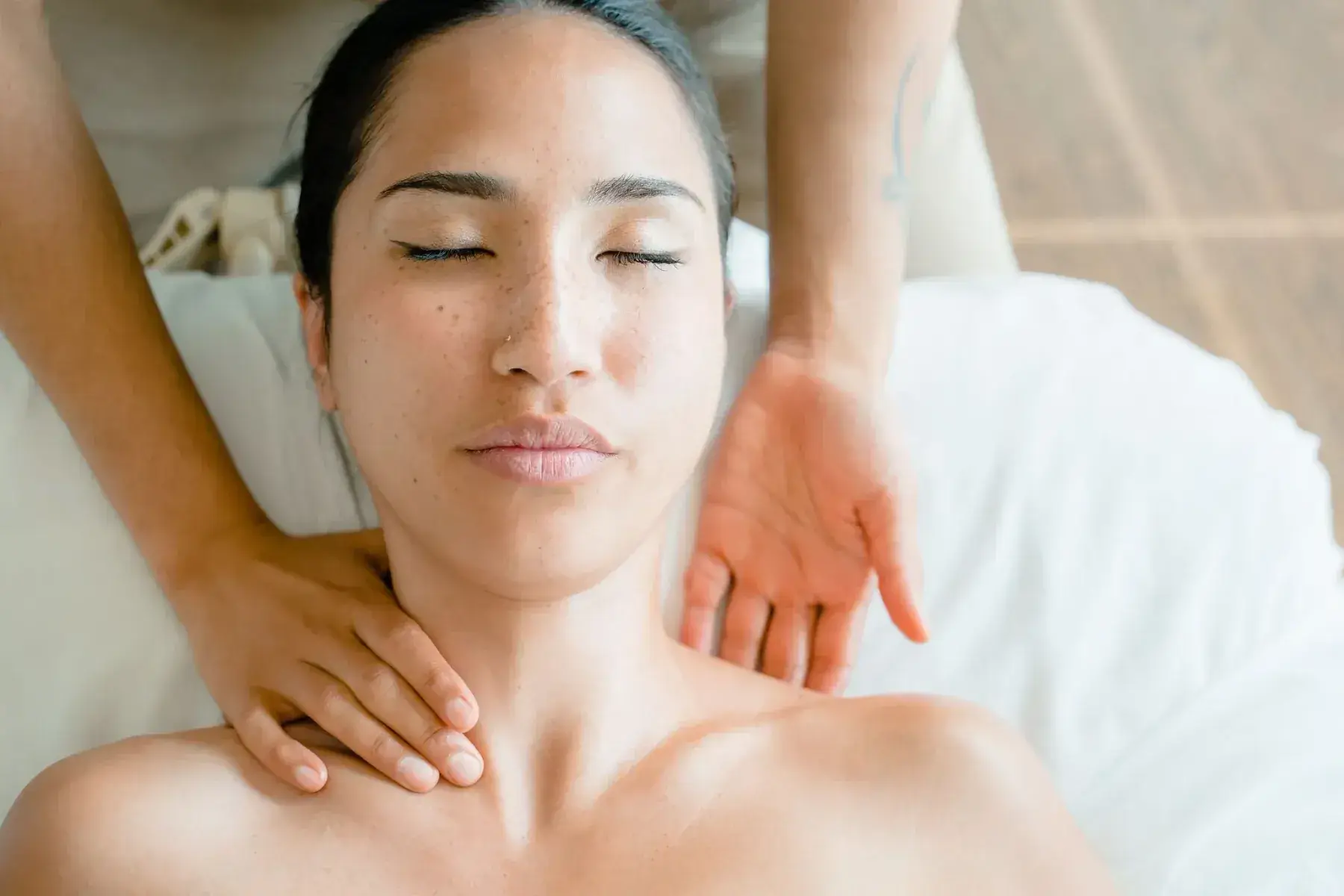
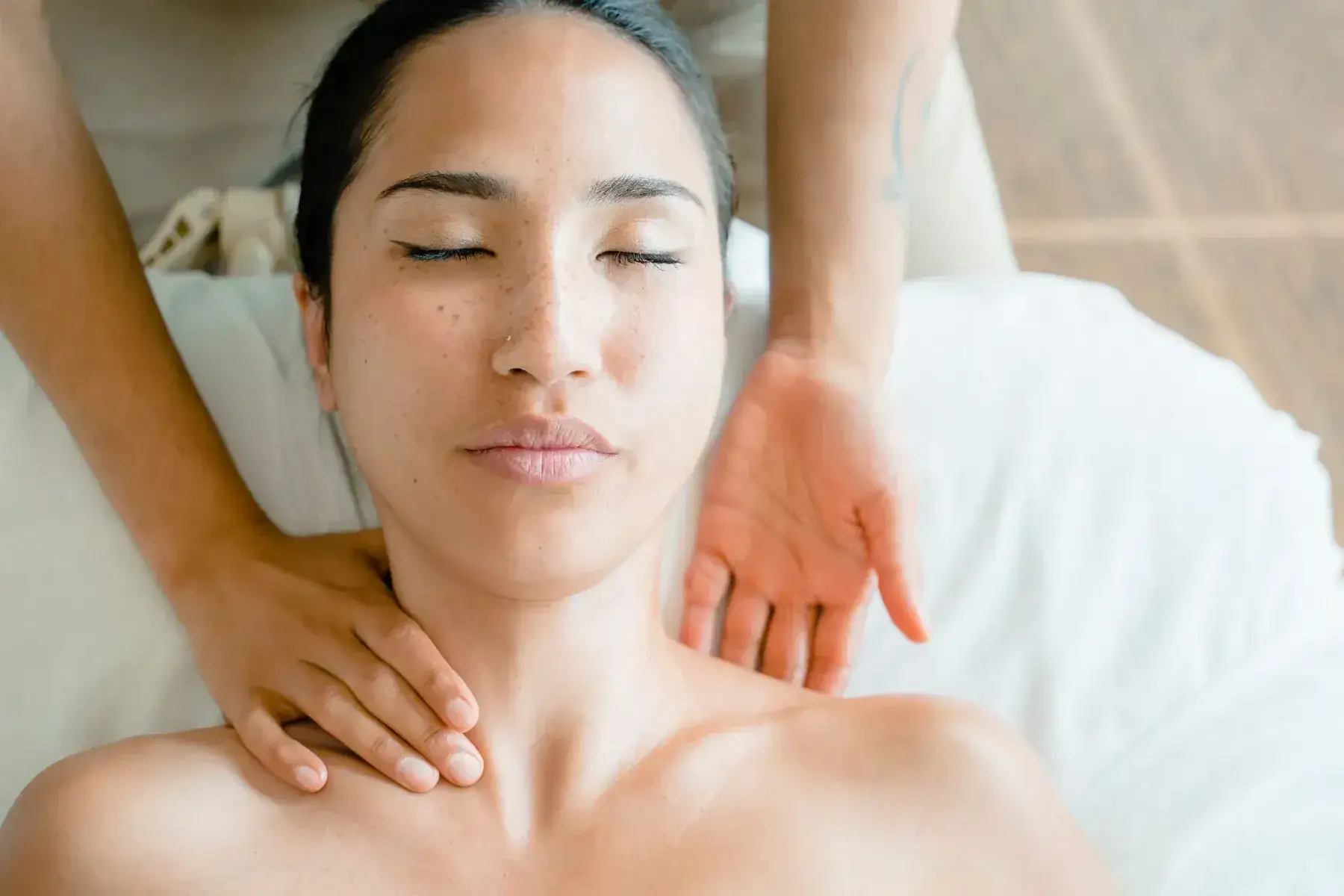
The home routine for a puffy face and neck is the NHS head and neck self-drainage sequence: five deep breaths, emptying the nodes at the neck, ears and collarbone four times with light downward skin stretches, sweeping under the chin toward the neck twice, repeating the node step, then light strokes with the palms or backs of the hands from the puffy area toward those nodes, finishing with breathing. It is done skin to skin without oil, stretching the skin slightly rather than pressing muscle, and it never causes pain or redness.
A puffy face in the morning, a heavy feeling around the sinuses, a little swelling after a facial: the gentlest thing you can do at home is the head and neck self-drainage sequence that NHS lymphedema services teach. Five deep breaths, empty the nodes at the neck, ears and collarbone, sweep under the chin, then coax the puffiness toward those nodes with the palms or backs of your hands. It is done skin to skin, without oil, with a slight stretch of the skin rather than any pressing of muscle, and it never leaves the skin red.
What this routine can and cannot do
Cleveland Clinic says facial lymphatic drainage may increase blood circulation and reduce puffiness in the face. That is the honest scope: a short, repeatable habit that helps a congested-feeling face look and feel less full.
The sequence below comes from a leaflet written by the Calderdale and Huddersfield NHS Foundation Trust Lymphoedema Service for people with head and neck lymphedema. We use it here because it is the clearest published version of the order a lymphatic therapist follows: nodes first, then the swollen area toward the nodes. If your swelling is from cancer treatment rather than a late night, read our routine for head and neck lymphedema instead, which includes the leaflet’s full daily commitment and the cautions that come with it.
A note on anatomy, from Cleveland Clinic: you have about 600 lymph nodes, you can feel some of them through the skin at the neck, armpits and groin, and the lymphatic ducts finally empty into large veins called the subclavian veins. Fluid moves through the lymph vessels with help from the pulsing of nearby arteries and the squeezing of nearby muscles. That is why the routine clears the neck and collarbone before it touches the face: it opens the road the fluid is heading down. Our introduction to the lymphatic system tells the longer story.
The face and neck sequence
Clean, bare skin. Sitting is fine. These are the leaflet’s six steps.
- Deep breathing, five times. Slowly extend your arms out, breathe in through your nose and hold for two seconds. Slowly bring your arms across your chest as you breathe out through your nose.
- Empty the nodes, four times. At the neck, the ears and the collarbone, apply little pressure and stretch the skin downward.
- Sweep under the chin, twice. Move any fluid from under the chin toward the neck nodes.
- Repeat the node emptying from step 2.
- Work the puffy areas. Using either your palms or the backs of your hands, encourage the fluid toward the nodes at the ears or the neck, whichever is nearer the puffiness. The leaflet then has you repeat steps 2, 3 and 5.
- Finish with the deep breathing from step 1.
The leaflet’s standing instructions apply throughout: always work toward the area of working lymph nodes, apply a small amount of pressure, keep skin to skin contact, and stretch the skin slightly as you go, without causing pain or redness.
The touch: stretch skin, do not press muscle
This is where home routines usually go wrong. The strokes that move lymph are skin stretches. Macmillan’s description of simple lymphatic drainage is that you use your hand to very gently move the skin in a particular direction, and that if your skin is red when you have finished, the movement was too much. Cancer Research UK describes the clinic version as skin movements that are very light, slow and rhythmic.
Three practical consequences:
- No oil, no cream. The NHS leaflet says so plainly. Product makes the hand slide across the skin instead of taking the skin with it. Moisturize afterward.
- Backs of the hands are allowed. The leaflet offers palms or the backs of the hands for the puffy areas, which makes it easier to keep the touch light on the cheeks.
- Slow counts. Four node stretches, two sweeps, then the face. Rushing turns stretching into rubbing.
The same principle explains why lymphatic drainage pressure is so light in the treatment room.
How this differs from a roller or gua sha habit
The leaflet does not rule tools out. Its top tips say facial massagers such as lymph balls, jade rollers and dry brushes can be bought to assist with the massage. The difference is in the order and the direction, not the object in your hand. A roller swept across the cheekbones without first emptying the neck and collarbone nodes is moving fluid toward a door that has not been opened.
If you use a tool, keep the leaflet’s rules: nodes first, work toward the working nodes, light pressure, skin to skin with nothing underneath. We compare the two approaches properly in gua sha versus a lymphatic facial, and our page on dry brushing covers the brush.
Sleep, temperature and razors
The leaflet’s tips for people with head and neck swelling transfer well to anyone whose face is puffy in the morning:
- Avoid sleeping on the affected side, and try propping your head up slightly, for example with two pillows, to see whether it changes the swelling.
- Avoid extreme temperature changes; protect the area from cold in winter and heat in summer.
- Exercise regularly, because muscle contraction encourages lymph flow.
- Be careful when wet shaving not to cut yourself and introduce infection.
Stop and see a doctor
Facial drainage is gentle, but there are times to leave the face alone:
- Skin that becomes red, hot and more swollen. The leaflet says to stop, because infection may be present, and to see your GP as soon as possible.
- Any infection, fever, cellulitis, blood clot, heart disease, kidney failure or recent stroke. Cleveland Clinic lists each as a reason to avoid lymphatic massage. Cancer Research UK adds cancer in the area and a blockage of the large vein returning blood to the heart.
- Skin damaged by radiation therapy, or tissue where there is cancer. Cleveland Clinic says providers avoid massaging directly over either.
- Swelling on one side that does not settle, or swelling with pain, fever or trouble swallowing or breathing. Those are questions for a doctor, not a home routine.
Our Learning Centre page on when swelling needs medical care covers the wider picture.
When a professional pair of hands is worth it
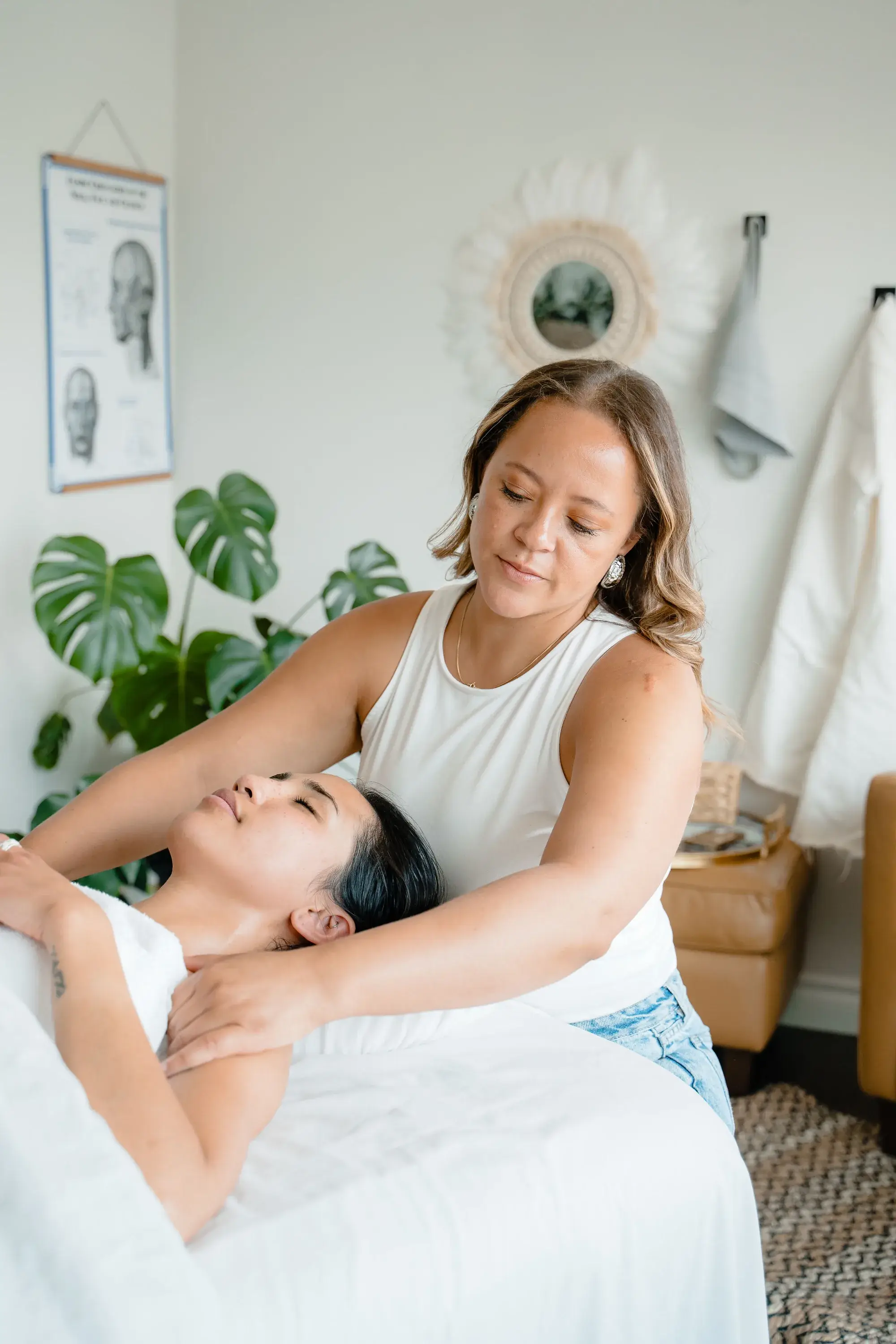
The home sequence is a maintenance habit. At BodyTox by Renu, Aisha Mendes, a licensed esthetician and lymphatic facialist, builds the same order into a full lymphatic facial: the Drift and Drain Signature Lymphatic Facial is 60 minutes for $160, the Silk Express Facial is 30 minutes for $80. If you are not sure which suits your skin, the facial finder takes a minute. For swelling that reaches the neck and jaw after dental or sinus trouble, a lymphatic drainage massage with one of our lymphatic therapists covers the neck and collarbone properly before the face.
Questions people ask
Can I do facial lymphatic drainage over my skincare?
The NHS leaflet says to keep skin to skin contact and not to use oils or cream, because each stroke stretches the skin slightly rather than gliding across it. Do the routine on clean, bare skin, then apply your serum or moisturizer afterward. If you prefer a slip for a roller, that is a different kind of routine.
Should the strokes go up or down the neck?
Both appear in the leaflet, at different moments. When emptying the nodes at the neck, ears and collarbone, you stretch the skin downward with little pressure. When working on the puffy area afterward, you encourage the fluid toward the nodes at the ears and neck. The general rule the leaflet gives is to work toward the area of working lymph nodes.
Does this help sinus fullness?
Cleveland Clinic lists chronic sinus infections among the problems that can accompany a congested lymphatic system, but none of the leaflets we used prescribes drainage for sinus symptoms. The routine may feel relieving; it is not a treatment for sinusitis. Sinus pain with fever or facial swelling belongs with a doctor.
How is this different from a lymphatic facial at the clinic?
A lymphatic facial follows the same order, nodes first and then the face toward them, but with a trained esthetician's hands and the whole decollete, neck and face worked in sequence. At BodyTox by Renu, Aisha Mendes delivers the Drift and Drain facial in 60 minutes for $160. The home routine keeps the puffiness down between visits.
How often can I do it?
The leaflet's prescription of at least 30 minutes twice a day was written for people with lymphedema after cancer treatment. None of our sources sets a frequency for ordinary morning puffiness. A few minutes in the same order, once a day, is a reasonable habit; stop if the skin reddens or anything hurts.
Sources
- Calderdale and Huddersfield NHS Foundation Trust: Head and neck self-lymphatic drainage (leaflet mely0010)
- Cancer Research UK: Manual lymphatic drainage (MLD) for lymphoedema
- Macmillan Cancer Support: Lymphatic drainage for lymphoedema
- Cleveland Clinic: Lymphatic drainage massage
- Cleveland Clinic: Lymphatic system
Page reviewed October 4, 2026. This page is education, not a diagnosis. For your own situation, talk to your doctor, surgeon or care team, or ask us.
Keep reading
Related pages