
Self-lymphatic drainage after liposuction: what you can do between sessions
Between post-op sessions: belly breaths, clear the groin or armpit nodes, then light skin strokes from the treated zone toward them. Never over incisions.
By The Renu lymphatic and massage team · 6 min read
Between post-op lymphatic drainage sessions, the safe home version is light and node-first: belly breathing, slow circles over the groin or armpit nodes the treated area drains into, then skin-stretching strokes from the treated zone toward those nodes. Nothing is kneaded, no lump is pressed, no stroke crosses an incision or a drain, and the whole thing happens inside the compression schedule your surgeon set. The American Society of Plastic Surgeons describes the first week as a time to significantly limit activity, with gentle exercise returning from about week six, and the routine below is added only once your surgeon says yes.
Somewhere in the second to sixth week after liposuction, most people hit the same point: the surgeon’s instructions are being followed, clinic drainage sessions are booked, and the days in between feel long. The swelling is there every morning and you want to do something about it. This page is what we are comfortable with you doing at home, and, just as importantly, what we are not.
First, what the surgeon owns
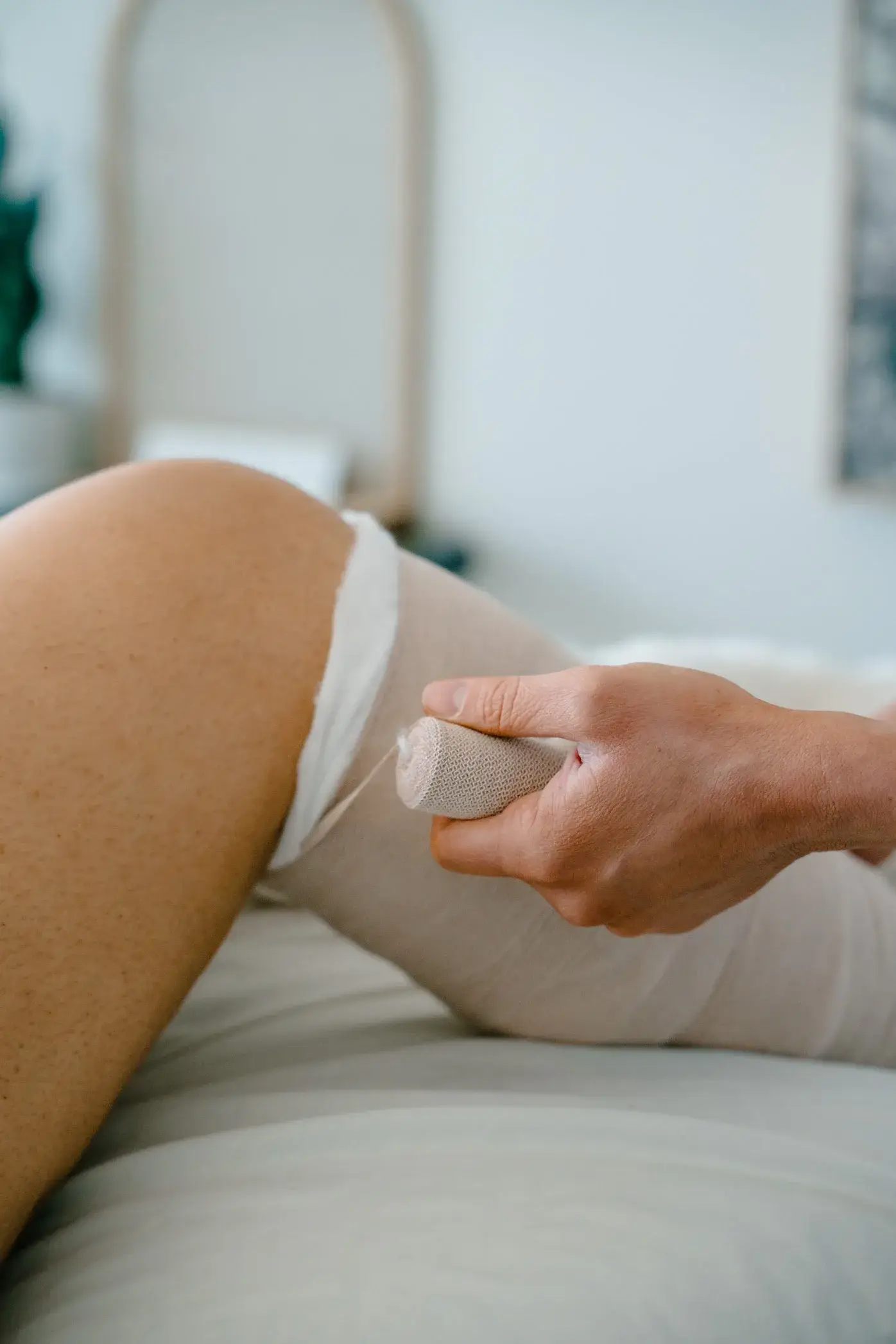
Everything below sits underneath your surgeon’s plan. The American Society of Plastic Surgeons (ASPS) describes liposuction recovery in stages: you may wear an elastic bandage, support bra or compression garment to minimise swelling, you may have small drainage tubes whose fluid you record, and your incisions must not be subjected to excessive force, swelling, abrasion or motion while they heal. Activity is significantly limited in week one and exercise is limited in weeks two and three. Bruising should be gone by weeks four and five, and from about week six you may start to gradually increase activity and do gentle exercise, with continued improvement in swelling after that.
ASPS is also clear that your surgeon gives specific instructions and that all questions go to them. So the first step of this routine is a question at your follow-up: “Is it all right for me to do light lymphatic self-care over the treated area between my sessions?” Until the answer is yes, do the breathing only. Our post-op recovery guide lays out the timeline week by week.
Why the home version is light and node-first
Clinic post-op drainage and self-drainage share one rule: fluid is moved toward working lymph nodes, and the swollen tissue itself is handled last and least. Cancer Research UK explains that a specialist first clears the area they want the fluid to drain into, and that self lymphatic drainage is done only in the areas the therapist taught you, with light pressure. Macmillan says you usually do not massage the swollen area at all; you move the skin in the areas where there is no swelling, in the direction away from it.
After liposuction that principle protects you. The treated zone is bruised, tender and full of healing tissue. Kneading it, rolling it or pressing on firm patches can do harm and does nothing a gentle skin stroke would not do better. The lumps you may feel are covered on our fibrosis after liposuction page, and they are treated in clinic, not at home.
The between-sessions routine, step by step
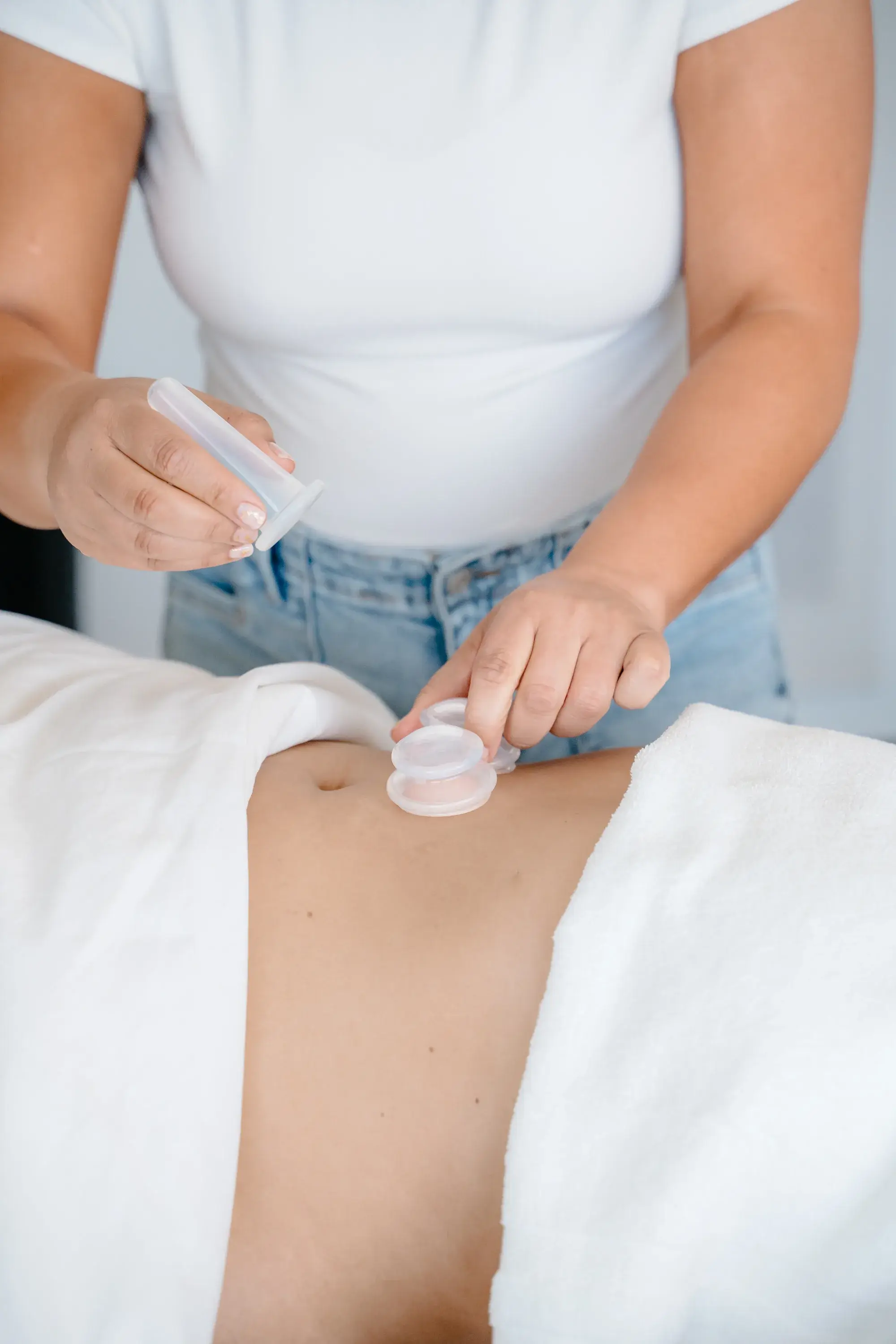
Do this with the garment off only for the window your surgeon allows, on bare skin, with no oil. If the garment must stay on, do step one only.
- Belly breathing. Sitting or lying with the knees bent, hands on the abdomen. Breathe in slowly and deeply; as you breathe out through pursed lips, let the hands sink into the belly. The West Suffolk NHS leaflet gives two to five repetitions. For a tummy or flank procedure this is the step to repeat most often, because it needs no touching of the treated zone.
- Clear the nodes the area drains into. For the thighs, hips, flanks and lower abdomen that means the groin: the leaflet places the flat of the hand or a small ball in the groin crease and marches the leg up and down 10 times while keeping gentle pressure there. For the arms, upper back or bra line it means the armpit: slow circular movements with the flat of the hand, 10 repetitions. Do both sides if both were treated.
- Stroke from the treated zone toward those nodes. With the flat of the hand, stretch the skin a short distance toward the groin or armpit and let it return. Start at the edge of the treated area nearest the nodes and work outward in bands, so each stroke sends fluid into territory you have already cleared. The leaflet allows a firm stroke in a healthy limb; after surgery we ask for the lightest version that still moves the skin.
- Skip incisions and drains. Lift the hand over any incision, tape, drain site or dressing. Do not stroke across them, toward them or away from them.
- Finish with the nodes and the breath. Repeat step two, then step one. The leaflets close every routine this way.
- Garment back on. Straight away, for the hours your surgeon set.
Keep the whole thing short at first, a few minutes once or twice a day, and let your therapist adjust it at your next session.
What you should feel, and what you should not
The NHS leaflet’s rule for every stroke is that it must not cause pain or redness to the skin. Macmillan’s test is the one to remember: if the skin is red when you have finished, the movement was too much. After liposuction, add bruising to that list; if a stroke leaves a mark, it was not a lymphatic stroke.
Light-headedness during the breathing means slow down. Soreness that builds over a day or two after you start the routine means stop and tell your therapist. A sense of the swelling shifting lower, for example toward the pubic area or the inner knee, is common after abdominal and thigh procedures and is worth mentioning at your next session so the route can be adjusted.
Stop and call your surgeon
Call the surgeon’s office the same day, and do not do the routine, if you notice:
- Fever, chills or feeling unwell. The NHS leaflets say not to perform the massage if you feel unwell or have an infection.
- Spreading redness, heat or increasing pain around an incision or in the treated area. ASPS lists infection and poor wound healing among the risks of liposuction.
- Fluid leaking from an incision, or a soft swelling that is growing. ASPS lists fluid accumulation as a risk; a collection needs the surgeon to look, not a massage.
- One calf or leg that is swollen, painful or hot, especially on one side only. ASPS lists deep vein thrombosis among liposuction’s risks, and the NHS says unexplained swelling in one leg needs urgent assessment. Cancer Research UK lists a blood clot as a reason not to have lymphatic drainage at all.
- Shortness of breath, chest tightness or coughing up blood. The NHS says to call emergency services.
- Numbness that is new or spreading. ASPS notes that changes in skin sensation can occur; your surgeon should know about them.
For anything more gradual, the post-op recovery guide lists what is normal in each week.
Where clinic sessions fit
Self-care fills the gaps; it does not replace the sessions. At Renu, post-op lymphatic drainage is 30, 45 or 60 minutes ($105, $115 or $140), with a 90-minute option at $210 for people recovering from more than one procedure. In the session the therapist clears the central pathways and nodes, works the treated zone with the right pressure for that week of healing, and checks your home routine against what the tissue is doing. The question of timing, including when drainage can start after surgery, is answered on its own page, and people recovering from a 360 lipo will find the specific plan on our 360 lipo page.
If you are struggling to get comfortable at night in the garment, the sleeping after a tummy tuck or liposuction page covers set-up and getting out of bed.
Questions people ask
Can I massage the hard lumps after lipo myself?
No. Lumps and firm patches are the surgeon's and your therapist's to assess, and simple lymphatic drainage never works directly on the swollen tissue; Macmillan says you usually do not massage the swollen area at all. Pressing a lump can bruise tissue that is still healing. Our fibrosis page explains what the firmness is and how it is treated in clinic.
When after liposuction can I start the home routine?
When your surgeon clears hands-on work over the area, and not before. The ASPS timeline has you significantly limiting activity in week one and limiting exercise in weeks two and three, with gentle exercise from about week six. Most people start the breathing straight away and add the node and skin strokes once incisions are closed and the surgeon agrees.
Do I take my compression garment off to do it?
Only for as long as your surgeon's schedule allows, and the garment goes straight back on. ASPS says you may be asked to wear an elastic bandage, support bra or compression garment to minimise swelling, and the surgeon decides how many hours a day. The breathing step can be done with the garment on.
Should the strokes glide with oil like a regular massage?
No. The NHS leaflets say the strokes are done on bare skin without creams or oils, because the hand is meant to carry the skin a short distance rather than slide over it. The pressure is light; Cancer Research UK describes the skin movements as very light, slow and rhythmic.
Is fluid leaking from an incision something I can drain at home?
No. Leaking fluid, a growing soft swelling, heat, redness or fever all belong to your surgeon's office, not a massage routine. ASPS lists fluid accumulation and infection among liposuction's risks and says to raise any complication with your plastic surgeon in a timely manner.
Sources
- American Society of Plastic Surgeons: Liposuction recovery
- American Society of Plastic Surgeons: Liposuction safety
- West Suffolk NHS Foundation Trust: Simple lymphatic drainage, legs (leaflet 6466)
- Cancer Research UK: Manual lymphatic drainage (MLD) for lymphoedema
- Macmillan Cancer Support: Lymphatic drainage for lymphoedema
- NHS: Swollen ankles, feet and legs (oedema)
Page reviewed October 4, 2026. This page is education, not a diagnosis. For your own situation, talk to your doctor, surgeon or care team, or ask us.
Keep reading
Related pages