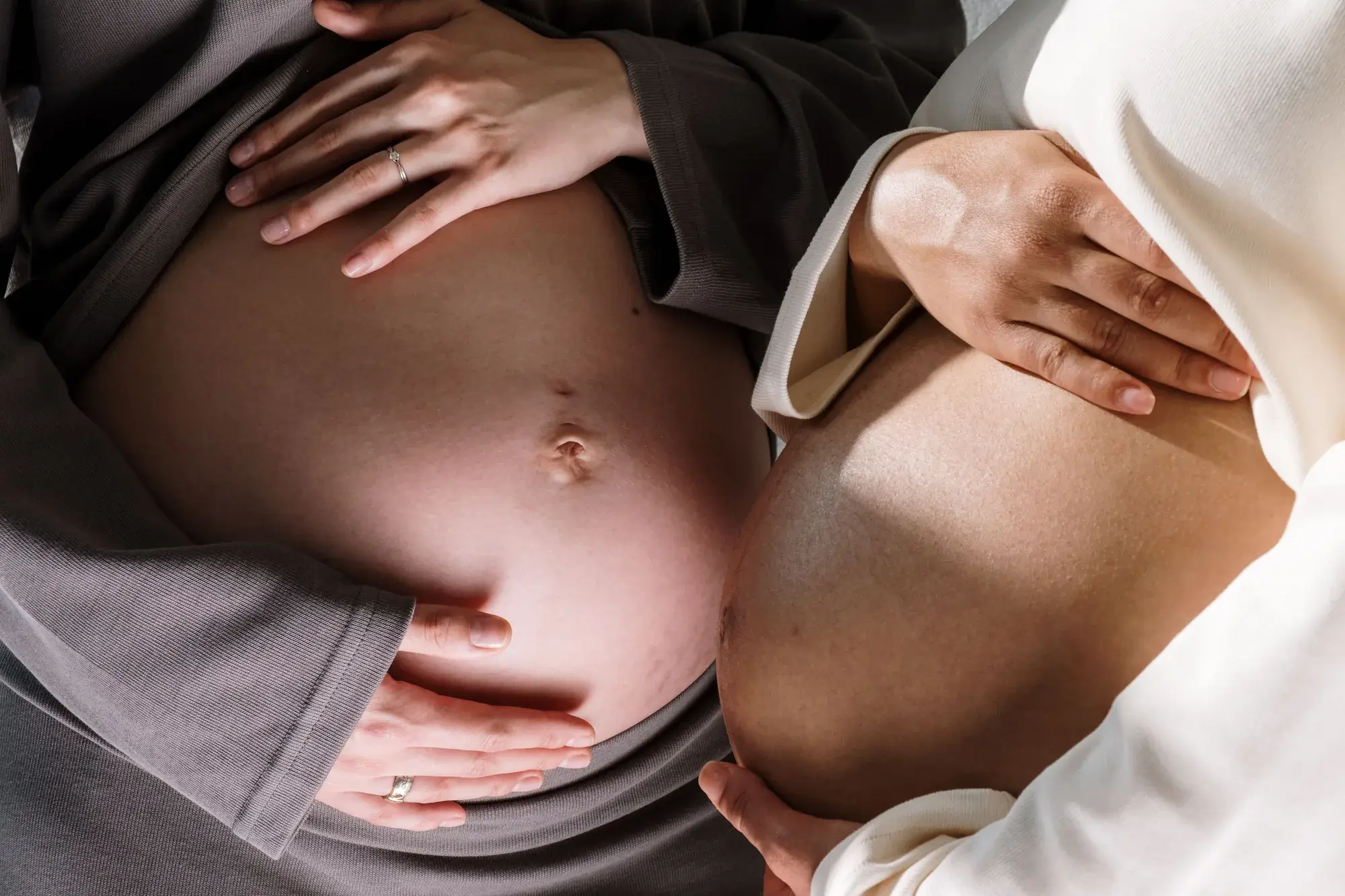

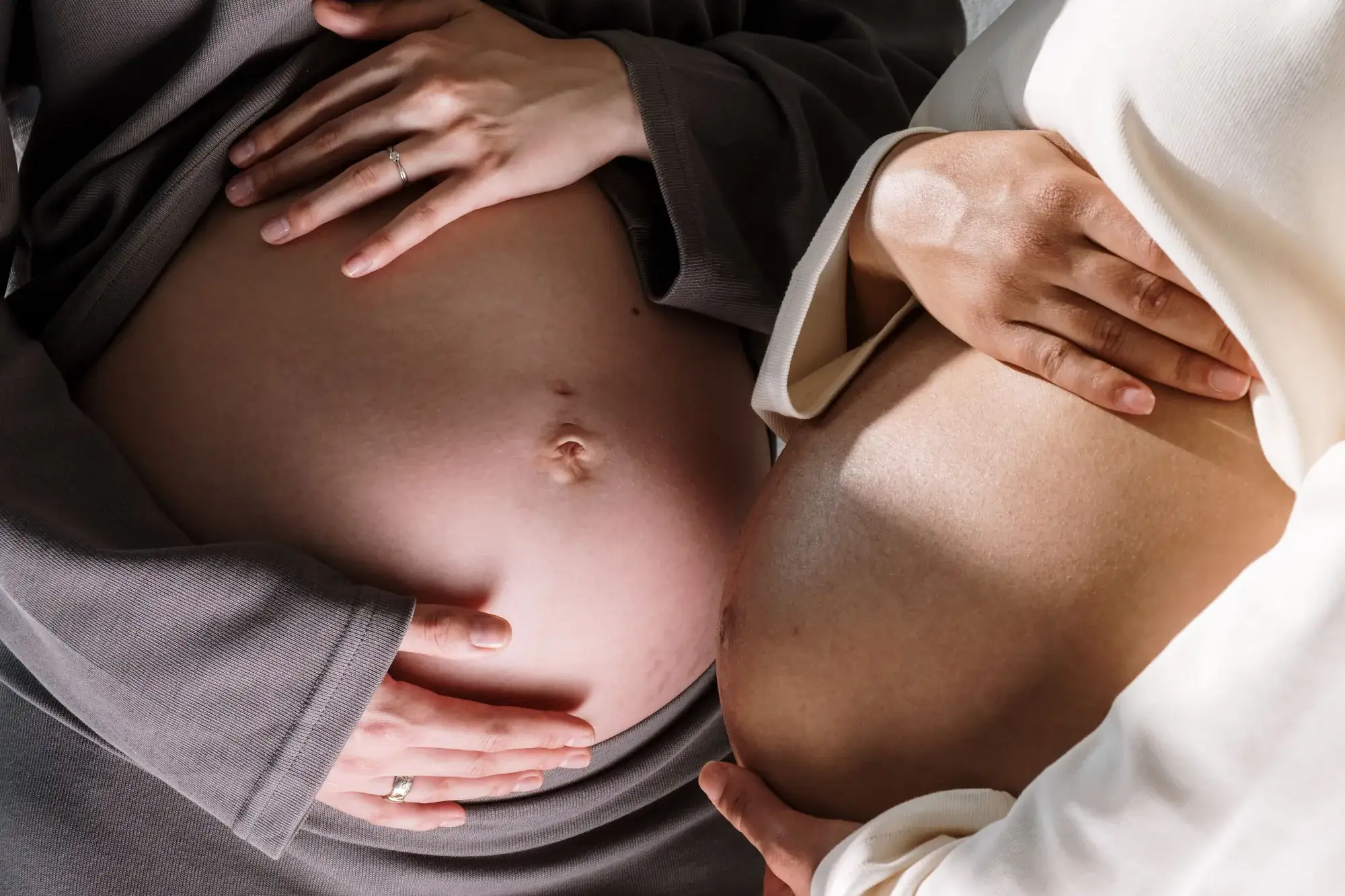
Massage in the last weeks before labour
From 36 weeks, massage is about comfort and preparation, not induction. What it eases, what to teach a birth partner, and when to call the hospital.
By The Renu lymphatic and massage team · 6 min read
In the final weeks, massage is preparation rather than a way to start labour: it eases the hips, lower back and sleep, and it is a chance to teach a birth partner the sacral pressure and touch that the SOGC lists among drug-free comforts for labour. A Cochrane review of ten trials found low-quality evidence that massage reduces pain intensity in the first stage of labour. Nothing we do on the table induces labour, and we do not offer perineal massage or induction techniques.
In the final weeks, massage is preparation rather than a way to start labour: it eases the hips, lower back and sleep, and it is a chance to teach a birth partner the sacral pressure and touch that the SOGC lists among drug-free comforts for labour. A Cochrane review of ten trials found low-quality evidence that massage reduces pain intensity in the first stage of labour. Nothing we do on the table induces labour, and we do not offer perineal massage or induction techniques.
What changes in the last month
By 36 weeks most people are carrying the heaviest load of the pregnancy, sleeping in short stretches, and feeling the pelvis loosen in readiness. The baby may drop lower, which eases breathing and tightens the squeeze on the bladder and the hips. Backache and an urge to go to the toilet are listed by the NHS among the signs that labour may be starting, but on their own, in the weeks beforehand, they are usually just the final stretch.
A session now is not about fixing anything. It is about easing the places that take the strain in the last weeks (low back, sacrum, hips, the outside of the thighs, the feet) and about getting you to sleep. The trimester-wide picture, including positioning and the swelling that comes with it, is on our third-trimester page. This page is only about the run-up to birth.
What massage does in labour, according to the trials
The Cochrane review on manual methods for labour pain included fourteen trials, ten of which contributed data on 1,055 women. Its findings, in its own cautious terms:
- massage gave a greater reduction in pain intensity than usual care during the first stage of labour, on low-quality evidence
- there was some reduction in pain scores in the second and third stages, on very-low-quality evidence
- one trial found less anxiety during the first stage with massage
- two trials measured satisfaction with the birth and both found more satisfaction with massage
- there was no clear benefit for the length of labour
The authors sum it up: massage, warm packs and thermal manual methods may have a role in reducing pain and improving women’s sense of control and emotional experience of labour, although the quality of evidence varies from low to very low, partly because the trials were small.
Field’s 2010 review describes an earlier trial in which partners were taught to massage the woman’s back and legs for the first fifteen minutes of each hour of labour, with her lying on her side. The women who received massage reported significantly less pain, and their labours were on average three hours shorter with less need for medication. That is one trial, with a result Cochrane’s larger pooling did not confirm for labour length, so treat the “three hours” as a single finding rather than a promise.
Teaching a birth partner
The SOGC’s drug-free comfort list is where we start. It says a birth support partner can provide comfort through touch, including massage, pressure or gentle touch, and that firm pressure on the sacrum can be helpful. Alongside touch, the same page lists continuous support, breathing patterns, changing position (standing, sitting upright, side-lying, squatting, kneeling on all fours, a birthing ball or stool), warm (not hot) water in a tub or shower, vocalizing, and TENS.
If your partner comes to a session with you in the last weeks, the therapist can show three things in ten minutes:
- Sacral pressure. The heel of the hand flat over the sacrum, the triangle of bone at the base of the spine, with steady weight leaning in rather than pushing. In labour this is often wanted during a contraction and resented between them, so the partner learns to apply it on request and lift off cleanly.
- Long strokes. Slow, even strokes from the shoulders down to the sacrum with the flat hand, the pace matched to your breathing out. This is the back-and-legs massage from Field’s trial, simplified.
- The still hand. Sometimes the most useful thing is a warm hand resting on the low back or hip without moving at all. Partners tend to want to do something; learning to be still is a skill.
Practise at home, lying on your side with a pillow between the knees, so that the pressure and the position are familiar before the day. What to pack is simple: an unscented oil or lotion if you want strokes rather than dry pressure, and a warm pack, since Cochrane groups warm packs with massage among the methods that may help.
What we will not do, and why
Two things are often asked for in the last weeks and we decline both.
Induction techniques. Pressure on points said to bring on labour, deep abdominal work, and anything marketed as “induction massage”. The evidence that any of it starts labour is examined on our page can massage start labour; the short version is that the trials do not support it, and we are not willing to sell something we cannot stand behind. Your care provider is the only person who should be making decisions about inducing labour.
Perineal massage. This is a home practice in the weeks before birth, taught by midwives and doctors, and it is not something a Registered Massage Therapist performs on the table. Ask your midwife or obstetrician to show you.
What we will do is everything else: side-lying work on the low back, sacrum, gluteals and hips; lighter work on the calves and feet; neck and shoulders for the tension of waiting; and the quiet of an hour in a dark room. A prenatal massage is 60 minutes for $120 or 90 minutes for $157, delivered by Sasha Bernard, Dr. Will Tanner or Aisha Mendes, each of whom lists prenatal work among their credentials.
True labour or practice contractions
The NHS describes labour as starting with contractions or tightenings, a “show” when the mucus plug comes away, backache, an urge to go to the toilet, or the waters breaking. The defining feature of real contractions is that they become longer, stronger and more frequent as labour progresses. Braxton Hicks practice contractions generally do not last long, do not happen often and do not build up.
Labour usually begins with a latent phase, when the cervix softens, thins and starts to open. It can last hours or days, and the standard advice is to stay at home during it.
When to call the maternity unit or go to hospital
Call your midwife or maternity unit straight away if:
- your waters break
- you have vaginal bleeding
- your baby is moving less than usual
- you are less than 37 weeks pregnant and think you might be in labour
- any contraction lasts longer than two minutes
- you are having six or more contractions every ten minutes, or regular contractions every five minutes or more often
Premature labour is labour before the 37th week, and about 8 in every 100 babies arrive before full term. Before 37 weeks, regular contractions, period-like pain, fluid leaking from the vagina or an unusual backache are reasons to contact your midwife or maternity unit rather than to wait and see. If you are on the table when any of that starts, we stop, help you up, and get you to a phone.
Questions people ask
Can I still book a prenatal massage at 39 or 40 weeks?
Yes, provided your pregnancy is uncomplicated and your care provider has not asked you to avoid it. We keep the side-lying set-up, shorten position holds if you are uncomfortable, and leave the deep leg work out. If you are being monitored for blood pressure or a clot risk, we ask for your provider's go-ahead first.
What should my partner practise before the birth?
Firm, steady pressure on the sacrum with the heel of the hand, long slow strokes down the back, and simply resting a warm hand where it is wanted. In the trial Field describes, partners massaged the back and legs for the first fifteen minutes of each labour hour with the woman on her side. Come to a session together and the therapist will show the pressure and the spots.
Does Renu do perineal massage?
No. Perineal massage is something you or your partner do at home in the weeks before birth, and your midwife or doctor is the right person to show you. It is not part of a prenatal massage on our table.
How do I know the contractions are real?
The NHS describes true labour contractions as becoming longer, stronger and more frequent as labour goes on, while practice contractions do not last long, do not come often and do not build. Call your maternity unit if contractions come every five minutes or more often, last longer than two minutes, or you have six or more in ten minutes.
Sources
- Cochrane (Smith et al. 2018): Massage, reflexology and other manual methods for managing pain in labour
- SOGC pregnancyinfo.ca: Drug-free pain management in labour
- Field 2010, Expert Review of Obstetrics and Gynecology: Pregnancy and labor massage
- NHS: Signs that labour has begun
- NHS: Premature labour and birth
Page reviewed October 4, 2026. This page is education, not a diagnosis. For your own situation, talk to your doctor, surgeon or care team, or ask us.
Keep reading
Related pages