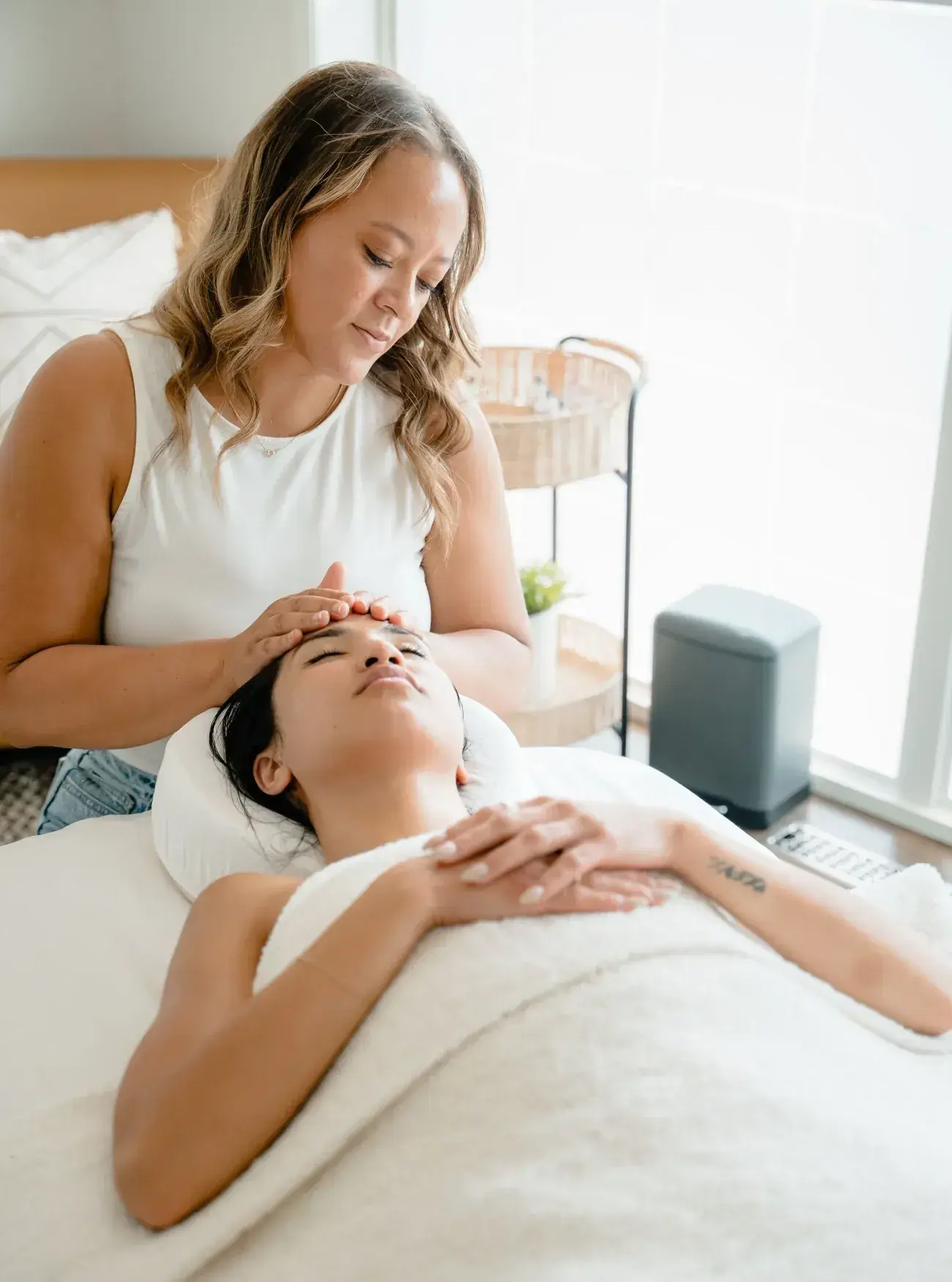


Leg cramps in pregnancy
Leg cramps in pregnancy strike the calf at night in the third trimester. What Cochrane found, the NHS stretch routine, and how calf massage is adapted.
By The Renu lymphatic and massage team · 6 min read
Leg cramps in pregnancy are sudden, painful tightenings of a calf muscle, usually at night and most often in the third trimester. The Cochrane review of eight trials found no reliable evidence that magnesium, calcium or vitamins prevent them, and no trial has tested stretching, massage, heat or relaxation at all, so none of the usual remedies is proven. Gently stretching the muscle is the best way to stop a cramp in progress, and a daily calf-stretch routine is the standard advice for prevention. Calf massage is a reasonable comfort measure, but a calf that stays painful, swollen or discoloured is not a cramp and needs a same-day check for a clot.
Few things are as unfair as being jolted awake in the thirty-fourth week by a calf that has locked solid. Leg cramps are one of the most common complaints of late pregnancy, and we will be straight with you about the evidence: almost nothing has been shown to prevent them, including the supplements most often recommended, and massage has never been tested for it. What follows is what the research does say, the stretch routine that is the standard advice, and how we adapt calf work so it is safe.
What a cramp is, and when pregnancy brings them
The NHS describes a leg cramp as a muscle in the leg tightening and causing sudden pain, lasting anywhere from a few seconds to ten minutes. They are common, usually harmless and short-lived. The Cochrane review notes that in pregnancy they are especially common in the third trimester, and that they are painful, interfere with daily activities, disrupt sleep and reduce quality of life, which anyone who has had one at 3 am would confirm.
The NHS list of causes includes ageing, strain from exercise (worse in the heat), pregnancy, usually in the later stage, some medicines such as statins and diuretics, dehydration, and liver disease from alcohol. Why pregnancy in particular should provoke them is not explained in any of the sources we read, and we would rather say that than invent a mechanism.
What the trials found, and what they never tested
The 2020 Cochrane review gathered eight randomised trials with 576 women who were 14 to 36 weeks pregnant. The treatments studied were all taken by mouth.
| Supplement | Finding |
|---|---|
| Magnesium | May reduce how often cramps occur compared with placebo or no treatment, but the findings were not consistent |
| Calcium | Did not consistently reduce how often cramps occurred |
| Vitamin B | More women fully recovered than with no treatment |
| Calcium versus vitamin C | No difference in cramp frequency |
| Vitamin D | No effect on frequency, length or pain intensity |
The authors graded the evidence as low or very low quality and concluded that it is not clear whether any of the oral interventions provide an effective and safe treatment for leg cramps in pregnancy.
Then the sentence that shapes this whole page: no trials considered therapies such as muscle stretching, massage, relaxation or heat therapy. Not that they failed; they were never tested. Everything we and others suggest for prevention, from stretching to calf work, sits in that gap. We think the stretching routine is still worth doing, because it is free, safe and recommended by the NHS, but you should know it rests on practice rather than trials.
Stopping a cramp that has already started
Two sources agree on this, and it is the one thing you can rely on. The SOGC’s pregnancy site says that gently stretching out the cramp is the best way to stop it. The NHS says that stretching and massaging the muscle may ease a cramp, that standing up and putting your weight on the leg with the cramp may also help, and that painkillers are pointless in the moment because they take too long to work.
Our usual advice for a calf cramp in bed is to straighten the knee and draw the toes up toward the shin, pressing the sole against the wall or footboard if you cannot reach your foot, holding until the muscle lets go, then rubbing the calf gently.
The daily stretch routine
The NHS prevention routine takes five minutes and is designed for the calf:
- Stand facing a wall with your arms outstretched and your fingertips just touching it.
- Keep your feet flat and your body straight.
- Lean forward toward the wall until you feel a stretch in the calves, and hold for two or three seconds.
- Straighten up.
- Repeat for five minutes, three times a day, with the last session just before bed.
Later in pregnancy, keep a hand on the wall for balance and do not lean further than feels steady. If your balance is poor or the stretch provokes pelvic pain, stop and ask your midwife or physiotherapist for a seated version.
Dehydration is on the NHS list of causes, so drinking regularly through the day is a reasonable habit, especially in summer.
How we adapt calf work in pregnancy
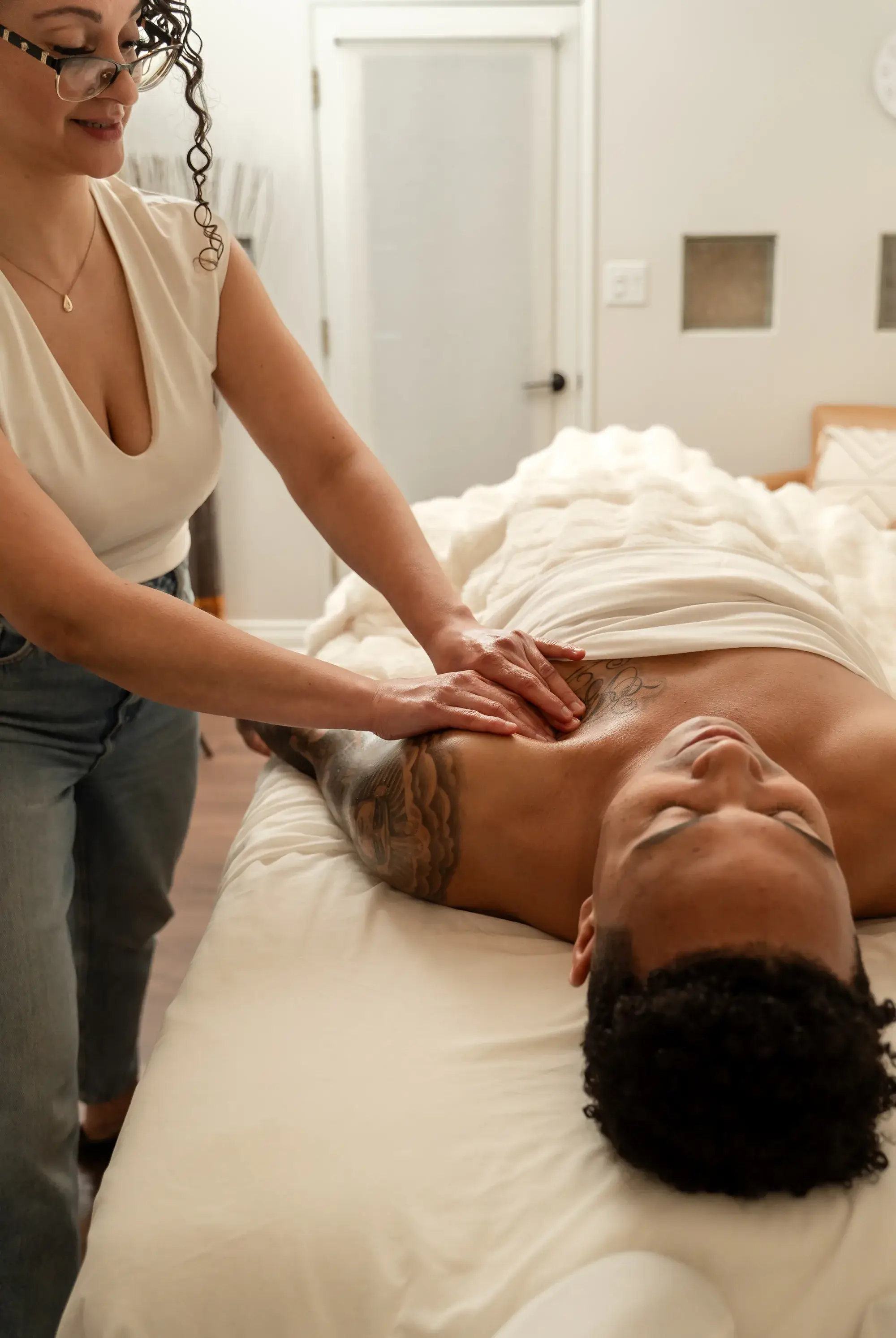
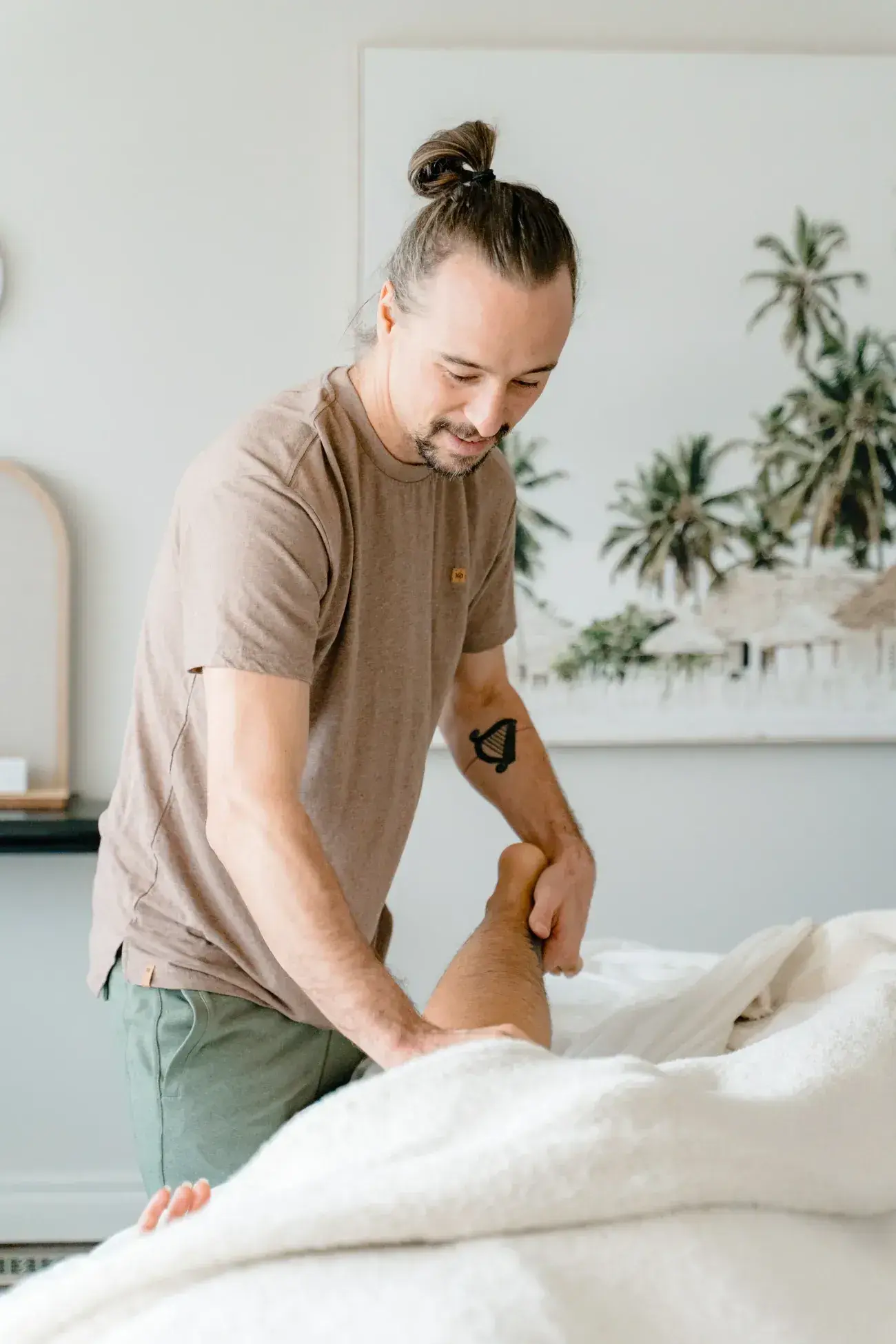
In a prenatal massage or a general massage therapy session we treat the calves in side-lying, with slow strokes from the ankle toward the knee and a gentle sustained stretch of the calf at the end. Clients with nightly cramps usually arrive with calves that are tender to the touch from the spasms, and that tenderness is what we can genuinely ease. We describe it as comfort and recovery between cramps, not prevention, for the reasons above.
Before we touch either lower leg, we ask the clot questions. The NHS describes deep vein thrombosis as throbbing pain in one leg, rarely both, usually in the calf or thigh, with swelling in that leg and red, blue or darkened skin around the painful area, and the risk is raised in pregnancy and for six weeks after birth. A calf with those signs is not massaged. Our screening is set out in full in blood clots and prenatal massage.
Because cramps are a sleep problem as much as a leg problem, the evening-habit advice on insomnia in pregnancy is worth pairing with the stretch routine, and the gentle daily movement described in at-home lymphatic health keeps the calf pump working through the day.
When a cramp is not a cramp
The NHS says to see a GP if cramps are disturbing your sleep, if you have numbness or swelling in the leg, or if a cramp lasts longer than ten minutes. In pregnancy we would add: tell your midwife or doctor about frequent cramps at your next visit, so they can review your medicines and ask about anything else going on.
The urgent one is the clot. A cramp passes and leaves a tender muscle; a deep vein thrombosis does not pass. If one calf stays painful, is swollen compared with the other, feels warm or has changed colour, the NHS says to ask for an urgent GP appointment or call the nurse line the same day, and to call emergency services if you also feel short of breath or have chest pain. Please call them before you call us.
Questions people ask
Does magnesium stop leg cramps in pregnancy?
Not reliably. The Cochrane review found magnesium may reduce how often cramps happen compared with placebo or no treatment, but the findings were inconsistent and the evidence was low or very low quality. Calcium and vitamin D did not consistently help either. Talk to your midwife or doctor before adding any supplement.
What should I do the moment a cramp hits?
Stretch the muscle. The NHS says stretching and massaging the muscle may ease a cramp, and standing up and putting your weight on the cramping leg can help. The SOGC says gently stretching out the cramp is the best way to stop it. Painkillers are no use in the moment because they take too long to work.
Can massage prevent pregnancy leg cramps?
Nobody knows, because it has not been tested. The Cochrane review notes that no trial considered stretching, massage, relaxation or heat therapy. We offer calf work as a comfort measure that many clients find eases the tight, tender feeling the morning after, and we are honest that it is unproven as prevention.
How do I tell a cramp from a blood clot?
A cramp is a sudden spasm that passes within seconds to minutes and leaves a tender muscle. A clot is a throbbing pain in one leg, usually the calf or thigh, that persists, with swelling in that leg and red, blue or darkened skin. The NHS says to seek an urgent GP appointment if you think you have a clot, and emergency care if you are also short of breath or have chest pain.
Sources
Page reviewed October 4, 2026. This page is education, not a diagnosis. For your own situation, talk to your doctor, surgeon or care team, or ask us.
Keep reading
Related pages