
Is bruising after a deep tissue massage normal?
A small bruise or two after very firm work can happen, more so on blood thinners, but it is not the goal. Widespread bruising means too much pressure.
By The Renu lymphatic and massage team · 6 min read
An occasional small bruise after very firm work can happen, especially if you take blood thinners, bruise easily or have older, thinner skin, but bruising is not a sign the massage worked. Bruising is rare at sensible pressure, and widespread or painful bruising means the pressure was more than your tissue could take. Tell your therapist so the next session is adjusted, and see a doctor if bruises are large, unexplained or slow to fade.
An occasional small bruise after very firm work can happen, especially if you take blood thinners, bruise easily or have older, thinner skin, but bruising is not a sign the massage worked. Bruising is rare at sensible pressure, and widespread or painful bruising means the pressure was more than your tissue could take. Tell your therapist so the next session is adjusted, and see a doctor if bruises are large, unexplained or slow to fade.
What a bruise actually is
A bruise is skin discolouration from small blood vessels under the skin that have been damaged and leaked. The Cleveland Clinic describes the pooled blood showing through as black, blue, purple, brown or yellow, depending on how old the bruise is. The colour sequence is predictable: red or purple at first, then lighter brown, green and yellow as the body clears the blood over roughly two weeks.
That definition matters because it tells you what a massage bruise is not. It is not a released muscle, a dissolved knot or anything leaving the body. It is a mechanical injury to capillaries, the same thing that happens when you bump a shin on a coffee table. Muscle can soften beautifully with no bruising at all, and skin can bruise over a muscle that has not changed.
One small bruise versus a patch of them
There is a real difference between a single thumb-sized mark on a spot where the therapist spent a long time, and bruising spread across a whole area.
Paul Ingraham, writing on PainScience, notes that bruising from massage is rare at sensible intensities. Deep tissue massage uses sustained pressure and slow, deep strokes, and even that style, done well, should leave the skin unmarked in most people. A small, isolated bruise on someone who bruises easily is a reasonable thing to mention and move on from. A field of bruises on the back, shoulders or legs is not a normal outcome of a well-judged session. It tells you the force exceeded what the tissue could absorb, which is the same conclusion whether the massage felt good at the time or not.
Soreness is a separate question. A spread-out ache the next day is common after firm work and usually settles within a day or so. Bruising and soreness can occur together, but one does not cause the other, and you can have either without the other. If soreness is your main concern, is it normal to be sore after a massage? covers that on its own.
Who bruises more easily
Some people bruise at pressure that leaves no trace on anyone else, and this is worth knowing before you book deep work. The Cleveland Clinic lists the groups most prone to bruising:
- Older adults, because aging skin is thinner and the vessels beneath it are less protected.
- People taking blood thinners, and people who use non-steroidal anti-inflammatory drugs regularly.
- People with bleeding disorders such as hemophilia or von Willebrand disease.
- People with low platelet counts.
- People with vitamin C or vitamin K deficiencies.
Healthline’s guide to deep tissue massage adds the same themes from the other direction: anyone with blood clots or a clotting disorder, on blood thinners, with a bleeding disorder, with cancer or in cancer treatment, with osteoporosis, who is pregnant, or who has open wounds or skin infections should talk to a doctor before booking deep tissue work. If you are on anticoagulants specifically, massage, cupping or acupuncture on blood thinners goes through what changes.
None of these rule out massage. They change the pressure, and they are the reason the health history at the start of a first visit asks about medications. A therapist who knows you take a blood thinner will work differently from the first stroke.
Why pressure, not technique, is the usual cause
The United States National Center for Complementary and Integrative Health (NCCIH) reports that the risk of harm from massage is low, and that the rare serious events on record, such as blood clots, nerve injuries and fractures, have tended to involve vigorous styles such as deep tissue massage or people at higher risk, such as the elderly. Bruising sits well below that level of harm, but it follows the same pattern: it is intensity, more than the style on the booking, that produces it.
Two things make bruising more likely in a session:
- Sustained pressure on one spot. Holding a thumb, elbow or knuckle on a single point for a long time concentrates force on a small area of skin and the vessels under it.
- Working against a guarding muscle. When a muscle tightens under the hand, a therapist who pushes harder to get through it is loading the surface tissue, not reaching the deep layer.
Neither is good technique. Depth is reached by warming the surface and sinking slowly as it yields, which is the approach described in does deep tissue massage have to hurt to work?
What to do about a bruise at home
The Cleveland Clinic’s home care for an ordinary bruise applies here:
- Rest and, where practical, elevate the area.
- Ice for 15 minutes at a time during the first 24 to 48 hours.
- Switch to a heating pad after two days.
- Acetaminophen for discomfort if you need it.
Avoid massaging the bruise itself. The vessels there are already leaking, and rubbing them adds nothing.
What to tell your therapist next time
Bruising is useful information, and the right response is to pass it on rather than to stop booking. The College of Massage Therapists of Ontario, which regulates RMTs in that province, tells clients they can request the pressure level that feels right and can ask for a change at any point in the session. Massage therapy is not regulated in Alberta, but our Registered Massage Therapists work to the same standard, and at Renu pressure is adjusted throughout every session as a matter of course.
Say something like: “Last time I had a few bruises on my shoulders the next day, I think I need less sustained pressure there.” A good therapist will take that as a clear brief, not a complaint. If a therapist’s answer is that bruising shows the work is going deep, that is not supported by anything in the literature on massage, and you are entitled to a lighter session or a different therapist.
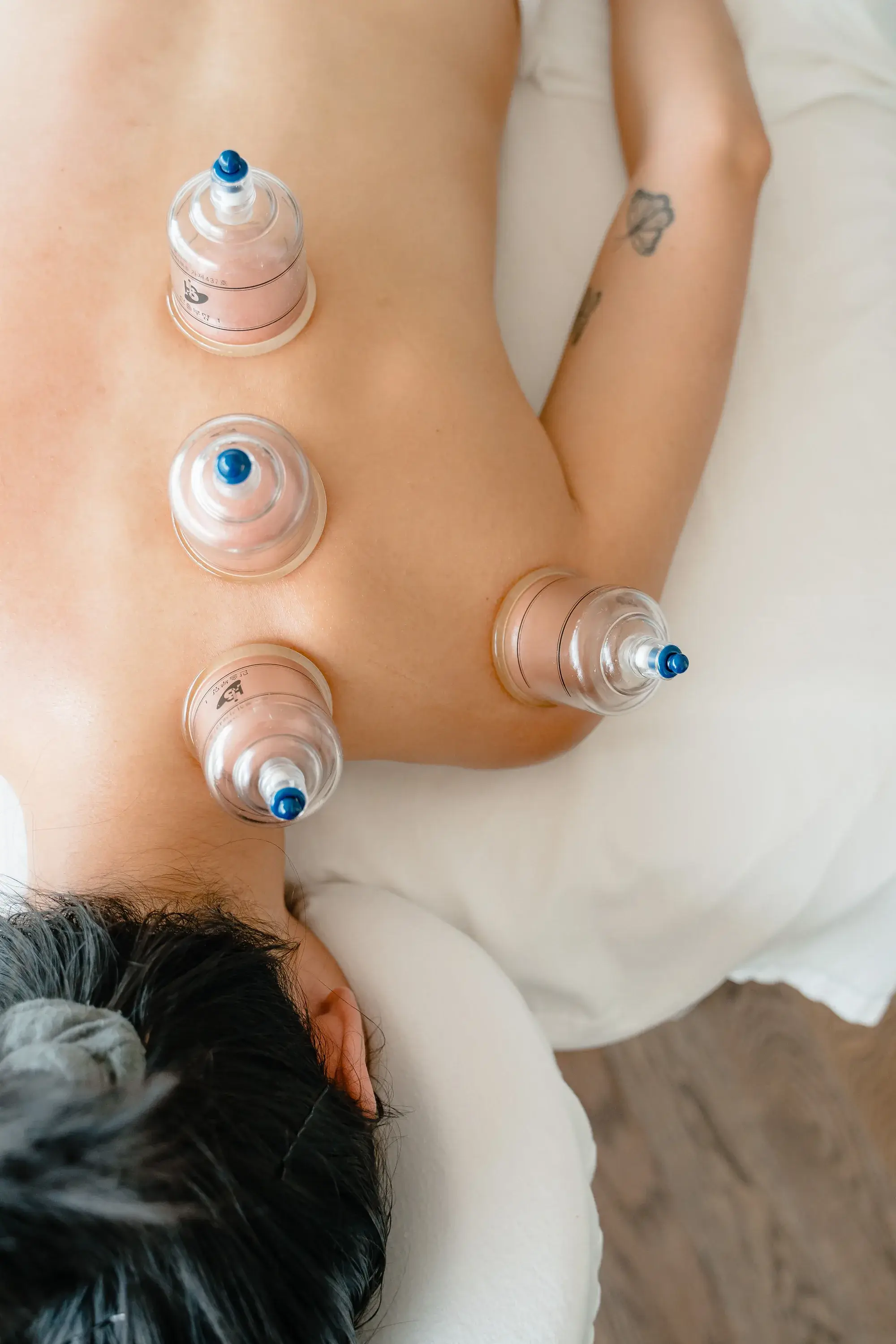
Cupping is the exception where marks are expected. In myofascial cupping, suction draws blood toward the surface deliberately and the round marks are part of the treatment rather than a mistake; what do the colours of cupping marks mean? explains them.
When bruising needs a doctor
See a healthcare provider if a bruise from a massage, or any bruise:
- lasts longer than two weeks;
- comes with painful swelling or pain that lingers after the colour has faded;
- is one of several large bruises you cannot explain;
- keeps appearing in the same place; or
- is accompanied by unusual bleeding elsewhere, such as nosebleeds or blood in the urine or stool.
Those are the Cleveland Clinic’s criteria for a bruise that deserves a look, and they apply whether or not a massage was involved. New, easy bruising that you have not had before is worth raising with your physician in its own right, because it can point to a medication effect or a blood issue that has nothing to do with the table. Healthline’s list of conditions to discuss with a doctor before massage includes bleeding disorders, blood-thinning medication and severe thrombocytopenia for exactly this reason.
If you have questions about pressure before your first visit, the clinic FAQ and the massage therapy page cover how sessions are planned, and you are welcome to ask for a lighter start.
Questions people ask
Does a bruise mean the massage was effective?
No. A bruise is bleeding from small vessels damaged under the skin, and it has nothing to do with whether a muscle released. The benefit of deep tissue massage comes from slow, sustained pressure that the tissue accepts, not from force that breaks capillaries. A session that leaves marks has usually gone past what was useful.
How long should a bruise from a massage take to go away?
Most bruises fade within about two weeks without treatment, shifting from red or purple to brown, green and yellow as they heal. A bruise that is still present after two weeks, keeps coming back in the same place or is accompanied by painful swelling should be looked at by a healthcare provider.
Why do I bruise from massage when my friend never does?
People bruise more easily with age as the skin thins, with blood thinners or regular anti-inflammatory use, with bleeding disorders or low platelets, and with certain vitamin deficiencies. If any of those apply to you, tell your therapist before the session so the pressure can be set with that in mind rather than discovered afterwards.
Are the round marks from cupping the same as bruises?
They look similar but they are produced differently and are expected after cupping, where suction rather than compression draws blood toward the skin. A bruise from massage is unplanned. If you had cupping and massage in the same visit, the circular marks are from the cups and the irregular ones are from pressure.
Sources
- Cleveland Clinic: Bruises (ecchymosis)
- NCCIH: Massage therapy, what you need to know
- PainScience: Can massage damage nerves? (Paul Ingraham, 2023)
- Healthline: Deep tissue massage benefits and risks
- Healthline: Why you feel sore after a massage and what to do
- College of Massage Therapists of Ontario: Five things to know before booking a massage
Page reviewed October 3, 2026. This page is education, not a diagnosis. For your own situation, talk to your doctor, surgeon or care team, or ask us.
Keep reading
Related pages