
Can massage make sciatica worse?
Massage can make sciatica worse when you lie face down and the low back is pressed hard in a flare. Side-lying, lighter work and 'first, do no harm' avoid it.
By The Renu lymphatic and massage team · 6 min read
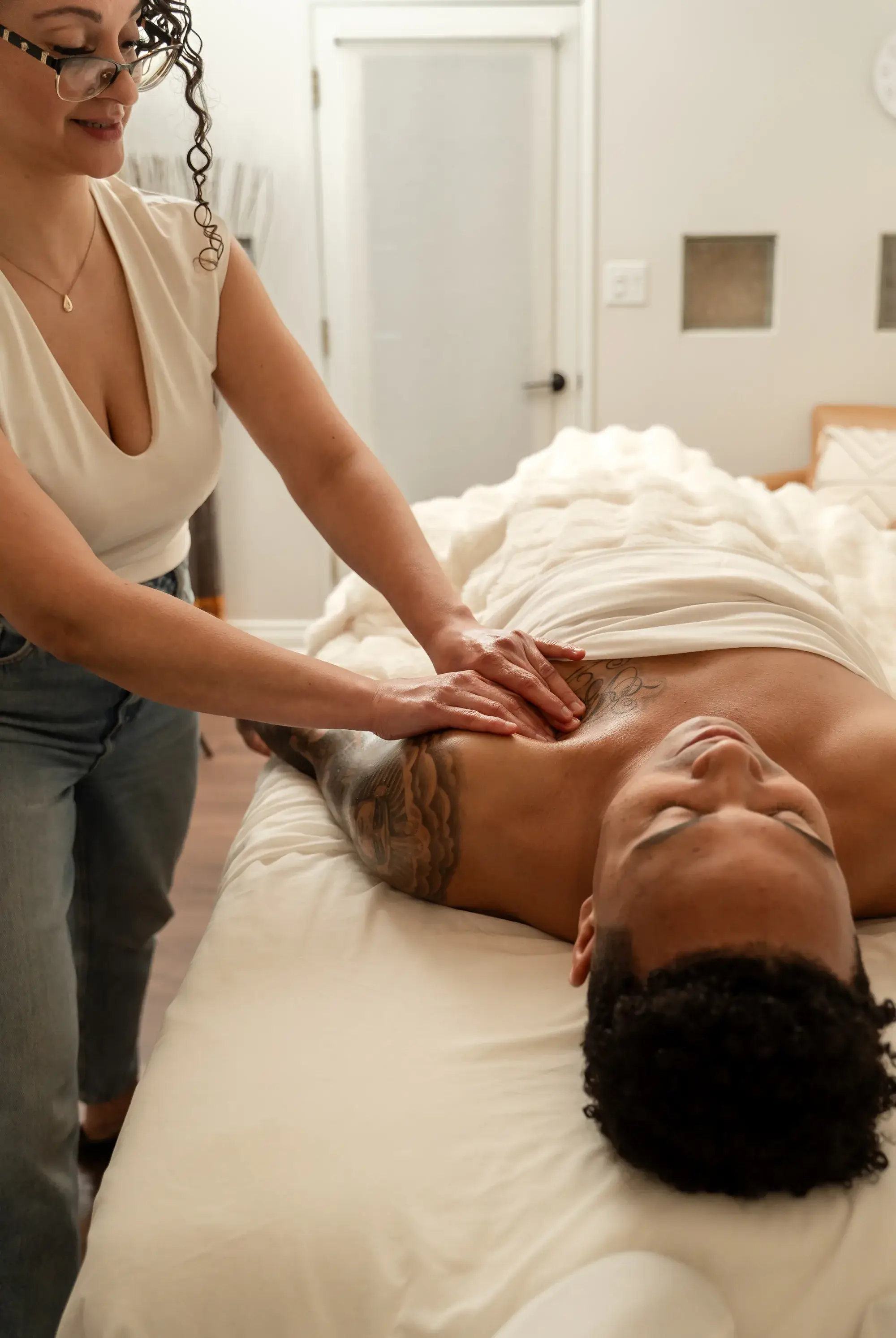
It can, and the usual culprit is position rather than pressure: lying face down is the position a massage educator writing for ABMP says most often aggravates sciatica, because it invites heavy work on the lower back and sacrum and the pain often shows up afterwards, when you turn or stand. In an acute flare even clothing on the low back can hurt, so deep lumbar pressure is counterproductive. Side-lying or face-up positioning, light pressure near the spine and firmer work only on the muscles that are compensating keep a session safe. New weakness, numbness in the saddle area or any bladder or bowel change is an emergency, not a massage question.
Sciatica makes people cautious about everything, including the thing they hoped would help. The electric pain down the back of one leg is bad enough; the thought of a therapist leaning into your low back and setting it off is worse. The fear is reasonable and the fix is specific. Sessions go wrong for sciatica in predictable ways, and avoiding them is mostly a matter of how you lie and where the pressure goes.
The position problem
In an article for ABMP’s Massage & Bodywork magazine, massage educator Mark Liskey is unusually candid: in his experience, prone, face down, is the position that can most often aggravate a sciatica condition. His reasoning is practical. Face down leaves the door open for ratcheting up the pressure on the lower back and sacrum, and an acute sciatica sufferer may not feel the increase on the table but is likely to feel more pain afterwards when they turn or stand up.
That last point explains a lot of post-massage flares. The session felt fine. The walk to the car did not.
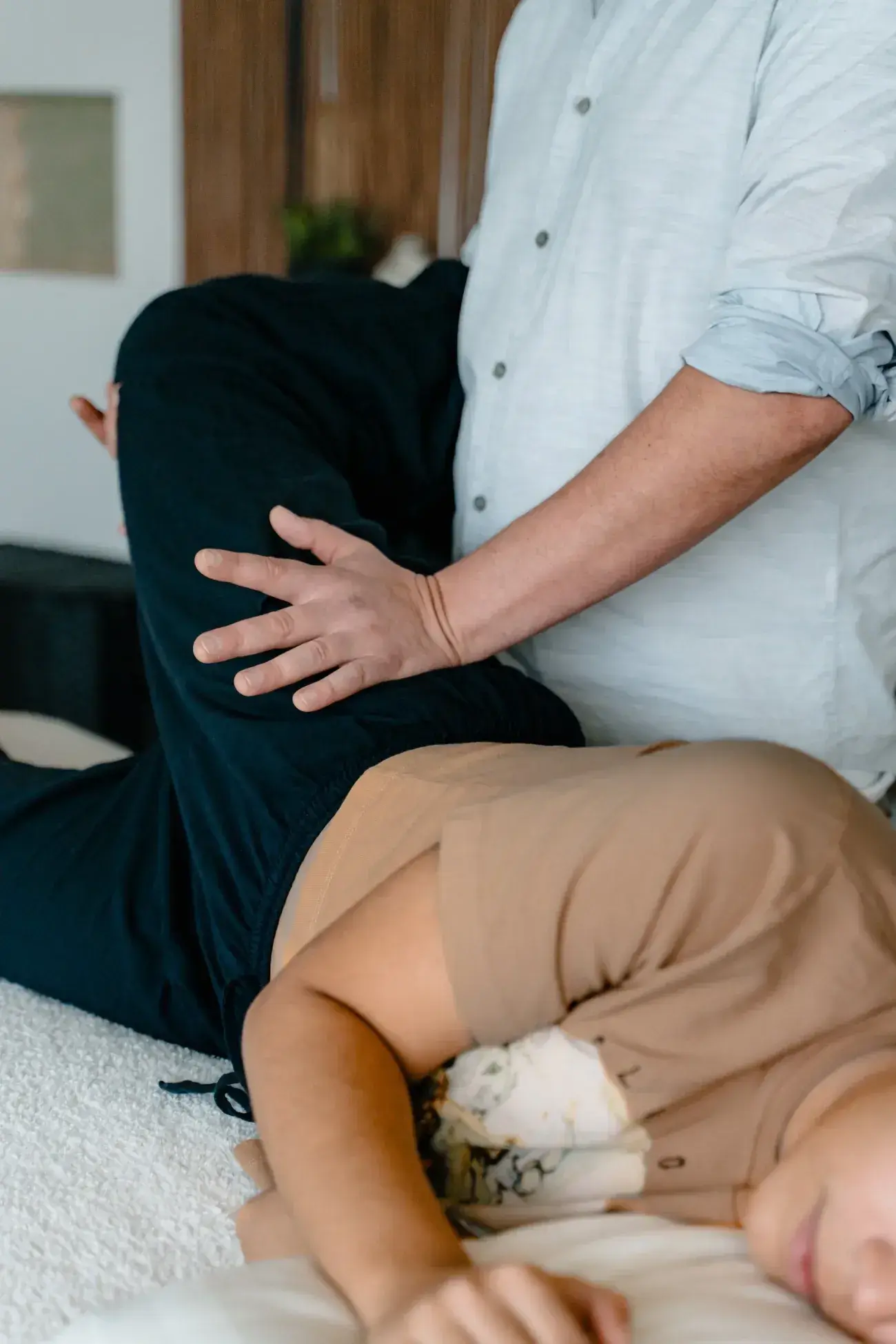
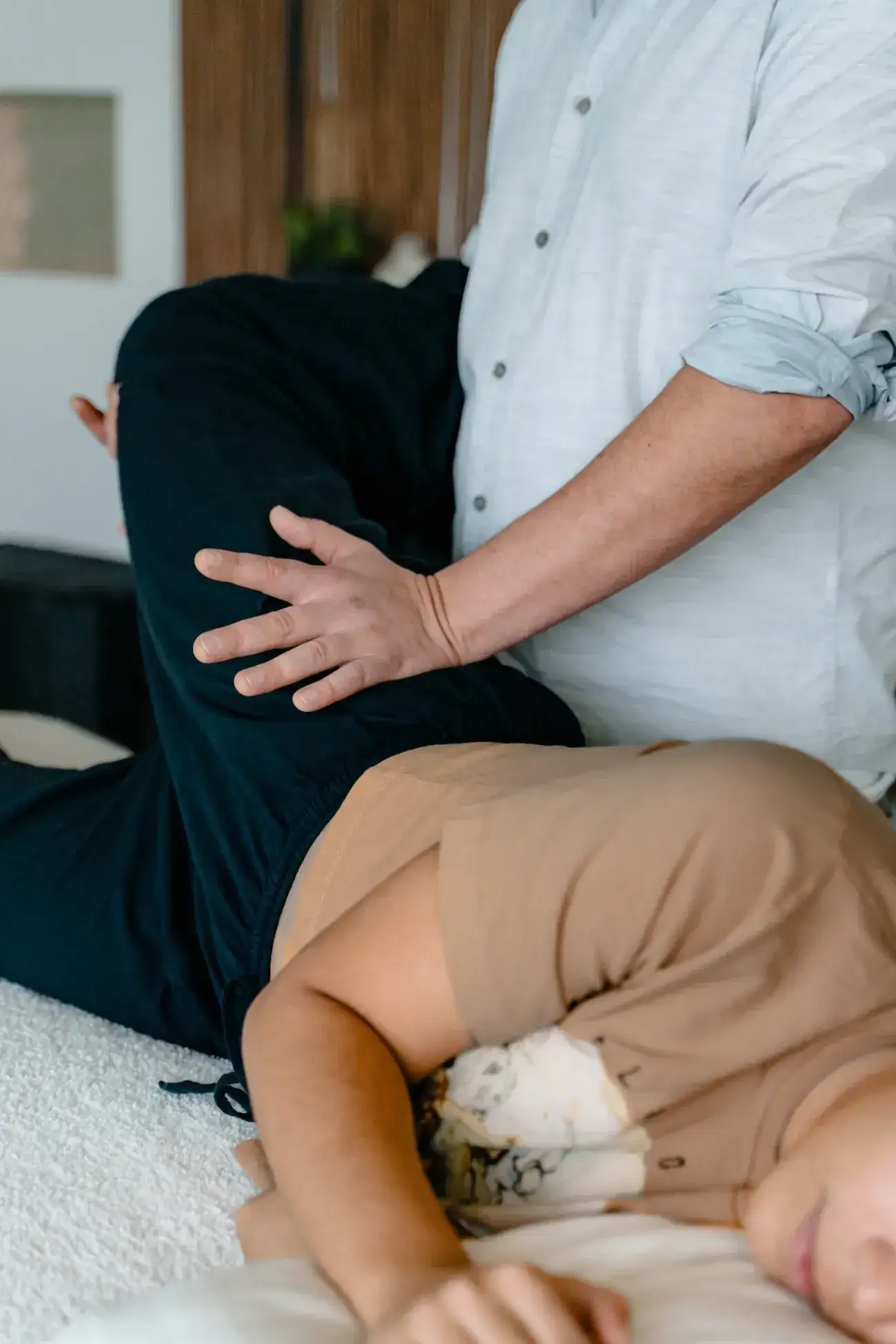
His alternatives are face-up or side-lying. For side-lying he suggests a question we have adopted: how do you sleep now? The side you have found you can sleep on since the sciatica began is usually the side you can lie on for treatment. He adds a caution to make sure that answer is current rather than your pre-sciatica habit, and to ask whether pain medication at night is temporarily letting you tolerate a position that would otherwise hurt.
The pressure problem
The second way to make sciatica worse is to treat the low back as if it were an ordinary tight back. Liskey describes the acute phase plainly: even the sensation of clothing contacting the lower back can be painful. Aggressive techniques there, in his words, are not what the moment calls for.
The ABMP approach when a client still wants firm work is to split the body: light pressure in the acute area, the lumbar spine and sacrum, and deeper pressure in the compensatory muscles, which he names as the hamstrings, calf and thoracic back, letting the client guide the therapist to places where firm work has helped before. The guiding sentence of the whole piece is that sciatica clients benefit when the therapist adopts the mindset “first, do no harm”, so as not to become a perpetuating factor themselves.
What this is not is a warning about damaging the nerve. PainScience, reviewing nerve injury from massage, calls it a bit ridiculous to say the sciatic nerve is exposed, because it sits under a lot of fat and muscle deep in the buttock. The risk in a session is provoking an inflamed nerve root at the spine or reproducing the leg pain, not bruising the nerve itself. The broader picture on nerves is on Can a massage damage a nerve?.
What the evidence says about harm
For low back pain generally, the 2015 Cochrane review of 25 trials and 3,096 people found no serious adverse events from massage; the commonest side effect was a temporary increase in pain, reported in 1.5 to 25 percent of participants depending on the trial. The NCCIH’s overall view is that the risk of harm from massage appears low, with rare serious events linked mostly to vigorous techniques. Neither source looks at sciatica specifically, so read them as context: the downside of a badly judged session is usually a flare, not an injury, and a well-judged one avoids even that.
What a sciatica-safe session looks like
Putting the ABMP advice together with how we work:
| Choice | Aggravates a flare | Protects it |
|---|---|---|
| Position | Face down for the whole session | Side-lying on your current sleeping side, or face up with the knees supported |
| Low back and sacrum | Firm, sustained pressure | Light contact only while acute |
| Where firm work goes | Into the painful region | Hamstrings, calf, mid-back, and the hip muscles if they tolerate it |
| Pace | Pressure turned up because you are not complaining | Pressure held where you can still feel and report it |
| Getting up | Rolling straight off the table | Slow, assisted, with a pause sitting on the edge |
If your sciatica is from the piriformis muscle rather than the spine, the buttock itself becomes a treatment area. Cleveland Clinic describes piriformis syndrome as that muscle pressing on the sciatic nerve, with pain that worsens with prolonged sitting, walking, running and stairs, and it lists massage among complementary treatments beside stretching, physiotherapy and heat or ice. Even then, the first sessions are moderate; the muscle is irritated, and provoking it to prove a point helps no one.
Between sessions
The advice from Cleveland Clinic and the NHS runs against instinct, which is to lie down and wait.
- Keep moving. The NHS says to carry on with normal activities as much as possible and not to sit or lie down for long periods, because movement helps recovery even when it is uncomfortable. Cleveland Clinic allows bed rest only for short periods.
- Ice first, then heat. Cleveland Clinic suggests ice to reduce pain and swelling in the first few days and heat after that, about 20 minutes at a time. The NHS recommends heat packs on the painful areas.
- Gentle stretching. Cleveland Clinic names bridging, cat-and-camel, knee-to-chest and lower back extension; the NHS has its own set of sciatica exercises.
- Pain relief. Both sources mention anti-inflammatory medication, with a pharmacist’s advice.
Most sciatica improves on its own. Cleveland Clinic says many cases improve within four to six weeks without medical treatment; the NHS says it usually gets better in a few weeks to a few months, and can come back. Piriformis syndrome, per Cleveland Clinic, often improves in days or weeks with simple measures.
When to call a doctor, or 911
Some symptoms with sciatica mean the problem has moved beyond anything we should touch. The NHS and Cleveland Clinic both list them. Go to emergency or call 911 if you have:
- Sciatica on both sides at once
- Weakness or numbness in both legs that is severe or getting worse
- Numbness around or under your genitals, or around your bottom
- Difficulty urinating, loss of bladder control, or loss of bowel control
See your doctor, without the sirens, if the pain is not improving after a few weeks of home care, is getting worse, stops you doing normal activities, began after an injury, or comes with falls or a sudden increase in weakness. Cleveland Clinic’s piriformis page adds frequent falls and sudden severe pain to its own list.
Booking with sciatica
Tell us it is sciatica, which leg, how long it has been going on, and which side you sleep on now. If you have been told the cause, a disc, spinal narrowing or the piriformis, that shapes the plan. If you have not seen anyone, a doctor’s assessment comes first. A massage at Renu can then be set up the careful way, side-lying, light near the spine, with the firm work saved for the muscles that have been carrying you. During pregnancy, the same positioning is standard on our prenatal massage table. Contact us if you would like to talk it through before you book.
Questions people ask
Why did my sciatica flare the evening after a massage when it felt fine during it?
This is the pattern the ABMP article describes almost word for word: an acute sciatica client may not feel the pressure being turned up while lying face down, then feels more pain afterwards when they turn or stand. The low back was loaded in a position that masked the signal. Next time, ask for side-lying or face-up positioning and light work near the spine.
Can a massage therapist press on the sciatic nerve itself?
Not really, and that is a comfort rather than a worry. PainScience points out that the sciatic nerve is nestled under a great deal of fat and muscle deep in the buttock, so it is not exposed in the way people imagine. The problem in a session is not bruising the nerve; it is loading an already inflamed low back or reproducing the pain down the leg.
Is massage better for piriformis syndrome than for sciatica from a disc?
It has a clearer role. Cleveland Clinic describes piriformis syndrome as the piriformis muscle in the buttock pressing on the sciatic nerve, worse with sitting, stairs and running, and lists massage among complementary treatments alongside stretching and physiotherapy. When the cause is a disc or spinal narrowing, massage can only ease the surrounding muscles while the nerve settles.
Can I have a massage for sciatica while pregnant?
Yes, with a therapist trained in prenatal positioning. Cleveland Clinic lists pregnancy among the causes of sciatica and notes massage specifically for pregnancy-related cases. Side-lying with pillow support is the standard position, which happens to be the one that also protects a sciatic flare. Our prenatal massage page explains how we set the table up.
Sources
- ABMP, Massage & Bodywork magazine (Mark Liskey, Nov/Dec 2016): How to Not Make Sciatica Worse
- Cochrane: Massage for low-back pain
- Cleveland Clinic: Sciatica
- NHS: Sciatica
- Cleveland Clinic: Piriformis Syndrome
- PainScience (Paul Ingraham): Can Massage Damage Nerves?
- NCCIH: Massage Therapy: What You Need To Know
Page reviewed October 4, 2026. This page is education, not a diagnosis. For your own situation, talk to your doctor, surgeon or care team, or ask us.
Keep reading
Related pages