
Answers
Can lymphatic drainage make swelling worse?
Done correctly, no. Swelling can rise if drainage is given during infection, to a heart or kidneys that cannot cope, or with no compression.
By The Renu lymphatic and massage team · 6 min read
Done correctly on a suitable person, lymphatic drainage should not increase swelling; the trials describe it as safe and well tolerated. Swelling can get worse when the technique is given during an infection or cellulitis, when the heart or kidneys cannot handle the fluid being returned, when pressure is too deep, or when compression is left off afterward and the fluid simply settles back. A limb that looks different hours later is usually fluid redistributing, but new redness, heat or fever is not, and needs a doctor.
It is a fair worry. You have paid for a treatment that is supposed to reduce swelling, and your arm or leg looks no better, or looks worse. The short answer is that the technique itself, done properly on the right person, does not add fluid to a limb. The longer answer is about the four situations where swelling can rise around a session, and how to tell those from the ordinary ebb and flow of a day.
What the trials say about safety
The Cochrane review of manual lymphatic drainage for breast cancer-related lymphedema pooled six trials with 208 participants and reported that MLD was well tolerated and safe in all of them. The Cleveland Clinic says few people have negative reactions, and the side effects it does list are fatigue, headaches or nausea, not increased swelling. So “it made me worse” is not a documented effect of correct treatment. When it happens, something around the treatment is usually the cause.
Four ways swelling can rise
Treating during an infection
Cellulitis is the most common complication of lymphedema, and the NHS describes its signs: redness and a feeling of heat in the skin, pain and increased swelling in the affected area, and a high temperature or feeling hot, cold or shivery. Massaging a limb in that state does not help it and can make things worse, which is why the Cleveland Clinic lists cellulitis, infection and fever among the conditions in which you should avoid lymphatic massage, and why Cedars-Sinai’s therapist says the techniques are not recommended for people with cellulitis. If a limb is red, hot and growing, the next appointment is with a doctor; the NHS says oral antibiotics usually treat cellulitis, with hospital treatment for severe cases.
A heart or kidneys that cannot take the load
Lymphatic drainage returns fluid to the bloodstream. For most people that is the point. For someone whose heart or kidneys are struggling, extra fluid arriving in the circulation is a burden they may not be able to clear, and it can end up back in the tissues or somewhere worse. This is why heart disease and kidney failure sit on the Cleveland Clinic’s avoid list, why Cedars-Sinai names heart conditions and kidney problems, and why Healthline’s guide adds congestive heart failure and liver problems. It is also why we ask about these at intake rather than assuming. Our answer on who should not have lymphatic drainage goes through the full list.
Pressure that is too deep
Lymphatic vessels near the surface are delicate, and the strokes are meant to stretch skin, not compress tissue. Healthline’s certified lymphedema therapist gives the test: if you can feel the muscles underneath your skin, you are pressing too hard. The same guide warns that ordinary deep tissue massage can be too heavy for someone with lymphedema, and that you should not assume any massage therapist can treat it. Firm work on a swollen limb can irritate the tissue and leave it puffier, which is the one way “lymphatic massage” from untrained hands can genuinely backfire.
No compression afterward
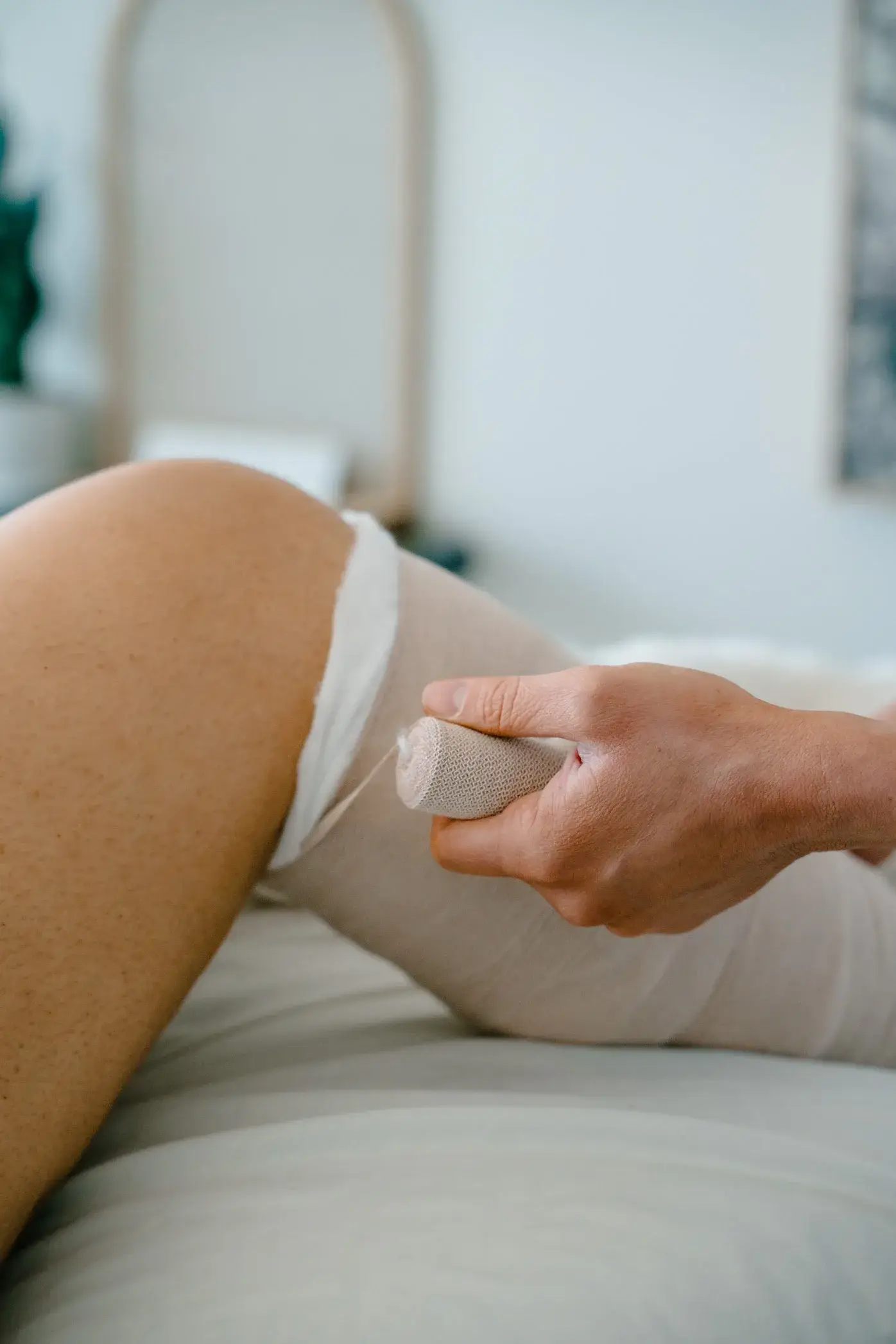
This is the most common reason a good session seems to wear off by bedtime. The NHS lymphedema treatment page explains that the lymphatic system has no central pump and that compression garments act as a counterforce to the muscles, and it notes that garments may be applied after a massage session to prevent fluid accumulating in the limb again. The Cleveland Clinic’s advice is simply to keep wearing your compression socks or sleeves. Without it, fluid moved in the morning drifts back by evening. The garment also has to fit: Macmillan warns that a garment that is too loose will not control swelling, and that rolling the top over restricts blood flow and causes more swelling. We have a separate answer on whether a compression garment can make swelling worse.
Why a limb can look different hours later
Fluid moves with time and gravity. The NHS describes early lymphedema as swelling that may get worse during the day and go down overnight, and the everyday swelling the NHS lists in otherwise healthy legs comes from standing or sitting in one position too long. So a leg that is treated at ten in the morning, then spends the afternoon under a desk, can look fuller at six o’clock than it did on the table, and smaller again at seven the next morning. That is redistribution, not damage.
Heat does the same. The NHS prevention advice for lymphedema is to avoid very hot baths and showers because the heat from saunas, steam rooms and sun beds may increase the swelling. A session followed by a hot tub can undo itself. If you are thinking of adding our infrared cocoon to a lymphatic appointment and you have lymphedema, talk to your therapist first, because that NHS advice applies.
The fair test is to compare like with like: the limb first thing in the morning before the session, and first thing the morning after.
When to call your doctor
Call the same day, and skip your next session, if the limb shows any of the following:
- new redness, warmth or streaking, or pain that was not there before;
- a sudden increase in size, especially on one side only;
- a high temperature, chills or feeling generally unwell;
- skin that has split or is leaking fluid.
Call emergency services if swelling comes with shortness of breath, chest tightness or pain, coughing up blood, palpitations, or feeling faint or confused; the NHS warns these can mean a blood clot in the lungs. The Cleveland Clinic’s own advice to its patients is to call any time lymphedema symptoms get worse, including puffiness in the belly, tightness in the joints or swelling in the arms or legs. Our Learning Centre page on when to seek medical care lists the same signs.
How we keep it from happening here
We ask about your health history before a first lymphatic session, and fever, infection, clots, heart or kidney disease and recent stroke mean we postpone. For diagnosed lymphedema the right booking is not a stand-alone massage: Meeghan Mackenzie, our Certified Lymphedema Therapist and Certified Compression Fitter, delivers complete decongestive therapy, where drainage, compression, skin care and exercise are planned together, and a compression fitting is 30 minutes ($25). For general swelling without a diagnosis, a classic lymphatic drainage massage runs 30, 45 or 60 minutes, and we will tell you plainly if what you describe sounds like it needs a doctor first. The Learning Centre’s compression garments page explains why the sleeve or stocking is half the treatment.
Questions people ask
My leg looked bigger the evening after my session. Did it go wrong?
Probably not. Fluid moves for hours after a session and settles with gravity, so a leg that has been down all evening can look fuller than it did on the table. The NHS notes that early lymphedema is often worse through the day and down again by morning. Compare it first thing tomorrow, and if it is larger than before the session, or red, hot or painful, call us and your doctor.
Can the therapist push fluid the wrong way?
A trained therapist directs every stroke toward working nodes and opens the outlet at the neck first, so the fluid has somewhere to go. Pressure that is too deep is the more common fault: Healthline's rule is that if you can feel the muscles under the skin, the pressure is too hard, and deep tissue work is too heavy for a limb with lymphedema.
Does lymphatic drainage spread an infection?
That is exactly why it is not done during one. The Cleveland Clinic lists cellulitis, infection and fever among the reasons to avoid lymphatic massage, and Cedars-Sinai says the techniques are not recommended for anyone with cellulitis. Redness, heat, pain and increased swelling in the limb, with or without a temperature, mean a doctor and usually antibiotics, not a session.
Why do I need compression if the massage already moved the fluid?
Because the massage moves fluid and the garment keeps it from coming back. The NHS explains that compression may be applied after a massage session to prevent fluid accumulating in the limb again, and the Cochrane review found that people kept their swelling down at one year when they continued to wear a custom-made sleeve.
Sources
- Cleveland Clinic: Lymphatic drainage massage
- Cedars-Sinai: Lymphatic drainage massage FAQs
- NHS: Lymphoedema
- NHS: Lymphoedema, treatment
- NHS: Lymphoedema, prevention
- Macmillan Cancer Support: Compression treatment for lymphoedema
- Healthline: How to perform lymphatic drainage massage
- Cochrane: Manual lymphatic drainage for lymphedema following breast cancer treatment
Page reviewed October 4, 2026. This page is education, not a diagnosis. For your own situation, talk to your doctor, surgeon or care team, or ask us.
Keep reading
Related pages